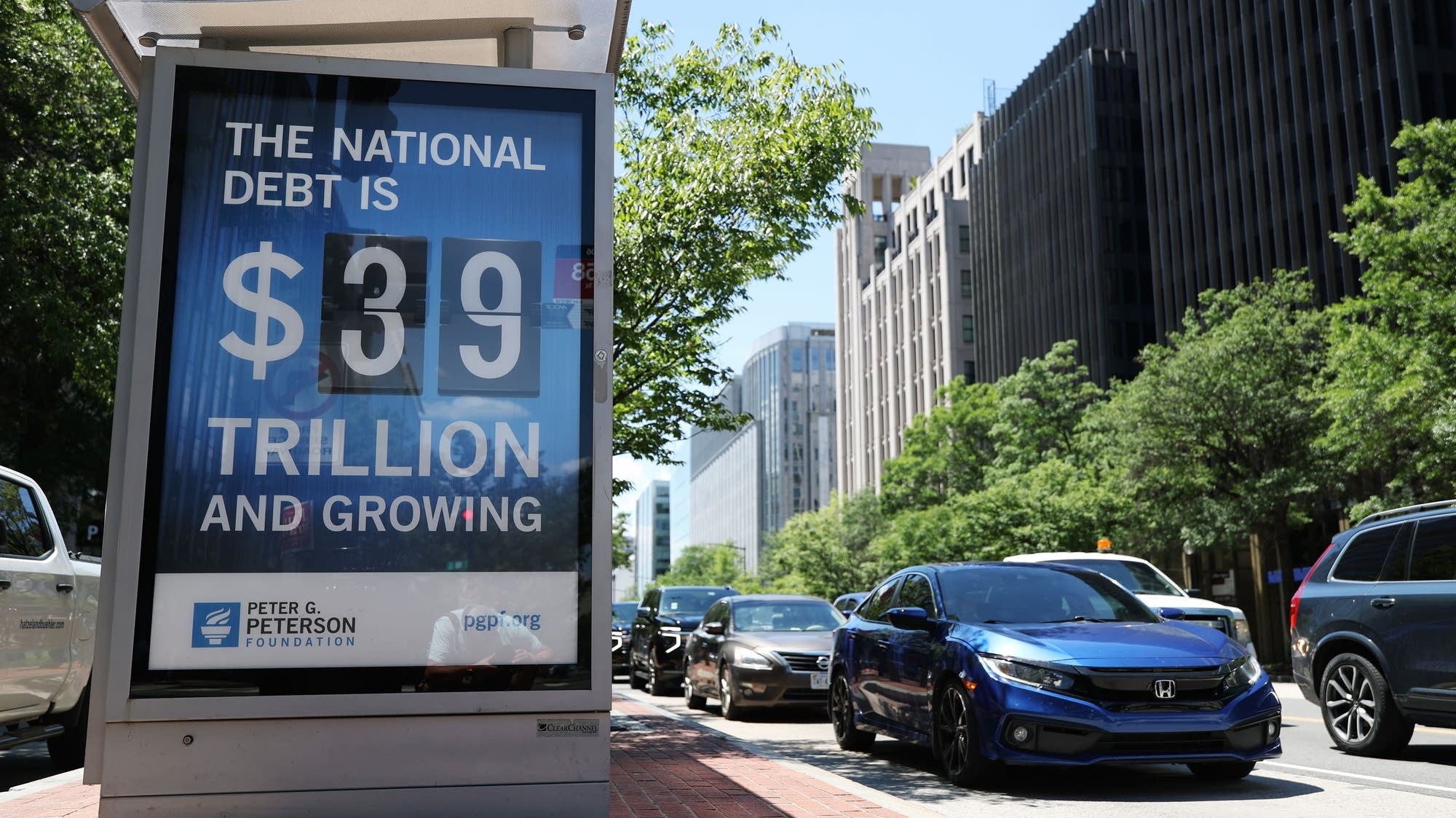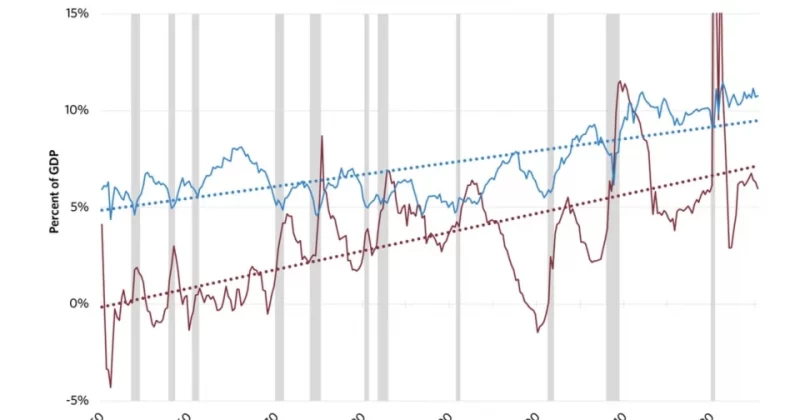
The US federal budget deficit is projected to hit roughly $2 trillion this fiscal year. That’s over 6% of GDP, more than double the 3% threshold that economists generally consider sustainable for a developed economy.
To put that number in perspective: the government is spending $2 trillion more than it takes in during a period of relative economic stability. This isn’t wartime spending or emergency pandemic relief. This is just the normal operating budget running at a pace that would make most household accountants faint.
How we got here
The Congressional Budget Office revised its FY2024 deficit estimate to $1.9 trillion, a 27% increase from its earlier projections. The culprit is a familiar one-two punch: spending is rising while revenues are falling.
The structural math is not complicated, just depressing. Mandatory spending programs, specifically Social Security, Medicare, and Medicaid, are growing faster than the government’s ability to collect revenue. These aren’t line items Congress votes on each year. They run on autopilot, and the passenger count keeps growing as the population ages.