There is a moment in most long-lived applications where you open a controller and find a block of conditionals that nobody quite understands anymore. Something like if ($entity->status === 'pending' && $this->someFlag) buried inside a service class, half-guarding a transition that was probably fine when someone wrote it but now nobody wants to touch. The business logic has drifted from the code, and the code is quietly lying about what the system actually does.
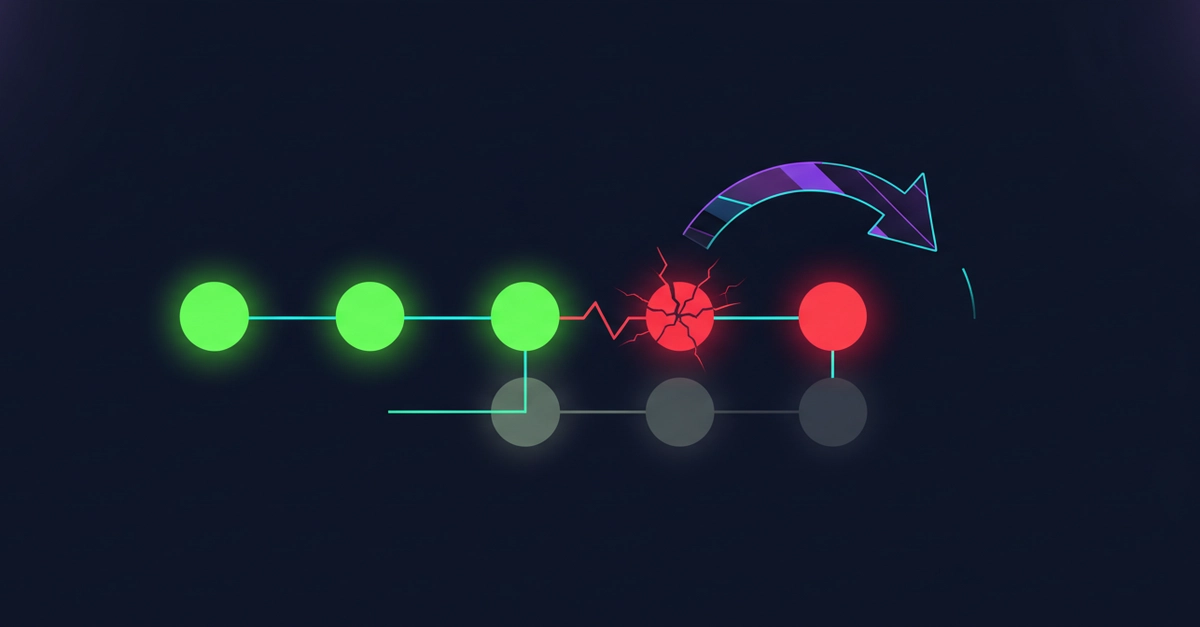
I have been building a platform recently where I could see this problem coming from a long way off. The domain has entities that go through well-defined lifecycles - things move through stages, transitions have rules, and when a transition happens, a bunch of other things need to follow. The instinct is to reach for a big use case class, or a service that handles everything in sequence. But that approach tends to collapse under its own weight as requirements change.
Instead, I ended up with a two-layer pattern: a strict state machine for each entity that owns nothing but transition rules, and a separate workflow engine that responds to those transitions and orchestrates the follow-on work. This article is about how that pattern holds together and why I think it is worth the setup cost.