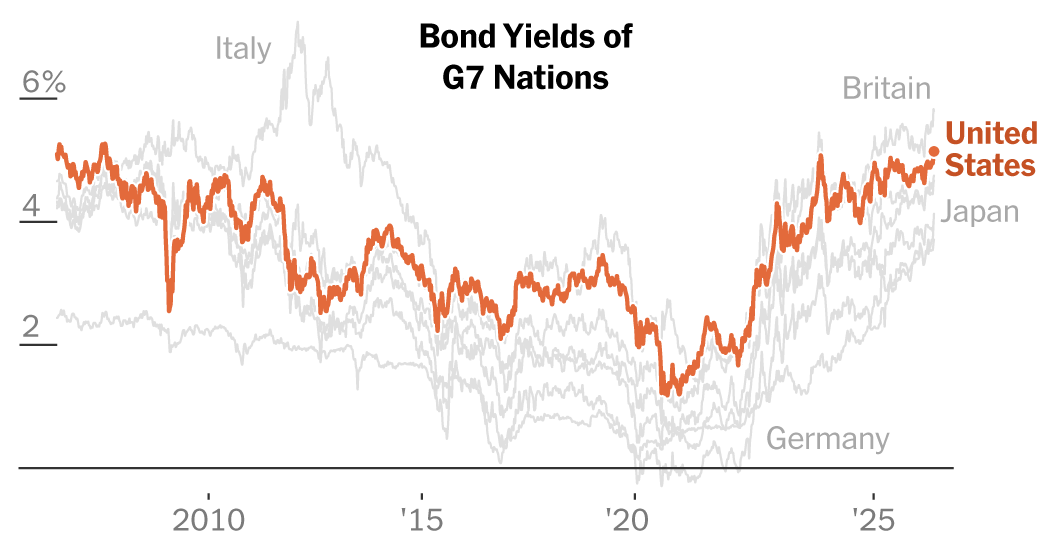
High Treasury yields' impact on consumer finances: Higher Treasury yields are no longer just a topic for economists and bond traders. As government bond yields continue climbing to multiyear highs, the effects are beginning to spread across daily finances, influencing borrowing costs, investments, retirement savings, and even consumer confidence.Treasury Yields Reach Multiyear Highs: What Is Causing Treasury Yields to Rise in 2026Recently, two-year and 10-year Treasury yields reached their highest levels since February 2025, while the 30-year Treasury yield climbed above 5% for the first time since 2007, as per a report. The bond market’s reaction reflects growing concerns over the ongoing Middle East conflict, rising inflation fears, and uncertainty following the Trump-Xi meeting in China.Why Investors Are Worried About the US Economic OutlookEconomists are also warning about a weaker economic outlook. The Federal Reserve Bank of Philadelphia released a report forecasting slower growth, modest job gains, nearly unchanged unemployment, and continued inflation pressures in the US economy, as per a Yahoo Finance report.Treasury yields represent the return investors receive for lending money to the US government. For example, a 10-year Treasury note with a 4.5% yield would pay $45 annually on a $1,000 investment until maturity.Understanding How Treasury Bonds and Yields WorkHowever, rising yields also mean falling bond prices. Investors holding older bonds with lower interest rates may lose money if they decide to sell before the bond matures because newer Treasurys offer better returns.You Might Also Like:This shift is creating ripple effects throughout financial markets and household finances.Bond investors are reacting to several growing concerns at once. The continuing conflict in the Middle East has kept fears of higher inflation alive as gas prices continue rising. The Consumer Price Index increased 3.8% in April, marking the biggest jump in three years, while gas prices surged more than 28%.How Higher Treasury Yields Affect Borrowing Costs and Mortgage RatesInvestors are becoming increasingly concerned about the growing federal deficit and the rising cost of government debt.There is also growing speculation in Wall Street futures markets that the Federal Reserve could raise interest rates again instead of cutting them.You Might Also Like:As Treasury yields rise, borrowing becomes more expensive for both households and the government.Mortgage rates, which are closely linked to 10-year Treasury notes, are likely to remain elevated. Higher yields also increase the government’s debt costs. With the national debt at $38.5 trillion, even a 1% increase in interest rates could add trillions in interest payments over the next decade, as per the Yahoo Finance report.Why Rising Bond Yields Could Impact Stocks and Retirement SavingsConsumers may also feel indirect pressure through higher lending costs across different parts of the economy.Higher Treasury yields are also creating uncertainty in stock and bond markets.You Might Also Like:Stocks may appear less attractive when investors can earn risk-free government returns of 5% or higher. Companies also face higher borrowing costs, which can put pressure on profits and stock performance, especially in more volatile sectors like technology.Bond investors may see the value of existing holdings decline, while retirement accounts such as 401(k)s could experience volatility through stock funds, bond funds, exchange-traded funds, and target-date funds.Can Rising Treasury Yields Improve Savings Account ReturnsNot all impacts are negative. Rising Treasury yields can help push savings returns higher, particularly for longer-term savings products influenced by multiyear bonds.While short-term savings accounts remain more closely tied to Federal Reserve and prime rate moves, higher Treasury yields may still improve returns for savers looking for safer investment options, as per the Yahoo Finance report.Treasury Yields vs Fed Rates: Understanding the Key DifferencesTreasury yields and Federal Reserve rates influence different parts of the economy. The Fed primarily controls short-term interest rates, while Treasury yields affect longer-term borrowing such as mortgages.Together, these rate movements help shape everything from consumer debt costs to investment decisions, making rising Treasury yields an issue that now reaches far beyond Wall Street.FAQsHow do higher Treasury yields affect mortgage rates?Mortgage rates often rise along with 10-year Treasury yields because lenders use them as a benchmark.Why do bond prices fall when yields rise?Older bonds become less attractive when newer bonds offer higher returns, lowering the market value of existing bonds.
US Treasury yields reach highest levels since 2007 – here's how it will change the way Americans borrow, spend and invest
High Treasury yields' impact on consumer finances: Discover how the recent spike in US Treasury yields impacts consumer borrowing costs, investments, retirement savings, and the overall economy, along with forecasts from economists regarding future financial trends.
688 words~3 min read