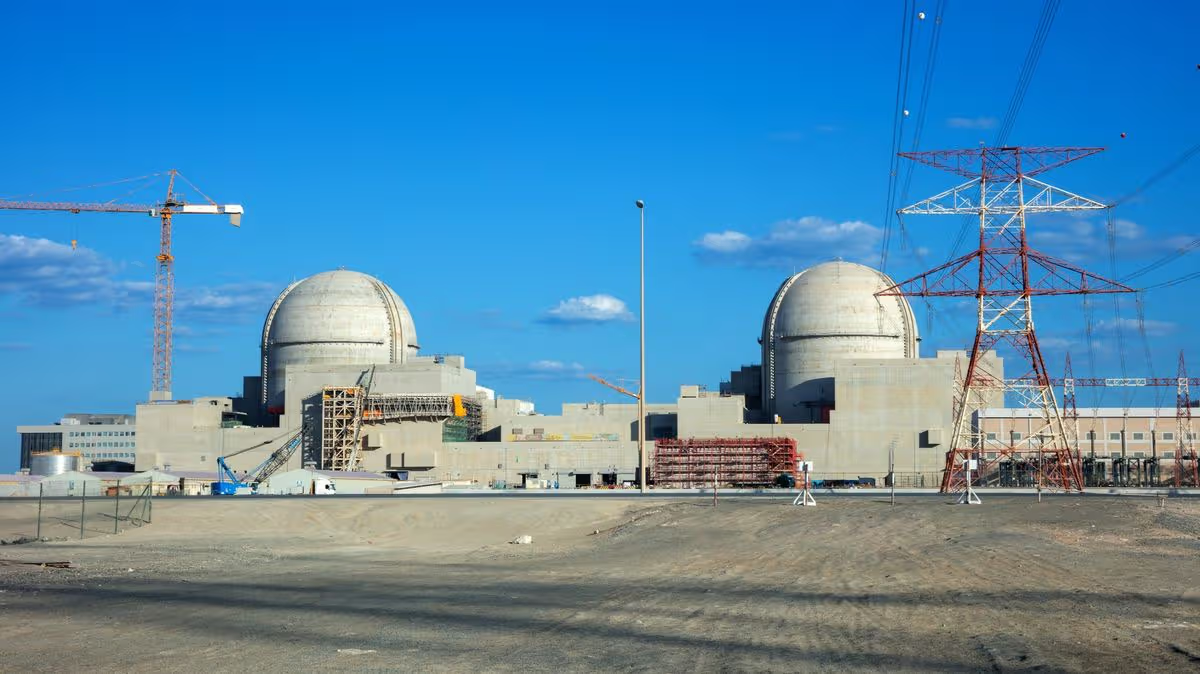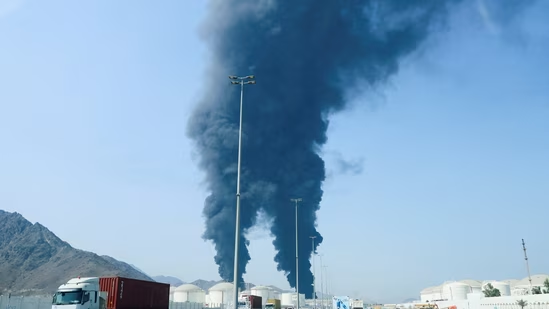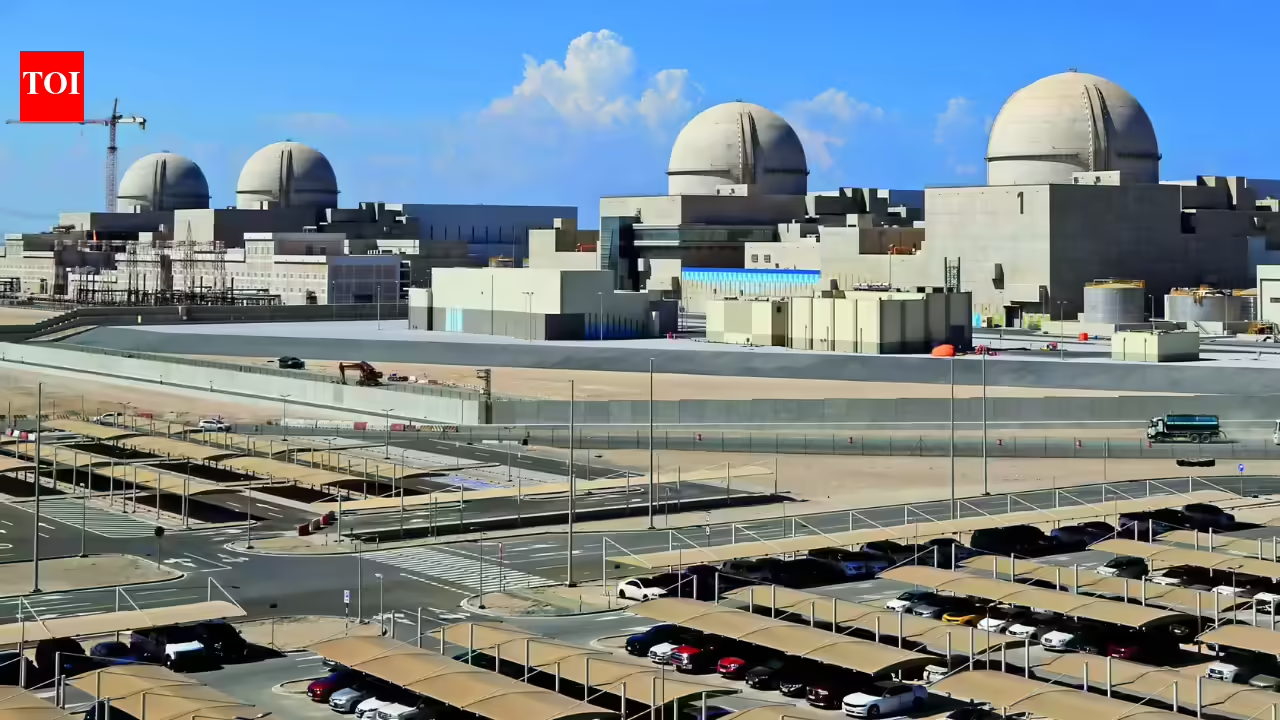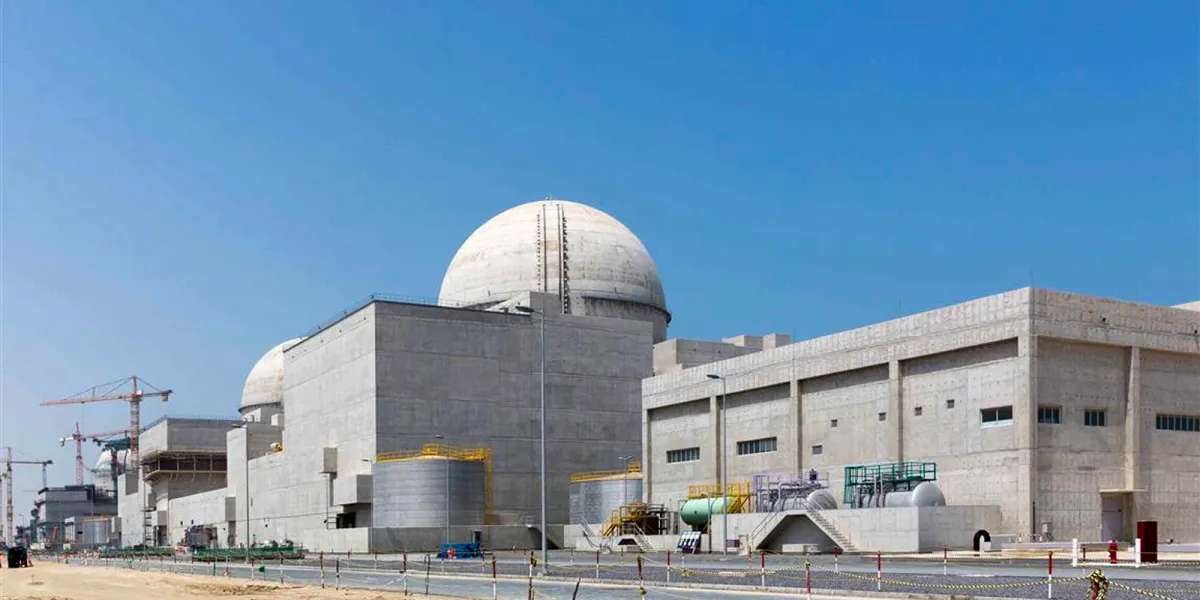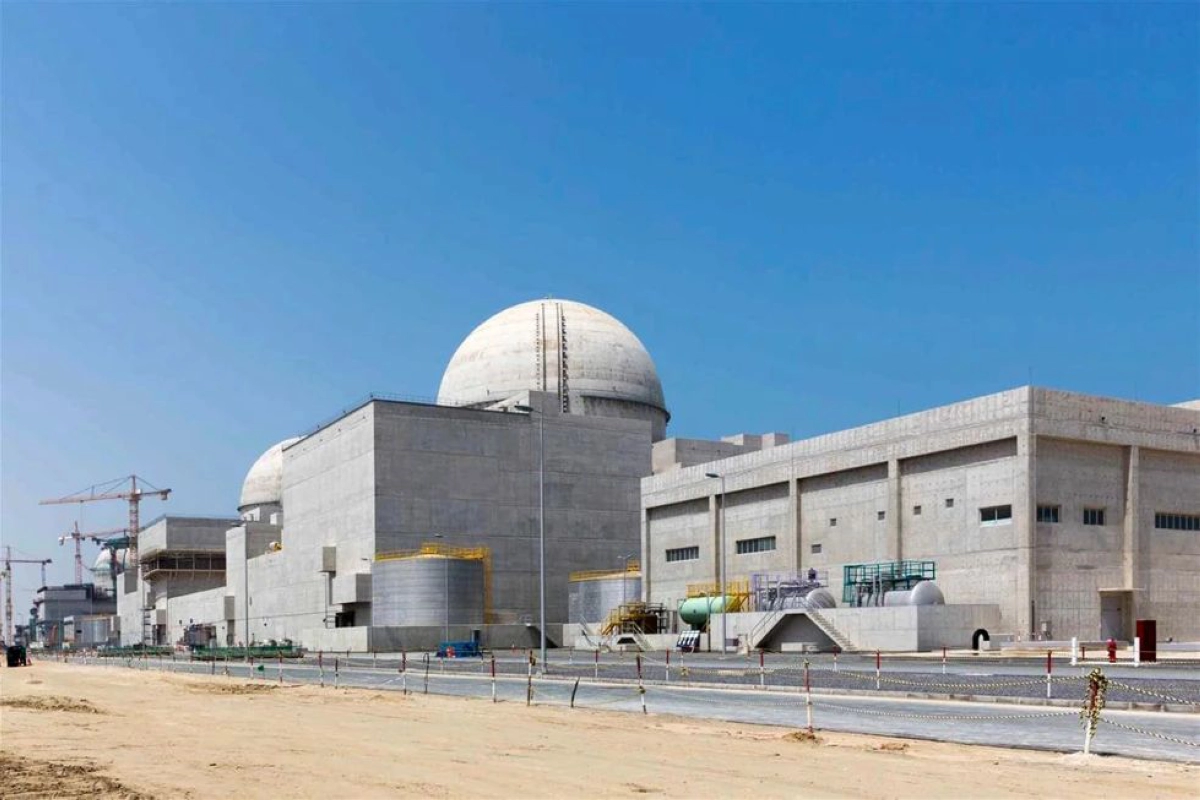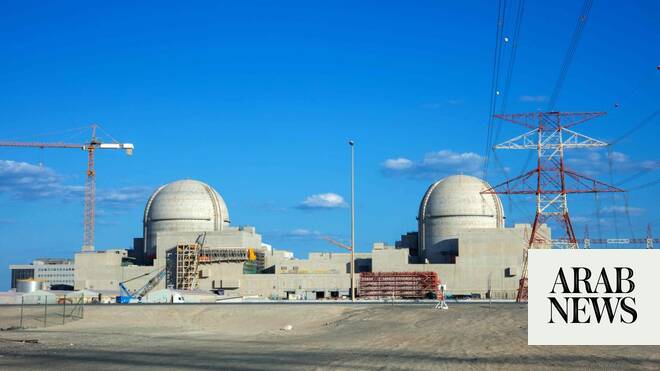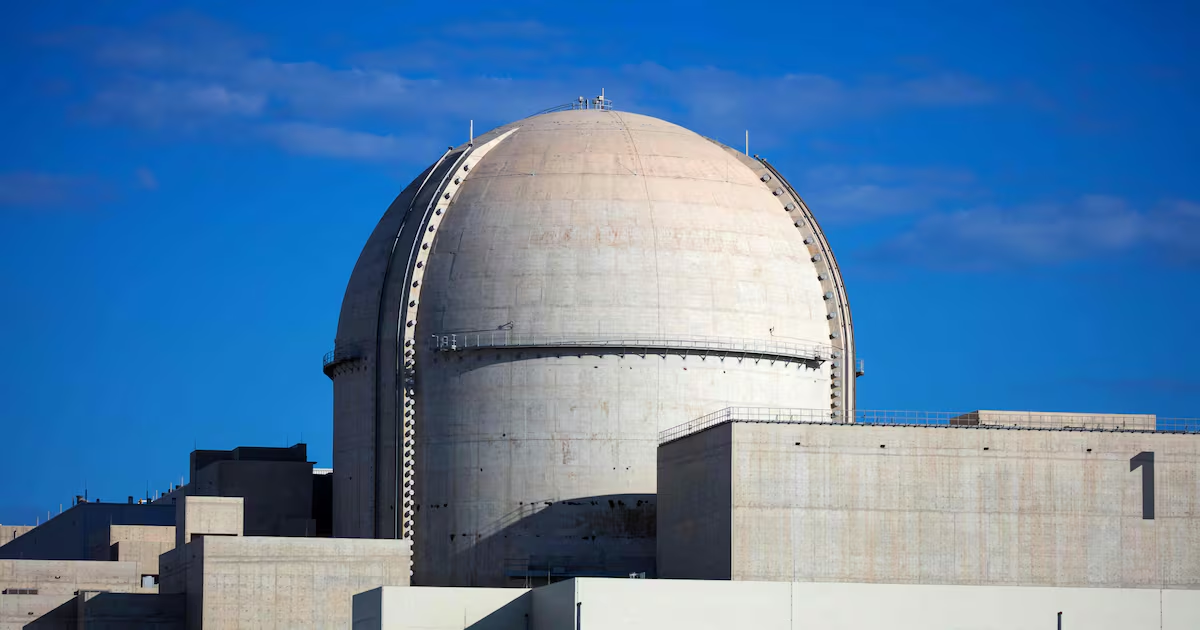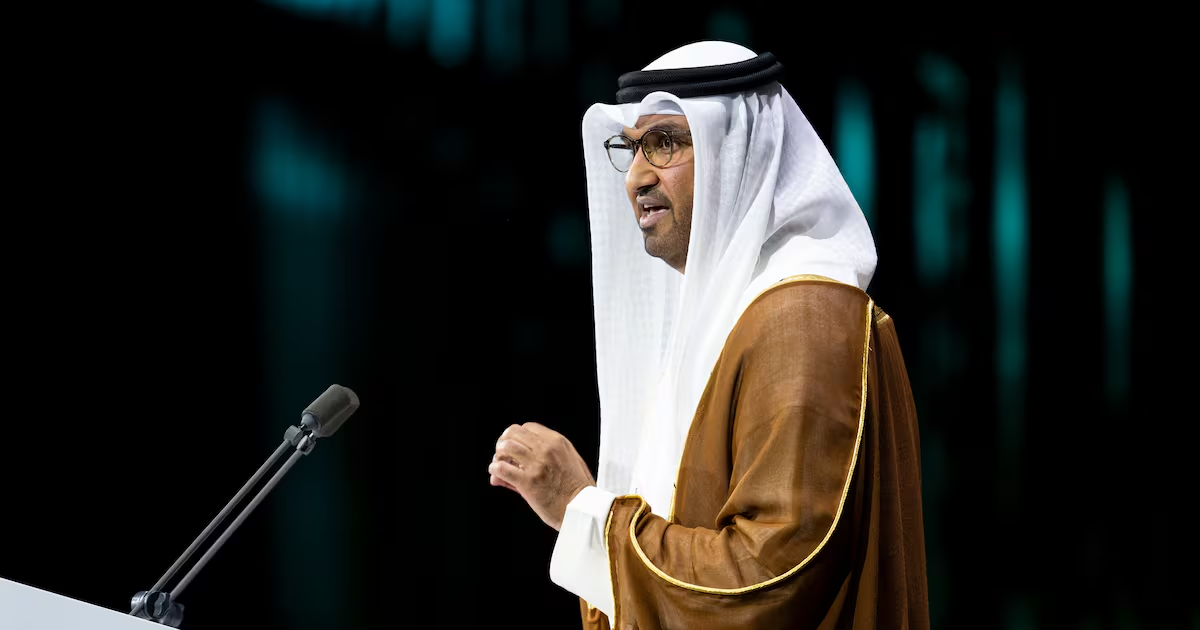
Dr Sultan Al Jaber, Minister of Industry and Advanced Technology, on Wednesday said a drone strike on the Barakah Nuclear Energy Plant in Abu Dhabi was a “dangerous escalation”.UAE authorities said the attack on Sunday that caused a fire near the nuclear plant was launched from Iraqi territory, while two other drones intercepted that day also originated from Iraq. No injuries were reported and no radiation was released.“Whether carried our directly or through proxies, this was a terrorist attack and a dangerous escalation,” Dr Al Jaber said during an online discussion with the Atlantic Council in Washington. “It showed a clear disregard for civilian lives in the UAE and across the region."Barakah is the only nuclear power plant in the Arab world. It provides uninterrupted access to clean energy, which is seen as crucial to decarbonising the UAE's industrial sector.The $20 billion, 5.6GW plant provides about one quarter of the UAE's electricity needs. The reactor's final unit was added to the grid in 2024.During an emergency UN Security Council session on Tuesday, UAE ambassador Mohamed Abushahab said the drone attack sought to undermine the country's sovereignty, security and territorial integrity.Play01:15UN Security Council condemns attack on UAE nuclear plantRafael Grossi, director general of the UN's nuclear watchdog, on Wednesday told the chamber that any attack on the site would carry significant consequences. “I want to make it absolutely and completely clear, in case of an attack on the Barakah nuclear power plant, a direct hit could result in a very high release of radioactivity to the environment,” he said.The UAE has faced more than 3,000 missiles and drones since the Iran war broke out – more than any other country in the region. Dr Al Jaber, who is also managing director and group chief executive of Adnoc, said the company's facilities were among the targets of the attacks, “but this is exactly the kind of scenario our systems have been tested to withstand”. 'Everything problem' in Strait of HormuzDr Al Jaber said that, if that conflict ended tomorrow, it could take at least four months to return to 80 per cent of energy flows recorded before the war, and that full flows may not return until the first or second quarter of 2027.His warning comes as traffic remains at a standstill in the Strait of Hormuz, a vital waterway through which about one fifth of global oil supplies normally passes. More than one billion barrels of crude oil have been lost owing to Iran's stranglehold on the strait, while about 100 million barrels are projected to be lost each week. The closure has also affected flows of liquefied natural gas, fertilisers, helium, critical minerals and ammonia.Brent crude has surged more than 40 per cent since the war began, leading the International Monetary Fund to downgrade its global economic forecast this year. It also issued a warning of more profound economic consequences the longer the conflict persists.“Hormuz … is not just an oil story, it is in fact an everything story,” Dr Al Jaber said. He added that the closure showed global energy supplies move through too few chokepoints.He also pointed towards the UAE's construction of the West-East pipeline. Dr Al Jaber said the project was nearly 50 per cent complete and that the UAE was accelerating its delivery towards 2027.However, he said global spare capacity should be closer to five million barrels per day compared with its current level of about three million bpd. “As a sector and as an industry, we are dangerously underinvested,” he said.UAE-US investment tiesDr Al Jaber also touted the UAE-US relationship, pointing to the $1 trillion the Emirates has already invested in America. Adnoc, XRG and Masdar all have investments in the US, which Dr Al Jaber said remained an important destination because of its infrastructure, capital markets and pro-investment regulation.The UAE has previously said it is doubling down on a $1.4 trillion investment framework announced in 2025 that focuses on artificial intelligence, energy manufacturing and critical infrastructure. “The UAE and the United States are not just trading partners, we are co-investors in the economy of the next century,” Dr Al Jaber said.Yousef Al Otaiba, Minister of State and the UAE's ambassador to the US, this month said the Emirates received its first shipment of Nvidia's advanced chips, after President Donald Trump's administration authorised an export licence last year.Earlier that year, during Mr Trump's visit to the UAE, plans for a 5GW UAE-US AI Campus were announced. The UAE also joined the US-led Pax Silica bloc in January this year, with the group aiming to protect AI-related supply chains.“This is no longer just a technology conversation. It is an energy infrastructure capital and competitiveness conversation,” Dr Al Jaber said.
Barakah drone attack showed 'clear disregard for civilian lives', Dr Al Jaber says | The National
UAE minister warns it will take at least four months for world to return to 80% of prewar energy flows
783 words~4 min read