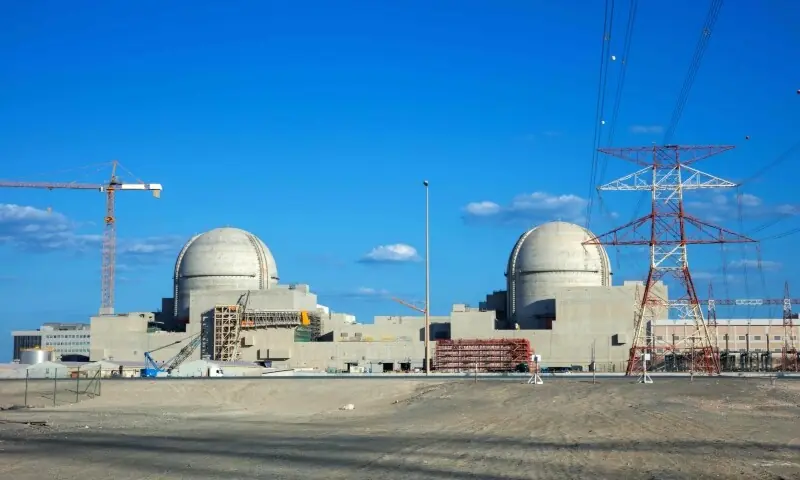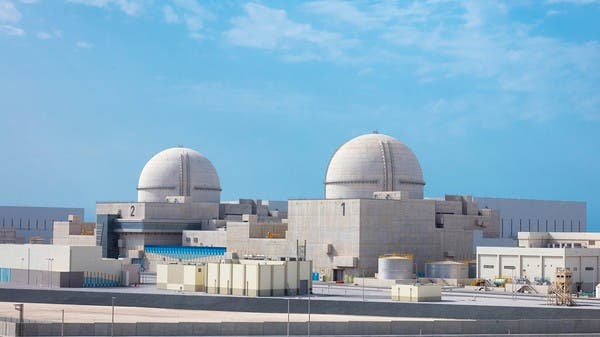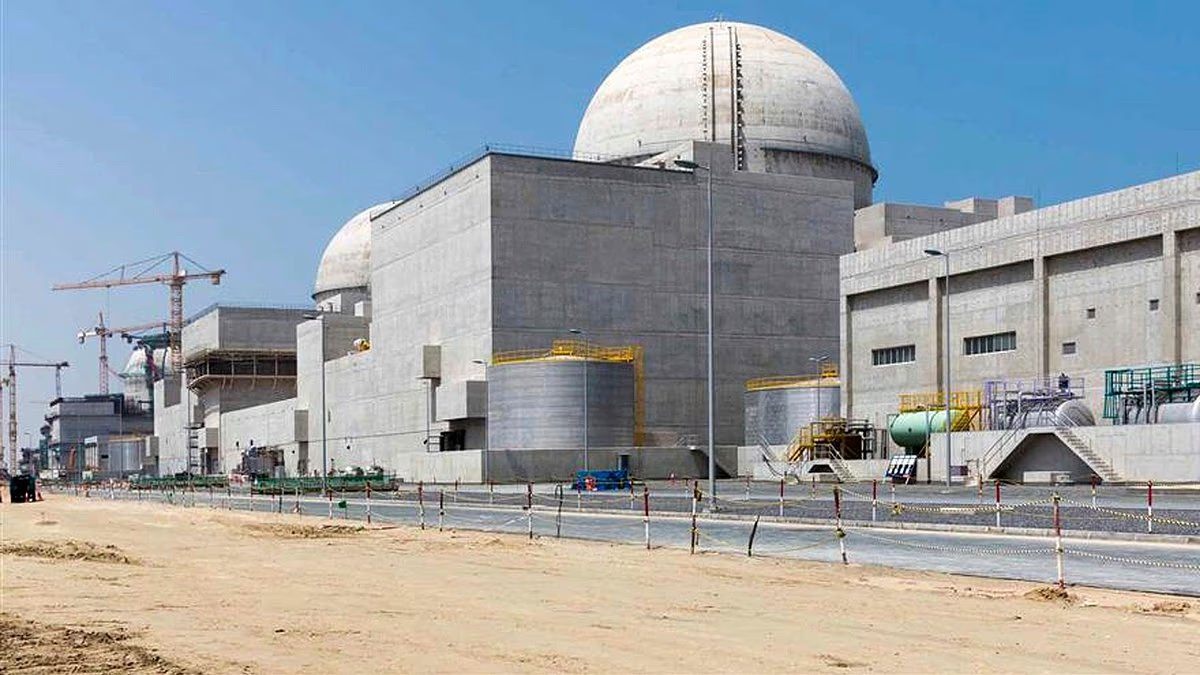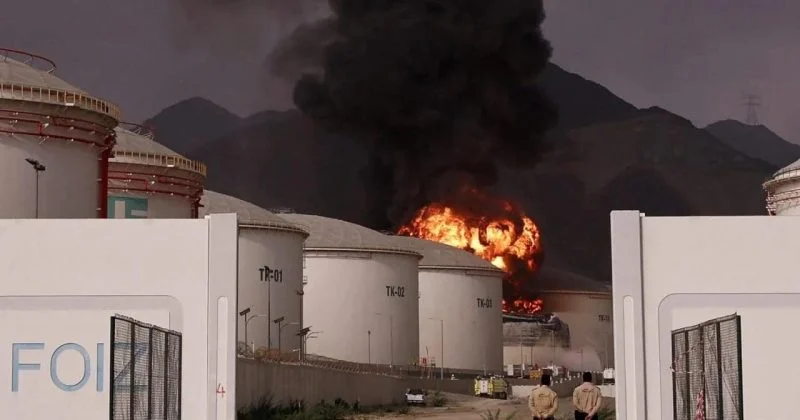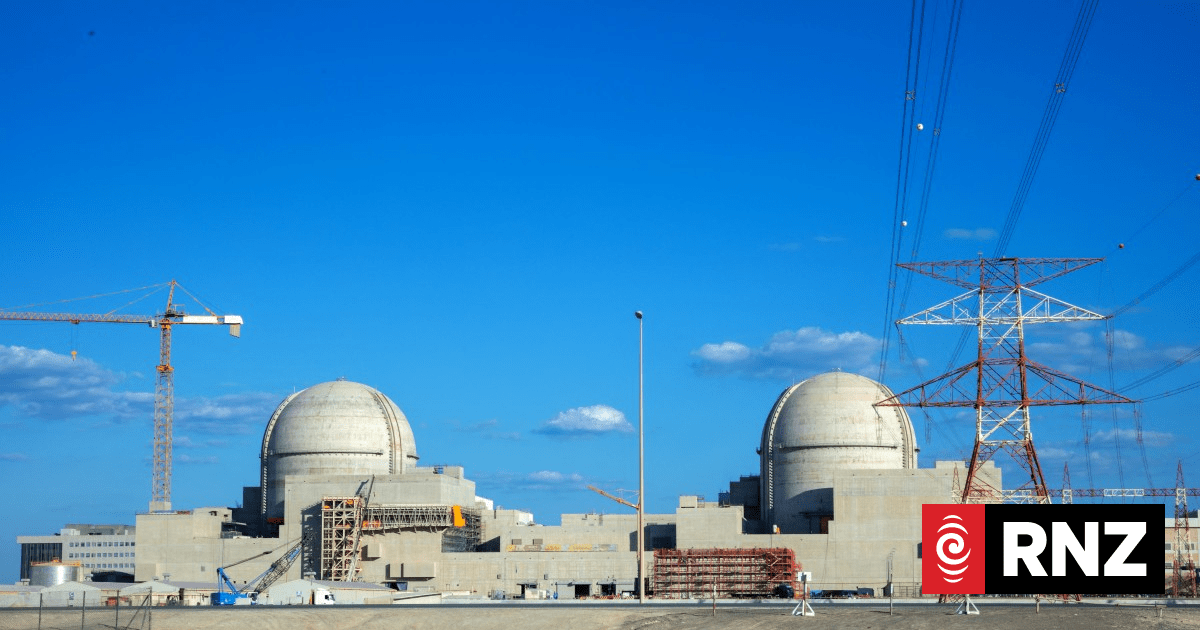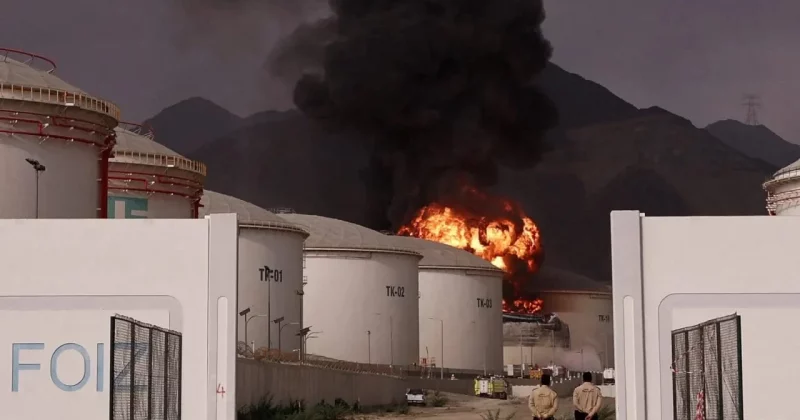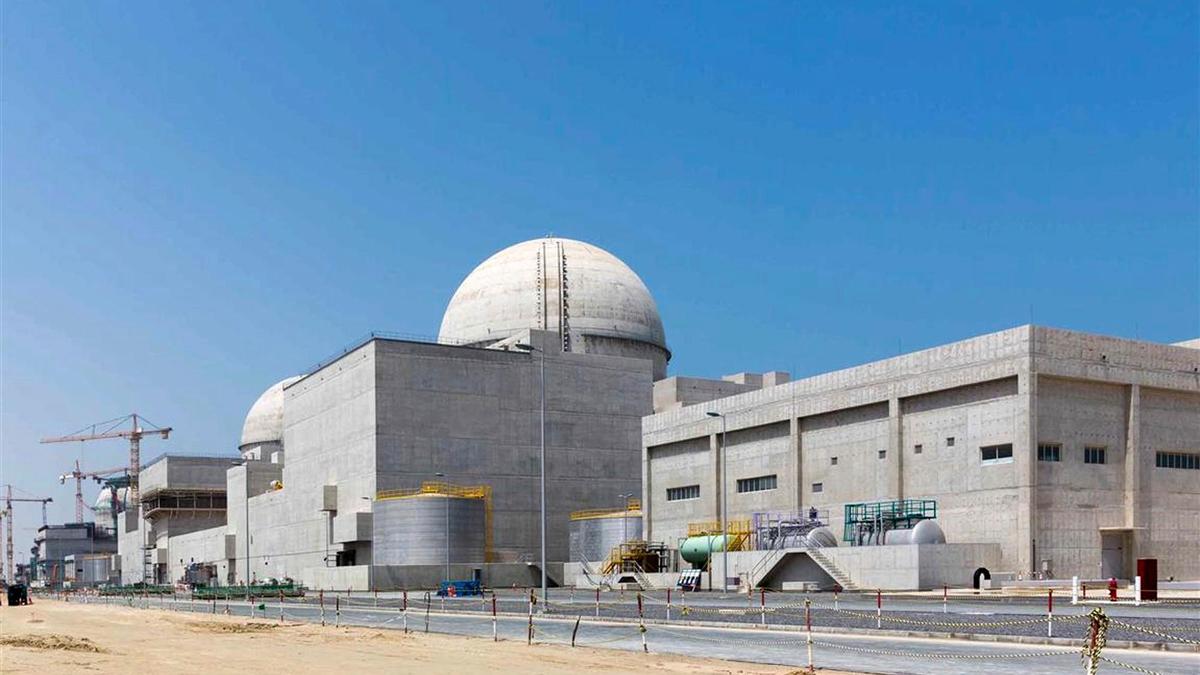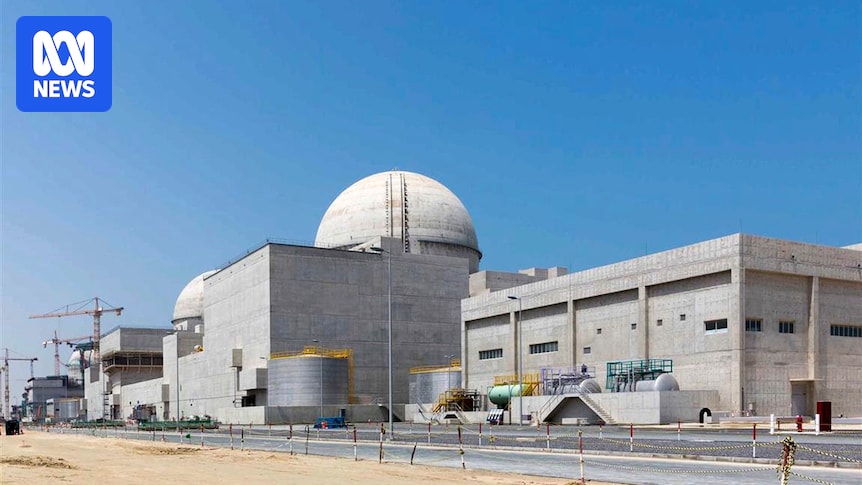
The UAE's defence ministry says it is working to determine the source of a drone attack that hit a generator outside the Barakah nuclear power plant in Abu Dhabi. The ministry said it dealt "successfully" with two drones, while a third hit a generator near the plant. It said the drones were launched from the "western border", without providing further details. The country's Foreign Ministry described the incident as a "dangerous escalation", but stopped short of naming any state as being responsible. "The UAE emphasised that it will not tolerate any threat to its security and sovereignty under any circumstances," the Foreign Ministry statement said.Emirati officials did not attribute blame for the attack and there were no immediate claims of responsibility. The UAE has previously accused Iran of attacking its energy targets in what it has called an escalation of the conflict in the region.The drone hit an electrical generator outside the inner perimeter of the Barakah Nuclear Power Plant, the Abu Dhabi Media Office said. Radiological safety levels and operations were unaffected and there were no injuries, it said.The International Atomic Energy Agency said it was following the situation closely.During the war that began with US and Israeli strikes against Iran on February 28, Iran has repeatedly targeted the UAE and other Gulf states that host American military bases, hitting sites that include civilian and energy infrastructure.Iran stepped up such attacks on the UAE this month after US President Donald Trump announced a naval mission to try to open the Strait of Hormuz, which Mr Trump suspended after 48 hours.Diplomatic deadlockMore than five weeks after a tenuous ceasefire in the conflict took effect, US and Iranian demands remain far apart despite diplomatic efforts to end the war and reopen the strait, the world's most important shipping route for oil and gas.Washington has called for Tehran to dismantle its nuclear program and lift its hold on the strait. Iran has demanded compensation for war damage, an end to a US blockade of Iranian ports and a halt to fighting on all fronts, including in Lebanon, where Israel is battling Iran-backed Hezbollah.Donald Trump and Xi Jinping discussed the Iran war during the US president's visit to Beijing. (Reuters: Evan Vucci)Mr Trump, who held talks with Chinese President Xi Jinping this week without securing an indication from China that it would help resolve the conflict, has threatened to resume attacks if Iran does not agree to a deal.A senior spokesperson for the Iranian armed forces, Abolfazl Shekarchi, said on Sunday, local time, that if Mr Trump's threats were carried out, the US would "face new, aggressive, and surprise scenarios, and sink into a self-made quagmire".Iranian Foreign Ministry spokesperson Esmaeil Baqaei said the US and Israel had tried to shift the blame for destabilising energy markets following their "unprovoked military aggression against Iran".Rival blockadesThe disruption to shipping through the Strait of Hormuz has caused the biggest oil supply crisis in history, pushing up prices. The US has imposed its own blockade of Iranian ports.Ebrahim Azizi, who heads the Iranian parliament's national security committee, said over the weekend that Tehran had prepared a mechanism to manage traffic through the strait along a designated route that would be unveiled soon.Thousands of Iranians were killed in the US and Israeli air strikes. Thousands more have been killed in Lebanon in fighting between Israel and the Iran-backed group Hezbollah.Israel and Lebanon agreed on Friday to a 45-day extension of a ceasefire there, though the truce has failed to end clashes.Reuters
UAE slams 'dangerous escalation' after drone hits near nuclear plant
Abu Dhabi officials say radiation levels are normal and there was no damage to the plant, but authorities are now working to determine who carried out the attack.
583 words~3 min read