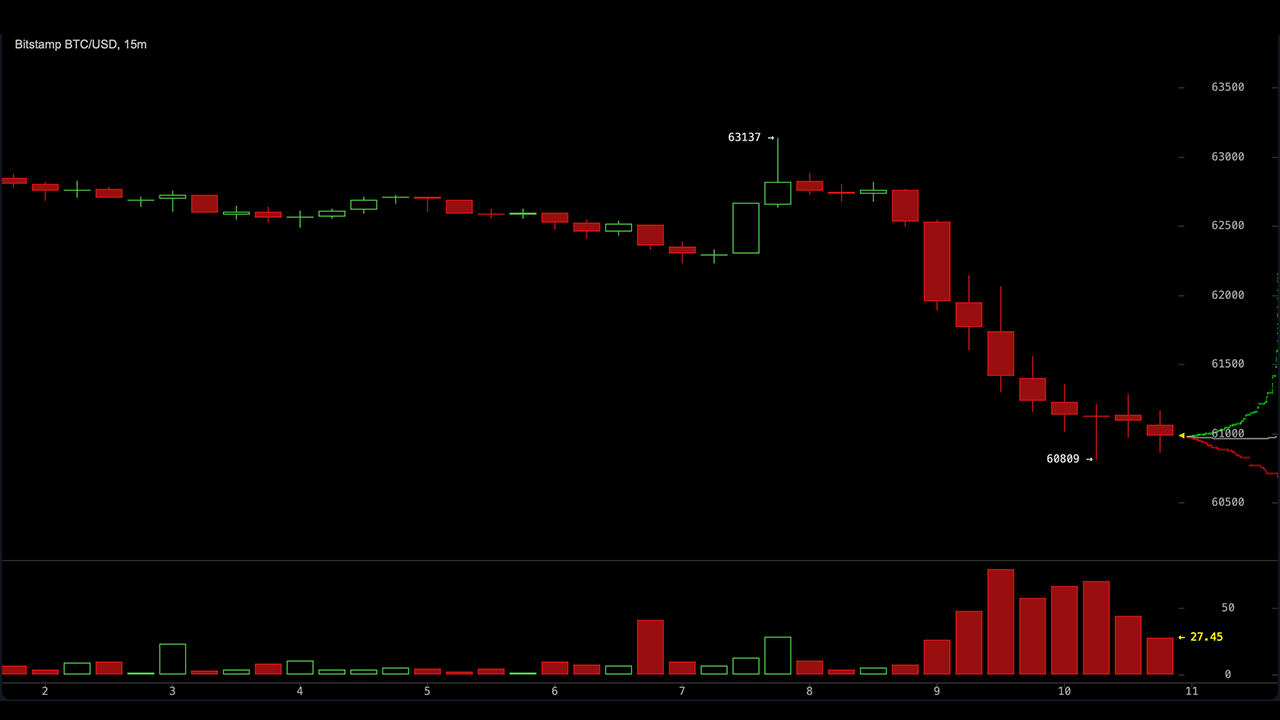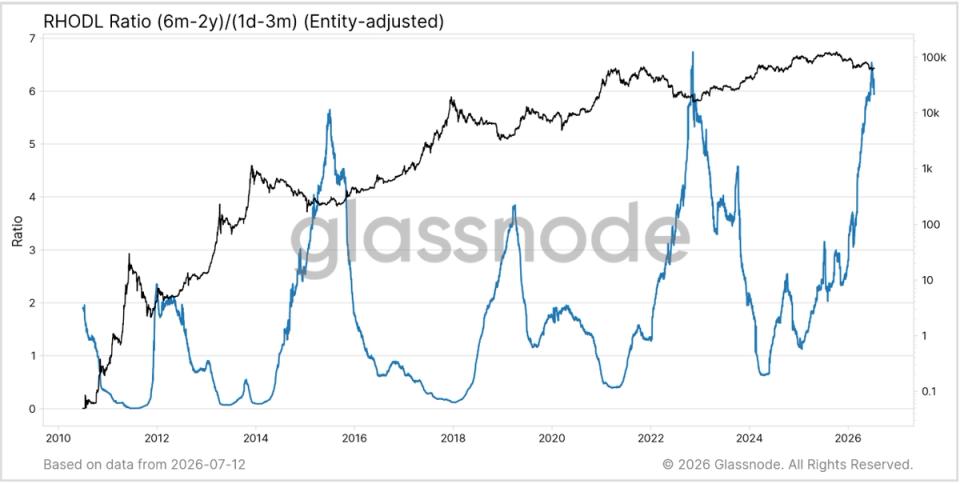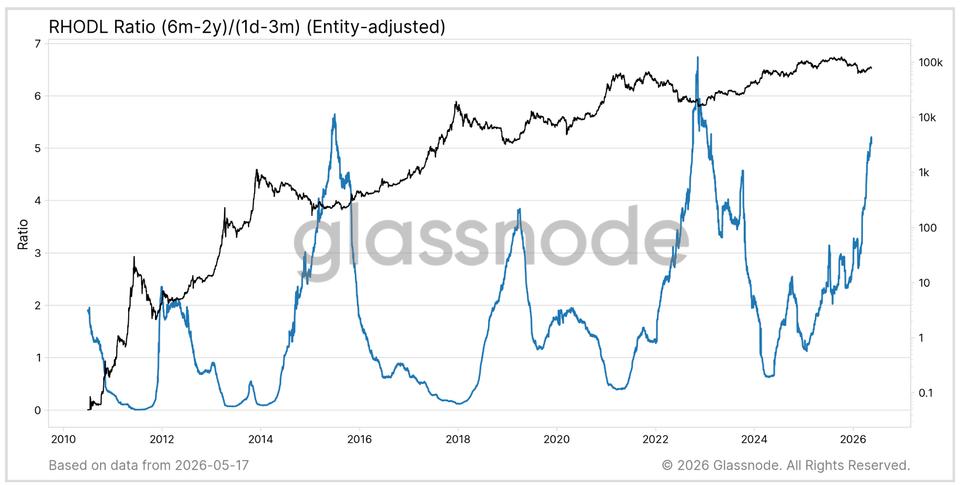
These bitcoin metrics suggest February’s $60,000 selloff may have marked the bottomRealized cap stabilization, historically elevated RHODL readings and deeply negative funding rates all point toward a potential cycle low for bitcoin forming earlier this year. May 20, 2026, 11:57 a.m. 2 min readMake preferred on The biggest question facing bitcoin BTC$77,336.25 investors is whether the market bottom was set in early February, when the largest cryptocurrency briefly fell toward $60,000. While no indicator can assess that with certainty, a number of onchain and derivatives metrics suggest the worst of the current correction may be in the past, especially as bitcoin is now trading back above $77,000.The first metric is Realized Cap, which measures the total value of bitcoin based on the price each coin last moved onchain. It differs from market capitalization, which is based on the current market price, and reflects the aggregate cost basis of investors. It is often used to track capital entering or leaving the network. Realized cap peaked near $1.12 trillion before falling to roughly $1.08 trillion as bitcoin declined more than 50% from its October record high. That's a significant wealth destruction, one of the largest on record. However, the metric has now begun stabilizing and forming a base, similar to the pattern seen during lows of the 2022 bear market.The Realized Cap (Checkonchain)The second metric is the RHODL Ratio, which compares wealth held by longer-term holders (six months to two years) with newer market participants (one day to three months). The ratio is now above 5, its third-highest reading on record. The only higher readings occurred during the 2015 and 2022 cycle bottoms. This suggests long-term holders continue to dominate supply. Since February, long-term holder supply has increased by over 400,000 BTC. Finally, perpetual futures funding rates, the payments exchanged between long and short traders to keep futures prices aligned with spot markets, remained negative for one of the longest periods on record between February and May. Historically, sustained negative funding reflects extreme bearish sentiment and overcrowded short positioning, conditions that often form market bottoms as selling pressure becomes exhausted. Similar setups occurred during the Silicon Valley Bank crisis in March 2023, the yen carry unwind in August 2024, and the tariff-driven selloff in April 2025, all of which ultimately marked major bitcoin lows.Perpetual Funding Rates (Checkonchain)More For YouA Seoul-based funeral services firm disclosed tens of millions of dollars in unrealized losses tied to leveraged ether ETF investments.What to know: A South Korean funeral company disclosed a roughly $33 million unrealized loss tied to a leveraged crypto-related ETF. The firm invested in the T-REX 2X Long BMNR Daily Target ETF (BMNU), which targets 200% of BitMine Immersion Technologies’ daily performance. The disclosure highlights rising appetite among South Korean investors for...Read full story
Onchain data and funding rates indicate bitcoin’s worst correction phase could be over
Realized cap stabilization, historically elevated RHODL readings and deeply negative funding rates all point toward a potential cycle low for bitcoin forming earlier this year.
460 words~2 min read