The current macroeconomic climate is characterised by a policy dualism that has become pronounced in recent years. On the one hand, the government, led by the Prime Minister, has continued to place a high priority on austerity-oriented macroeconomic management and fiscal consolidation. This includes adhering to the FRBM framework, giving deficit reduction top priority, and carefully increasing revenue expenditure. However, the government has also made an effort to promote private investment through policies such as tax breaks, infrastructure investments, manufacturing incentives, and improved bank balance sheets. Nevertheless, these two strategies are not entirely compatible. Policies aim to increase investment, but the economy’s total demand is still low, so private businesses don’t perceive enough incentive to increase production.Policymakers have frequently expressed bewilderment over lack of investment intent. They wonder why private investment is not picking up despite many supportive measures like tax reductions, improved banking conditions, and government spending on infrastructure. The reason is often seen as a gap between expectations and reality: policy assumes investment will rise because conditions are improved, but in reality investment depends mainly on whether there is enough demand in the market.Private investment is not autonomous. Above all, it reacts to anticipated demand, which is captured by the degree of capacity utilisation — the ratio of actual to potential output. Private businesses face a simple calculation: if macroeconomic demand is stagnant, it would not be profitable to increase future production capacity, regardless of the stability of the regulatory environment. The evidence indicates that this seems to be the case in India.Decline in PFCEPrivate Final Consumption Expenditure (PFCE) has declined from 61 per cent of GDP (at current prices) in the 2011-12 series to around 57 per cent during FY23-FY25 at constant prices, according to the most recent GDP series with base year 2022–2023. The PFCE-to-GDP ratio at constant prices was 56.4 per cent in 2023–2024 and further declined to 55.7 per cent in 2024–2025, according to official MoSPI projections. This is a structural compression of the consumer base that serves as the foundation for the overall investment calculation, not a marginal fluctuation.Moreover India’s dollar-denominated economic growth looks weak once both GDP revision and currency depreciation are taken into account. Because the rupee has fallen from about ₹80 to ₹88 per US dollar (from 2022-23 to 2025-26), along with a downward revision in nominal GDP, the size of the Indian economy in dollar terms has increased only modestly — from $3.24 trillion in 2022–23 to $3.93 trillion in 2025–26. This means that in four years, the economy has expanded by just about $0.69 trillion, indicating slow progress.India’s labour market reveals a deeper problem beneath weak investment trends. Around 82 per cent of workers are in the informal sector, and nearly 90 per cent are informally employed. Recent data from the Labour Bureau and NSSO show that real wages have barely grown over the past decade. Economists Paaritosh Das and Jean Drèze, using rural wage data, find that real wage growth has been almost zero. Meanwhile, PLFS data indicate that salaried workers’ real wages in mid-2024 were still below their 2019 levels. Evidence from datasets like the PLFS and WRRI, analysed by economists such as Jean Drèze and Paaritosh Das, shows that real wages, especially in rural and informal work, have grown very slowly or even declined in recent years. This suggests that the informal sector, which employs the majority of workers, has experienced near-zero growth.Divergence in growthIn contrast, the formal sector, reflected in corporate data, has shown steady growth of around 6–8 per cent. When GDP is estimated by assuming that the informal sector grows at a similar rate as the formal sector, it creates an upward bias. A simple approximation shows that if the formal sector grows at 7 per cent and the informal sector at 0 per cent, actual GDP growth may be around 4–5 per cent. But if both are assumed to grow at 7 per cent, GDP growth appears much higher. Divergence between a fast-growing formal sector and a stagnant informal sector can lead to an overestimation of GDP, making the economy look stronger on paper than it is in reality. The new GDP series attempts to correct this issue.When a majority of people see little or no income growth, overall consumption demand weakens. This reduces the effectiveness of consumption as a driver of economic growth. By late 2024, this slowdown became visible in markets, with declining sales across sectors, including automobiles and everyday consumer goods. Since investment depends on demand, businesses hesitate to invest when consumption remains subdued. But what about other components of demand?The government has leaned heavily on public capital expenditure on infrastructure to try to stimulate output. The government’s infrastructure budgetary allocation more than tripled from roughly ₹3 trillion in FY2019 to ₹10 trillion by FY2024. However, given that the Fiscal Responsibility and Budget Management (FRBM) Act broadly binds public spending, this increase in public capital expenditure has been more or less matched by a decline in public consumption expenditure.The net demand-stimulating effects of this change in the composition of public expenditure have been muted. Moreover, the government’s public capital allocation tends to exaggerate the magnitude of public investment. A significant portion of this allocation goes towards loans, financial support to States, and funding non-investment activities of public sector companies, none of which directly enhance production capacity. When these are excluded, the resulting magnitude of effective investment is much smaller and has even declined relative to GDP.Challenging export environmentThe current fraught conditions in international political economy make an increase in net exports more challenging than before unless there are significant changes in India’s strategic direction. India’s net export situation is worsening, with exports increasing by 4.22 per cent to $860 billion in FY 2025-26, while imports surged 6.47 per cent to approximately $970 billion, leading to a trade deficit of $119.30 billion — up from $94.66 billion the previous year. However, positive net exports of services partly offsets the larger net imports in goods.There remain concerns about the impact of artificial intelligence on the trajectory of net exports of services in the future. Recent data indicates a decrease in the merchandise trade deficit to $20.67 billion in March 2026 from $27.1 billion the previous month, but the outlook remains precarious due to international political economy tensions in West Asia affecting shipping routes. Without significant improvements in manufacturing capacity, export diversification, and trade diversification, India’s trade deficit is expected to broaden further.Could monetary policy easing through a cut in the rate of interest stimulate private investment? After all, medium, small and micro enterprises (MSMEs) are constrained by both demand and credit. Typically policy interest rates in India are linked to policy interest rates in the US, leaving only limited room for discretionary change in monetary policy. Moreover, in a macroeconomic environment where the degree of capacity utilisation is expected to stagnate or fall, a cut in interest rates may not be sufficient to adequately stimulate private investment even for MSMEs.What about other measures to stimulate private investment? In 2019, the government implemented significant corporate tax cuts, reducing the base tax rate from 30 per cent to 22 per cent for existing companies and to 15 per cent for new manufacturing firms, aiming to stimulate private investment. However, despite the expectation of increased business sentiment, the anticipated investment boom did not materialise.Instead, private companies used the increase in post-tax savings to pay down debt rather than expand production capacity. Data from the Reserve Bank of India indicates a decrease in the private sector investment-to-GDP ratio from 28 per cent in 2011–12 to 21.1 per cent in 2022–23. This trend reflects cautious corporate behaviour influenced by a demand-constrained environment, wherein the reduction in capital costs by itself did not trigger new investment without a justifiable increase in revenues. Given that the government is broadly constrained by the FRBM Act, its capacity for further tax reductions seems limited, leaving policymakers in a challenging position.To revive private investment, policymakers must act to loosen the demand constraint. First, there must be an improvement in mass consumption driven by better rural incomes, job creation, and a less unequal income distribution. Second, an increase in net exports will require a calibrated integration with regional production networks. Third, public expenditure needs to be determined by a well-thought-out industrial strategy. Ultimately, investment will not recover without a substantial demand revival, underlining the need for structural policy changes.Trishna is Assistant Professor, Dept of Economics, Dr Bhim Rao Ambedkar College, University of Delhi. Saratchand is Professor, Dept of Economics, Satyawati College, University of DelhiPublished on May 20, 2026
Investment affected by lack of demand
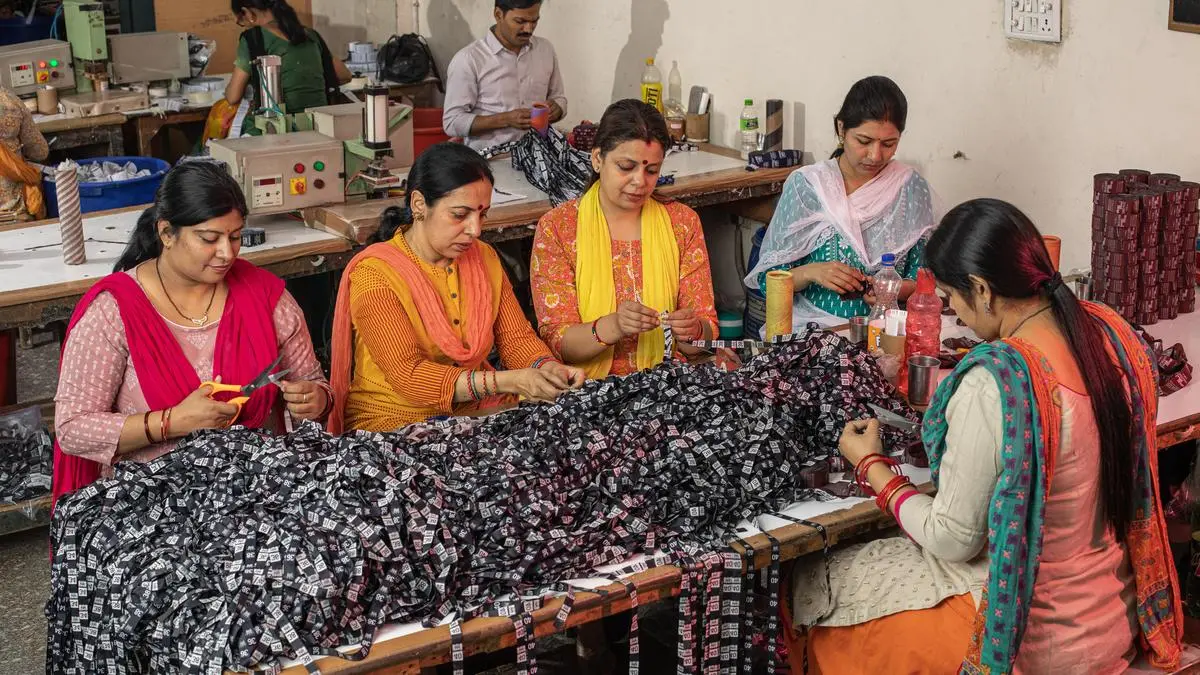
To revive private investment, policymakers must act to improve mass consumption, and public expenditure needs to be determined by a well-thought-out industrial strategy
1,427 words~6 min read