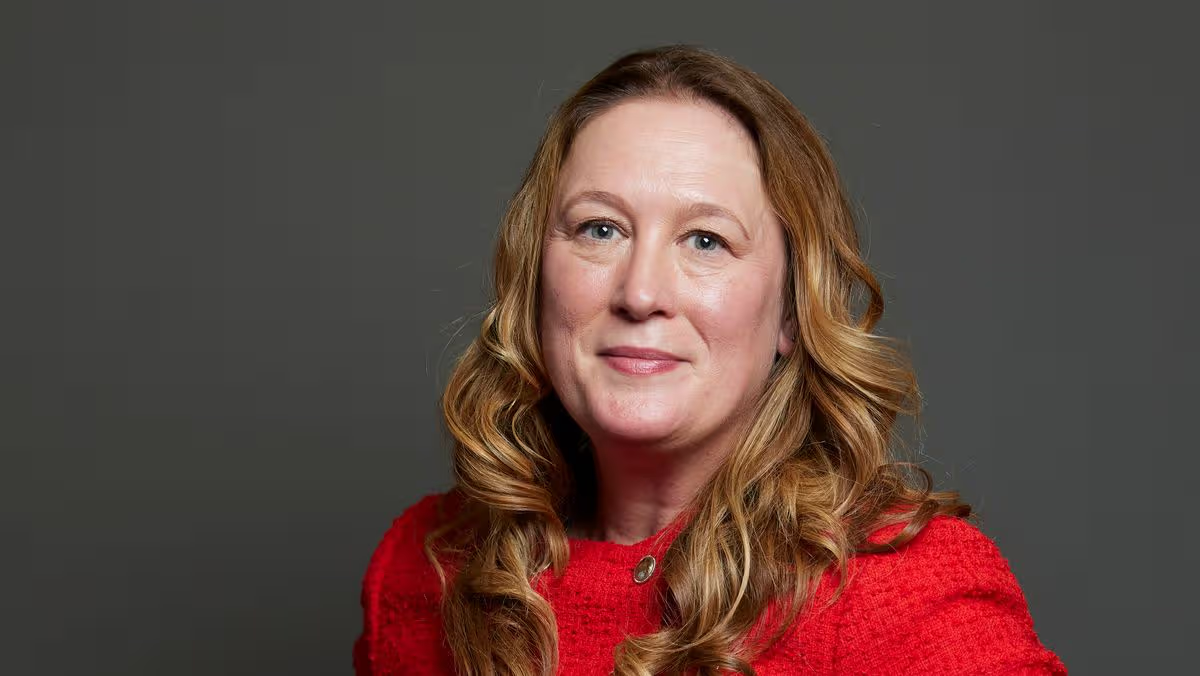
Social media companies are accused of 'shadow banning' women's health posts on Facebook and Instagram as Emily Darlington says Big Tech 'must explain why this is happening'MPs are expected to debate the role of social media giants in censoring content relating to women's health today (May 20). Platforms such as Facebook and Instagram stand are accused of removing posts on menstrual and sexual health after wrongly classifying it as 'adult content' - a practice often described as 'shadow banning'.The censorship spans from blocking specific terms connected to women's health to rejecting paid-for advertisements focused on periods and menopause.Emily Darlington, Labour MP for Milton Keynes Central, branded it 'shameful' and intends to lead a backbench business debate on the matter today. This follows hygiene and health firm Essity urging the government and social media companies to establish clear ownership and accountability on the issue."It is shameful that legitimate women's health content is still being hidden, restricted or deprioritised by big tech," Darlington said."This debate will examine growing evidence from Essity and other campaigners showing that content relating to menstruation, fertility, menopause and vaginal health continues to be unfairly censored on social media platforms."Big tech companies must explain why this is happening and what action they are taking to stop women and girls being unfairly silenced online."Evidence gathered by Essity which has brands including Bodyform, TENA and Modibodi, showed women's health topics are more than three times more likely to be suppressed on social media than men's.In a pilot study, social media influencer Aly Boghici, known online as allmumstalk, posted about menopause, pain during sex and vaginal dryness, and found those posts reached 66% fewer non-followers than her usual Instagram content.By contrast, when her husband Justin, who posts as alldadstalk, shared content on men's health issues such as erectile dysfunction and testosterone imbalance, the drop was just 16%.The study found engagement rates between the influencer's posts were significantly different, with Aly receiving a massive drop in comments by 69%, whereas Justin received an uptick by 76% as both followers and non-followers expressed real interest in men's health topics.Additional posts during the experiment by Aly focussed on periods, heavy bleeding and endometriosis - which saw 25% less views. Justin posted about taboo topics such as pain in your testicles, weird discharge and thrush and saw a massive surge, with 34% more non-followers viewing the content compared to his other activity.Essity has also experienced shadow banning with its brand Bodyform, which had its Vaginas Uncensored campaign blocked 22 times in one month across X, Instagram, Facebook and TikTok.Content was inaccurately labelled as 'sexual' despite using proper anatomical words. This included an advert using the words 'menstrual cycle', featuring the image of a sanitary towel and blood, rejected by Meta which claimed it needed an 18+ warning - despite the fact millions of women under the age of 18 menstruate.Essity has reportedly repeatedly highlighted how educational content on menstruation and vaginal health - including anatomically accurate language and imagery intended to normalise periods - has been restricted, rejected or down-ranked on major platforms.Kate Prince, for Essity, said: "We want to work with social media platforms and the government to find a solution that protects women and girls from online harm, while also ensuring they can speak openly about their bodies and health."The renewed Women's Health Strategy acknowledges misinformation or poor-quality information could be impacting women's health outcomes.Article continues below"But we feel the equally important issue of censorship is still being ignored by the government – and this is having a direct impact on how women are able to source health advice, tips and support."We want there to be more accountability, better alignment and active testing of solutions – including the introduction of cross-government working groups bringing together DSIT, DHSC, DCMS and relevant regulators, to examine how platform moderation practices affect women's access to health information."
Labour MP leads debate on social media 'shadow banning' women's health content
Social media companies are accused of 'shadow banning' women's health posts on Facebook and Instagram as Emily Darlington says Big Tech 'must explain why this is happening'
640 words~3 min read