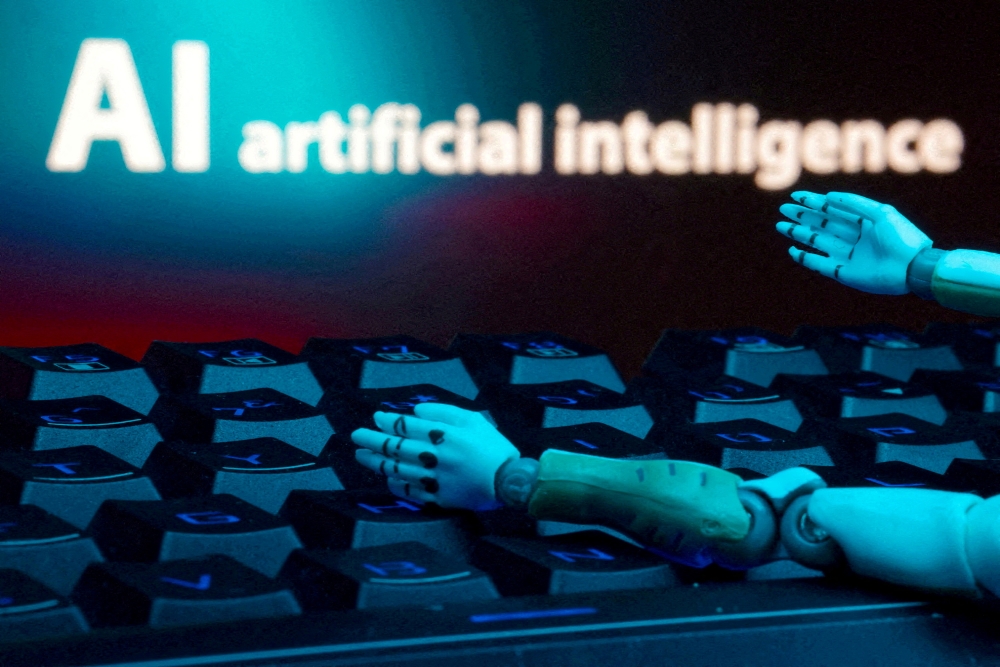
Even as AI reshapes how students learn, work, and understand themselves, a landmark UNESCO report released this month finds that only one in five universities worldwide has a formal policy on artificial intelligence. File Photo by Fazry Ismail/EPA
May 20 (UPI) -- Even as AI reshapes how students learn, work, and understand themselves, a landmark UNESCO report released this month finds that only one in five universities worldwide has a formal policy on artificial intelligence. The finding arrives against a troubling backdrop: according to the World Health Organization's September 2025 update, "World Mental Health Today," more than one billion people are now living with a mental health disorder. The two statistics are not unrelated.
Neither crisis will be resolved through clinical intervention or technological policy alone. Both point to something universities have long undervalued: the humanities.
The report documents how digital platforms increasingly influence attention, desire, identity and human relationships. And yet most universities lack even a governance framework to address the technology reshaping their students.
Therapy and medical treatment remain necessary. But they are not enough. If digital society is helping mold attention, identity, and emotional life, then education, culture and public institutions must also be part of the response. That is where the humanities become essential.