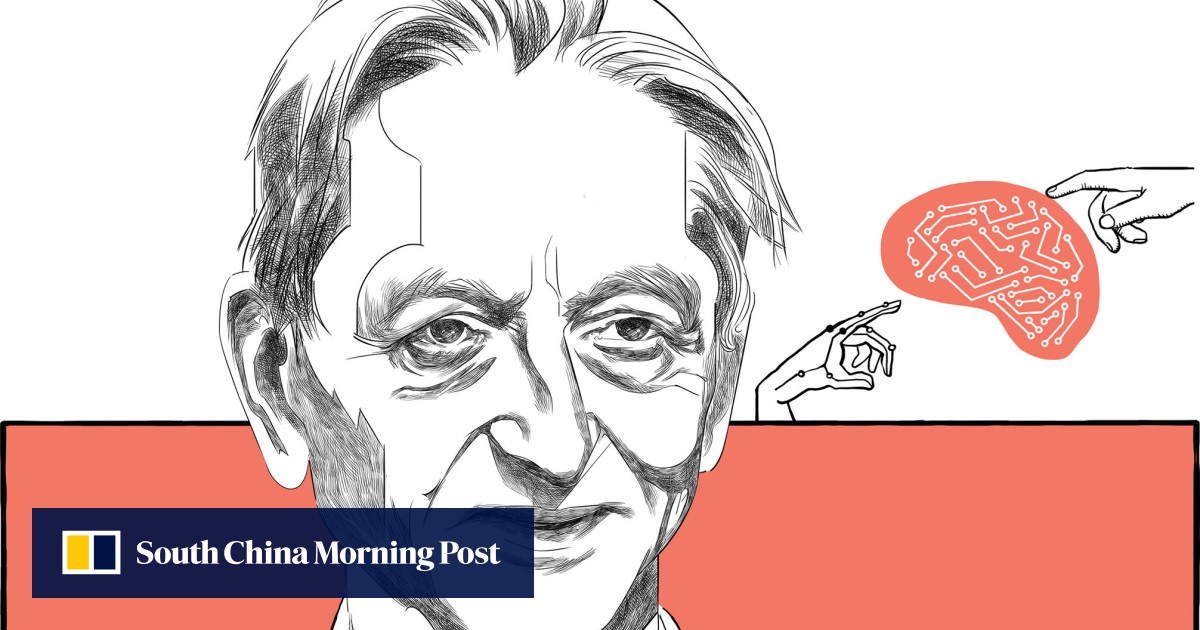
Almost 50 years after he first got his hands on a computer, the Oxford professor still believes in the power of technology. Can his beloved game theory explain why Silicon Valley’s entrepreneurs consistently misuse it?
M
ichael Wooldridge is like the teacher you wish you’d had: approachable, able to explain difficult things in simple terms, neither dauntingly highbrow nor off-puttingly cool, and genuinely enthusiastic about what he does. “I love it when you see the light go on in somebody, when they understand something that they didn’t understand before,” he says. “I find that incredibly gratifying.”
He comes across a regular sort of guy, which, as an Oxford professor with more than 500 scientific articles and 10 books to his name, he clearly isn’t. Typically, his favourite work is his contribution to Ladybird’s Expert Books – an update of the classic children’s series – on artificial intelligence. “I’m very proud of this,” he says, as he hands me a copy from his bookshelf. We’re in his study in the University of Oxford’s somewhat municipal computing department on a sunny spring day. Maybe it’s the campus setting, but our discussion almost takes the form of a seminar.
Wooldridge is an adept public communicator, especially on artificial intelligence – a field he has worked in for more than 30 years, but about which he retains a healthy scepticism. In his 2023 Christmas lectures for the Royal Institution, titled The Truth about AI, he brought in a robotic dog and asked his school-age audience to vote on whether they’d whack it with a baseball bat. And, to explain reinforcement learning, he recreated the classic 80s movie WarGames, in which a young Matthew Broderick averts nuclear catastrophe by getting the US military computer to play noughts and crosses with itself (until it concludes there is no real way to win). “Matthew Broderick was in London at the time. We tried to get him to come on the Christmas lecture, but he couldn’t do it,” says Wooldridge. “So we called our computer BrodeRick in his honour.”