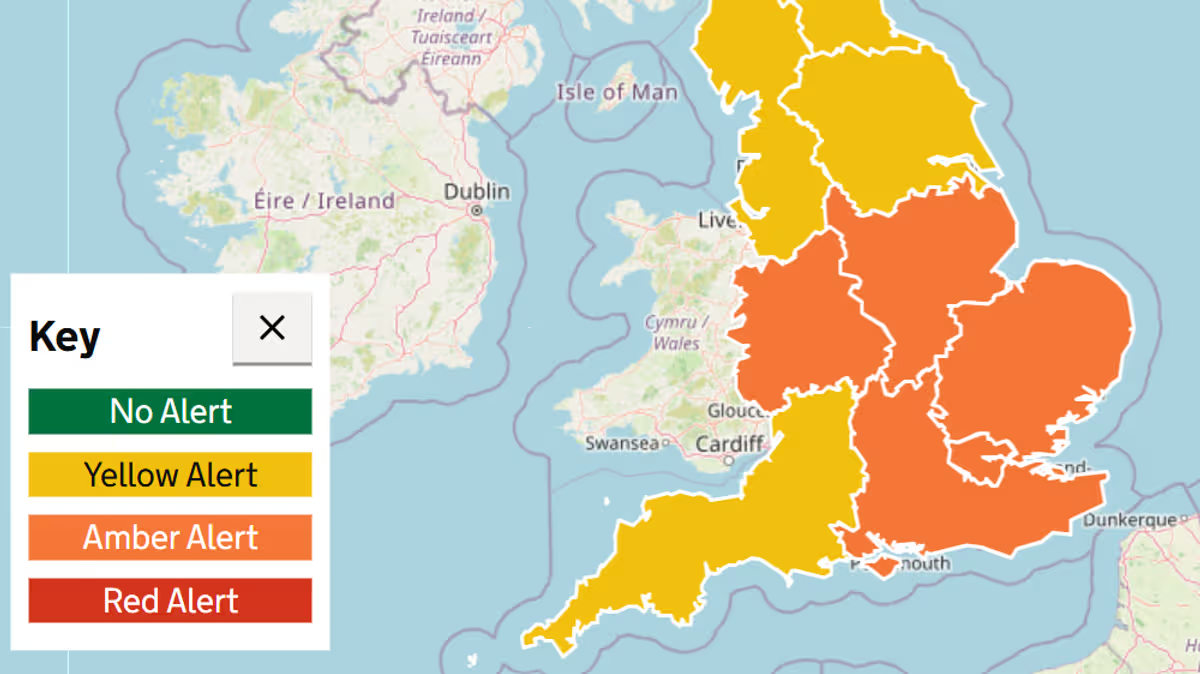
LONDON, ENGLAND - AUGUST 12: Children play with the water fountains located in Leicester Square during a heatwave on August 12, 2025 in London, England. An amber health warning from the Met Office came into force at 0900 today covering the Midlands, South East, East of England, and London. Temperatures are expected to reach 34oC in some parts of the country. (Photo by Ben Montgomery/Getty Images)Getty ImagesThe U.K. Government has been urged to set a national maximum temperature for workplaces to protect workers’ safety during heatwaves, according to a new analysis.The report by the Climate Change Committee (CCC) warns the growing impacts of climate change are affecting every aspect of British life, with the three biggest risks being heat, flooding and drought. It warns 92% of homes are likely to overheat by 2050, and peak river flows will be up to 45% higher and water supply shortfalls could exceed five billion litres per day by the same date. The study calls on the government to introduce maximum working temperature regulations.It says these regulations would address the increasing risks that high temperatures pose to workers’ safety and incentivise the deployment of the necessary cooling. It also calls on ministers to invest in cooling for key public services and argue cooling will be needed in critical settings such as hospitals, schools, prisons, and care homes in many parts of the country to protect wellbeing and often lives. The report states new buildings should also be designed to keep people cool from the outset. “Increasingly extreme and frequent heatwaves are the greatest risk to health in the U.K. from climate change,” the report states.It adds annual heat-related excess deaths in heatwave periods already range from 1,400 to 3,000 in the U.K. each year.And it argues by 2050, this could rise to between 3,000 and 10,000 each year without additional adaptation. MORE FOR YOU“This would mean increased heat-related mortality in all parts of the UK, exacerbated by the UK’s ageing population,” it adds. The report also calls for long‑term investment in measures such as flood defences, effective emergency response, and natural solutions.And it says the U.K. Government should maintain a strong regulatory focus on drought, scale up sustainable water storage, accelerate leakage reduction and cut demand. Committee chair Baroness Brown said being well adapted to climate change is fundamental to securing food, energy and economic security in a statement.Baroness Brown added the solutions already exist, and proven technologies are available now to help the UK adapt effectively. “With the right decisions and actions, we can protect the people and the places we love,” she added. A report published last month warned heat-related deaths are rising across Europe. Responding to the report, the general secretary of the Trades Union Congress (TUC), Paul Nowak said new laws are needed on maximum working temperatures, and improvements to workplaces to keep them cool, in a statement.The TUC is also calling for the Health and Safety Executive to review and update guidance to deliver on this commitment. The union says that this must include the introduction of maximum workplace temperature guidelines. The TUC recommends these should ensure employers can take steps to reduce temperatures if they get above 24 degrees Celsius and workers feel uncomfortable.And that workers can stop work above a maximum temperature of 30 degrees Celsius, or 27 degrees for those doing strenuous jobs.The Green Alliance’s director of policy and research, Roz Bulleid, said for too long, preparing for the consequences of climate change has been an afterthought in the U.K, in a statement.Bulleid added while adaptation is essential, the CCC is right to point out that it cannot be a substitute for cutting the emissions that are driving these risks in the first place. “All political parties must take this report as a call to action and commit to working with business and communities to build a well-adapted U.K. If they don’t, voters will notice as the waters, temperatures and bills rise,” she said. The U.K. Government’s environment secretary, Emma Reynolds said it is acting to protect people and places from the impacts of climate change that are already being felt across the country, including flooding to extreme heat and drought, in a statement.Reynolds added the government has already invested £2.65 billion to repair and build flood defences, protecting tens of thousands of homes and businesses."Robust, independent science is essential and we will carefully consider the Climate Change Committee's latest recommendations to drive further action,” said Reynolds.
Climate Advisers Call For Maximum Workplace Temperature Rules In U.K.
The report by the Climate Change Committee warns the growing impacts of climate change are affecting every aspect of British life, including heat, flood risk and drought.
741 words~3 min read