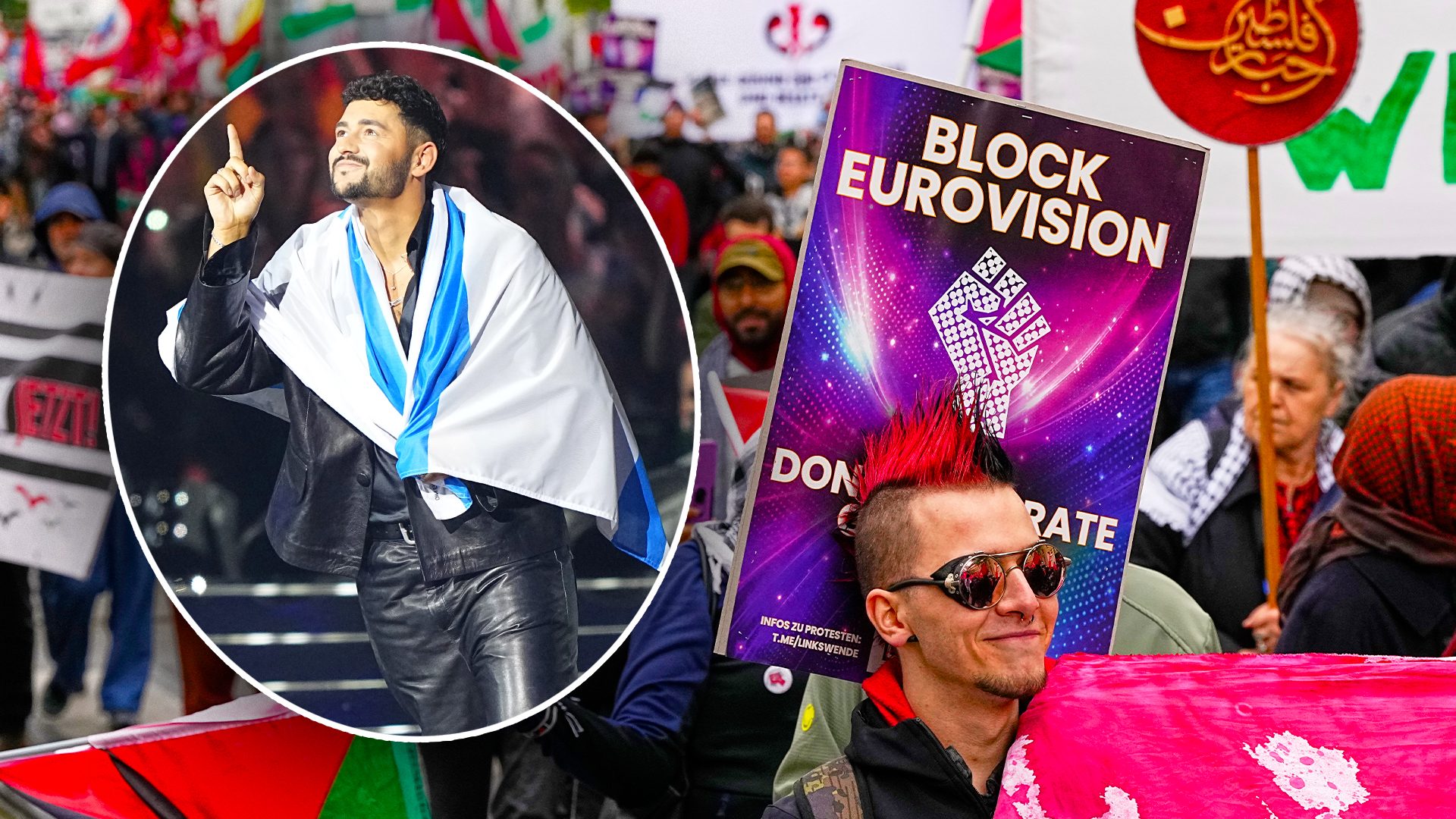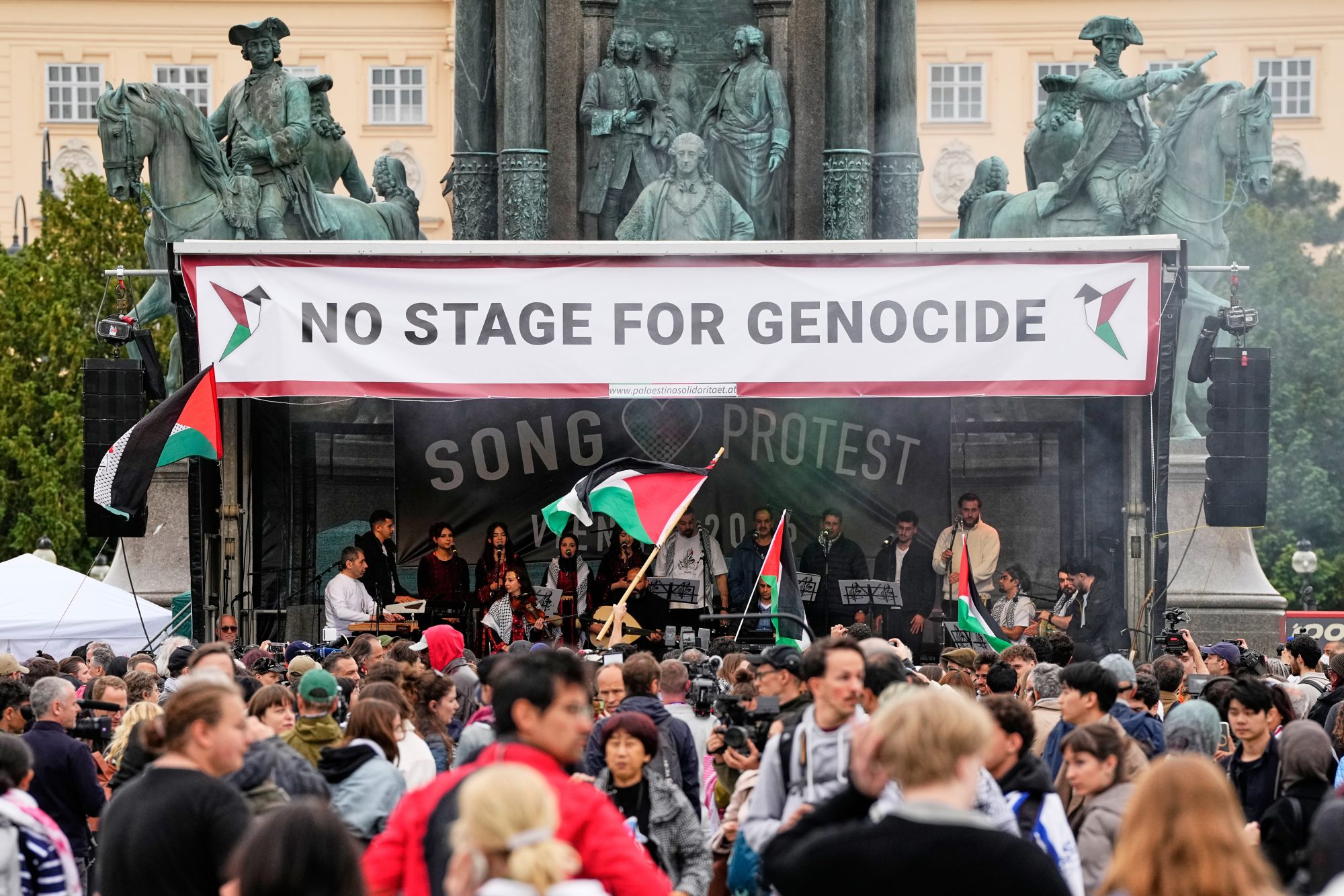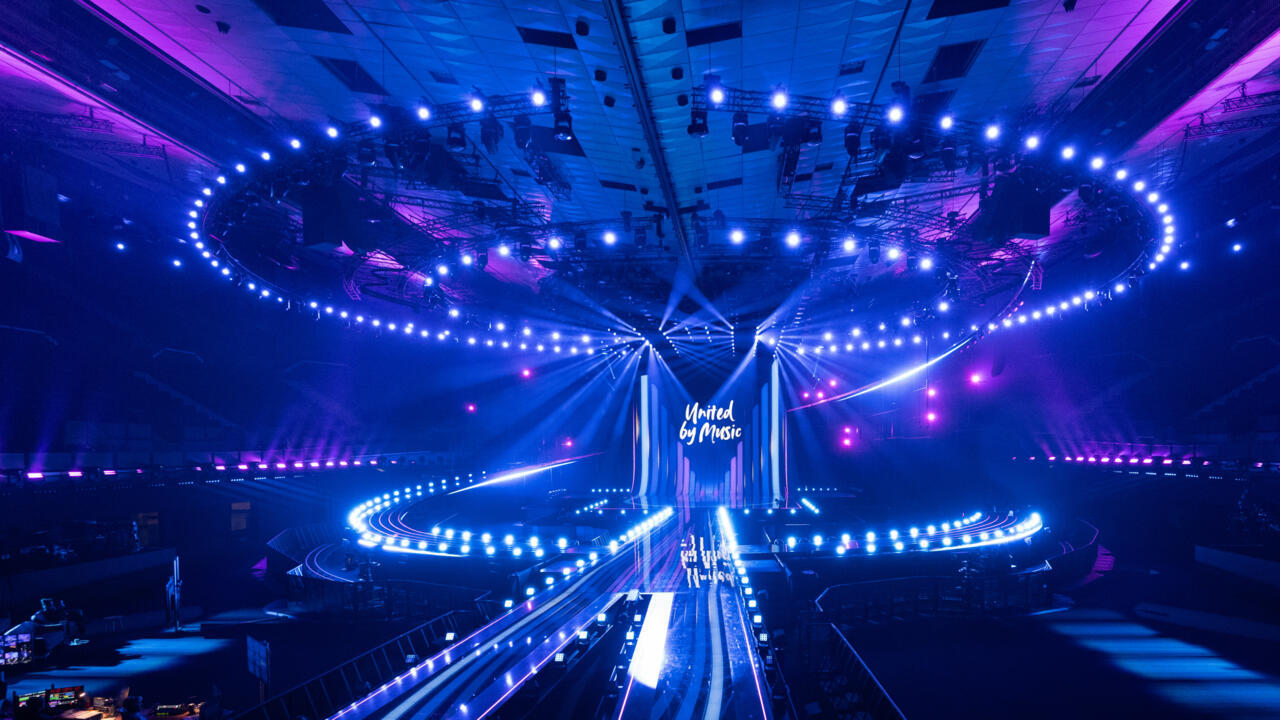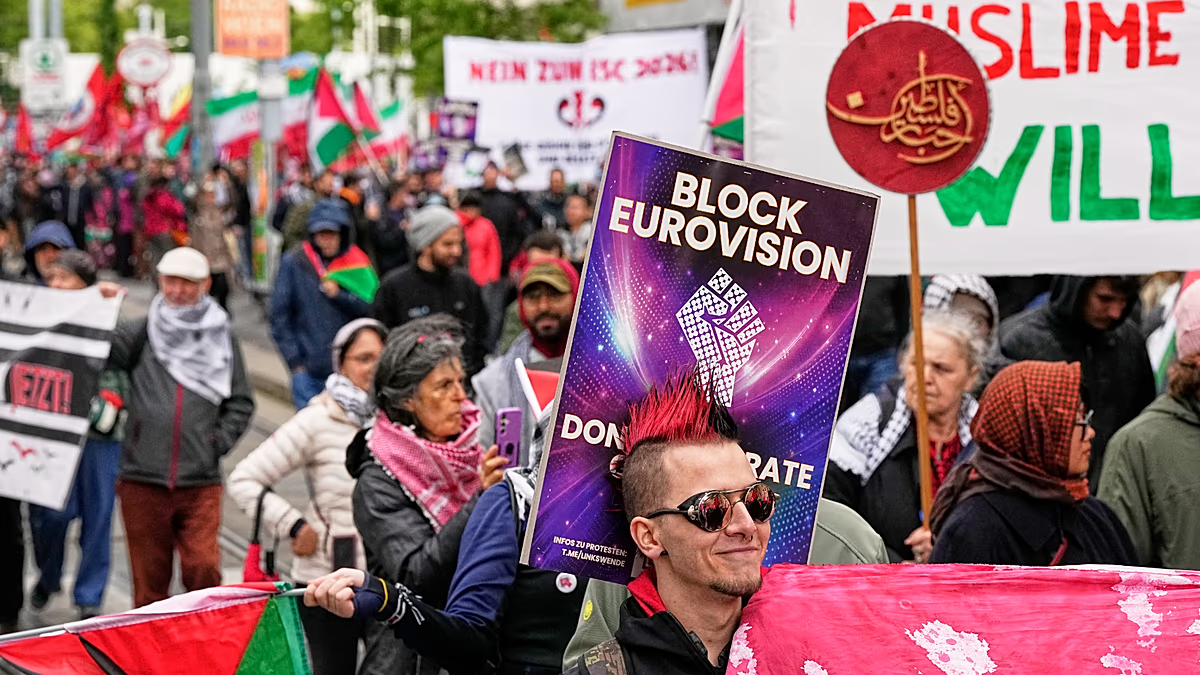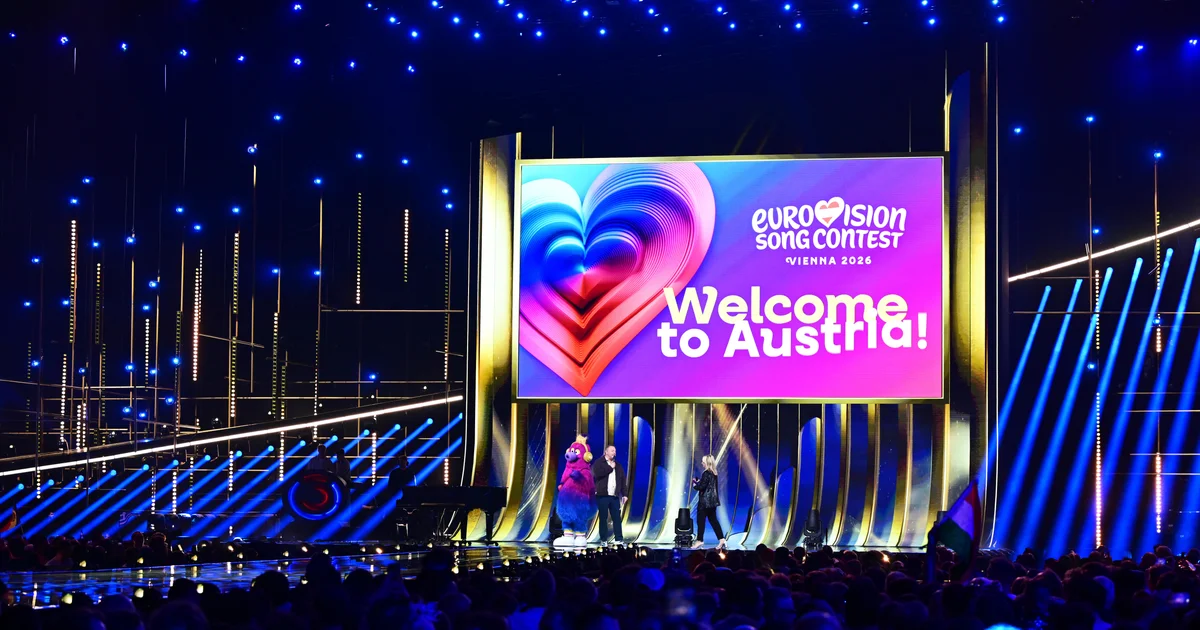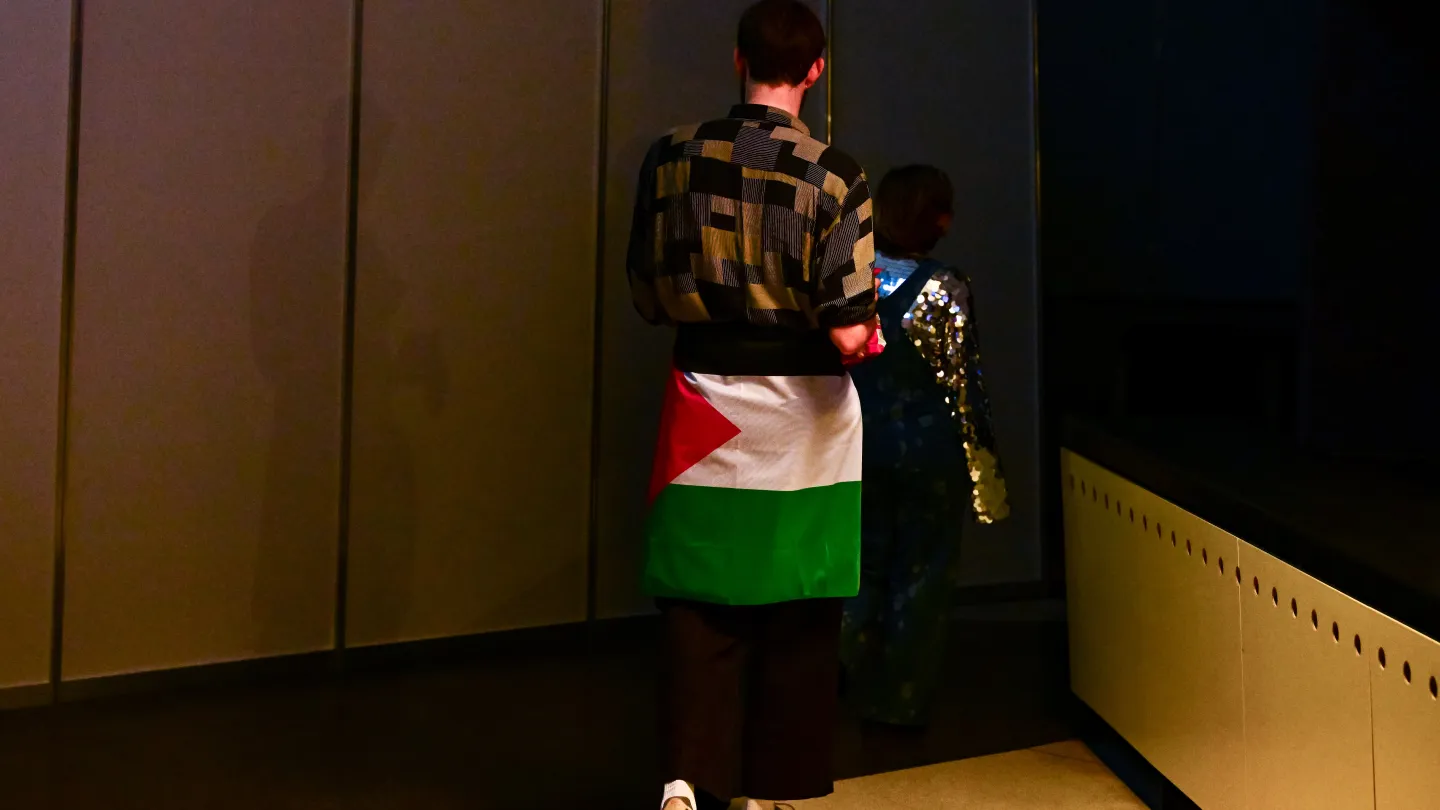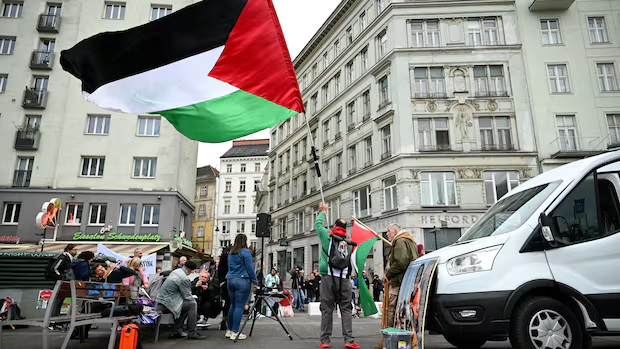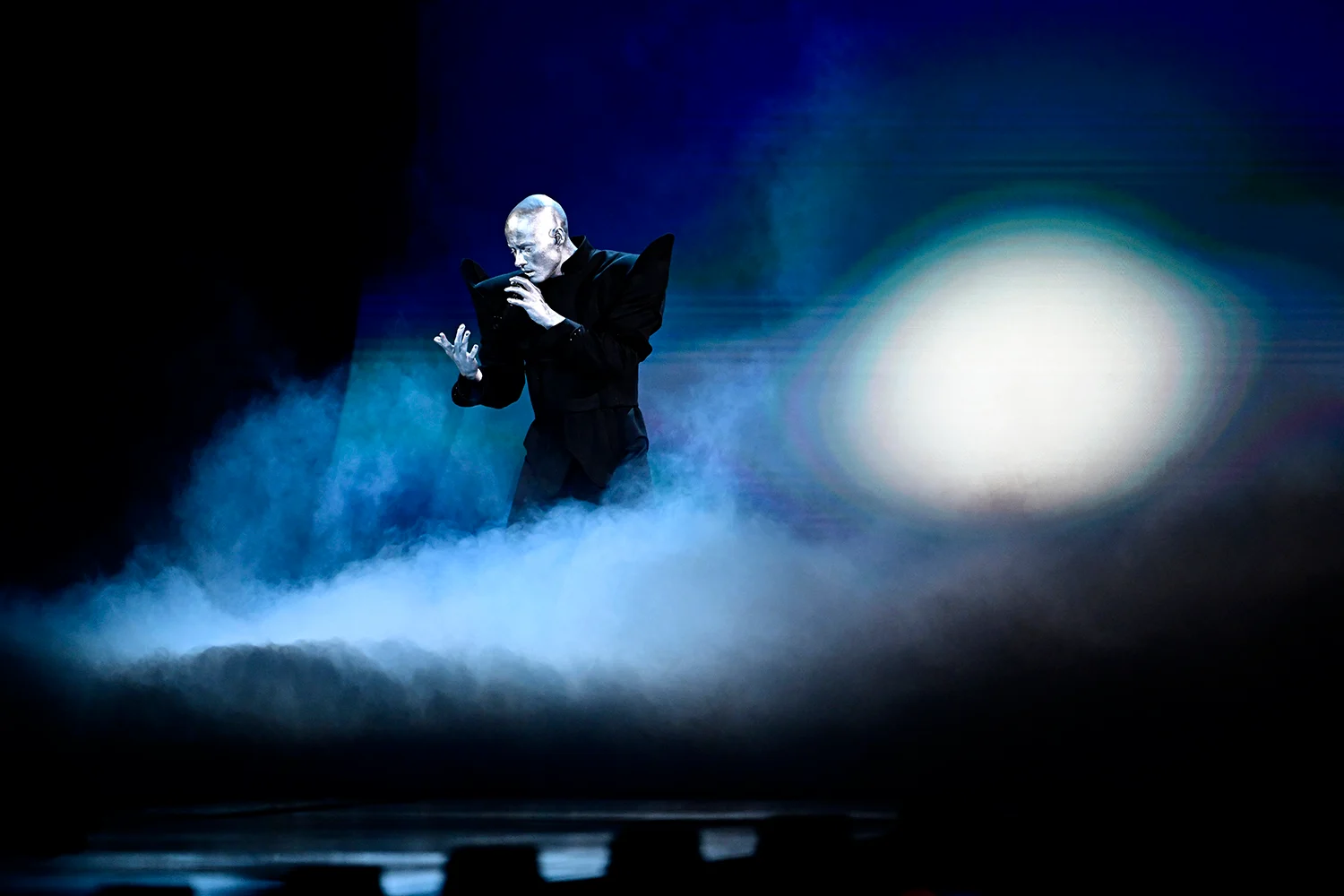
VIENNA—On May 9, the day before the Eurovision Song Contest held its opening ceremony, protesters were already in the streets. Israel’s participation, a fact of Eurovision since the country joined in 1973, had become a flash point after the war in Gaza began in 2023. Ahead of this year’s contest, the 70th edition of Eurovision, the controversy reached a fever pitch.
What began as calls from artists and activists for Israel’s exclusion transformed in the months leading up to the contest into an open revolt. Five countries—Iceland, Ireland, the Netherlands, Slovenia, and Spain—announced they would not attend. Numerous former contestants boycotted, and the 2024 winner, the Swiss singer Nemo, returned their trophy to the European Broadcasting Union (EBU), which was rumored to be smashed and wrapped in toilet paper.
If all of this seems melodramatic, that is because the contest’s troubles represent not just a song competition under threat, but a global order teetering on the edge of collapse. Eurovision, long a symbol of the liberal internationalist project, finds itself in danger of being caught up in its demise.
A performer with long dark hair is captured from the side in silhouette on a stage, holding a microphone to their mouth. The background screen displays the words "NO WAR" in large, bold white lettering, illuminated by vibrant green spotlights.