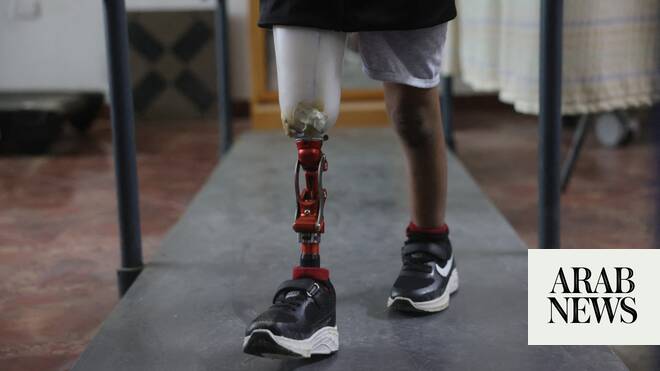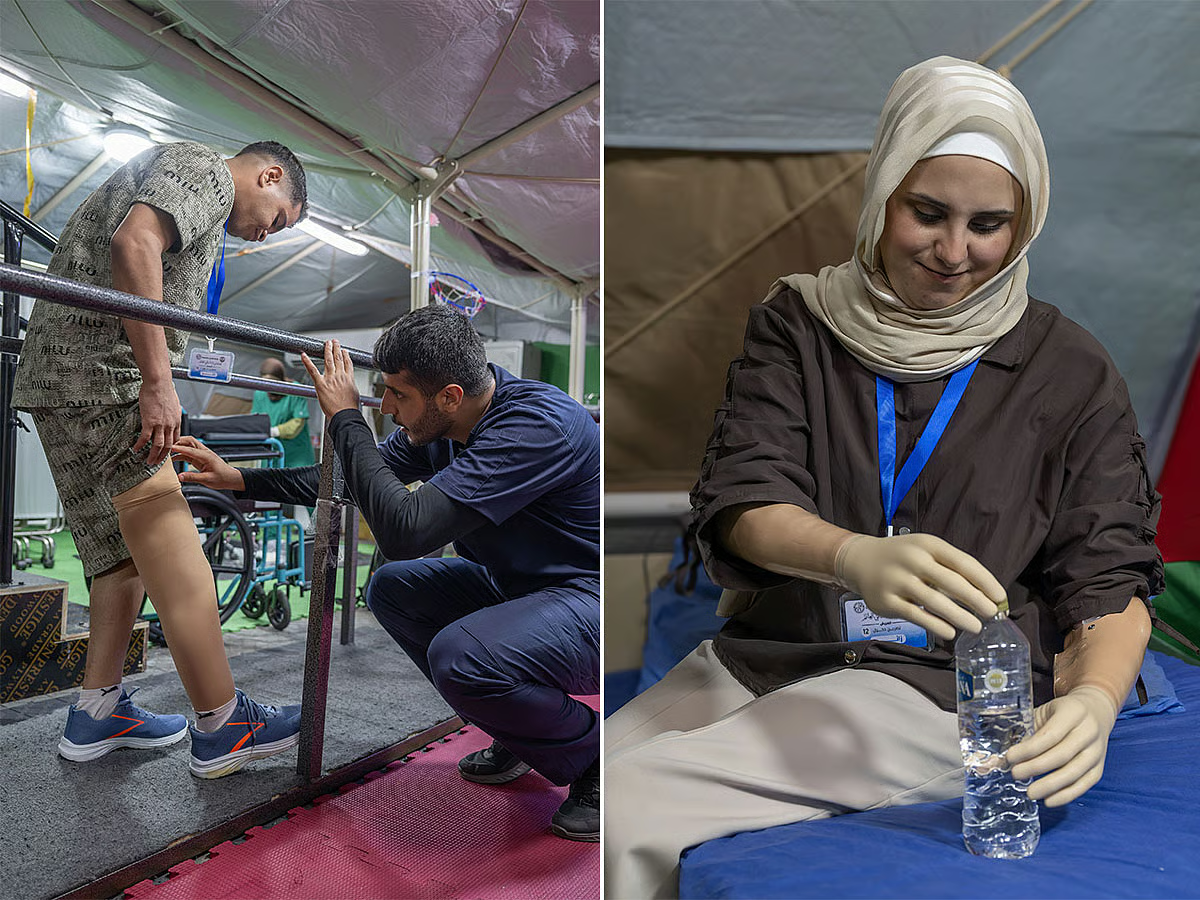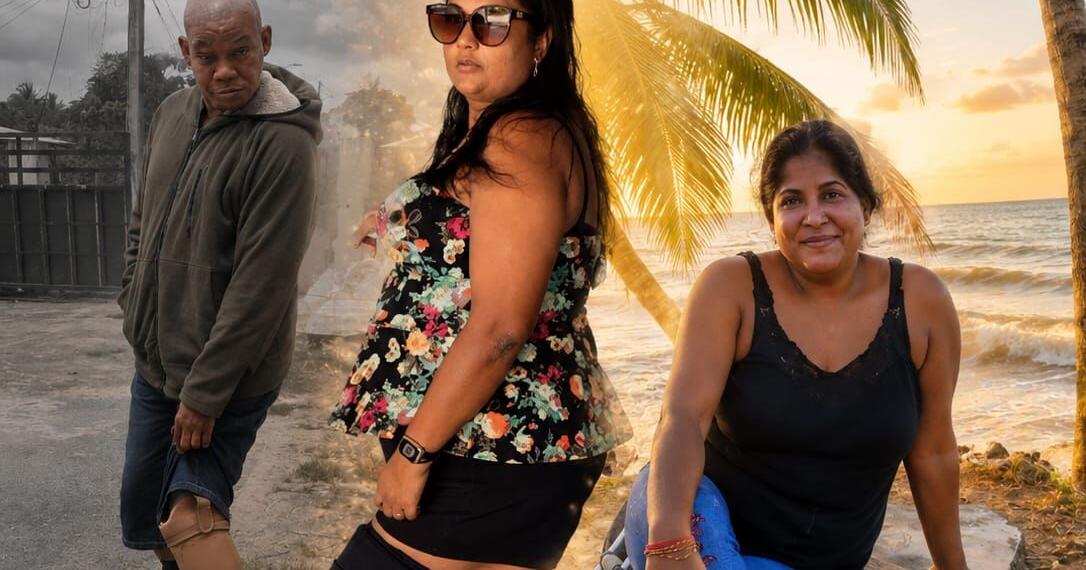
Over 800 citizens have benefited from prosthetics through a partnership between the Governments of Trinidad and Tobago and India.Health Minister Dr Lackram Bodoe said that since the programme was launched last year, a total of 803 people have received prosthetics, as he noted there was a waiting list of over 1,000.The minister said this week another 12 people received prosthetics.Prime Minister Kamla Persad-Bissessar and India’s External Affairs Minister Dr Subrahmanyam Jaishankar launched the National Prosthetics Centre in Penal during his official visit last week, which she said would provide prosthetics not only for people in Trinidad and Tobago but also across Caricom. Jaipur Foot USA is a major partner in this programme.But exactly why are so many people losing limbs?According to Bodoe, diabetes is one of the leading causes of amputations.The Sunday Express spoke to some of the recipients of prosthetics, who shared their stories of how they lost their limbs and the challenges they endured to survive. A prosthetic can cost from $25,000 upwards, and recipients were able to receive their prosthetics free of charge.The story of Anita Singh, 43, Point Fortin“I was 36 years old and gainfully employed, leading a normal life with my three children when this happened. I am diabetic and in January 2020 I got a cracked heel that became infected. I went to a private doctor and things got worse. I ended up at the San Fernando General Hospital where they cleaned out the bottom of my heel. This was during Covid and I was moving back and forth to the hospital to get dressings.“What first seemed like a simple problem quickly became much worse. I became very ill for months, and eventually I developed septic complications that led to the amputation of my left foot.“That period of my life was one of the most difficult experiences I have ever faced. Not only was I battling physical pain, but emotionally and mentally I struggled as well. During that time, my mother, my children, my aunt, my sisters, a few close friends, and even strangers stood by my side and helped me through my recovery. Their love, prayers, and support gave me strength when I felt weak and hopeless.“Unfortunately, due to other medical complications, I was unable to return to work. As a single mother receiving no assistance from my children’s father, life became extremely difficult. I had to depend heavily on family and friends to help me survive and care for my children. I also applied for social assistance, but after going back and forth many times, I was unsuccessful. It was discouraging and emotionally draining, but through it all my mother and sisters never left my side.“There is also one special friend I can never thank enough for her unwavering support throughout my journey. Her kindness, encouragement, and presence during my hardest days meant more to me than words can express. I am also deeply grateful for my amazing partner, who reminds me every single day that I am strong and capable of making it through any storm life brings my way.“Just when I felt like giving up on the possibility of walking again, the current Government introduced a free prosthetic limb drive. I applied with hope in my heart, and I was blessed to be selected and given the opportunity to qualify for a prosthetic limb.“Receiving that opportunity was one of the happiest moments of my life. After everything I had endured, it meant more than just receiving a prosthetic leg—it meant getting a second chance. It meant hope, independence, confidence, and the possibility of walking again.“My journey has not been easy, but it has taught me resilience, gratitude, and faith. I am thankful to everyone who supported me during my darkest moments, and I remain hopeful for the future as I continue rebuilding my life one step at a time.”Vindra Parson, 53, Gasparillo“I was about 22 years old when my amputation occurred from the ankle. I have to wear a prosthetic from my knee. I was born with spina bifida—a hole on my fourth and fifth vertebrae which affected my legs. When I was about four years old I got a sore that never healed. I was hospitalised and the bone at the time had totally deteriorated.A lot of people think that when a limb is amputated life is over, but that is not so at all.“The first prosthetic leg I got was through the Government. It was made out of leather. I got a second one that was made out of blue PVC pipe and when I went out, everybody would stare at me, and it did affect my confidence. Then I had a black one that lasted about 15 years.“When I went to the Divali Nagar fitment camp last year, I got a brown one that looks like my own leg. The first thing I asked them was whether I could go in the water with the prosthetic, and I was overjoyed when they said yes.“I have been able to do things that I always dreamed of doing before. I went fishing off a rock in San Fernando. The same week I got the prosthetic, I went to Clifton Hill beach and bathed! That was something I was not able to do before.“I am fiercely independent today, but for a long time I was not. I let life and the prosthetic control me—and then I took back control.“One thing I am really proud about—I walked up to Maracas Waterfall, and when I was coming back down and I saw how far up I had hiked, I was in disbelief. That was something off my bucket list. I went to Argyle Waterfall in Tobago. I do not see any limitations in the things that I can do. I went to Gasparee Caves.“I always tell people: you don’t have to sit in a wheelchair, you have to learn how to use your prosthetic, you have to train yourself and be mindful of your confidence.“I do not see myself as disabled. I go shopping—there are big supermarkets such as PriceSmart, Anand Low Price and Price Club that have trolleys you can drive. I hope other major supermarkets like Massy can also follow this example.“I would really like to thank Prime Minister Kamla Persad-Bissessar and the Indian government and everybody involved in this initiative. The kindness and service that was provided at the Nagar was amazing. I went there at 7 a.m. and when I left in the evening I walked out wearing a new prosthetic that was designed and made for me in hours. That is truly remarkable and unheard of. I am grateful and I urge all persons who are amputees not to lose their confidence and will in life.”Sean Cupid, 53, Brazil“I was diagnosed with diabetes in 2001 after undergoing medical tests when I decided to join the Trinidad and Tobago Defence Force (TTDF).I later developed diabetic neuropathy where the nerves in the foot basically died; it was rotting from inside. When the diagnosis came, I was told my system was septic.“I was sick for a whole week and I did not know what was going on; and then my doctor told me that my system was compromised. Antibiotics did not help.“After getting worse, I went to Mt Hope hospital and was told I had gastric gangrene. I had a decision to make—I had to amputate my foot from below the knee. I told them to take the foot; it was either that or death. So I gave up my foot on May 8, 2018.“But mentally I was not deterred. I understood what was going on and I made a decision that changed my life. I was discharged with crutches and since then, I never looked back.“Making ends meet was difficult. My contract in the security field had ended, and I was the only breadwinner. Thankfully, my wife got a job and she has been able to sustain us. I have three sons. I got my first prosthetic in 2020—I actually went on eBay and bought one online and got it adjusted to fit me.“That one has deteriorated; so on October 4, I went to the Divali Nagar where I was fitted for a new prosthetic. I am taking my time to get adjusted to it.“I want to say to persons who are amputees: this is not the end of your life. I have never been in a wheelchair. I am physically challenged—that is how I saw it and continue to see it. I am not limited to a wheelchair.People are afraid to get prosthetics because they are fearful of falling, but I would advise anybody to do it. Most people who lose their leg sit in a wheelchair or lie in a bed and have no mobility at all. This helps people get back independence in their life.“I am willing to share and speak to others and can be contacted at sarc11076@gmail.com.“I really commend the collaboration between Trinidad and Tobago and India. There are thousands of people who do not know where to begin and having a centre here will help many.”Joseph Ramkumar, father of Joash Ramkumar, three, Central“My son Joash did not lose his limb—he was born that way because his umbilical cord was wrapped around his right foot. It was terrible when we were told this, because this was not detected in the ultrasounds that were done before. Some doctors believe that if it was detected, something could have been done. But nothing stops him—he moves faster than me. He is climbing all over and is highly intelligent.“They said they will work on making a special type of shoe for him to help him balance more. He is able to move, but this will provide him with better balance, as he walks with a limp. I commend this effort; it will help many people.”
From despair to hope ...Prosthetics initiative helps amputees walk again
Over 800 citizens have benefited from prosthetics through a partnership between the Governments of Trinidad and Tobago and India.
1,637 words~7 min read