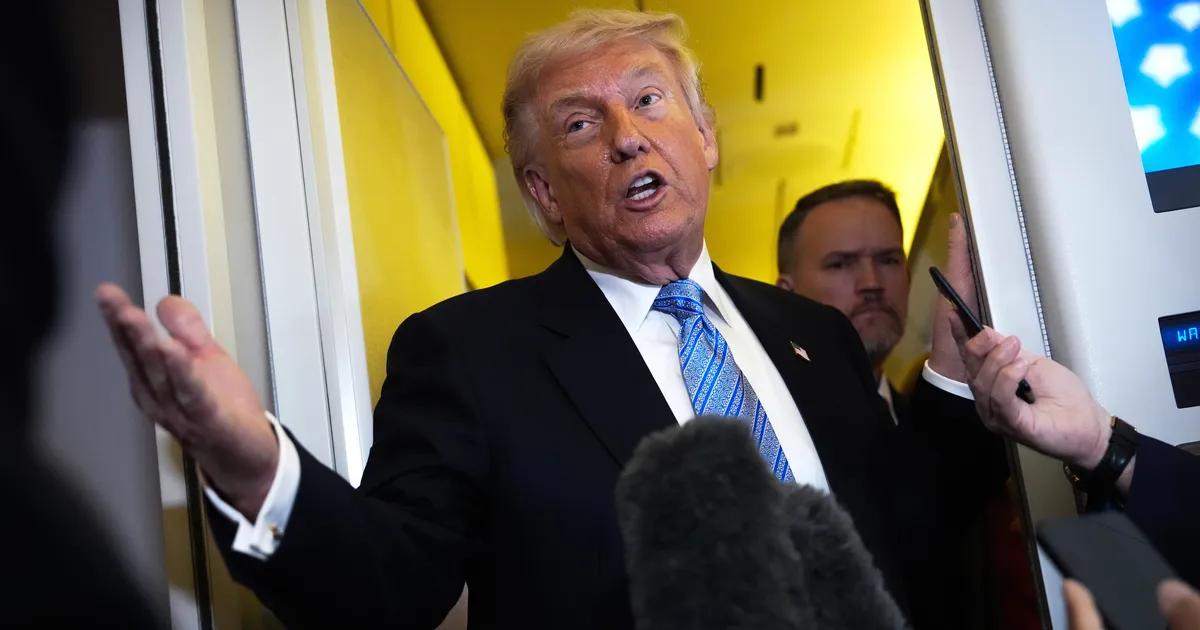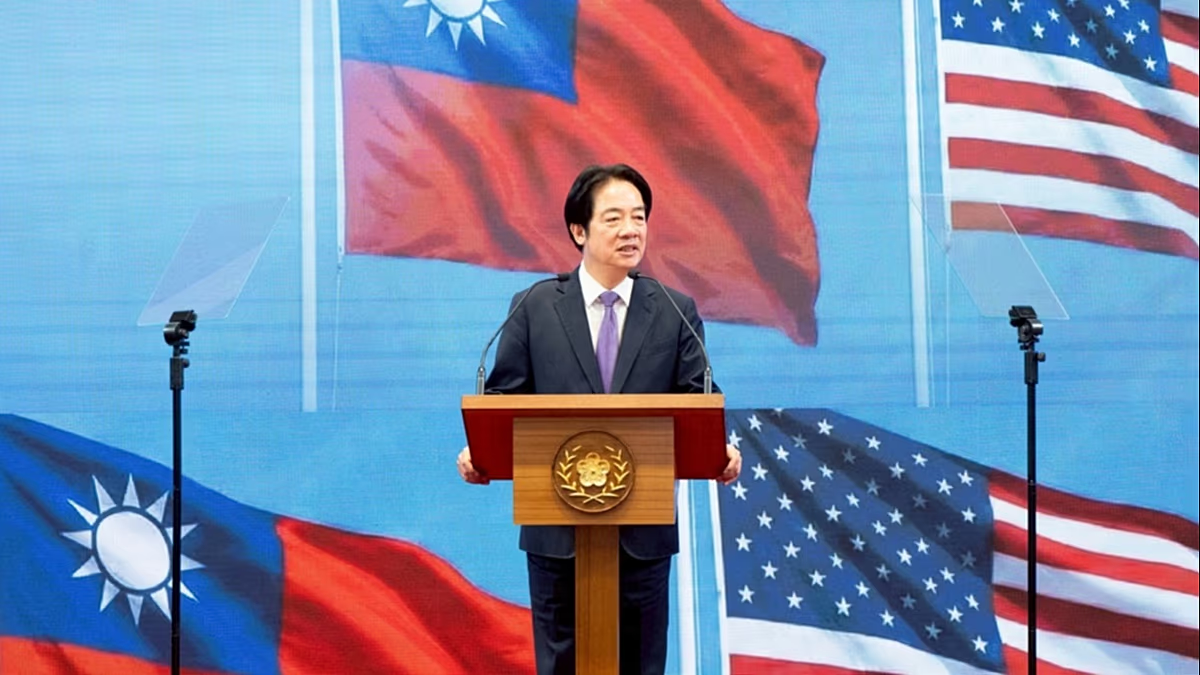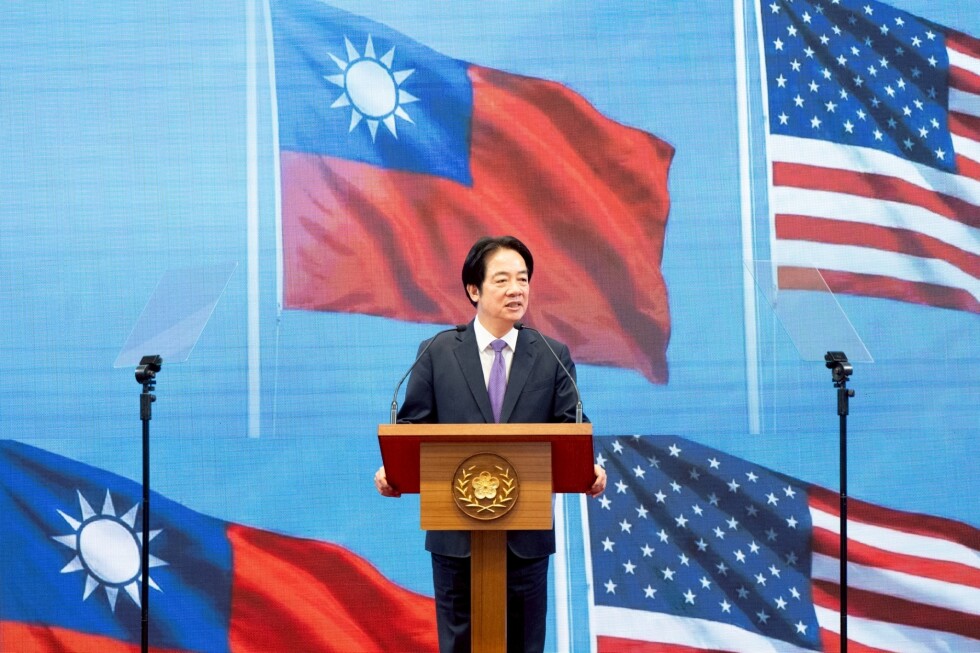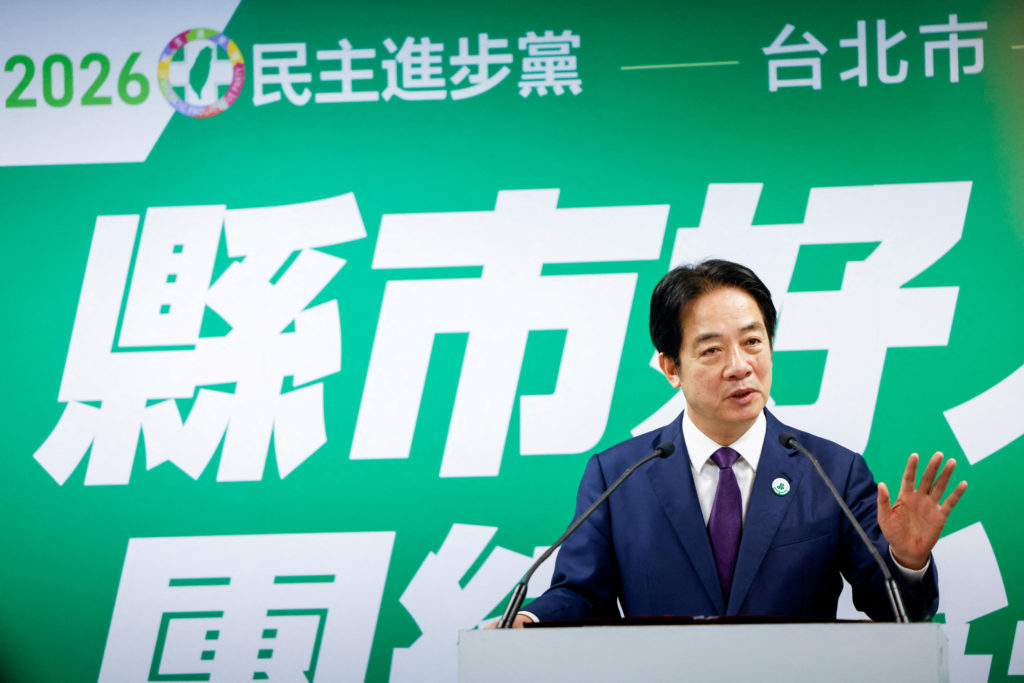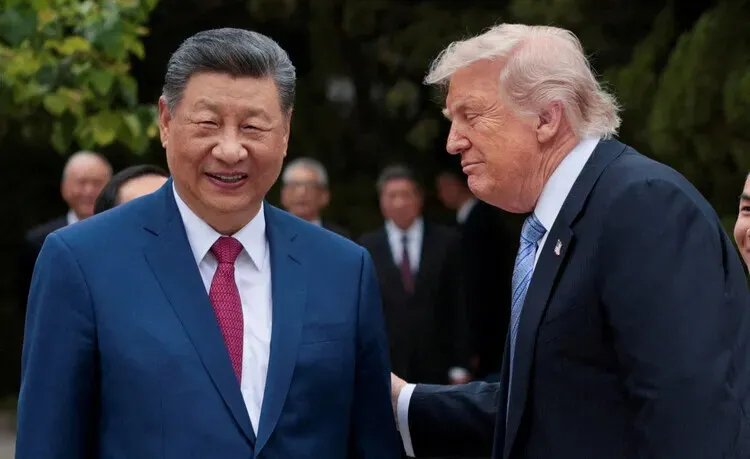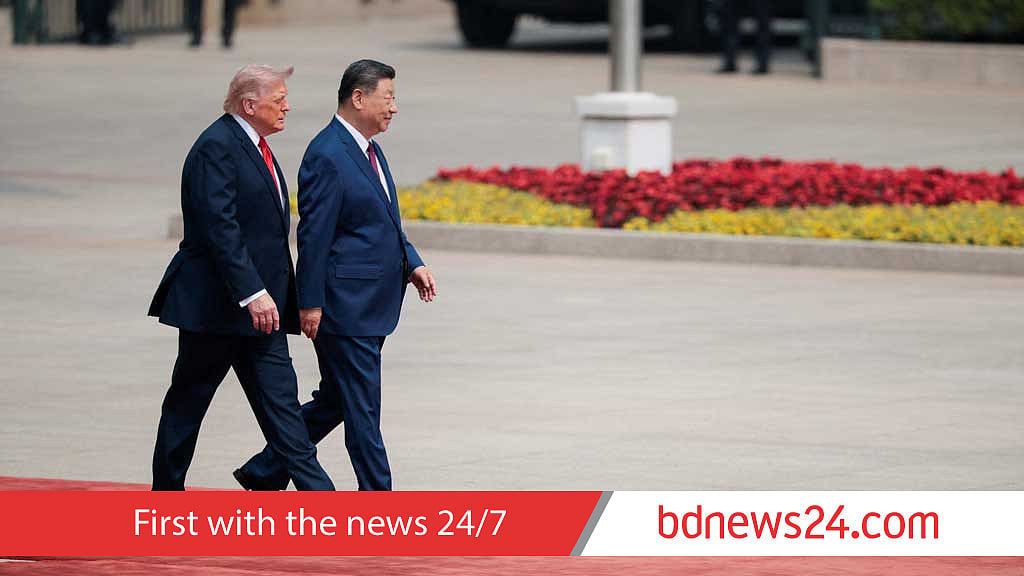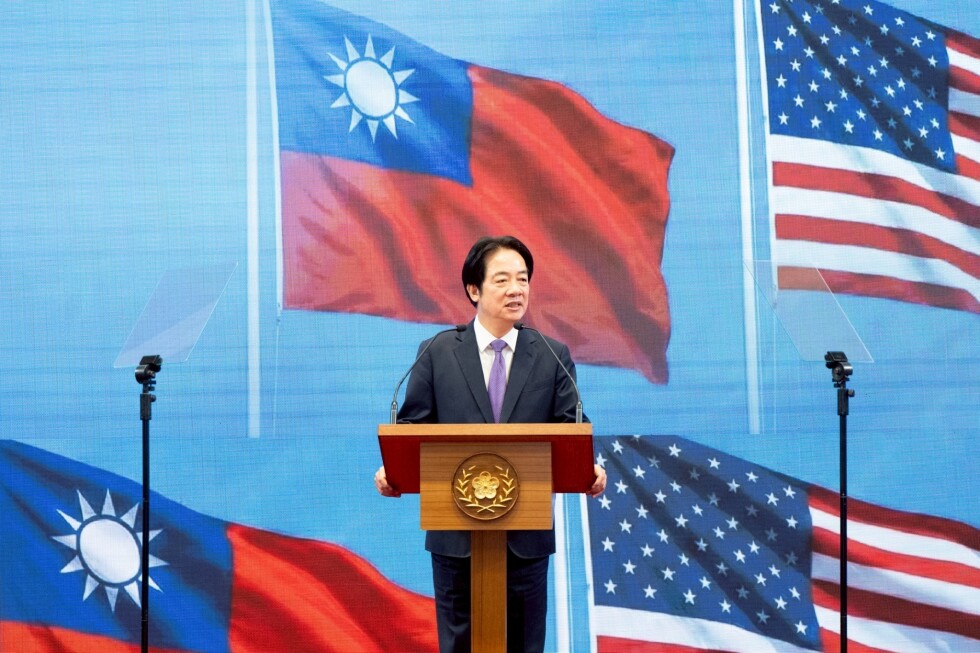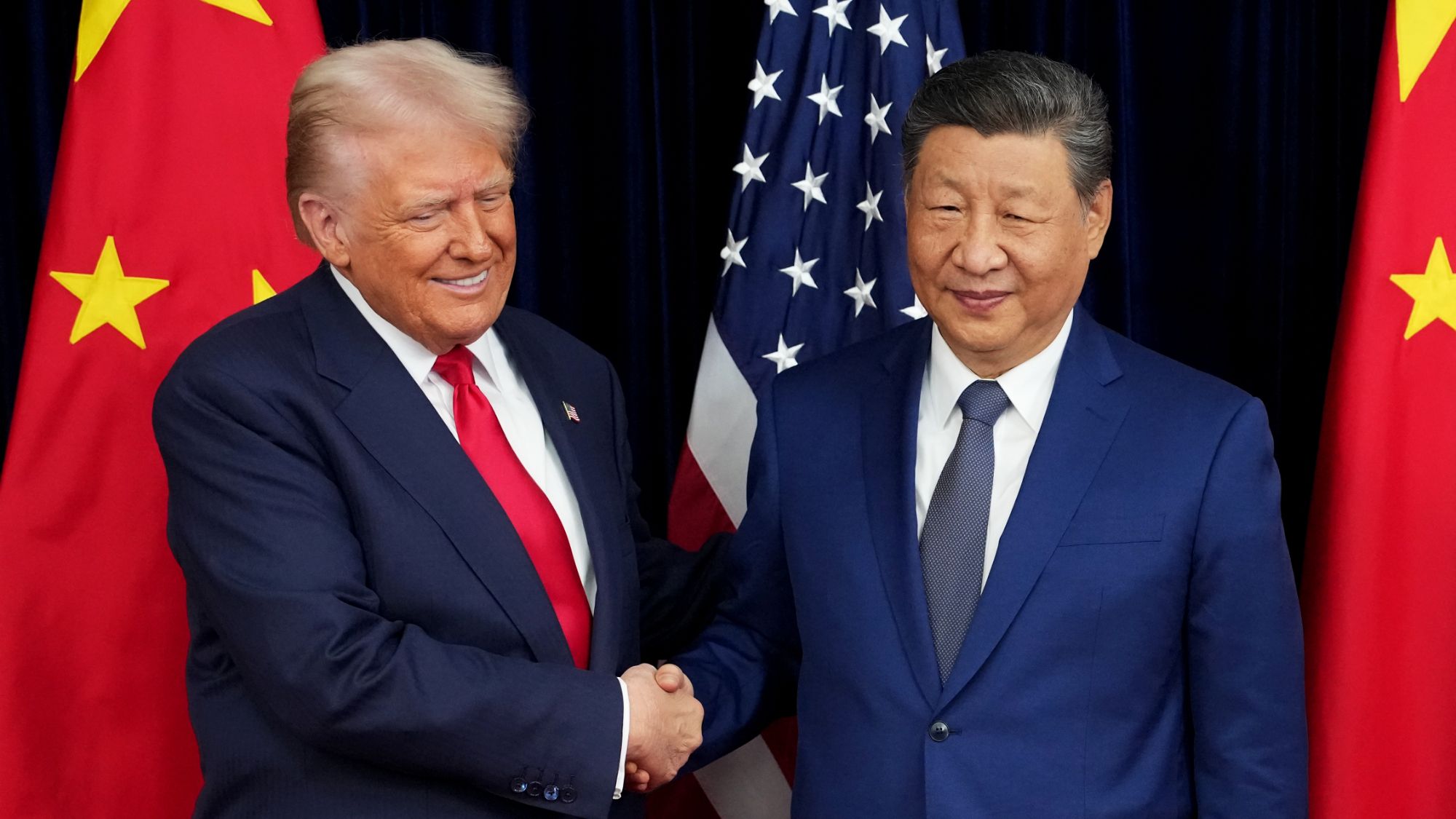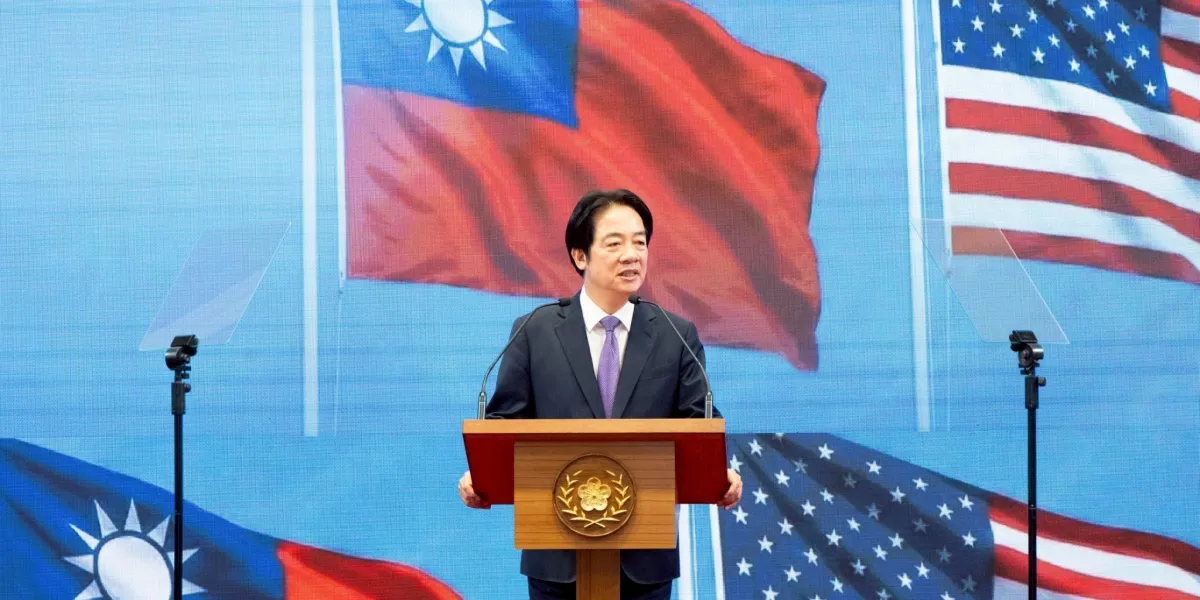
TAIPEI—Taiwan has long relied on the U.S. to provide it with weapons to stave off an attack by China. But following President Trump’s summit with Chinese leader Xi Jinping, American support for the island’s defense—vital to Taiwan’s survival as a self-ruled democracy—is in question.President’s mention of ‘negotiating chip’ with China sows uncertainty about vital U.S. supportIn remarks that aired after he left Beijing last week, Trump said a $14 billion package of U.S. arms for Taiwan that awaits his approval is “a very good negotiating chip” with China.While Beijing, which views Taiwan as part of its sovereign territory, has committed to a policy of “peaceful unification” with Taiwan since 1979, successive Chinese leaders, including Xi, have also refused to renounce the possible use of military force to try to seize the island.Trump’s remark could embolden China to step up its aggression against Taiwan, some analysts said.“Trump’s public openness to negotiating with Beijing over America’s posture on Taiwan will serve as the diplomatic equivalent of a matador waving a red flag in front of a bull,” Ryan Hass, director of the Brookings Institution’s China center, wrote in an online commentary. “It will cause Beijing to intensify its efforts to test the boundaries of what it can gain in terms of loosening America’s commitment to Taiwan’s security.”Trump’s comment, made in a Fox interview that aired after he left Beijing, has made how the U.S. handles the arms package a litmus test of his administration’s support for Taiwan.Trump said in the interview that U.S. policy on Taiwan hadn’t changed.“If the president does not proceed with the arms sale to Taiwan, he will jeopardize U.S.-Taiwan relations and weaken U.S. credibility globally,” said retired Navy Rear Adm. Mark Montgomery, now a senior fellow at Washington-based Foundation for Defense of Democracies, which supports a tougher stance toward China.Taiwan President Lai Ching-te weighed in Wednesday, declaring that Taiwan’s status isn’t up to China or the U.S. to determine.“Taiwan’s future cannot be decided by foreign forces,” Lai said in a speech marking the anniversary of his 2024 inauguration. “The future of Taiwan can only be decided by the 23 million people of Taiwan.”Lai said he would continue efforts to strengthen the island’s defenses and is willing to engage with China on equal terms. His remarks echoed a stance he has maintained since he took office. Beijing has refused to engage with Lai, and has at times conducted large-scale military exercises to pressure his administration.“We pursue stability, but not at the expense of our sovereignty and democratic way of life. This is Taiwan’s bottom line,” Lai said.Taiwan depends on U.S. military supplies such as advanced jet fighters and missile systems, as other countries shy from selling major weapons systems to the island to avoid retaliation from China.The arms package has been in limbo following opposition from Xi and U.S. concerns about upsetting relations with China, The Wall Street Journal has reported. American law makes it U.S. policy to provide Taiwan with weapons for its own self-defense.The Trump administration approved in December a separate $11.1 billion arms package that allayed some concerns that Trump wasn’t doing enough to counter China’s military.Beijing expressed significant irritation over that package, and “they don’t want to see one that is even higher” ahead of what Trump said would be a visit by Xi to Washington in September, said Bonnie Glaser, managing director of the Indo-Pacific Program at the German Marshall Fund of the United States, a Washington-based think tank.If no arms sales are announced in the coming months, she said, “it would have a serious impact on Taiwan, certainly on morale, on confidence that Taiwan has in the United States.”Trump’s “negotiating chip” comment suggests a shift from a U.S. position dating to the early 1980s, when Washington told Taipei that it wouldn’t consult with China on arms sales.Trump said last week that he would make a decision about the new arms package soon. “I have to speak to the person that right now, as you know—you know who he is—that’s running Taiwan,” he told reporters on Air Force One, in what appeared to be a possible reference to Taiwan’s president.Such a call would be another shift: No incumbent U.S. president has acknowledged speaking with a serving Taiwan president since Washington severed ties with Taipei in 1979. In 2016, Trump, then president-elect, accepted a congratulatory call from Lai’s predecessor, Tsai Ing-wen.Lai said after his speech Wednesday that he was open to a conversation with Trump. “If I get the chance, it is my duty to speak for Taiwanese society,” he said. He would tell Trump that “we hope these arms purchases will continue,” he said.Taiwan’s military is dwarfed by China’s. The mismatch has propelled Taiwanese military planners to adopt a “strategy of erosion,” aiming to inflict pain on invading forces and make Beijing think twice before attacking. Behind that is the goal of holding on long enough for U.S. forces to arrive, if America chooses to enter the fight.After leaving Beijing, Trump said Xi had asked him if the U.S. would defend Taiwan.“I don’t talk about that,” Trump said he told the Chinese leader, an answer that is in line with the U.S. policy of “strategic ambiguity” about whether the U.S. would aid the island against a Chinese attack.Trump said in the Fox interview that he wasn’t inclined to get American troops involved. “I don’t want someone to say, ‘The U.S. supports us, so let’s seek independence,’” he said.Lai already says the Republic of China, as Taiwan is formally known, is an independent and sovereign state, and therefore doesn’t need to declare its independence.Previous Taiwan presidents from Lai’s party have expressed the same position without Beijing indicating that its red lines had been crossed. Analysts say the Communist Party wouldn’t tolerate any move in Taipei to formally declare independence or rename the Republic of China as Taiwan.Chinese officials and state media portrayed the summit as a win for Beijing on the Taiwan question, saying Xi and Trump reached a consensus on the need to resist Taiwan independence.Some Chinese experts said China is unlikely to buy Trump’s suggestion that he could trade away Taiwan arms sales.“What price can China pay that would get the U.S. to sell out Taiwan?” said Shen Dingli, a Shanghai-based international-relations scholar. “There isn’t any.”Write to Joyu Wang at joyu.wang@wsj.com and Chun Han Wong at chunhan.wong@wsj.com
Taiwan presses its case after Trump puts arms sales in question
President Trump’s mention of an arms package as a “negotiating chip” with China has sowed uncertainty about vital U.S. support. | World News
1,054 words~5 min read