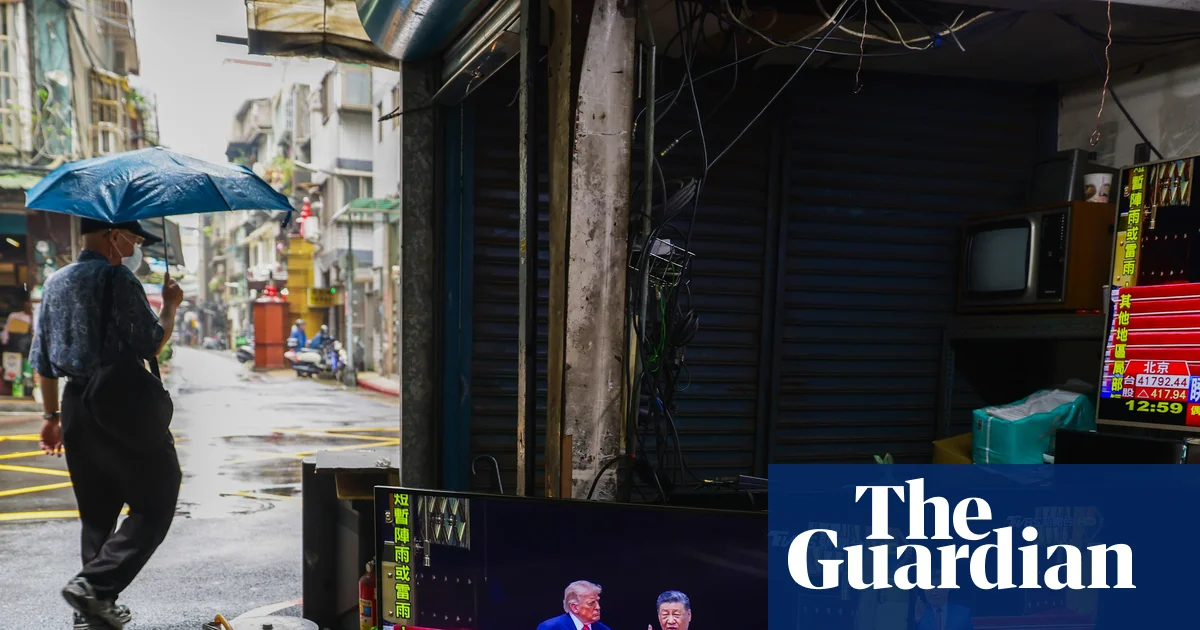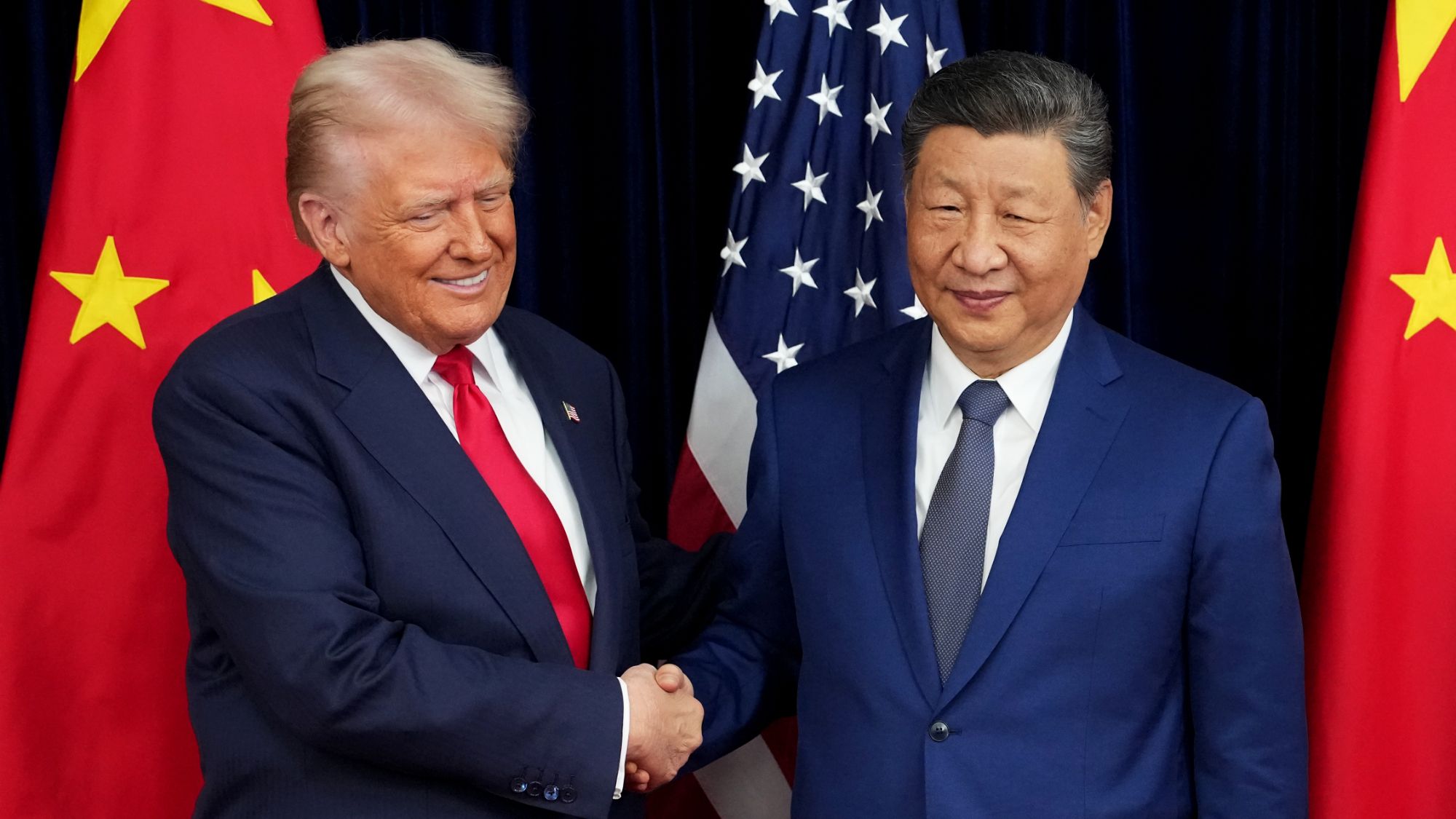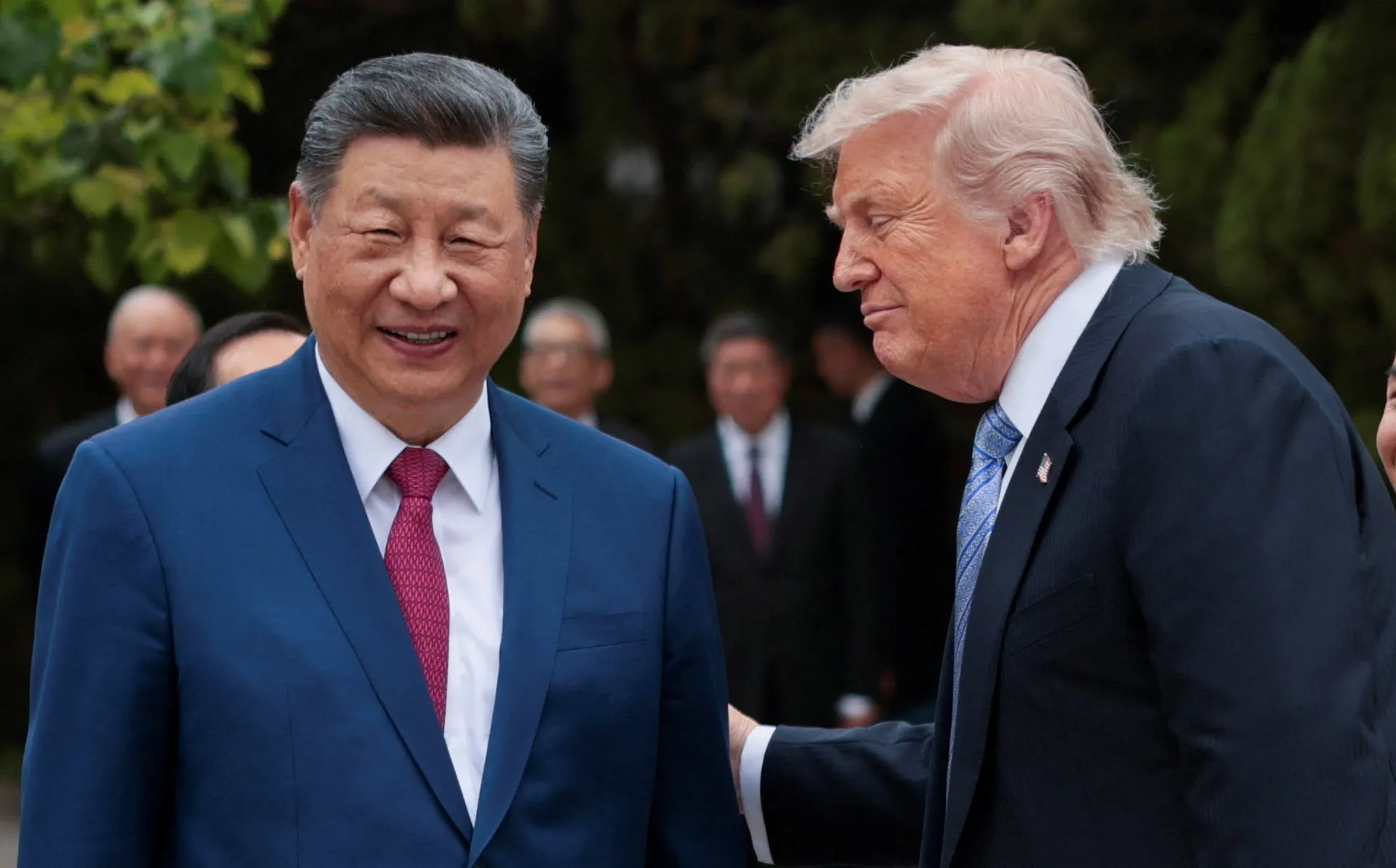
President Xi Jinping of China and President Donald Trump of the United States pay a visit to the garden in the Zhongnanhai leadership compound in Beijing, China, on May 15, 2026. (Reuters/Yonhap)
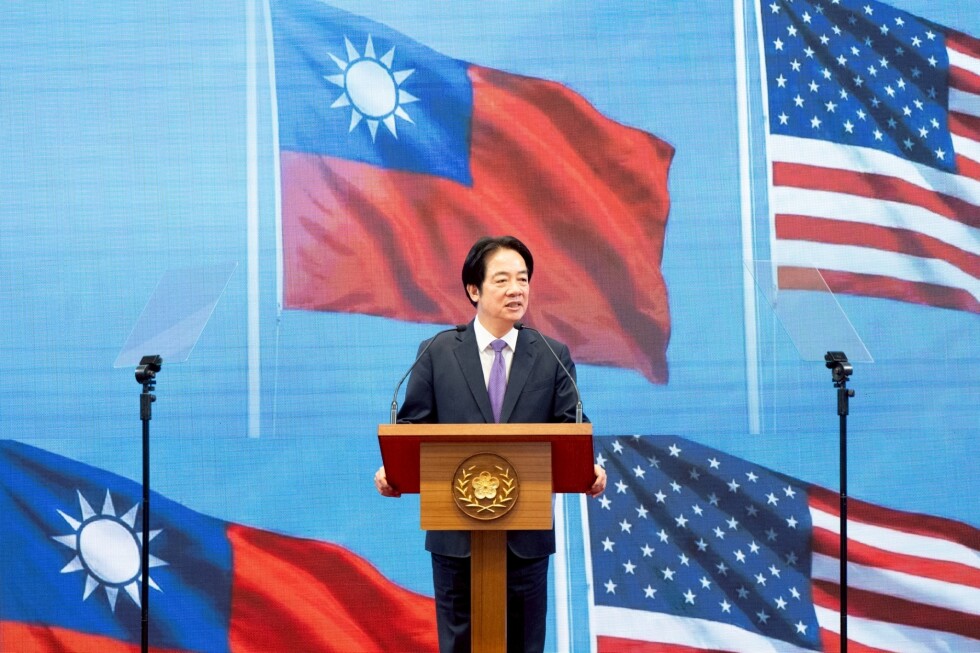
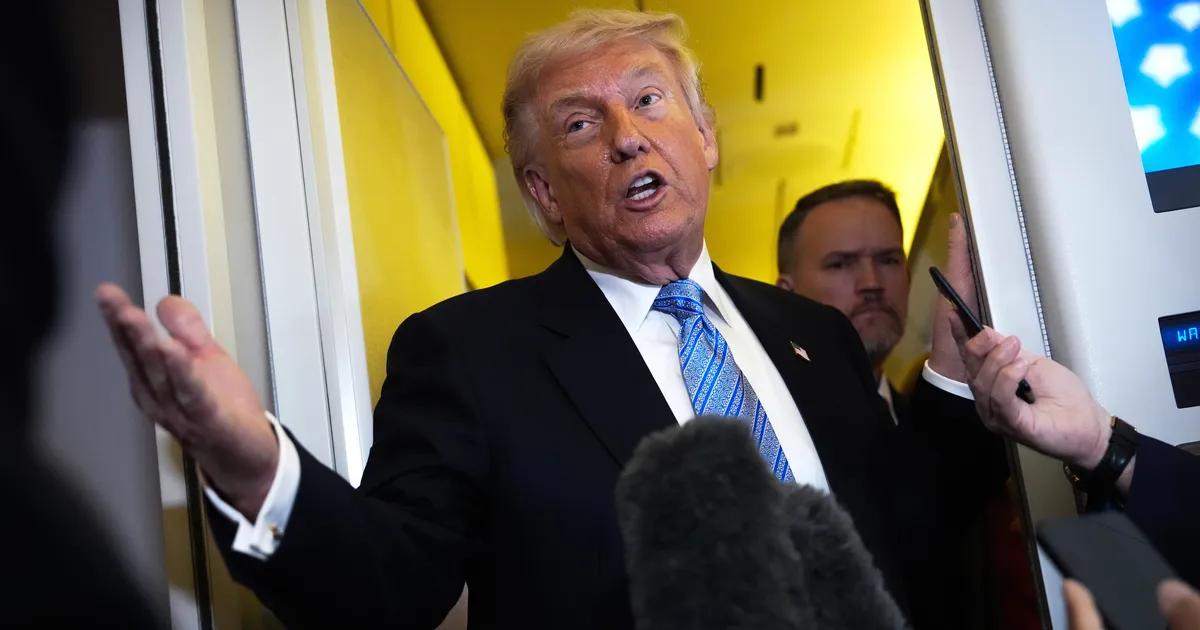
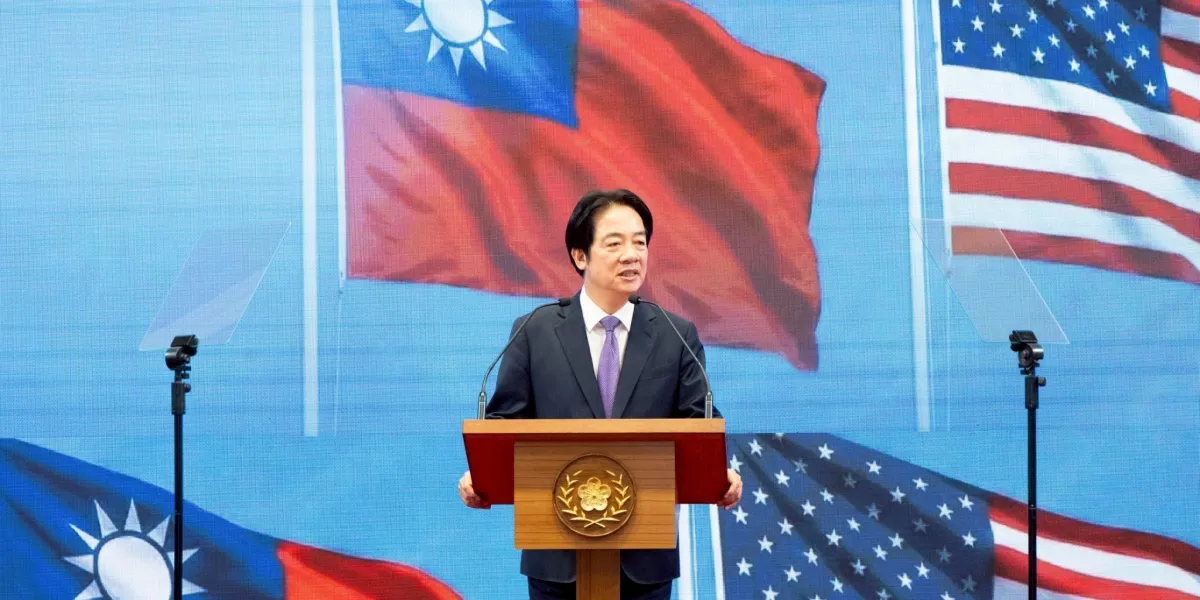
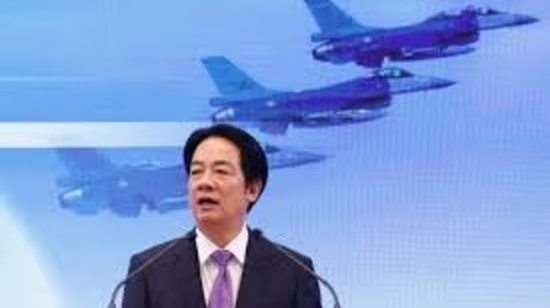
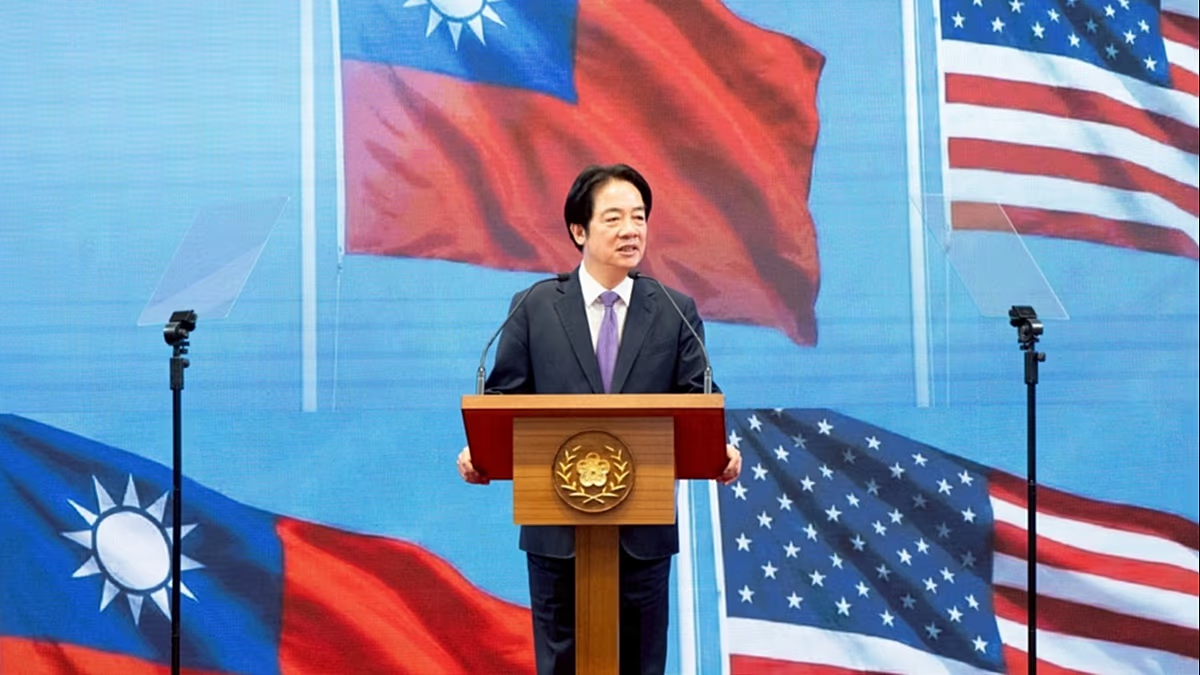
Political tensions within Taiwan are escalating after US President Donald Trump called arms sales to the island country a “very good negotiating chip” in relations with China.While the administration of the ruling Democratic Progressive Party (DPP), with its anti-China orientation, stressed that there has been no change in US policy toward Taiwan, figures from the pro-China main opposition Kuomintang (KMT) favor a readjustment of ties with Beijing, saying Taipei cannot rely solely on Washington.Reports from Taiwan’s Central News Agency and the United Daily News on Tuesday showed the Taiwanese government repeatedly emphasizing that US policy toward Taiwan has not wavered. Shen Yu-chung, a deputy minister of Taiwan’s Mainland Affairs Council, which oversees China affairs, denied any major change in US policy toward Taiwan since the summit last week between Trump and Chinese President Xi Jinping.“Key figures in the Trump administration including Secretary of State Marco Rubio have repeatedly confirmed no change in US policy toward Taiwan, and President Trump likewise made no commitments to China on arms sales to Taiwan,” Shen said at a symposium Monday at National Taiwan University.Taiwanese President Lai Ching-te said in a Facebook post on Sunday that security cooperation and arms sales based on the US commitment to Taiwan’s security are “the most important deterrent against moves to undermine regional peace and stability.”Taipei is highly sensitive to shifts in Washington’s stance because Taiwan’s geopolitical survival effectively depends on US security commitments and the supply of advanced weapons. Since any sign of US wavering would create a crisis for Taiwan’s national security and economy, the ruling DPP is forced to stake everything on proving that basic US policy remains the same.But KMT figures said security concerns are growing as the DPP continues to pursue a policy seen as heavily tilted toward the US.Su Chi, who was secretary-general of Taiwan’s National Security Council under President Ma Ying-jeou, said at a forum on Sunday that Taiwan “must abandon the expectation that the US will come to our rescue.” Former KMT legislator Charles I-hsin Chen also blasted the DPP for making a “one-sided bet” on its relationship with Washington.Chen told the British daily The Guardian that Trump’s comments show that Taiwan “cannot tie everything” to the US. “This highlights the need for Taiwan to move towards an equidistant approach between the US and China — that is, to give equal weight to cross-strait relations and relations with the US — in order to secure Taiwan’s greatest interests,” he said. The argument is that amid the shifting balance of power between the US and China, the restoration of dialogue channels and the revival of economic exchanges with China are practical methods of safeguarding Taiwan’s peace and interests.Other observers say US policy toward Taiwan is undergoing change. “Given that China has warned of the potential for a violent clash with the US if the Taiwan issue isn’t handled properly, would President Trump immediately announce arms sales to Taiwan and risk destabilizing Sino-US ties?” said Chang Hsien-yao, the executive director of the National Policy Foundation, the official think tank of the KMT.“President Trump apparently made a decision [on Taiwan] after his visit to China,” he added. “Although he didn’t explicitly state it, there will likely be a change.”China’s perspective is that the deepening division within Taiwan could work to its strategic advantage, as intensifying distrust of the US could spread pro-China sentiment among the Taiwanese public.Trump’s latest comments also served as an occasion to acknowledge the role of US arms sales and security aid to Taiwan as bargaining chips in Beijing-Washington ties.Growing doubts in Taiwan over the trustworthiness of the US could pressure the independence-leaning DPP to soften its hard-line stance toward China.Yang Kuang-shun, a co-founder of the Taiwanese think tank US Taiwan Watch, suggested that the Kuomintang is eager to jump on any signal that the US does not fully support Taiwanese independence to “push its agenda for opposing Taiwan’s independence.”By Lee Jeong-yeon, Beijing correspondentPlease direct questions or comments to [english@hani.co.kr]