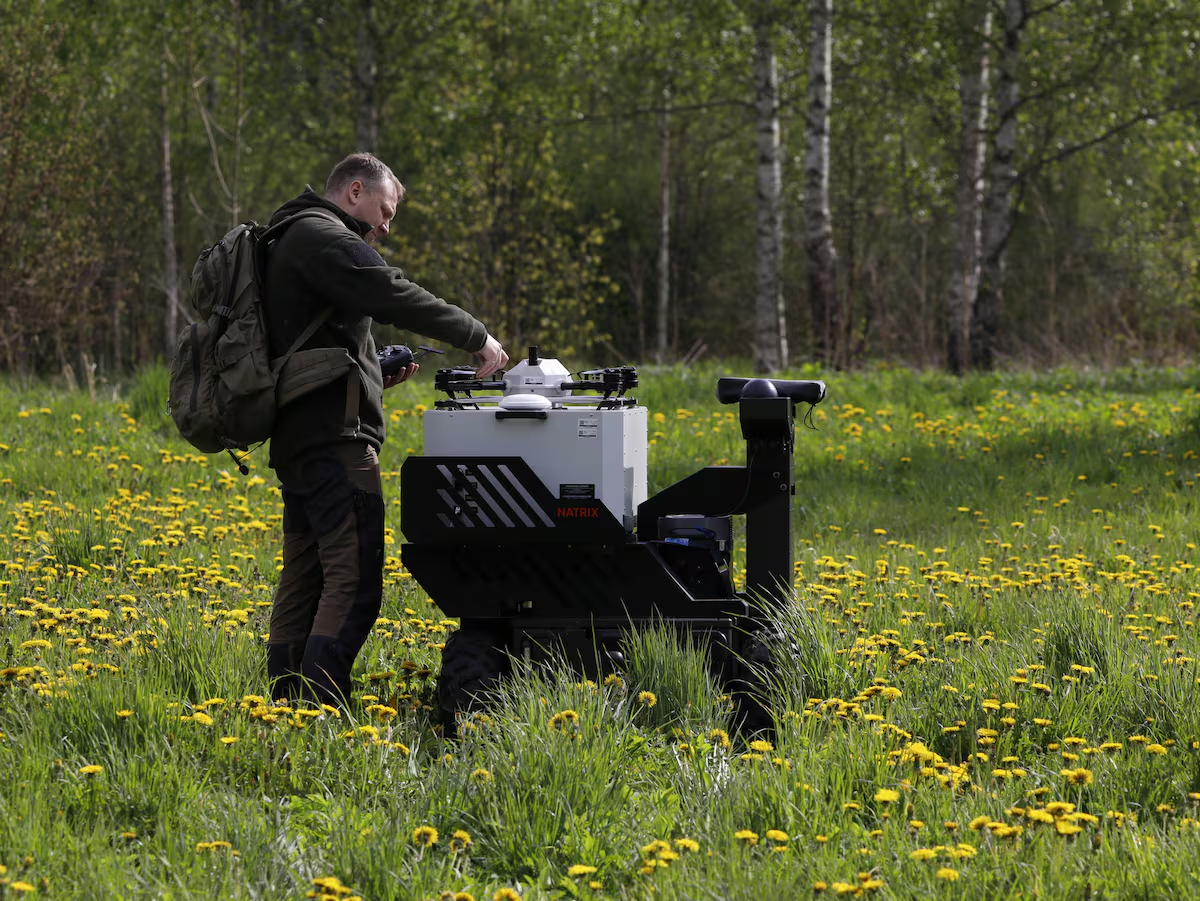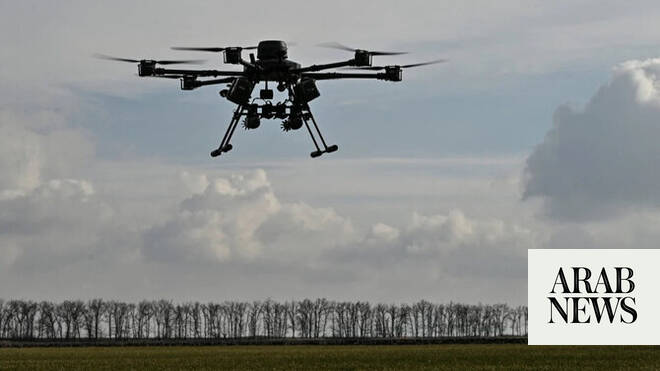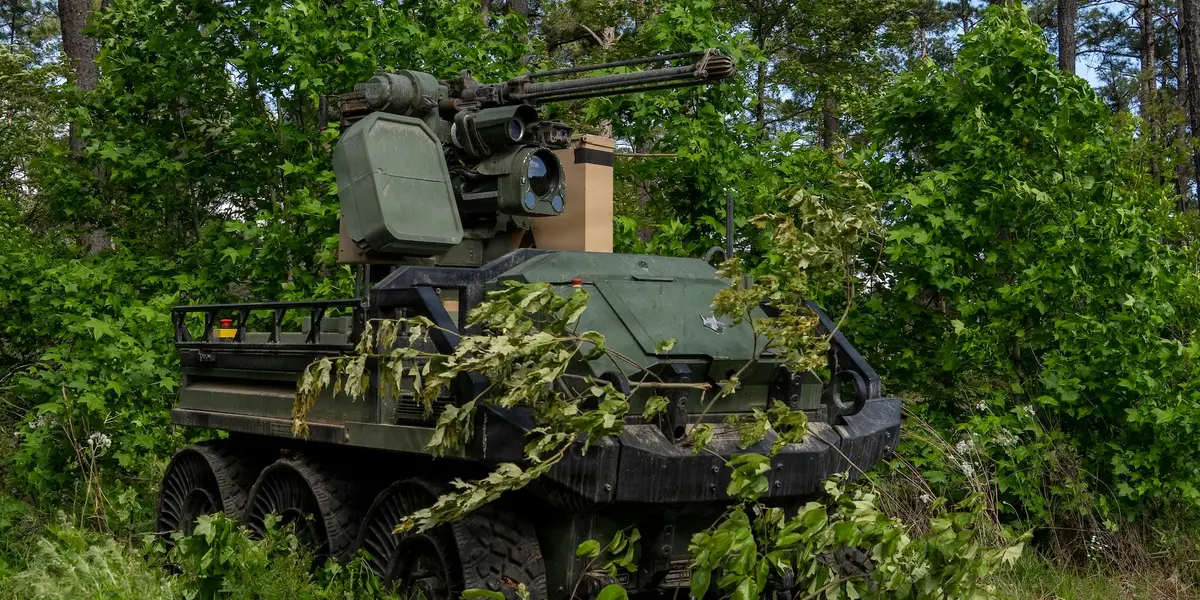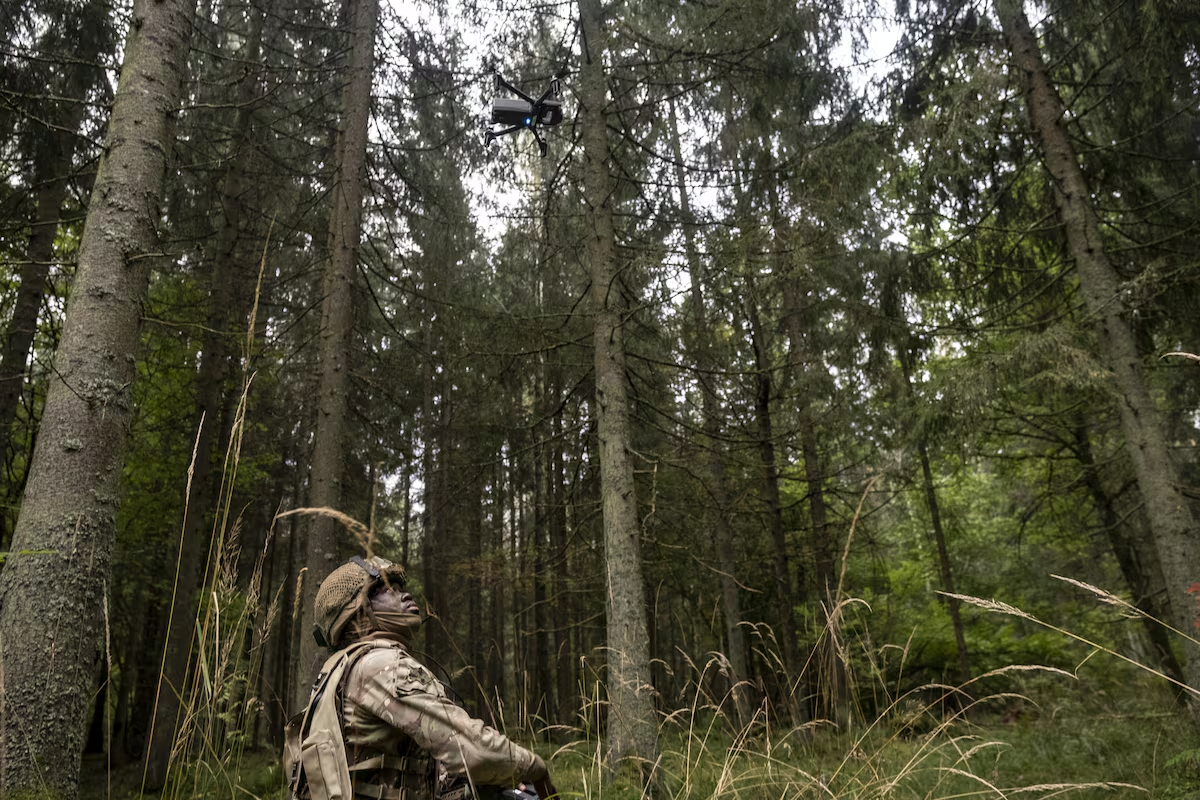
RIGA, Latvia — NATO’s plans to strengthen deterrence along its eastern flank envision an “autonomous zone” where only unmanned systems operate, with linked sensors, drones and long-range fires to detect and target invading Russian forces at the start of a conflict, alliance officials said on the sidelines of military exercises in Latvia last week.Latvian troops tried out unmanned ground vehicles during the Crystal Arrow exercise as part of operational testing to integrate new technology into NATO’s Eastern Flank Deterrence Initiative, inspired by lessons from Ukraine, said Brig. Gen. Chris Gent, deputy chief of staff transformation and integration at NATO Allied Land Command.“There’s no secrets here, it’s how warfare develops,” Gent told Defense News in an interview at the Sēlija training area in Latvia last week. “There is now a zone in front of you where you’re not going to put humans in harm’s way, and it’s all about machines taking the risk and absorbing that risk for you, and attrition.”With European intelligence agencies warning Russia could threaten NATO territory within a few years after fighting ends in Ukraine, the alliance’s Eastern Flank Deterrence Initiative aims to help build up a more credible border defense. Several countries on NATO’s eastern flank, including Latvia and Poland, have faced drone incursions from the direction of Russia over the past year.The initiative, shorthanded as EFDI, “has really picked up momentum very quickly,” United States Army Europe and Africa commander Gen. Chris Donahue told officers and officials in a briefing at the Sēlija range, describing it as NATO’s war-fighting concept.Donahue first discussed the concept at a conference in Germany last July. He said that beyond showing PowerPoint slides, it’s now about fielding capabilities and countries exercising with them to prove they work, and “make sure we have deterrence every day.”The concept includes a unified network of connected sensors, unmanned systems and both offensive and defensive effectors, according to Gent. The Eastern Flank Deterrence Initiative envisions “an autonomous zone, well documented already” where only unmanned systems can operate effectively before either side starts taking casualties, Gent said.“This is here right now,” Gent said, citing press reports of Ukraine capturing a position in April using only unmanned systems. “We’re not talking about science fiction, we’re not talking about the future. We’re not talking about 2040. We are talking about the requirement today.”Brig. Gen. Chris Gent speaks to NATO military staff at the Sēlija Military Training Area in Latvia on May 12, 2026. (Rudy Ruitenberg/staff)The challenge then becomes how many autonomous systems one side has, how effective they are, and how effective the counters are, according to Gent, who said the only way to understand that is through exercises such as Crystal Arrow. One hurdle remains different levels of permissions between NATO nations about allowing autonomous sensors to fire effectors, he said.“More and more nations are being challenged or are having that argument developed for them in real time, when, for example, you might see a drone incursion in peacetime,” Gent said. “Do we shoot that drone down, where might it land, for example. It’s become very real here in Latvia.”NATO has been testing new technologies in support of the EFDI since September within the Task Force X framework. During the first pilot in Lithuania in September, German forces integrated unmanned ground vehicles and counter-UAS in their operations, while testing in Finland in December focused on connectivity, according to Gent.The alliance is developing a “data backbone” across the Eastern Flank Deterrence Initiative, with a network tying together thousands of sensors and effectors, including acoustic and electro-optical sensors as well as counter-UAS and UGVs, Gent said. The idea is for sensors across the eastern flank to talk to each other and “trigger each other’s effectors across international boundaries,” he said.Trying out new capabilities during exercises is key to helping troops integrate them, Gent said, noting how Latvia’s Mechanized Infantry Brigade used UGVs during Crystal Arrow. NATO covered the cost of travel and accommodation for media attending the exercise, including for Defense News.The alliance is also asking companies to talk about how they’ll connect unmanned ground systems into NATO operating systems, with Gent saying there are lessons to be learned from Task Force X Baltic.Work is ongoing within NATO’s operational experimentation to establish the effective size of the autonomous zone, which varies depending on the terrain, according to Gent.In Ukraine, the term “kill zone” is used informally to describe an area near the front where movement is rapidly detected and targeted by drones, artillery or loitering munitions, and which can range to 15 kilometers or more from the line of contact in some areas.Latvian troops are training every day to secure this “kill zone” with only unmanned systems, said Maj. Eduards Šinkūns, chief of the operational, planning and training department of the Mechanized Infantry Brigade, in a briefing with reporters during Crystal Arrow. He described a multilayered system of drones supported by infantry and artillery.“What we see in Ukraine, no vehicle movements are in the gray zone at all,” Šinkūns said. “Any movement is destroyed.”Šinkūns declined to detail how Latvia would defend against a Russian invasion, saying “we Latvians, especially the mechanized brigade, we have a plan, and we know how to execute it. That’s all I can say about it.”The Eastern Flank Deterrence Initiative is one part in a multilayered approach to dissuade a Russian attack, said Brig. Gen. Jamie Murray, the deputy commander of the Estonian Division, in an interview with Defense News at the Sēlija training area.While the deterrence initiative creates a “day zero problem” by being able to detect and strike an attacker immediately, the next layer is the ability of Latvia, Estonia and Lithuania to hit targets in the deep if Russia does invade. He noted Estonia’s purchase of additional Chunmoo rocket artillery systems from Hanwha Aerospace with a range of 290 kilometers.He said the most demanding challenge for the alliance would be “a gambling Putin, throwing some forces, gambling that NATO doesn’t react, nibbling a bit of any of our countries,” Murray said.“If deterrence has failed, we reserve that right to then strike back at military targets,” Murray said. “The thing about the kill zone, it’s not going to be symmetrical. The Estonians, for example, have a very clear ‘no Russian boots on our territory.’ So the kill zone could be conceivably on their side of the border.”Shaping the terrain with physical barriers in combination with the deterrence initiative can allow NATO forces to compensate for the force-ratio imbalance with Russia, Murray said. He cited the Baltic Defense Line of anti-tank ditches and physical obstacles, and the difficulty Soviet troops faced in 1944 to remove German troops due to the forest cover.“The first act is to deter them, the second is to stop them, and the third is to get them into a position where ultimately they’ve culminated, we’re forcing them to do an echelon change, and as they do that, they’re really vulnerable,” Murray said.He said NATO’s logic has moved from the tripwire force to “deterrence by punishment and denial.”“The end state is clear, and we’re all working towards it,” Murray said. “Prove to Russia that they shouldn’t invade.”Rudy Ruitenberg is a Europe correspondent for Defense News. He started his career at Bloomberg News and has experience reporting on technology, commodity markets and politics.
NATO eastern deterrence strategy takes shape around ‘autonomous zone’
“What we see in Ukraine, no vehicle movements are in the gray zone at all,” one Latvian commander said. “Any movement is destroyed.”
1,211 words~6 min read