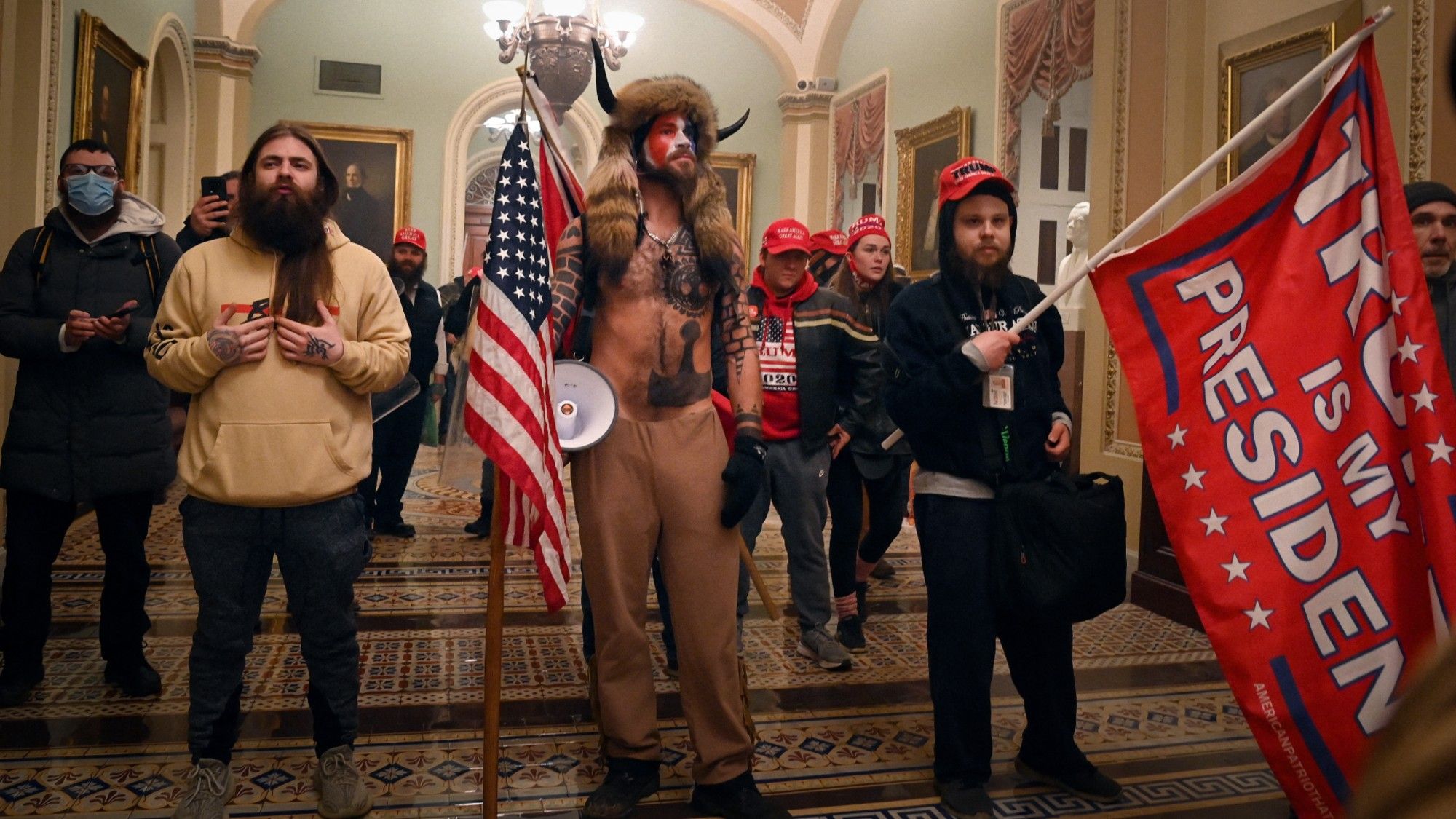
A former Justice Department official had two simple words to describe the department’s creation of a $1.776 billion “Anti-Weaponization Fund” meant to compensate allies of President Donald Trump. “Patently unlawful,” the former official told HuffPost. “What the memo is contemplating is patently unlawful.”The Justice Department created the fund, announced in a press release and memo on Monday, in exchange for Trump dropping his $10 billion lawsuit against the IRS. The department had offered little information about the fund when it was announced — and still very little is clear, even after the department released a new settlement agreement on Tuesday, ostensibly to provide specifics. The agreement does note, however, that in 30 days, the Anti-Weaponization Fund will “establish funding and any other relevant requirements, rules, conditions, terms and waivers” for claims.In its initial press release and memo, the DOJ did not define what specific criteria applicants’ claims must meet or how those claims would be vetted, but suggested the money would be used to pay people who have been wrongfully targeted for their political beliefs. The department did not explain how it reached the $1.776 billion figure.It is expected that the funds will go to Jan. 6 rioters who file claims, at least in part. Acting Attorney General Todd Blanche told lawmakers Tuesday that “anybody could apply” and it would be “for commissioners” appointed to the fund — that he will help select — to decide who receives a payout. The settlement agreement notes that time “spent in prison or federal custody as a result of lawfare and weaponization from ‘any source’” will be considered when claims are reviewed. Trump pardoned over 1,500 rioters, including those who violently assaulted police or were convicted of seditious conspiracy. But when asked on Monday if people who assaulted police should be paid, he dodged the question.“A hallmark of this administration is to say things that are completely divorced from reality to conceal its own misconduct,” said Andrew Warren, senior counsel at Democracy Defenders and former federal prosecutor. “The president has shown time and time again that he is willing to do whatever he wants to line his own pockets and that of his friends and family at the expense of American taxpayers.” (Notably, in a one-page memo published Tuesday by the Justice Department, it says the settlement included a clause where the IRS is “forever barred and precluded” from investigating Trump or his “related or affiliated individuals” and other businesses and trusts.)The Justice Department remains vague on eligibility, stating only that a person must “assert at least one legal claim stating that the claimant was a victim of lawfare and/or weaponization.”Who decides if the claim is valid and on what basis? The Anti-Weaponization Fund has the final say, per the agreement, and will base its reasoning on whatever it considers “the supporting evidence” or “the claimant’s actions, actual damages incurred, attorneys’ fees...[and] other factors the anti-weaponization fund deems just and appropriate.”A nondescript “third-party contractor” can audit the claims, too, and the settlement agreement warns that the DOJ or “any other government agency may, to the full extent permitted by law, make referrals for investigation or prosecution or prosecute or take other enforcement action to address any evidence of fraud.” How that “fraud” is assessed is not described, nor is it clear what constitutes fraud.What is certain, however, are two key elements: The Anti-Weaponization Fund is in charge and the taxpayer will foot the bill.Since filing claims with the fund is voluntary, “there shall be no appeal, arbitration or judicial review of claims, offers or other determinations made by the Anti-Weaponization Fund,” the settlement agreement states. And in terms of where the roughly $1.8 billion in payouts will be coming from: The DOJ says compensation to the allegedly aggrieved will come from the Judgment Fund, a taxpayer-backed fund that has long been used to pay court judgments and settlements for lawsuits against the government. In settlement cases, the court typically oversees how funds are drawn off the account and how auditing occurs — but for the anti-weaponization fund, all oversight and auditing will seemingly be left to the attorney general’s purview and a handpicked commission of five people. One member of the commission will be chosen “in consultation with congressional leadership,” the memo states. The memo also allows Trump to remove any member of the fund’s commission and replace them “the same way as the replaced member was selected.”“I’m deeply curious what the rationalization was of the administration to the Treasury to explain this,” said the former DOJ official, who asked to remain anonymous out of fear of retaliation.It is unclear if the Treasury Department agreed to the terms the Justice Department laid out. The top lawyer at the Treasury Department resigned after the fund was announced Monday.“He’s doing it so he can put his thumb on the scale on deciding who gets the money and then have the spigot shut off as soon as he leaves office.”- Andrew Warren, senior counsel at Democracy Defenders and former federal prosecutorWhen first making the announcement, the Justice Department pointed to a 2011 settlement agreement known as Keepseagle v. Vilsack as proof that there was “legal precedent” for such a fund.But Joe Sellers, lead counsel in the Keepseagle case, told HuffPost: “It’s a totally inapt analogy.” In the Keepseagle settlement, the U.S. government agreed to pay $760 million to a group of Native American farmers and ranchers who had sued the U.S. Department of Agriculture for racial discrimination. The farmers and ranchers alleged that they weren’t being given the same loan terms as white farmers and ranchers. The settlement came out of a class action lawsuit that started in 1999. Claims had to be vetted, the court had to approve the claims, and there had to be clear determinations made about whether funds were being dispersed to people who truly belonged to the class of Native Americans suing. Sellers called it a “sophisticated” process where oversight was conducted by the courts and in conjunction with Native American farmers, ranchers and businesspeople. “It was the court that had total control,” Sellers said. “Not some panel of people who were appointed by somebody to do this.”The administration has claimed that “there are no partisan requirements to file a claim” and seek compensation from the Anti-Weaponization Fund, which raised the eyebrows of legal experts. “It’s like they protest too much,” Sellers said. “To say there is no partisan requirement is to create the inference that otherwise people might think there was.”Warren, the former federal prosecutor, said he considered the mention of “no partisan requirement” to be disingenuous. Just consider the expiration date the Justice Department slapped on the fund: December 2028. “[Trump] doesn’t want to make these funds available to another administration to control,” Warren said. “So he’s doing it so he can put his thumb on the scale on deciding who gets the money and then have the spigot shut off as soon as he leaves office.” Trump has made weaponization of the federal government nearly routine, particularly with the capture of the Justice Department, which has made a series of splashy attempts to investigate and/or criminally charge political foes or vocal critics of his administration including former FBI director James Comey, New York Attorney General Letitia James, Rep. LaMonica McIver (D-N.J.), Federal Reserve Governor Lisa Cook, former national security adviser John Bolton, chair of the Federal Reserve Jerome Powell and several others, according to a comprehensive list compiled by Protect Democracy.“It has been a nonstop deluge of corruption since Day 1,” the former Justice Department official said. “The fact that neither the judiciary nor the legislative branches seem to have any ability to curb this corruption is troublesome to say the least.”
The 'Patently Unlawful' Plan For Trump's $1.8 Billion Slush Fund
The DOJ has claimed the fund is similar to an Obama-era settlement. But legal experts say that’s a far cry from reality.
1,284 words~6 min read