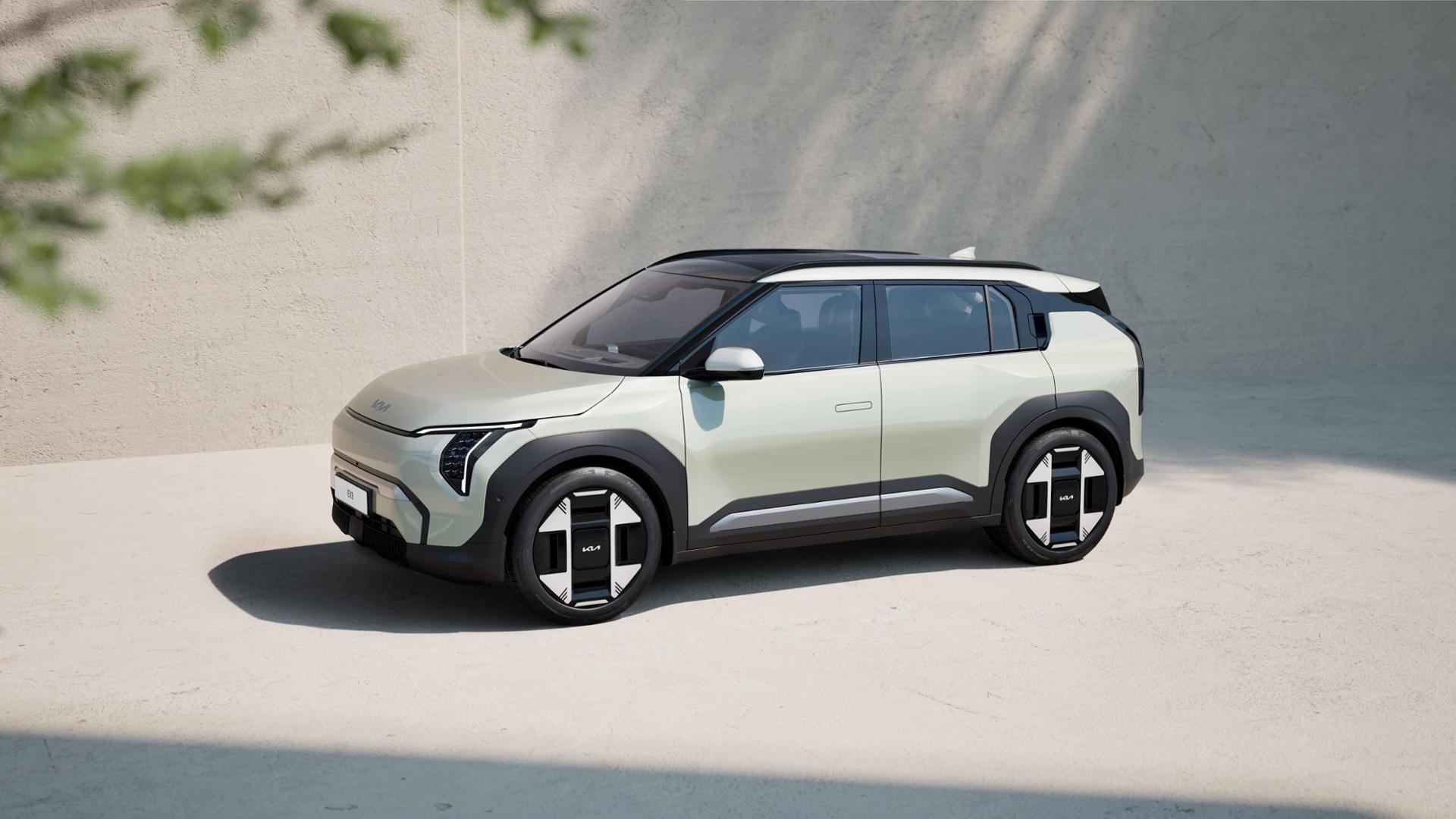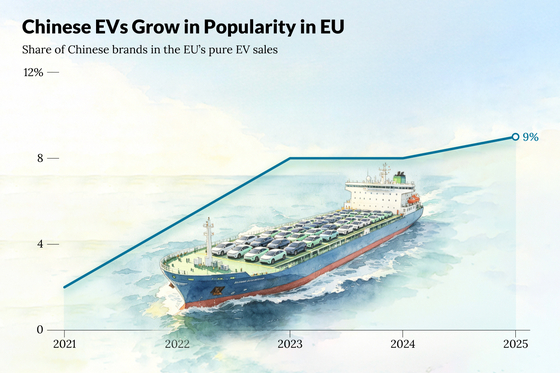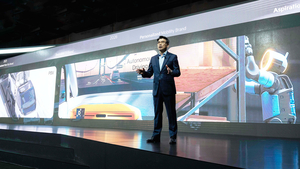
CEO tells investors broader EV lineup and EU battery rules could narrow gap with Chinese rivals Kia CEO Song Ho-sung (Kia) Facing intensifying price competition from Chinese automakers in Europe, Kia is betting that a broader electric vehicle lineup and tighter EU rules on Chinese battery supply chains will help narrow the price gap with rivals and lift market share.Kia recently outlined the strategy to investors during non-deal roadshows in Singapore and Hong Kong led by CEO Song Ho-sung.Chinese automakers have accelerated their push into Europe — the world’s second-largest EV market — after effectively being shut out of the US by Washington’s decoupling measures against China. Kia, however, has struggled to strengthen its EV presence in the region.The automaker said its European sales declined for two straight years after it phased out the gasoline-powered Ceed hatchback, once a key volume model, to expand EV production. But weaker-than-expected EV demand weighed on the transition.Kia now sees 2026 as a turning point after completing a broader EV lineup spanning compact to large SUVs, including the EV2, EV4, EV5, EV6 and EV9.Its sales in Western Europe rose 3.2 percent in the January-April period, supported by recovering EV demand and a stronger portfolio of lower-priced electric models.Kia also expects Europe’s tightening industrial policies to weaken Chinese competitors’ cost advantage.“If Europe limits subsidies to EVs equipped with locally produced batteries, Chinese automakers may no longer fully benefit from China’s low-cost manufacturing base and government-backed subsidies,” said Korea Investment & Securities analyst Kim Chang-ho, who joined the roadshows. “That could narrow the price gap between Kia and Chinese EV makers.”The EU is moving to reduce dependence on China-dominated battery supply chains. Under the bloc’s Industrial Accelerator Act, EVs sold in Europe will qualify for incentives from 2027 only if they use locally produced batteries.Kia said a core strategy is achieving price parity between EVs and internal combustion engine vehicles to accelerate mass-market adoption.In Germany’s C-segment SUV market, gasoline vehicles currently sell for around 35,000 euros ($40,700), while Kia’s EV6 initially sold for 55,000 to 60,000 euros because of low production volumes and high early-stage costs.Kia expects the gap to narrow significantly by 2030, with both gasoline and EV models in the segment projected to converge at around 40,000 euros.The company expects battery costs to fall roughly 30 percent by 2030, from around $130 per kilowatt-hour to below $100, helped by lower raw material prices and internal cost-cutting efforts, including improvements in electric power systems.Kia also said it plans to work strategically with battery suppliers, including LG Energy Solution, Samsung SDI, SK On and CATL, selecting batteries based on vehicle positioning and pricing strategy.
Kia sharpens Europe EV strategy as China fuels price war
Facing intensifying price competition from Chinese automakers in Europe, Kia is betting that a broader electric vehicle lineup and tighter EU rules on Chinese b
439 words~2 min read