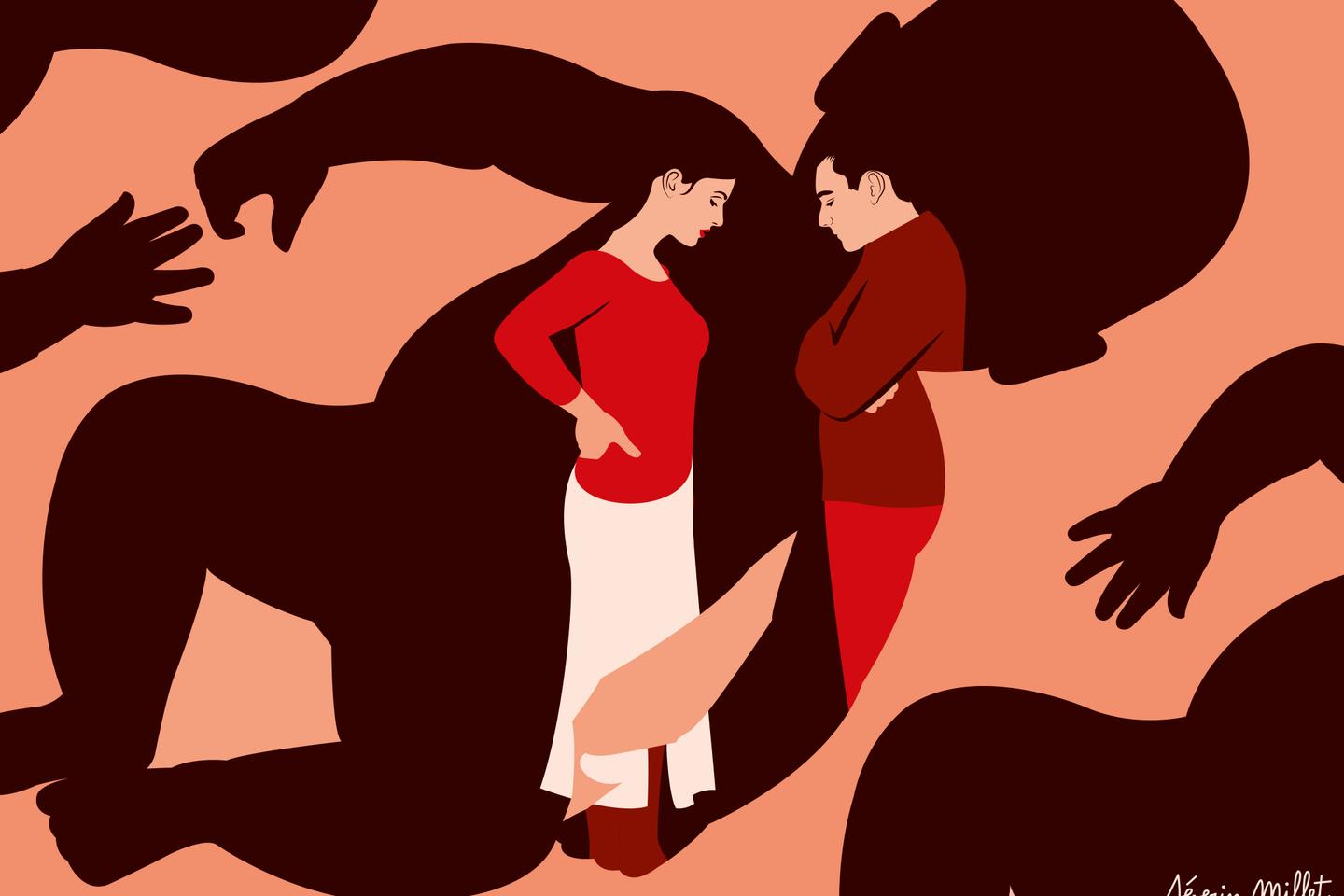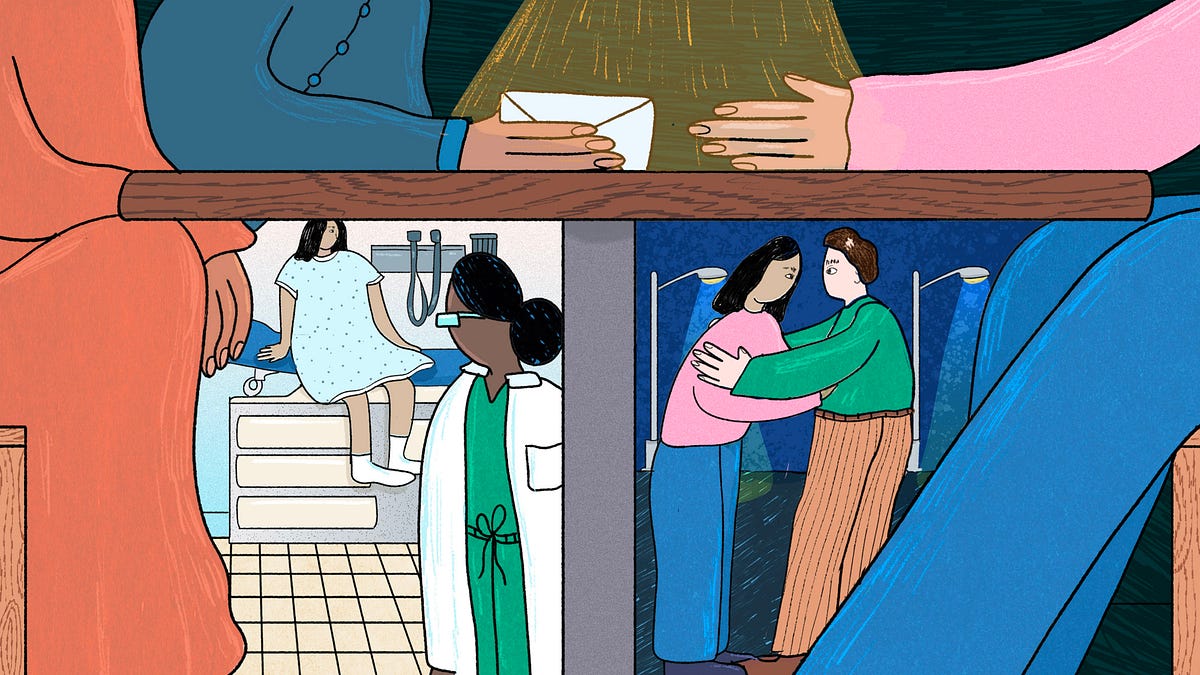
IVF has been in the zeitgeist for a while now. So many important stories have been told with candor about how real the struggle can be, the physical challenges, the emotional journeys people go on, usually ending in success. What we hear about less, though, is what it looks like when these journeys aren’t successful, the toll it takes monetarily and psychologically, the heartache that follows, but also the logistics. This essay — the latest in our Personals section — by the brilliant writer Angie Chuang, gives us a glimpse inside of that world. We’re so proud to present it. Illustration by Jane Demarest | Story edited by Jesse Sposato | Audio produced by Drew NellesIt was Jeff’s idea to put the drugs in a plain brown paper bag and keep it at my feet while meeting the buyers at Starbucks. I’d discreetly slide it toward them after counting the cash. Having watched a few too many drug deals gone bad in movies, he insisted on sitting at another table close by in case I needed help.I went along with it, because I knew even less than he did about drug deals. How had we gotten here, selling our unused fertility medications to someone we’d met on an underground market after three failed rounds of IVF? Maybe it was because a clinic staff member casually mentioned “the website” on which many patients sold leftover meds to recoup costs. Maybe it was because, after tens of thousands of dollars spent on procedures and medications, we had nothing to show for our efforts at parenthood but debt, plus nerves and a marriage equally frayed.This was something we could take control of, a way to salvage some cash and thumb our noses at big pharma and the fertility industrial complex.Yet we approached the suburban Maryland Starbucks shaky and clammy. I sat at a rectangular table, brown paper bag at my feet. Jeff parked a couple tables away at a high-top, trying to appear casual — which is to say he did not appear casual at all, eyes darting under his weather-beaten Orioles cap. I kept checking my texts from the woman I had met on “the website,” a more freewheeling version of Craigslist.My pulse pounded in my ears as I imagined who might come through the door. An undercover FDA investigator? A scam artist with a blackmail scheme? Or, probably more likely, someone a little like myself, who wanted to have a biological child but could not afford the exorbitant cost of trying.“Aditi” (we both used fake names throughout the whole transaction) and her husband, both Indian immigrants in their early 30s, found me based on my texted description: Chinese American. Shoulder-length hair. Early 40s. They looked nervous too. I gently slid the bag toward Aditi with my foot, and looked down. Out of the corner of my eye, Jeff leaned forward on his stool.“Did you get pregnant?” Aditi asked softly, placing the bag into her lap. She and her husband didn’t seem to notice Jeff trying to eavesdrop, perhaps because he is white and blended into the rest of the crowd.“No,” I said, and her face fell. “I mean, not yet. We’re taking a break,” I lied.We had been among the approximately quarter million patients a year who used assisted reproductive technologies. For many — including cancer survivors like myself and same-sex couples — the medical procedures offer a chance at conceiving a child where there may have been little or none. Yet the expensive and difficult process creates untold physical, emotional and financial stresses for many who can ill afford it. The underground IVF medication market was one such indication of these strains.The size and persistence of an illegal fertility-drug market has been well documented in major news media and academic journals for decades. One 2022 medical study found 954 black-market listings for fertility-related drugs after investigating five websites.Jeff and I were late bloomers in marriage, having first met two years prior, when I was 40 and he was 45. I had always wanted children, but not in a way that compelled me to really plan for them. When Jeff and I became a couple, and then married, I threw my timelines at him like a dare. “I’m really going to have to know before I turn 41,” I said, “if you can try to have a child with me, soon.”He knew, by then, that I had lost one ovary to a borderline cancerous tumor in my mid-30s. As my ob-gyn reminded me, by virtue of my age alone, I was literally geriatric as far as pregnancy was concerned.Jeff responded, as was his way, with barely concealed panic. “I know this is important to you,” he said, furrows etched in his brow, “so I’m going to try to get there.”It was that trying that got us through the trying. First, there was the news that because of our respective medical histories and ages, we’d need to go straight to IVF. As the bills, the drugs, the injections, the hormonal and physical side effects, the many doctor appointments, and more bills, racked up, we became consumed by stress and uncertainty — more separately than together.Jeff stopped sleeping through the night and started losing a patch of hair at his hairline, right above his right eyebrow. I started going to appointments alone and shunning him from my injection station (formerly known as our coffee table), littered with bags of syringes, scheduling charts, a small red plastic medical waste container for used needles, and ice packs and homeopathic balms for my bruising.Two failed cycles had left our bond feeling like my bloated abdomen, more bruises than unmarred areas. As I begged him to proceed with Cycle Three, I could see it: That odd bald spot on his otherwise voluminous dark hair was growing. “I want a child,” he said. “I just don’t know if this process is good for us. For you.”I went forward with the third round, with only a begrudging OK from him. I shielded him even more from the process. A patch of hair on my right eyebrow disappeared seemingly below the same place he had lost hair on his head. When I drove to the clinic, alone, for my final embryo transfer, I received a phone call from our fertility doctor. The embryo had “failed to thrive” in the lab, so the procedure was cancelled. Jeff offered to pick me up. I drove home alone.A month later, at the Starbucks, Aditi’s husband avoided eye contact with me, but handed me a cash-filled envelope. I counted it quietly as she pointed into the bag at the syringes and asked, “Do these hurt?”Her eyes were wide and moist. I wanted to hug her.“Ice helps with the bruising,” I said.She leaned toward me. I could feel other questions forming, probably the same ones I had had the privilege of asking a pharmacist. A sharp jolt interrupted her. Aditi’s husband had kicked her with his sneaker below the table. He motioned toward the door. I peered over at Jeff, who raised his eyebrows.“You’ll be OK,” I said to Aditi as her husband marched her away from me. I tried to give him the benefit of the doubt, to assume he rightfully thought it best not to linger at an illegal drug transaction, or that he might have felt helpless — ashamed, even — about their fertility struggles and inability to buy meds from a pharmacy. “Good luck,” I said softly as she brushed past me, bag in hand.As soon as Aditi and her husband left, Jeff rushed to my side. “What was that all about?” he asked, body tense. “Are you OK?”“I’m fine. I have the cash,” I said. I was tearing up and shaking. I knew I’d feel anxious about this all, but I didn’t realize I’d feel this emotional — and so tender toward a woman I’d likely never see again.He pulled me into him as we walked to the parking lot.“I think she was just trying to ask me some questions,” I said, “so she wouldn’t feel so alone.”He paused as we got to our car. He mentioned the husband’s body language, the impatient kick under the table, his disengagement from his clearly emotional wife. He sighed.“I’m sorry I made you feel alone,” he said softly. “I could feel his pain. But I also saw how his pain pained his wife.”Jeff squeezed me tighter, and I relaxed into him, allowing myself to be held.Making the sale using “the website” was something, unlike IVF — which requires the woman to endure so much, and the man to do little other than deposit sperm in a cup — something we could truly collaborate on, as co-conspirators.Our decision to stop trying was bittersweet, as all like it are. Years and, for me, two entire Ebony Anastasia Beverly Hills Brow Wiz Precision Pencils later, the missing hair on his hairline and my eyebrow grew back.Angie Chuang is on the journalism faculty at University of Colorado Boulder, and is the author of American Otherness in Journalism and The Four Words for Home. She has published literary nonfiction in Creative Nonfiction, The Washington Post, Litro, and other venues. This essay is part of a memoir-in-essays in progress called The Unbecomings.Jesse Sposato is Narratively’s executive editor. She has also written about feminism, friendship, culture and parenting for a variety of outlets, including Vanity Fair, InStyle, Slate, HuffPost, Memoir Land, The Rumpus and more. She is currently working on a collection of essays about coming of age in the suburbs, discovering punk rock and being boy crazy. Jane Demarest is an illustrator based in Philadelphia. Some of Jane’s clients include McSweeney’s, Courtney Barnett, Field Meridians, Off Assignment, Phish and Wilco. Their work has been recognized by the American Illustration Awards.
How a Black-Market IVF Drug Deal Helped Heal My Marriage
After failing to get pregnant, our financial and emotional reserves were depleted. An illicit transaction trading meds for cash at a suburban Starbucks was a surprising turning point.
1,631 words~7 min read