It’s clear that artificial intelligence is changing everything, from the way we learn to the way we work. What’s far less clear is how AI’s insinuation into everyday life is changing the way we relate to each other in the non-digital world.
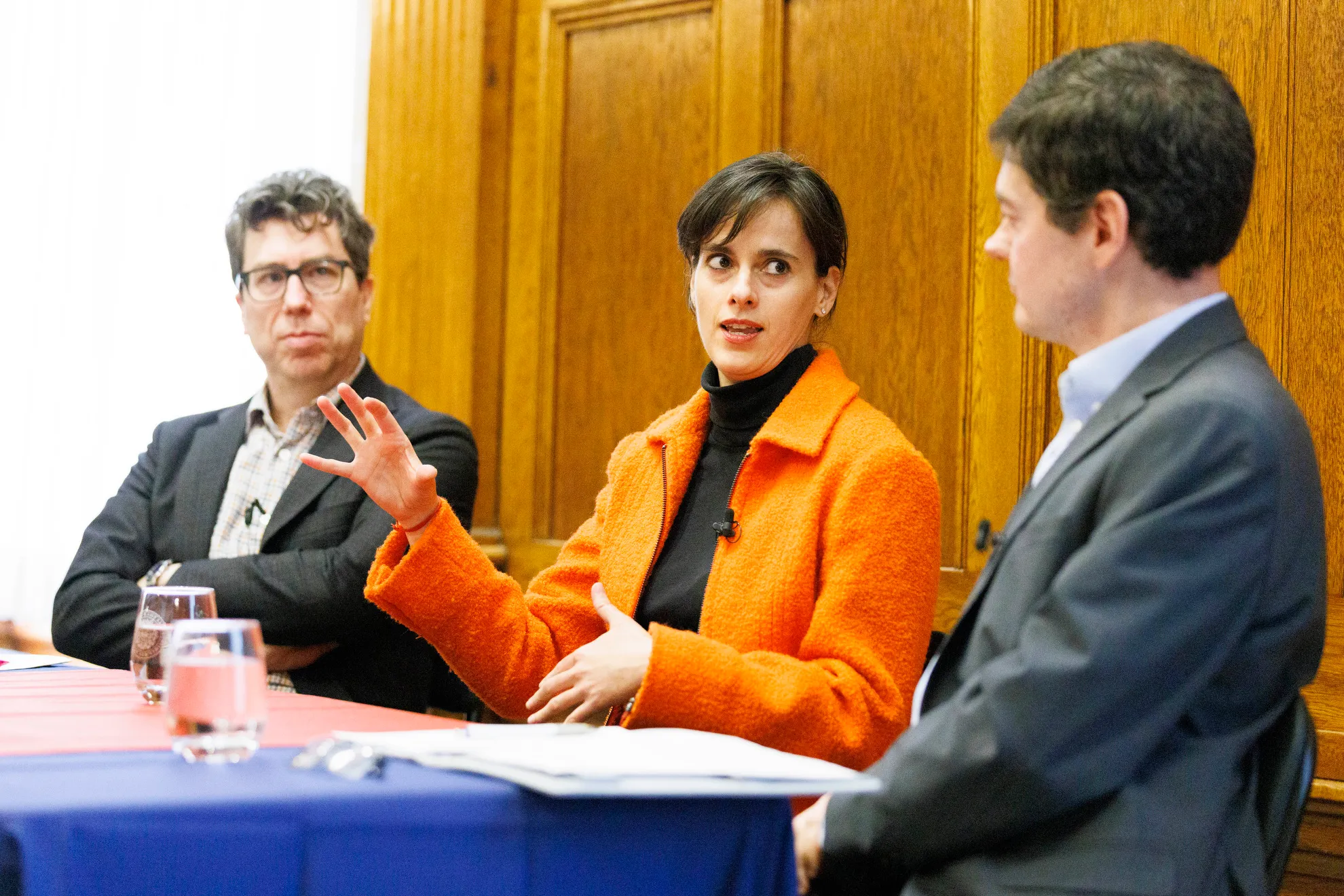
During a talk this week at the Barker Center, panelists discussed the rapid development of generative AI chatbots, like Claude and ChatGPT, and the ethical implications for how we communicate and connect as human beings.
The event, moderated by Eric Beerbohm, faculty director of the Edmond & Lily Safra Center for Ethics at Harvard, kicked off a series that will consider how AI is transforming both civil and uncivil disagreement.
The panel referenced a now-famous JAMA Internal Medicine article about patients perceiving AI responses to online health questions as more empathetic and accurate than those from human physicians.
Training AI chatbots to seem empathetic in order to boost engagement may be a smart business decision for tech firms, and may be preferred by users, but such constant reflexive validation comes at a cost, said Carissa Véliz, associate professor of philosophy at the Institute for Ethics in AI and a fellow at Hertford College at the University of Oxford.