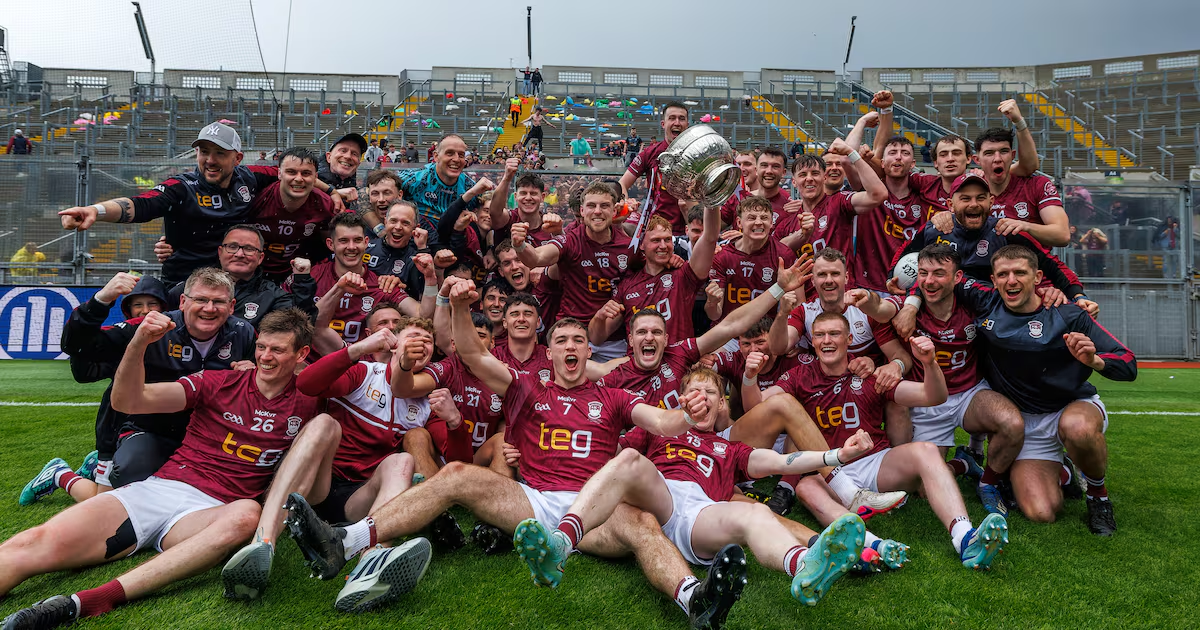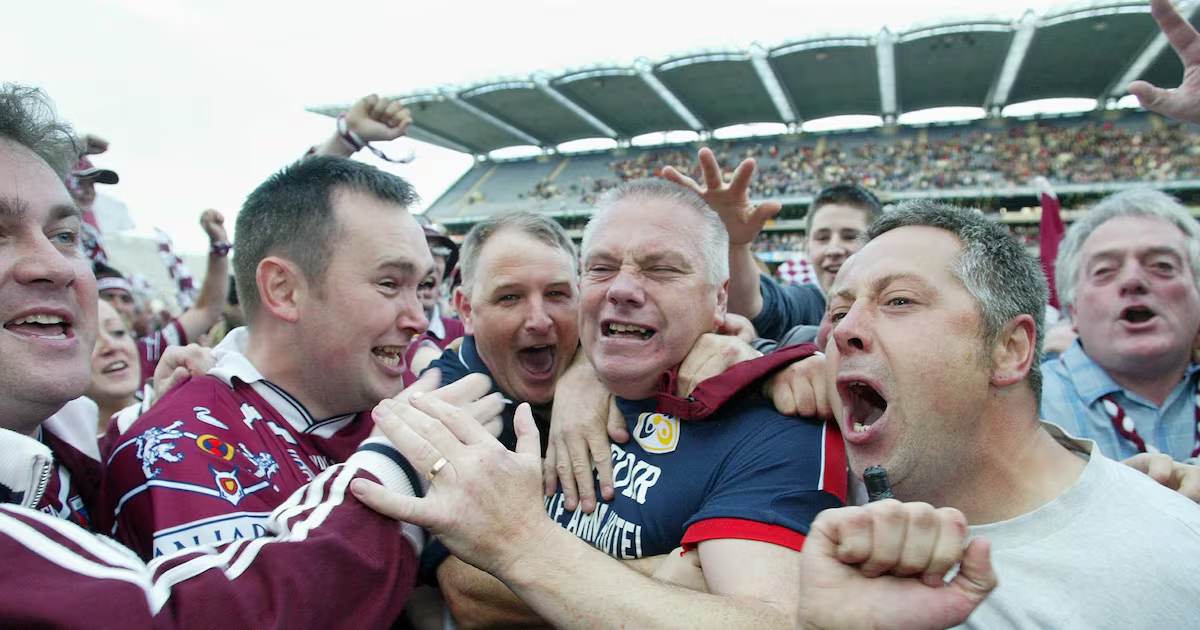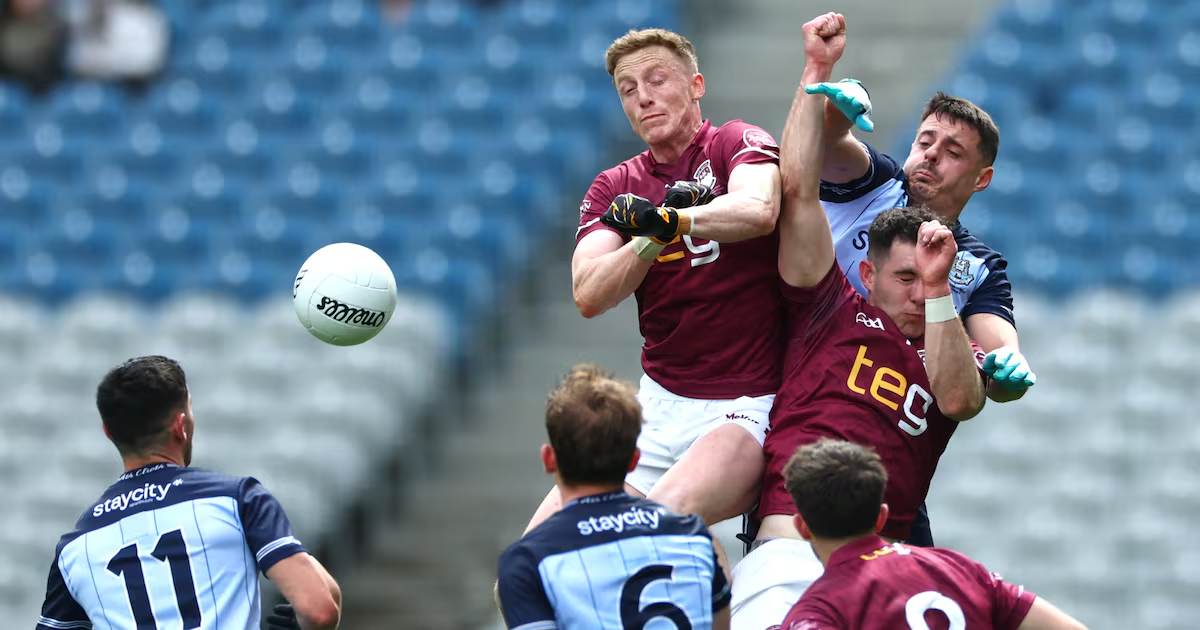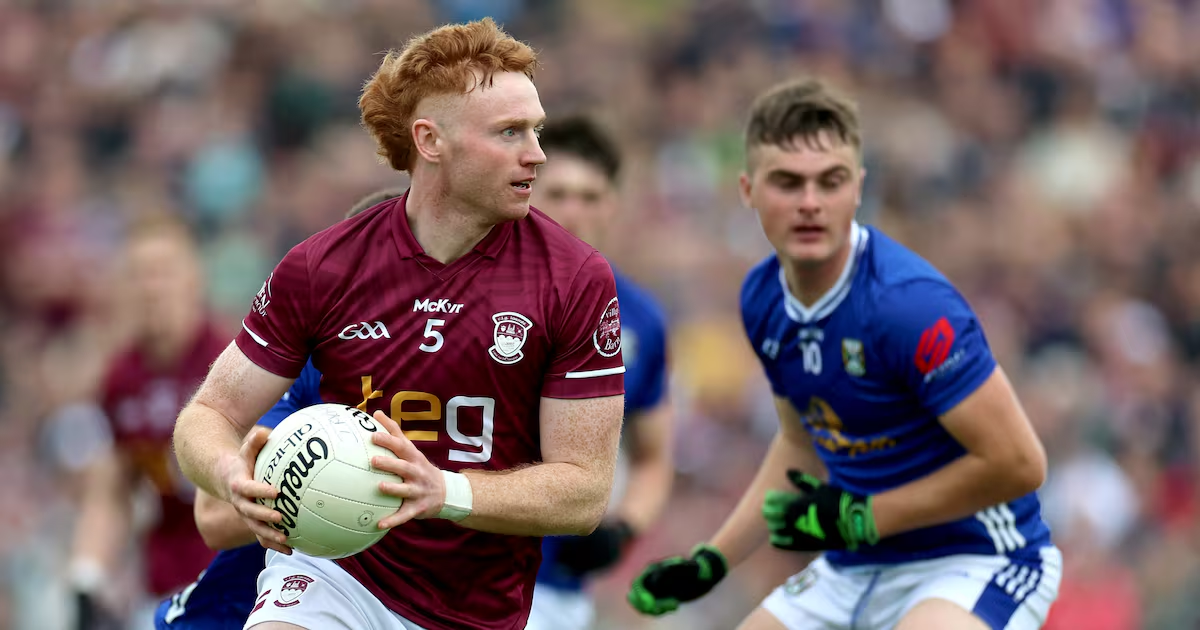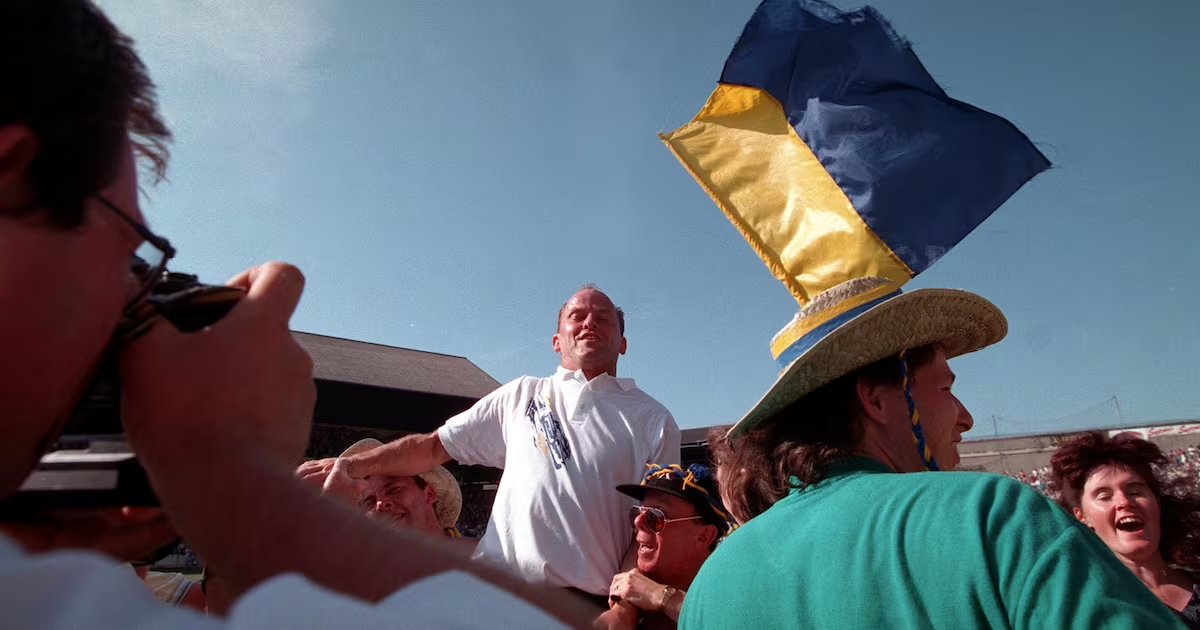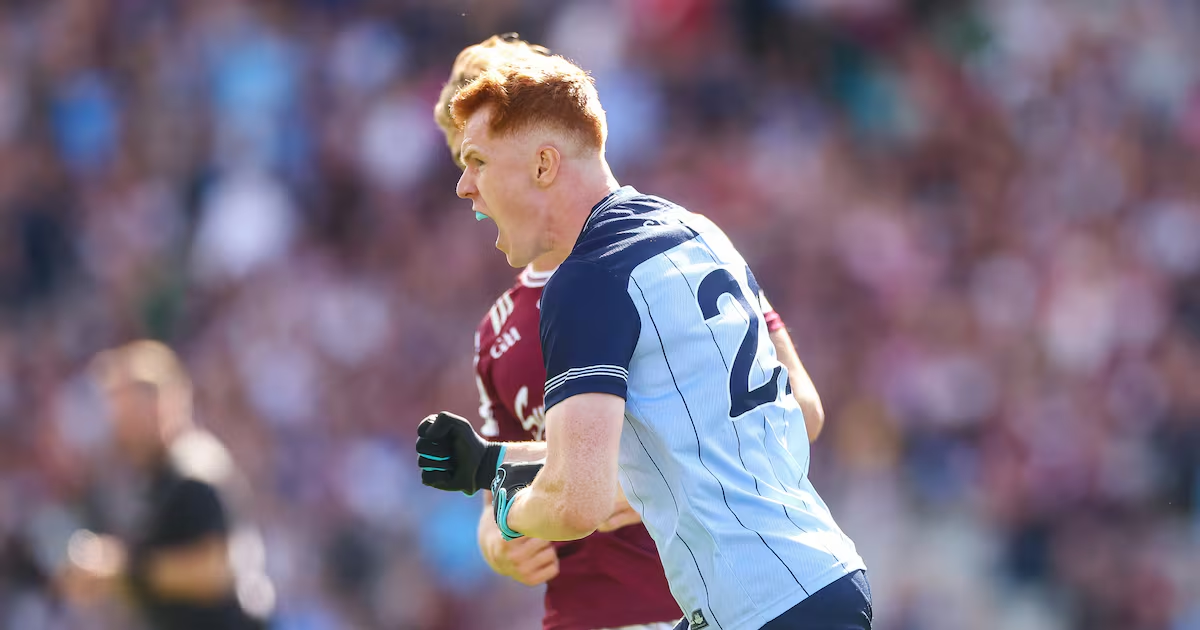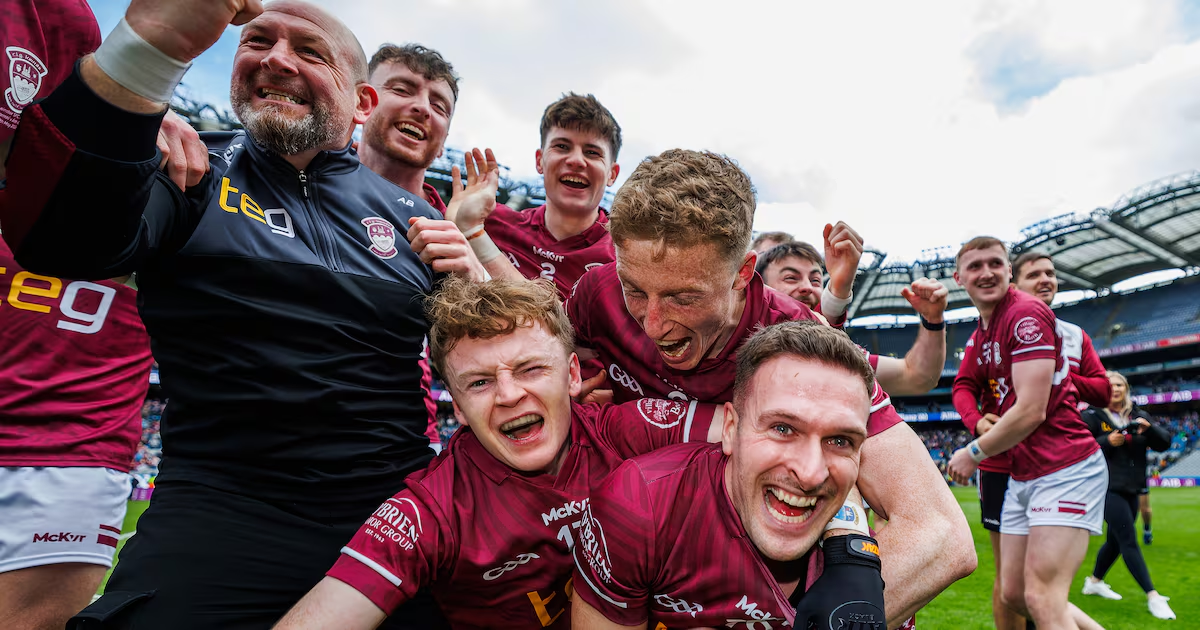
Westmeath’s dynamic captain, Ronan Wallace, who lifted the Delaney Cup on Sunday, acknowledged at the post-match media conference that when the tide runs in your favour during a match, you feel an irresistible control.“You get those purple patches and you’re in a flow state there where everything’s feeding off each other and everyone’s feeding off the scores.”He was referring to one of his team’s most impressive phases during the Leinster Final, the third quarter when they responded to Dublin’s quick three points on resumption to move five ahead.It was Eamonn Fitzmaurice on RTÉ co-commentary who remarked that quicker movement suited Westmeath better and that they “weren’t getting enough off the slow attacks”.That had been because Dublin were fencing off the slower, more deliberate phases of possession and forcing their opponents out wide and into corners. The increased tempo at this point in the match intensified the pressure on the favourites.From the 42nd minute and Cormac Costello’s second point in 60 seconds Dublin were outscored by 0-2 to 0-10 until the end of the third quarter, by which stage they trailed 0-16 to 0-19.Ger Canning’s commentary erupted on Sam McCartan’s point: “Everything they’re hitting at the moment is working a dream”.This ‘flow state’ domination came from uninhibited and accurate shooting – they missed just three shots during that time – and a near stranglehold on Evan Comerford’s kickouts.It happens but it has been almost commonplace under the FRC rules. Teams get a run on their opponents and reversing the momentum becomes nearly impossible. Most famously, Kerry’s 14 points in 15 minutes in last year’s All-Ireland quarter-final against Armagh that turned the match around.The process becomes mechanical. Score. Turnover. Score.Westmeath manager Mark McHugh and John Heslin after Sunday's Leinster final. Photograph: James Crombie/Inpho From when the relentlessly energetic Kevin O’Sullivan posted the first point of the comeback from 0-9 to 0-14, to McCartan’s score, the 19th, there were no wides and seven of the nine kickouts were turned over. One, which found Seán McMahon, was given away when the Dublin wing back’s pass was intercepted and ended up in a score for Robbie Forde.Dean Rock was correct to acknowledge Dublin’s feat in getting off the canvas to take the lead at the very end, but it must have been frustrating for the interim manager to watch his charges fail to protect the lead for the 90 seconds from Jason Daly’s kick-out. Instead, they were opened up like a can of tomatoes and prolific sub Senan Baker calmly kicked the equaliser with a whole minute left to play.By contrast, and as accepted by Rock, Westmeath ran the legs off their opponents in extra time, and when McHugh addressed his troops at the halfway mark, his instruction was clear and focused.“I just said lads there’s 10 minutes of your life here. I think we were seven up at half-time [in extra time]. We put ourselves in a serious position and the only thing I remember saying is, ‘lads, if we lose the ball we have to sprint back because if we don’t concede a goal here we’ll win the game’.”The word around was that Donegal now have a future manager. McHugh had been coach with Dermot McCabe – manager of the Cavan team Westmeath will face the week after next – until the latter’s prevaricated departure after which he stepped up to fill the vacancy.He has now emulated his dad Martin in winning an All-Ireland medal as a player with Donegal and a provincial title as manager.Westmeath manager Paidi Ó Sé is engulfed by supporters after the 2004 Leinster final replay against Laois. Photograph: Morgan Treacy/Inpho There was reference to McHugh coming from the west just as Páidí Ó Sé had, albeit a different direction, when Westmeath won the county’s first Leinster 22 years ago.It was not a trivial footnote either. Counties that have not known success frequently take strength from the input of elite managers with All-Ireland medals.Looking back at the 2004 documentary Marooned, which Cormac Hargaden and Setanta made in an inspired punt at the start of Ó Sé’s tenure, the subject’s expletive-laden eccentricities have become part of Gaelic games folklore – “a grain of rice” and a violated loaf of bread etc – but there is no doubting the impact he had on players, hungry to make the senior breakthrough.A then joint-record All-Ireland winner as a player and a twice successful manager, Ó Se had status and a means to communicate, which meant that his lofty expectations of the team became inspirational and self-fulfilling.McHugh has had a similar effect on the current team.“We feel as a group that we can compete with anybody in Ireland – that’s anybody, on any given day. We’ll compete with anybody,” as he told the media on Sunday.Westmeath captain Ronan Wallace lifts the Delaney Cup after their win over Dublin at Croke Park. Photograph: James Crombie/Inpho When he took over, Westmeath had spent last year losing matches by tiny margins, but in the process overstepped the demarcation line between hard luck and serial failure.At the start of the season, McHugh weathered retirements and the decision of Ronan O’Toole, their POTY in the 2022 Tailteann Cup winning campaign, to emigrate to Australia. For balance, he reclaimed John Heslin, the county’s retired most famous footballer, but not before consulting the current players.The western seaboard has produced many missionary managers, including the modern exemplar, Mick O’Dwyer, who followed a stellar career with his own Kerry by bringing good times to Kildare, Laois and Wicklow.John Maughan and John O’Mahony set out from Mayo and helped to turn Clare and Leitrim, winners of the Tailteann prototype, the less epically designated All-Ireland B, into provincial champions.The alarming thing for Dublin is that they were comprehensively beaten and looked flat out in extra time. What should further concentrate the mind is that last March and April, the county was knocked out of the Leinster minor and under-20 championship, also by Westmeath.Ashes to ashes, dust to dust.Email: sean.moran@irishtimes.com
Seán Moran: The Westmeath purple patch that left Dublin marooned
Mark McHugh becomes the latest missionary from the western seaboard to strike silver
994 words~5 min read