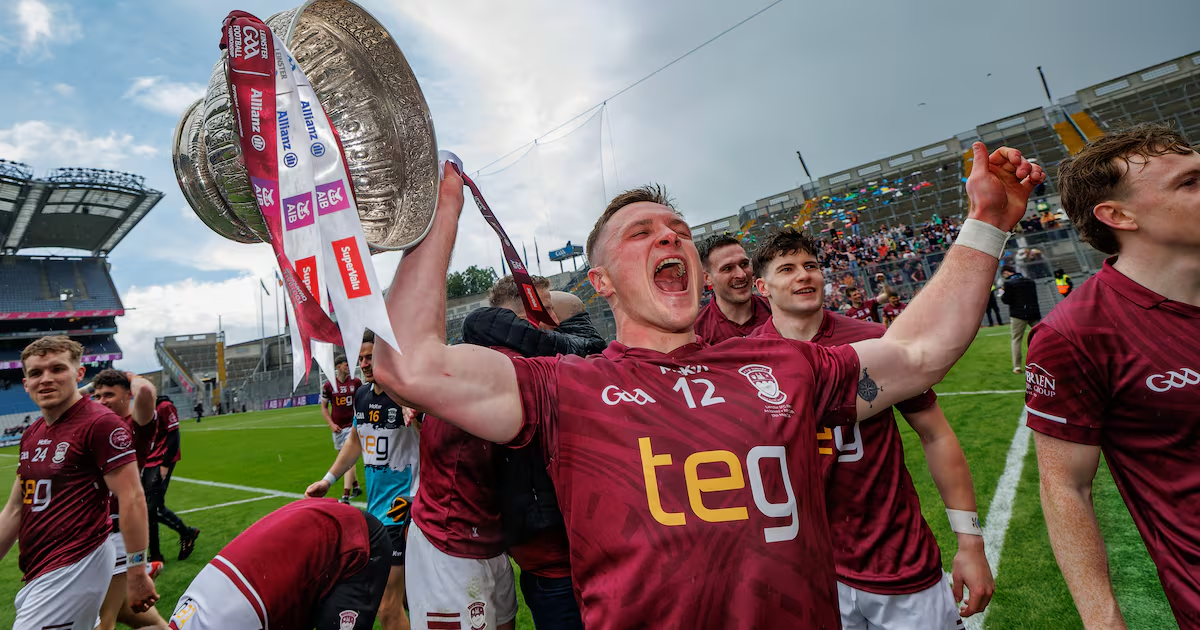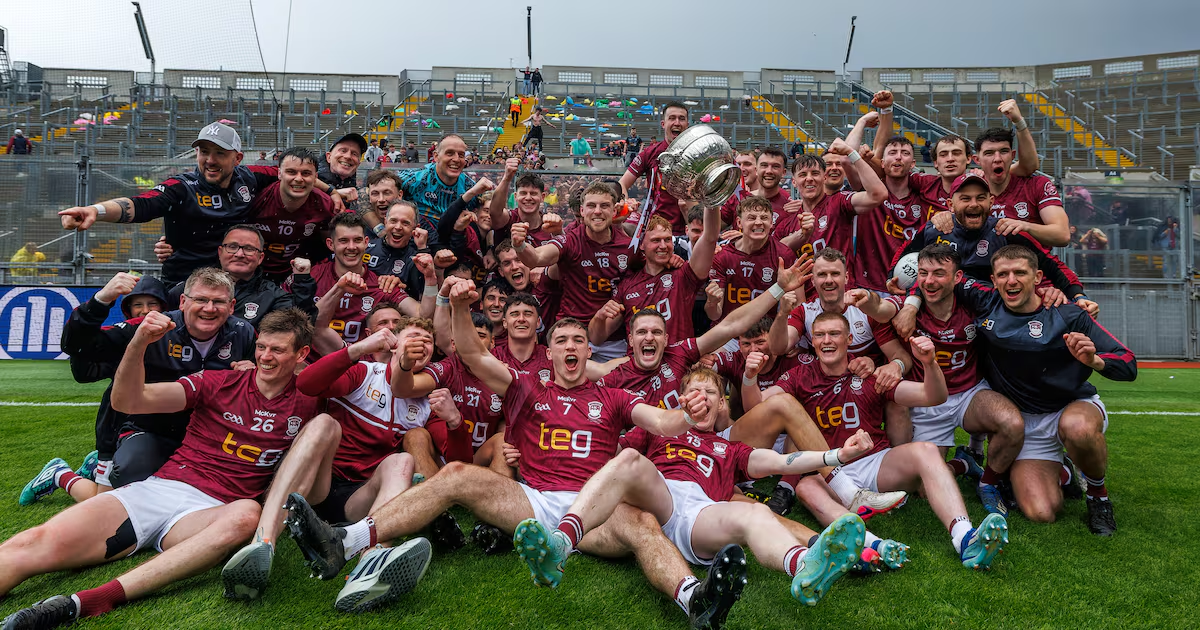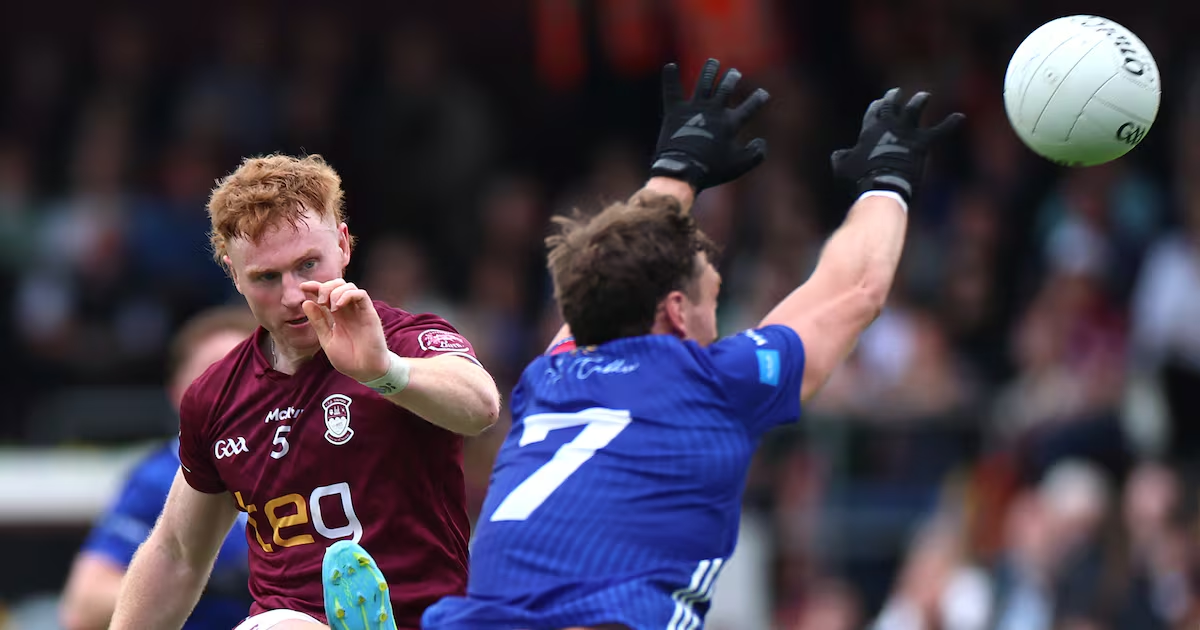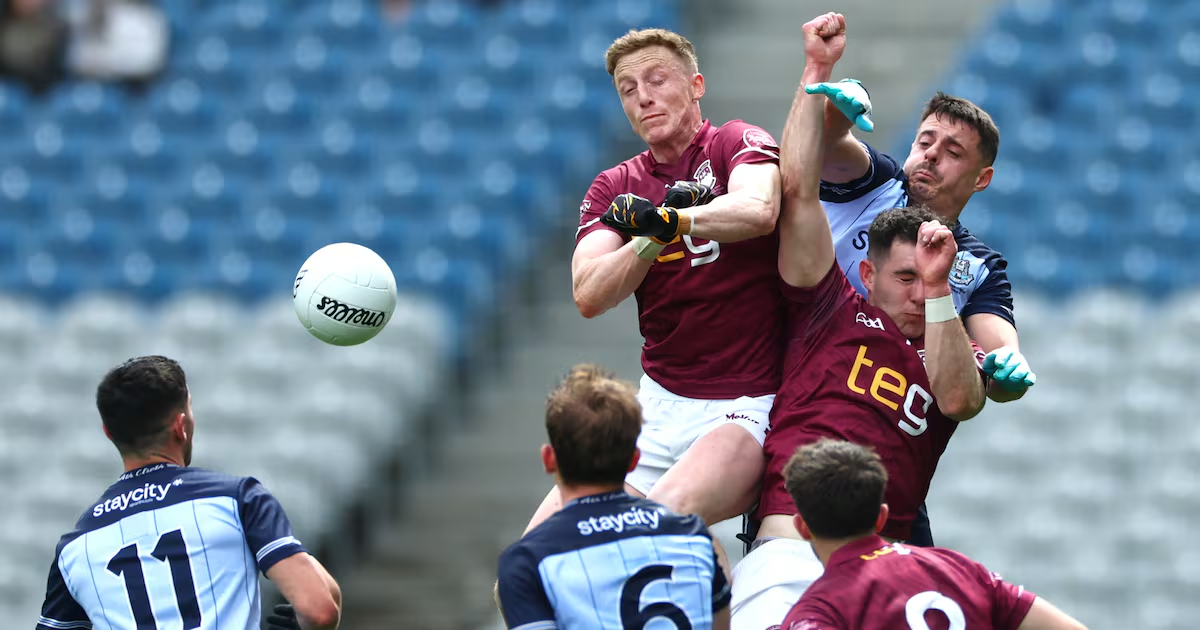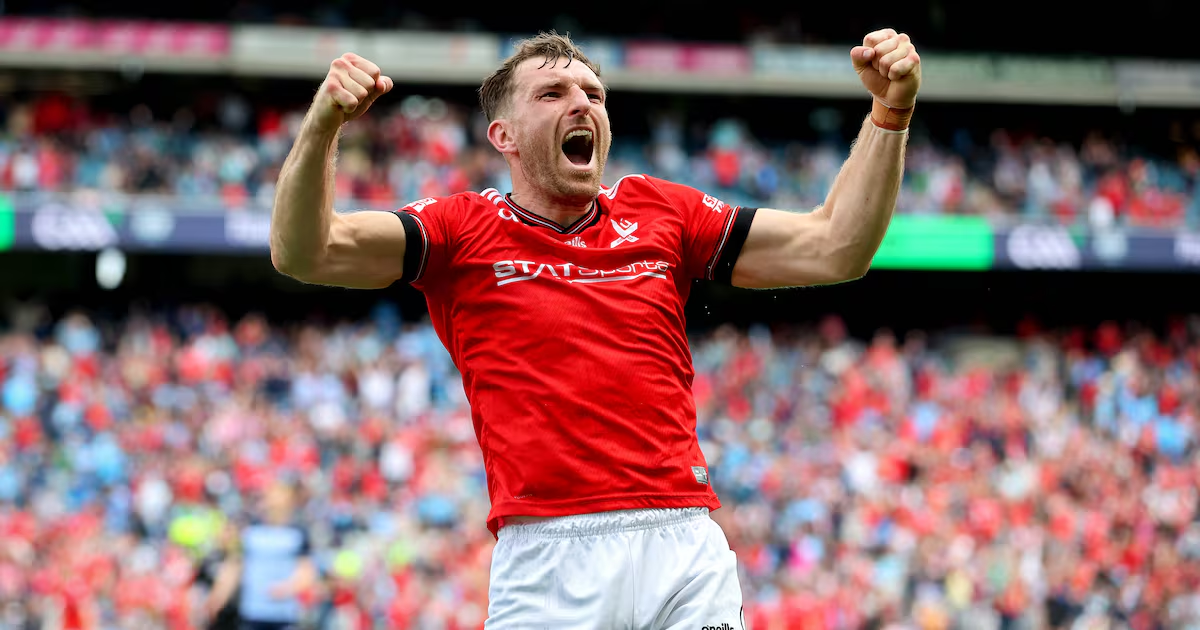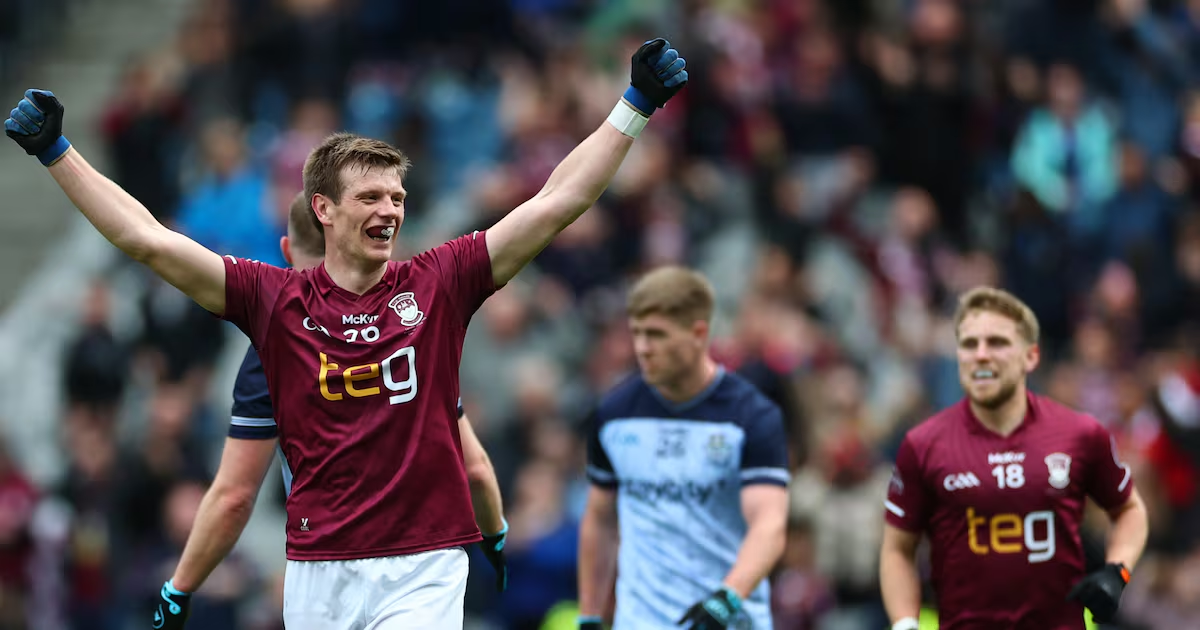
The intermittent lure of the provincial championships broke through again at the weekend, like sunshine on an otherwise dull and cloudy day. Westmeath emulated their neighbours in Roscommon by landing a much prized provincial title – a rarer achievement, admittedly, to the east of the Shannon.These unexpected outcomes are a reminder of the power of the apparently irrational in the life of the GAA.It has been promoted in these columns with increasing confidence that the future of the football championship lies in amalgamating its structure with the national league.Increasingly, the latter competition has been designated as the association’s most successful, bringing together counties of similar ability and ensuring realistic contests.This flipping, as it was called when debated five years ago, would also provide for a more streamlined All-Ireland championship – fulfilling in an echo of the 19th century land agitation, three F’s: footballing competitiveness, fair opportunity and fixture stability.The counterbalance to all these good things is simply that the All-Ireland is out of reach for the vast preponderance of counties. To them, a provincial title is as good as things are likely to get and great, epic memories are made of these sometimes once-in-a-lifetime achievements.Clare qualified twice in the 1990s for a top-eight Division 1, a real status symbol but it is unlikely to compare in the county’s lore with beating Kerry in the 1992 Munster final and marching on Jones’s Road to take on the Dubs in the All-Ireland semi-final.Captain Francis McInerney after Clare's win over Kerry in the 1992 Munster final. Photograph: Inpho There have been great improvements in the recognition of league divisional winners with trophies and finals in Croke Park, but it is the very fact that provincial championships are open competitions which ensures their attraction. Success is unqualified by relativism – even if it generally signals poor enough overall quality in the province.As former GAA president Liam O’Neill told this newspaper 20 years ago, when Leinster chair, greater equality in the province often means diminished quality.“We have developmental responsibilities. That’s our brief – to maximise the playing potential in every county. Our success is our failure, if you want to call it that.”That was the experience of the time. Great, landmark provincial wins by Laois and Westmeath were not followed up by appearances in even an All-Ireland semi-final.As a footnote, that 2004 win by Westmeath did leave one legacy. When centrefielder Rory O’Connell took his case against a red card to the High Court to evade suspension, enabling him to play in the All-Ireland quarter-final against Derry, it was the final straw for the GAA, who that winter consulted their lawyers and had the Disputes Resolution Authority (DRA) in place for the following summer.Westmeath celebrate with the Delaney Cup after beating Dublin in the Leinster final. Photograph: James Crombie/Inpho Westmeath were commanding winners on Sunday. Their relentless football and accuracy ran Dublin ragged and was distinctly unfortunate not to get the job done without the imposition of extra time, even if that allowed them to emphasise their superiority. Nonetheless, on one bookmaker’s site they are ranked 40/1 to claim their first All-Ireland title – irritatingly, you’d imagine for them, behind Meath and Dublin, teams they have already comprehensively beaten this season.Among the county’s achievements is to have taken a provincial title while still in Division 3. Manager Mark McHugh was quick to address that apparent anomaly.“We’re here to compete with anybody. We’ve a dressingroom in there that we feel is good to compete with anybody in Ireland. Okay, we may have not got up from Division 3, but we played well enough to get up from Division 3 and that was the thing. We’ll worry about that job next year, but tonight and for the next few days we’ll be celebrating big time.”One of the teams that did get promoted was Down, who sprang a massive surprise on the methodical Ulster champions Donegal, but emptied by their efforts, slumped in the semi-final against the latter’s successors, Armagh.Championship exploits by Division 3 counties are not terribly rare. Previously this decade, albeit in the bleak midwinter of 2020 and in the space of a couple of hours, both Cavan (who had been relegated from Division 2) – for the first time since 1997 – and Tipperary – bridging a gap of 85 years – greatly alleviated the gloom by winning Ulster and Munster, respectively.Monaghan won Ulster in 2013 after a spring in Division 3, although having earned promotion. It still didn’t help in reaching an All-Ireland semi-final, any more than regaining the title two years later did in 2015. But the county, subsequently a regular fixture in Division 1, did reach the last four on two different occasions, in 2018 and 2023.Making space for the ‘one fine day’ tradition of the GAA may not be the logical way to organise a championship, but it keeps on board a swathe of counties for whom the All-Ireland is an impossible attainment.This year, for the first time provincial attainment has no influence on a county’s All-Ireland fate and Westmeath simply slot into the schedules in a fortnight, playing against a Cavan team led by their former manager Dermot McCabe.They will have the same home advantage as the Dublin team they beat. In the now defunct All-Ireland round robin, Westmeath had a two-year tenancy after winning the inaugural Tailteann Cup and proved very competitive, as they are likely to do again.What the logic approach doesn’t always acknowledge is that what the form counties are capable of in the championship frequently outstrips that of the league.
Weekend that Was: Counties can thrive in the shadowlands between logic and the provincial championships
Westmeath defied league position and the weight of history in landing a second Leinster title
924 words~4 min read