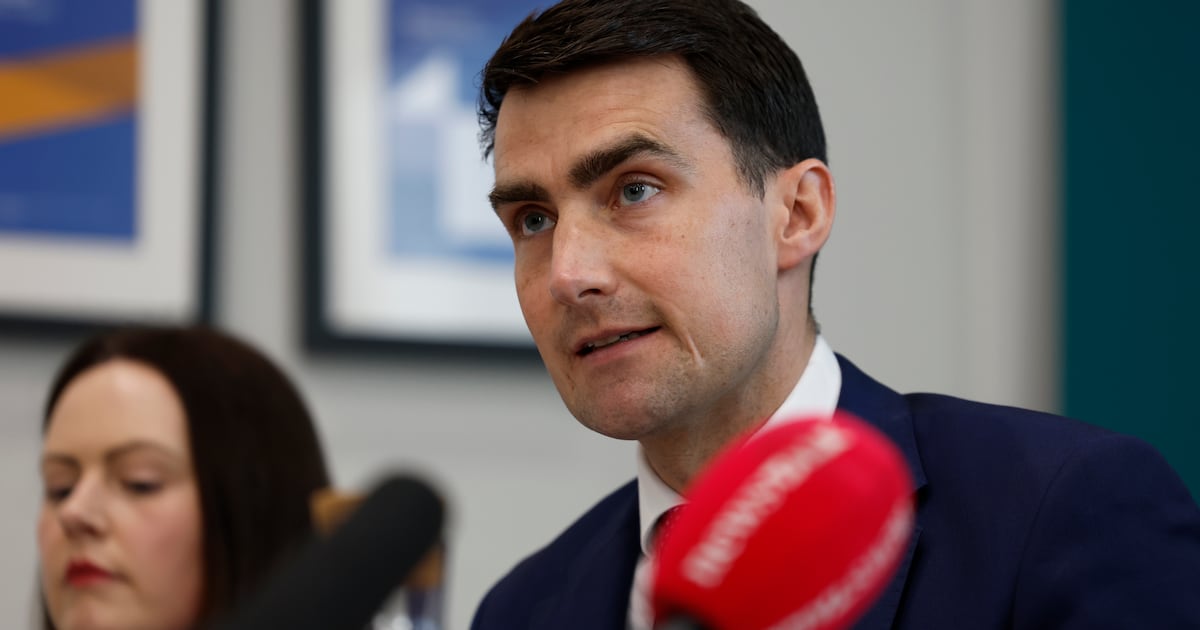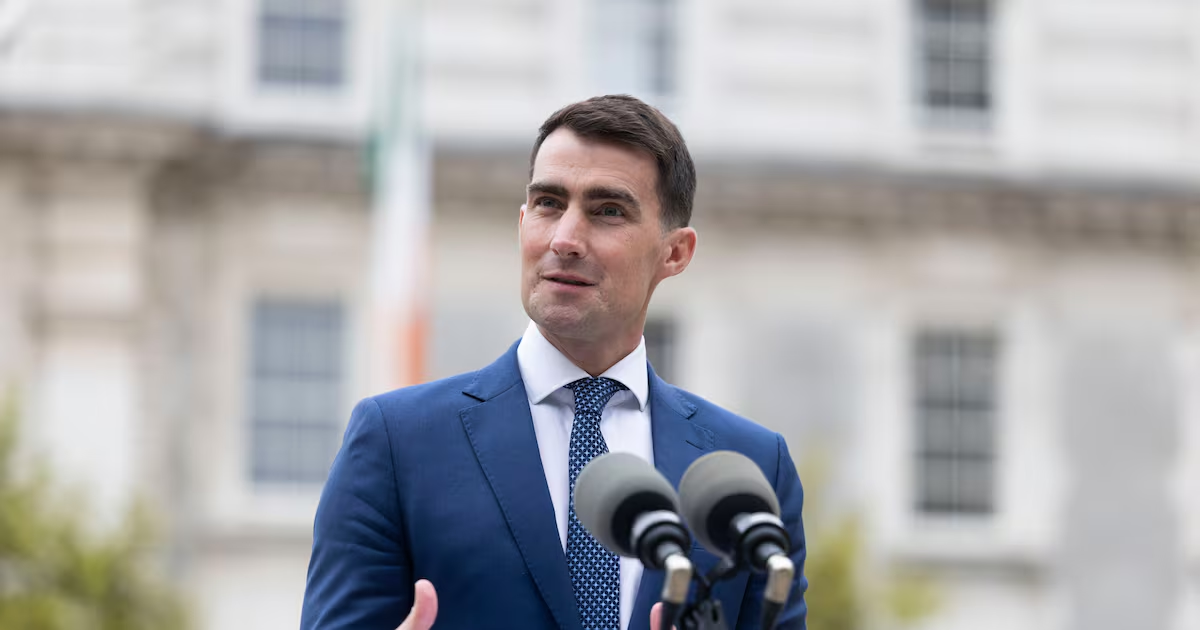
In a confidential memo to the Cabinet last month on Government overspending, Minister for Public Expenditure Jack Chambers included a reminder.He told colleagues about the duties of senior civil servants, saying they, as accounting officers, were responsible for executing and enforcing required spending controls across their departments.The Fianna Fáil TD noted a Government document published last July, known as circular 18/2025. It sets out the obligations for State employees to deliver value for money when spending public funds. The memo laid the ground for the introduction of levies on Government departments to offset overruns by those that exceed their budgets.The memo caused consternation – not only among some Ministers, who believed they were being penalised for the sins of others, but also among some senior civil servants, who considered it a pointed and personalised criticism of a colleague.Minister for Public Expenditure Jack Chambers. Photograph: Sam Boal/Collins Photos The Cabinet’s decision last Tuesday to give new powers to the Department of Public Expenditure and Reform (DPER) to tackle overspending, and last month’s memo, exacerbated the unhappiness felt by Ministers and some top officials who have privately complained for some time about the way it has exercised its authority.Budgetary overspending, at a time of global economic uncertainty, has placed a new focus not only on Chambers but also on his most senior official, David Moloney, who has been the top civil servant in DPER for five years. Outside the world of politics, public administration and media, Moloney remains relatively unknown and certainly does not have the public profile of his predecessor, Robert Watt, who moved to become Department of Health secretary general.From Raheny in north Dublin, Moloney served in departments including Taoiseach, Finance and Health before succeeding Watt.Before moving into the top job in DPER, overseeing spending in different parts of Government was his speciality.[ Laws bringing RTÉ under supervision of State spending watchdog approved by CabinetOpens in new window ]In biographical details provided to The Irish Times for a 2024 profile, the department said he previously worked as head of its labour market and enterprise division.That brought responsibility for various expenditure areas including social protection, housing, enterprise and agriculture and for the Irish Government Economic and Evaluation Service, a cross-government network of economists and policy analysts that looks to improve value-for-money analysis across the Civil Service.In its early days, the department’s primary focus was on finding savings – and it had powerful, if controversial, financial emergency legislation at its disposal to get its way in, for example, cutting public service pay.The criticism now of the department under Chambers and Moloney is twofold – and contradictory. For some, it has not enforced spending discipline with sufficient rigour; Chambers told the Cabinet this week that expenditure was already up by 8.9 per cent, breaching the 6 per cent target set by the Fianna Fáil-Fine Gael Coalition. On the other hand, there is widespread unhappiness among Ministers and top officials that, while State resources are plentiful, the department takes too long in making decisions – not just on spending on new projects or initiatives but also on one-off issues such as an individual pay rise in a State agency.David is playing the same bad cop [routine] with the secretaries general as Jack [Chambers] is playing at Cabinet. I really do like David, but he does get a bit of enjoyment out of the powerOne senior figure in Government was scathing, describing DPER as “the biggest block to delivery”.Emergency road funding sought in March following winter storms had still not been sanctioned, the source pointed out. “Their style is to slow everything down, to tie it down in bureaucracy, and then when things are delayed and cost more, they give out about it.”Another individual familiar with the thinking in Moloney’s department on Merrion Street says it is the nature of Government that no amount of money would ever be available to satisfy everyone. “If the department gave in to every request, there would not be a penny in the pot.”This person argues that all spending applications have to be assessed and that this takes time.Moloney is described by colleagues as very intelligent and good at reading the political runes. Some who have worked with him maintain he is approachable and socialises with a number of close department colleagues.[ Public service must embrace risk to deliver big projects, Jack Chambers saysOpens in new window ]Critics in other parts of Government contend that he and “DPER (as the department is known colloquially) don’t know when to say yes”.Some argue that the department seems “unpersuaded by the value of public spending and uses delay and processology as a weapon”.Asked whether this leads to departments appealing to senior political leaders to bypass logjams with the department, one senior figure replied: “All the time.” One individual who has worked with Moloney says the DPER did “sometimes appear to enjoy playing the bad cop” and there was frequently tension with other departments that was not always healthy.“David is playing the same bad cop [routine] with the secretaries general as Jack [Chambers] is playing at Cabinet,” they said. “I really do like David, but he does get a bit of enjoyment out of the power.” They added that they believe Moloney does “relish the idea of being able to say ‘no’ to his peers”.Complaints about how the department goes about its dealings with other parts of Government are common. Some contend that Moloney or his department are frequently not represented at the weekly meeting after Cabinet of top Government officials. [ Department of Public Expenditure to pay up to €8,500 a month on help to sell infrastructure planOpens in new window ]One official speaks of relatively junior civil servants in the department adopting a “suck it up attitude” in dealing with those in other parts of Government unhappy at funding decisions.One Minister says there is “a cohort of officials in DPER who don’t seem to want to understand what goes on in other departments and the expenditure pressures (they face)”, believing instead that everything must be done their way.But frustration with officials in Merrion Street saying “no” to the plans of other departments is not new.More than a decade ago, when DPER played a key role in killing off the signature project of the then minister for health James Reilly – the introduction of universal health insurance – an exasperated government adviser who worked extensively on the issue was overheard by journalists lamenting: “Haven’t things reached an extraordinary state of affairs when the champion of the status quo is the so-called Department of Reform?”On the other hand, some who know how DPER operates ask whether there is sufficient recognition elsewhere in Government as to the job Moloney has to do in keeping spending under control.“He is a really good leader,” says a source, arguing Moloney has developed people and given a lot of opportunity to others in the department, including in the area of gender balance. “Looking at the way he manages and leads the department is very positive.” “He expects a lot of his people,” this person says, adding that weekly management meetings are “very democratic”, with other people outside the core management group brought in for presentations and briefings. In other departments these are “much more closed and hierarchical”, says the source.One of DPER’s key roles is the negotiation of budgets for each department as part of the annual estimates process. Sources say these talks tend to be led at assistant secretary level – the grade below secretary general.[ Dublin drainage scheme will be completed a year early, says ChambersOpens in new window ]One person who worked with Moloney recalls spending talks in advance of the 2023 health budget being set. “He had to go in studs up on that one. It was a tricky conversation as Watt [his predecessor] was on the other side of the table ... Robert was very calm. David was very forceful.”“Behind the scenes, he is a pragmatist who looks to find solutions,” one associate says.Another criticism of the department is that it has been too focused on expenditure. After its establishment under Labour minister Brendan Howlin in 2011, the department embarked on a series of high-profile public service reforms. There was a new public service pension scheme, as well as new arrangements for sick leave and a standardisation of holidays for State employees.Critics argue that reform no longer attracts the same focus. The department rejects this, arguing that reform was a key part of last October’s budget. Senior figures say this set out planned reforms across several areas including housing, policing and pensions.In a speech on Thursday, Chambers pointed to plans to accelerate infrastructural development involving legal, regulatory, and delivery and co-ordination reform. He said senior civil servants would be encouraged by Government to take more risks to speed up delivery of projects.[ Jack Chambers’s sweeping plans to curb spending ‘go down like lead balloon’ with MinistersOpens in new window ]The department also said it approved reform action plans in different parts of the public service on foot of the 2024 public pay deal. It said it was also involved in plans for digitalisation, with targets for 2030 to have 100 per cent of key public services available online and 90 per cent of key public services consumed online. Critics, on the other hand, point out that the Civil Service Management Board, which was established in 2014 to assemble all heads of departments to drive reform, has not met in a year. The Department of the Taoiseach said it was “currently being reviewed to ensure that it remains aligned with the strategic priorities for the Civil Service and that it dovetails successfully with the (broader) Public Service Leadership Board”.The department on Thursday published its enhanced expenditure control and escalation process to keep a rein on spending growth across Government departments.With departments expected to come up with efficiencies, and with potentially greater oversight of spending in the future – where there are concerns about expenditure – further tensions between departments on one side and Chambers, Moloney and their officials on the other – seem likely.And a future government will also have to decide – given the limits on the number of Ministers permitted under the Constitution – whether DPER should remain an independent entity or be merged back into the Department of Finance.But this seems unlikely. One former Government adviser said this week: “People have been complaining about DPER and how it operates for 15 years. It is still there.”
‘He gets a bit of enjoyment out of the power’: Is this man now Ireland’s most powerful civil servant?
Have new curbs on spending made top Department of Public Expenditure offical David Moloney Ireland’s most powerful civil servant?
1,745 words~8 min read