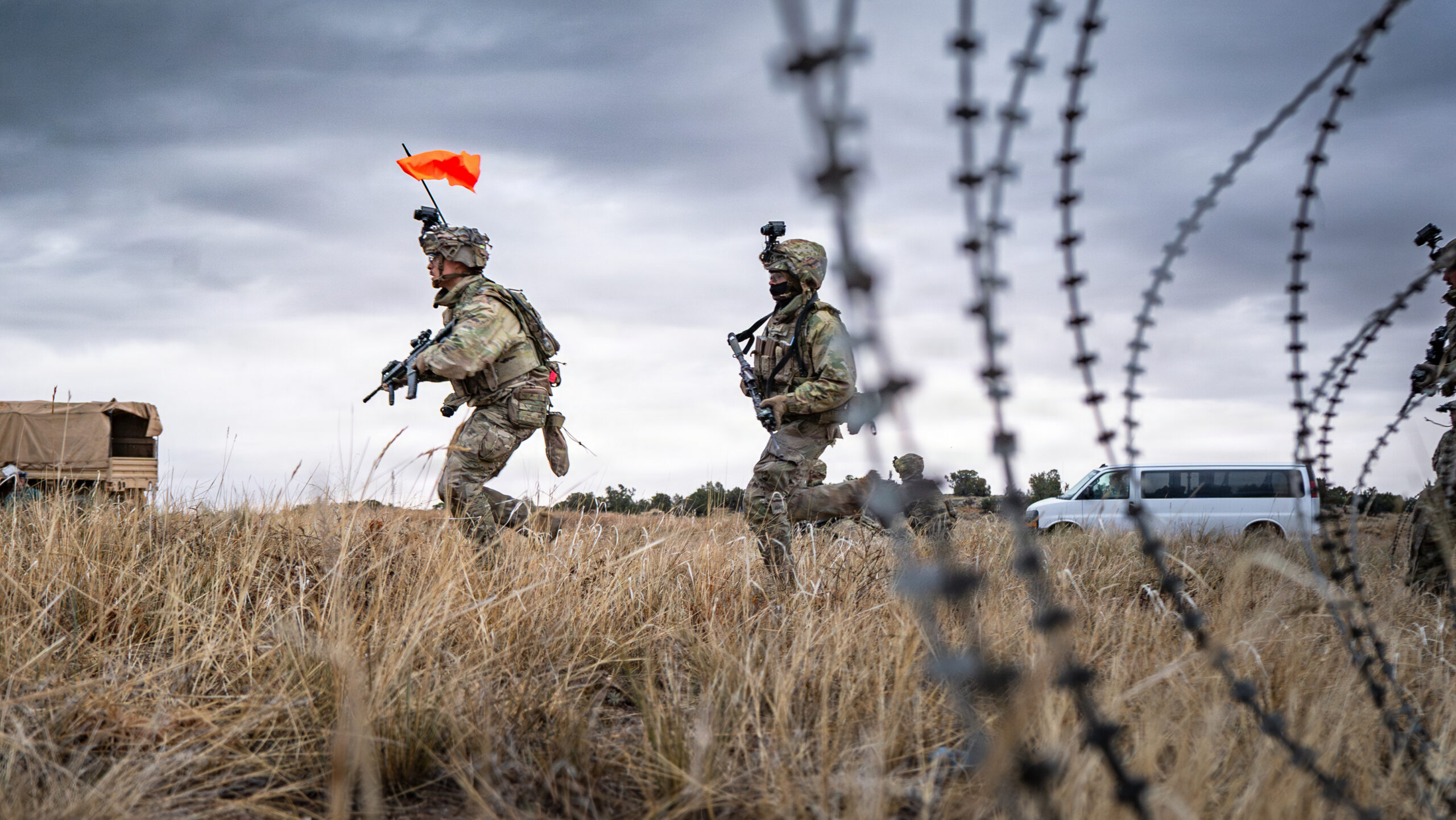
FORT CARSON, Colo. — It started by happenstance. Last summer, a senior Army special forces leader was on a routine visit to Fort Carson to see 10th Special Forces Group when he got to talking to the commander of the 4th Infantry Division, which also resides at the base.
The 4th ID commander, Maj. Gen. Patrick Ellis, mentioned the conventional unit’s work with a prototype of the Next Generation Command and Control (NGC2), the Army’s high-priority, high-profile network modernization effort. The talk made enough of an impression that word got back to 10th Group: “Figure out what it is.”
To do that, Maj. Jaysin Williams, 10th Group’s SOF NGC2 Integration Director, told Breaking Defense he found his way into a 4th ID briefing — and a lightbulb went off.
“I immediately saw like, oh man, this is going to change everything. This is really big,” he said. “I could see the digital kill chain already, just from the way [Ellis] was briefing it and I knew that we needed to do something to get involved and understand how we fit in this new architecture. I went back and I just kind of started working on it.”
Williams revealed to Breaking Defense that 10th Group since has been involved in several NGC2 prototyping experiments, known as the Ivy Sting series, culminating in last week’s Ivy Mass exercise, perhaps the largest test of NGC2 in a contested electronic warfare environment yet. The experiments have opened eyes for special operations forces.