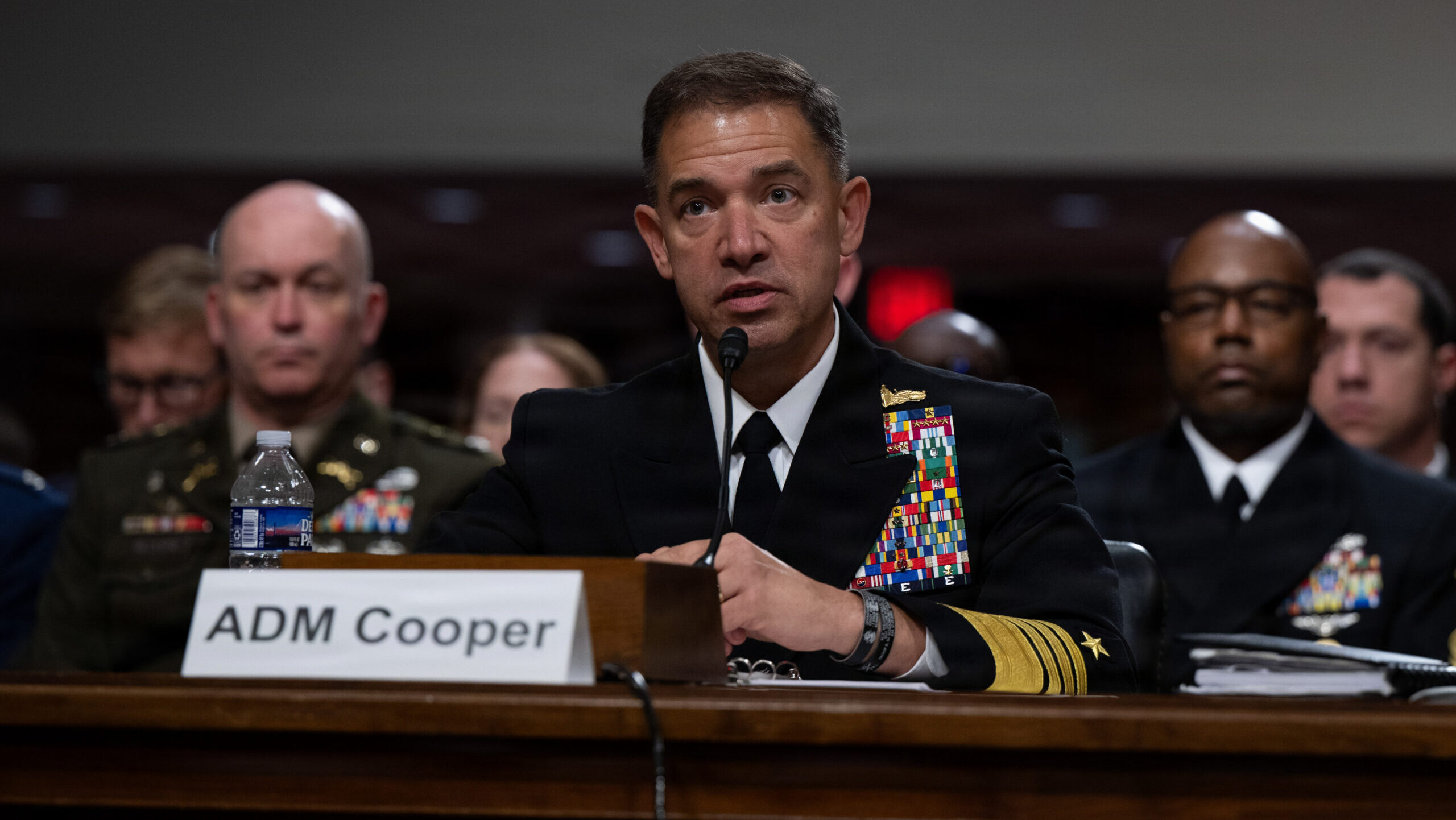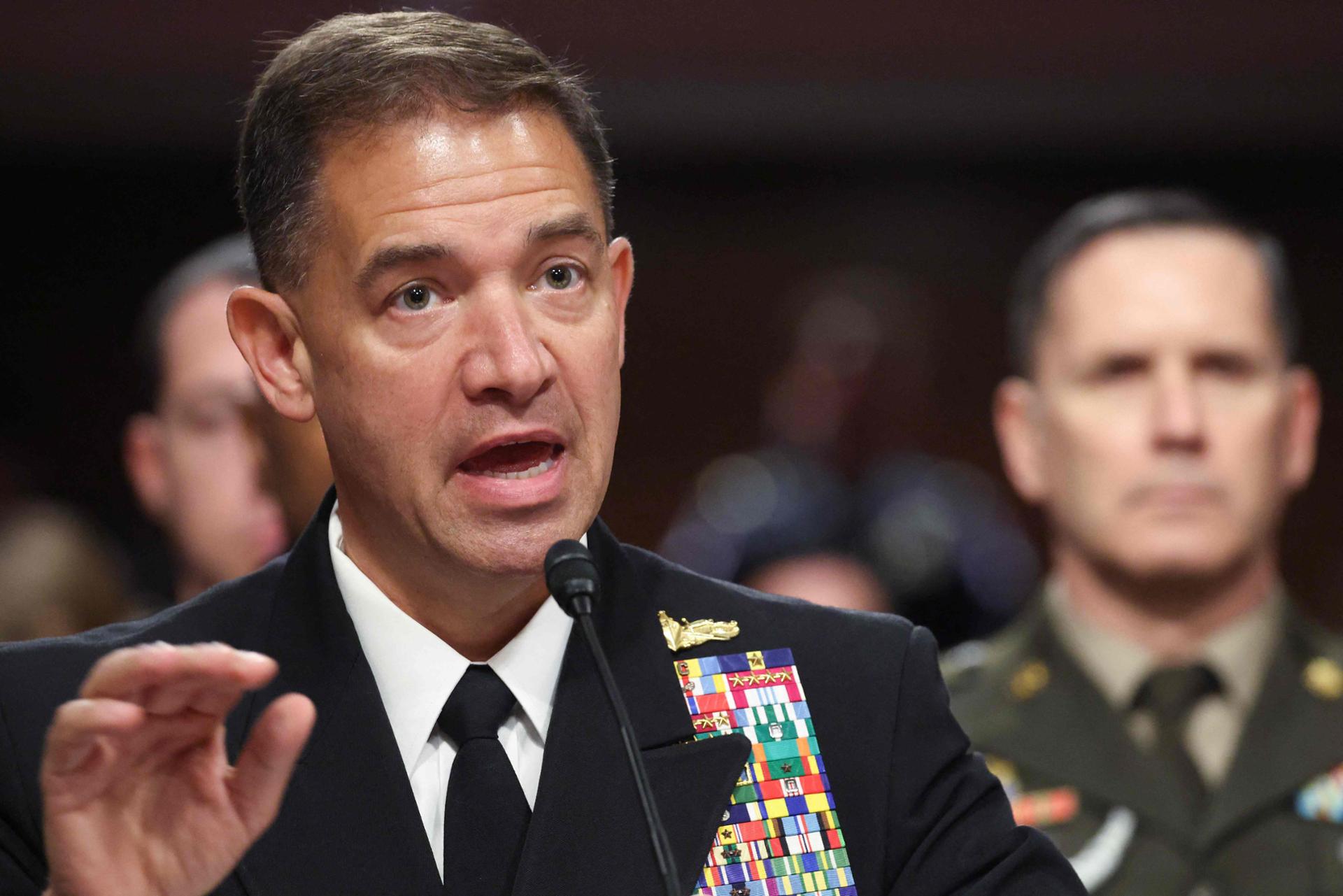
CENTCOM commander Adm. Brad Cooper (L) testifies with AFRICOM commander Gen. Dagvin Anderson during a Senate Armed Services Committee hearing, May 14, 2026.
Getty Images / Win McNamee
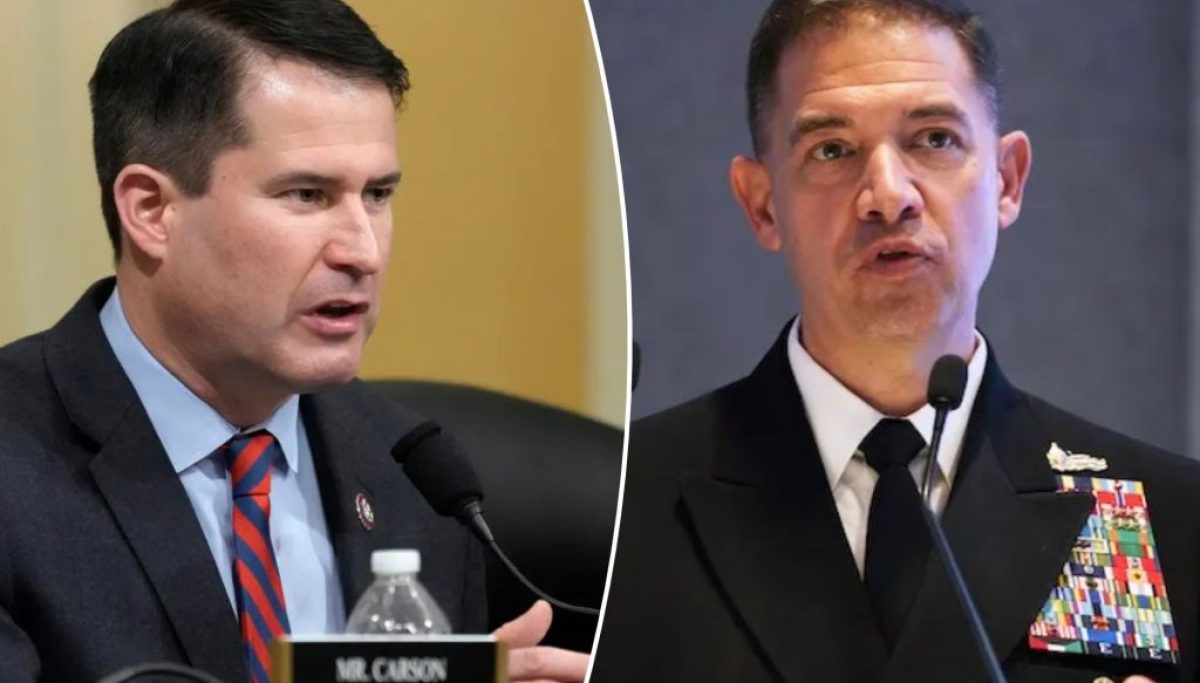
More money to counter drones and attack underground targets is necessary for future fights, the head of U.S. Central Command said on Thursday, as lawmakers praised and grilled the four-star admiral about the war in Iran.In his first House Armed Services Committee appearance since the Iran war began, Adm. Brad Cooper said the U.S. military has changed even in the past eight weeks, leaning on LUCAS drones as well as land-attack missiles and finding cheaper ways to fight off Iranian drones and other weapons. But when asked by Rep. John McGuire, R-Va., what additional support was needed, the four-star admiral had a wish list ready.“I’d put three things: more electronic warfare, keep counter-UAS on the leading edge—tactics change very quickly—and we need to invest more in hard and deeply buried targets,” Cooper said. “Everybody is going underground.” A CENTCOM spokesperson later told Defense One the CENTCOM commander was referring to munitions that can destroy more hidden and hardened targets. Cooper’s HASC appearance followed his testimony before the Senate last week, when some members criticized the administration’s shifting justifications for the war. Nor wereHouse Democrats reticent to criticize the conflict’s launch and conduct by the White House.Rep. John Garamendi, D-Calif., criticized Cooper and Daniel Zimmerman, the Pentagon’s assistant international security affairs secretary, for the Trump administration’s continued military operations despite an avowed May 5 ceasefire and the legal limits on wars without Congressional approval. Garamendi said that U.S. forces fired on Iranian tankers after the administration said it halted military actions. “It's incredible to me that this department has such disregard for the Congress and the U.S. Constitution, that the U.S. military forces are not still engaged in hostilities and still deployed against the war and ignoring the War Powers Act and the Constitution,” Garamendi said. “The fact of the matter is that hostilities continue.”In one exchange, Rep. Seth Moulton, D-Mass., peppered Cooper with rapid-fire questions—including whether the military’s war plan had anticipatedrising gas and oil prices, the closure of the Strait of Hormuz, and the lack of a nuclear deal. “We achieved all our military objectives, we're presently in a ceasefire, we're executing a blockade, and we're prepared for a broad range of contingencies,” Cooper said.“Well, it doesn't seem to be going well,” Moulton replied. “And I would like to know, how many more Americans have to ask to die for this mistake?”“I think it's an entirely inappropriate statement from you, sir,” Cooper said. “With all due respect.” Other members, such as Rep. Joe Wilson, R-S.C., praised the admiral’s leadership and the “remarkable” military achievements.Lawmakers also asked for updates regarding the investigation into the Feb. 28 airstrike on an Iranian girl’s school, which preliminary inquiries reportedly show the U.S. was responsible. Cooper said that investigation “is coming to the end” and said he was committed to releasing an unclassified version to the public.