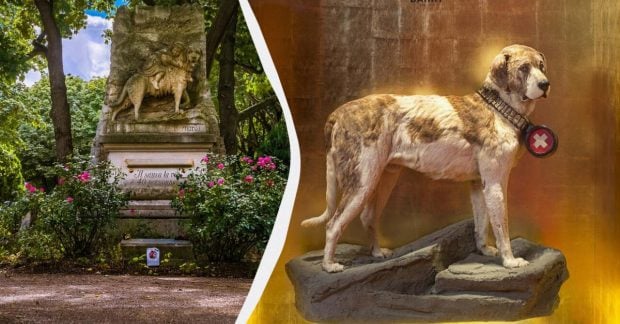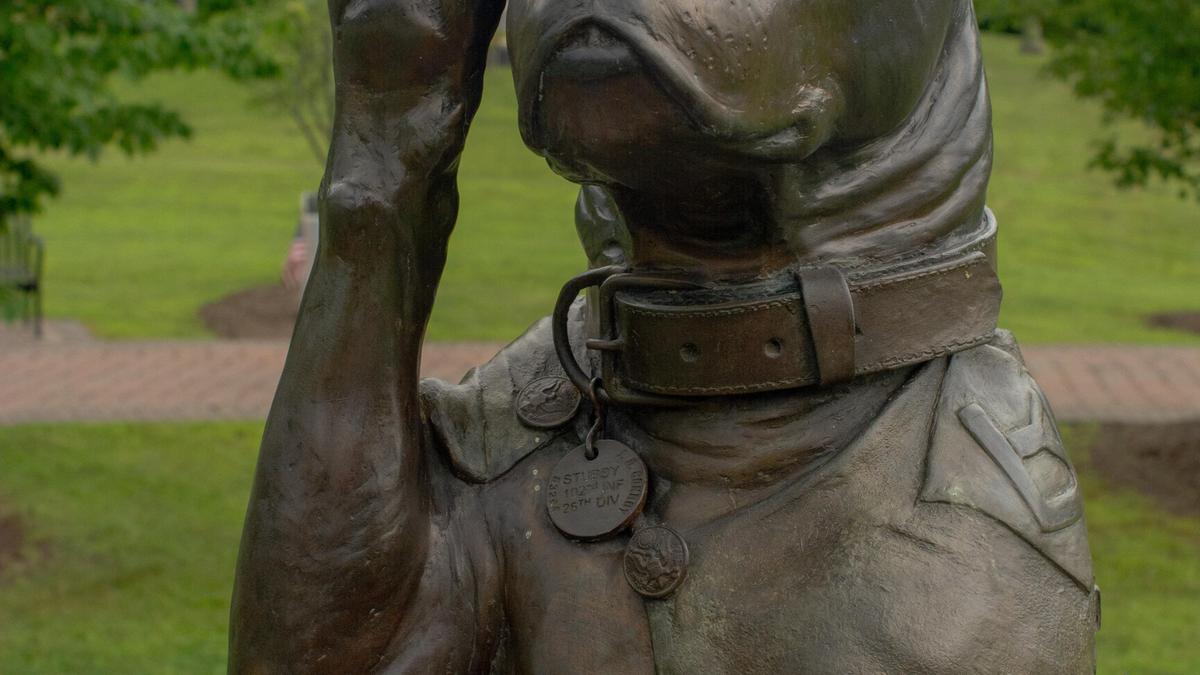
Picture this: an abandoned bull terrier wandering in an army training camp finds comfort and home in the arms of a soldier, and grows to become a hero in American history. Sounds kind of weird, doesn’t it? Well, believe it or not, this is a one-of-a-kind true story.Puppy profileIn 1917, this little pup was found wandering the grounds of Yale University, campus in New Haven, Connecticut, where the 102nd Infantry (soldiers who fight on foot) was training. One soldier, namely Corporal James Robert Conroy, noticed him and took him in secretly. During the war, the soldiers were heading to France on a troop ship. Conroy smuggled him onto the troop ship going to France, keeping him hidden. But this secrecy wouldn’t last long.Breed in questionStubby may have been a Boston Terrier or a “bull terrier”, according to existing news sources. American historian and author Ann Bausum wrote: “The brindle-patterned (a coat colour pattern in animals characterised by dark stripes on a light base) pup probably owed at least some of his parentage to the evolving family of Boston Terriers, a breed so new that even its name was in flux: Boston Round Heads, American... and Boston Bull Terriers.”The commanding officer spotted Stubby instantly, wanting him off the ship as dogs weren’t allowed. But Stubby won him over with a special trick. He stood on his hind legs, and raised his paw to his head, as if saluting him. Sure enough, the rule was overlooked and Stubby was eventually made the Infantry’s unofficial mascot. This memorable pose can be seen in the statue of him in the Veterans Memorial Park in Middletown, Connecticut.A helping pawOf course, loyalty isn’t all it takes to be a good hero dog. Stubby displayed specialised skills that were of great use to the Infantry. He entered combat on February 5, 1918, and served for 18 months on the field, and in about 17 attacks. He managed to adapt to the loud gunfire and the constant attacks he was under. But there’s more.German soldiers began to use a toxic and colourless chemical gas called mustard gas (also known as sulphur mustard) on their enemies. Stubby was almost killed in a mustard gas attack, but he managed to survive. He eventually used his survival of the fumes to eventually warn others of gas attacks. He’d recognise the smell of the gas and bark loudly, alerting everyone on the battlefield.On a separate occasion, during the 1918 takeover of Seicheprey (an area in north-eastern France), he was hit by a grenade, and injured in the chest and the leg. He was immediately taken off the field to recover, which he eventually did. Truly an epitome of the saying, “What doesn’t kill you makes you stronger!”
The very ‘Paw-some’ Sergeant Stubby
Discover the remarkable true story of Sgt. Stubby, America's most decorated dog, who displayed extraordinary bravery in World War I.
1,009 words~5 min read