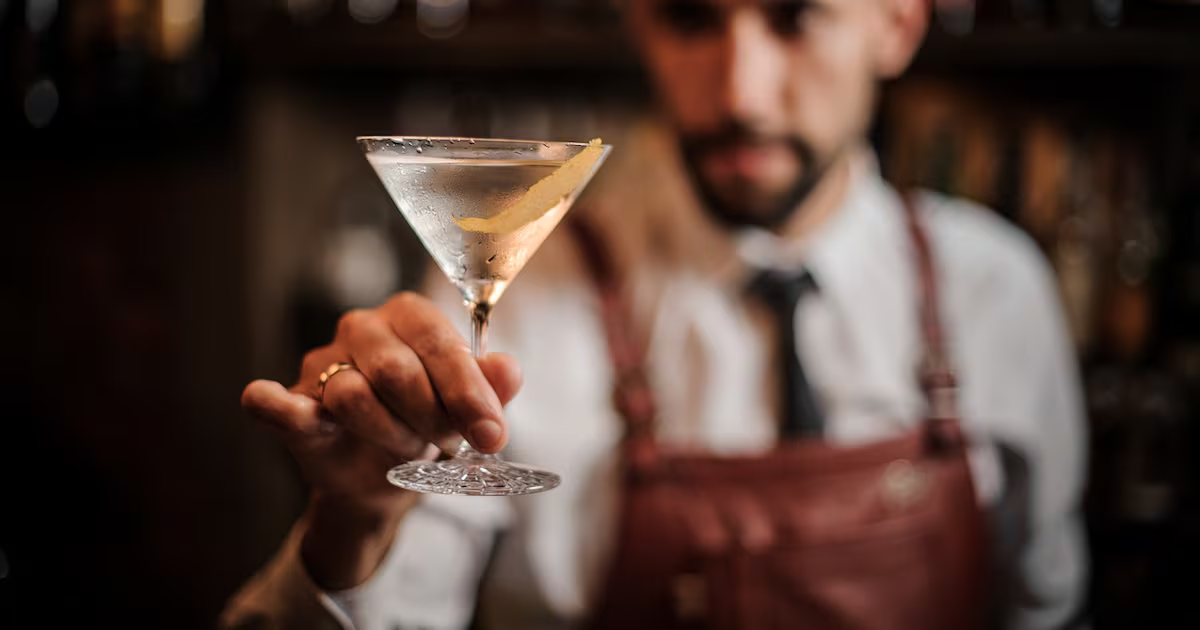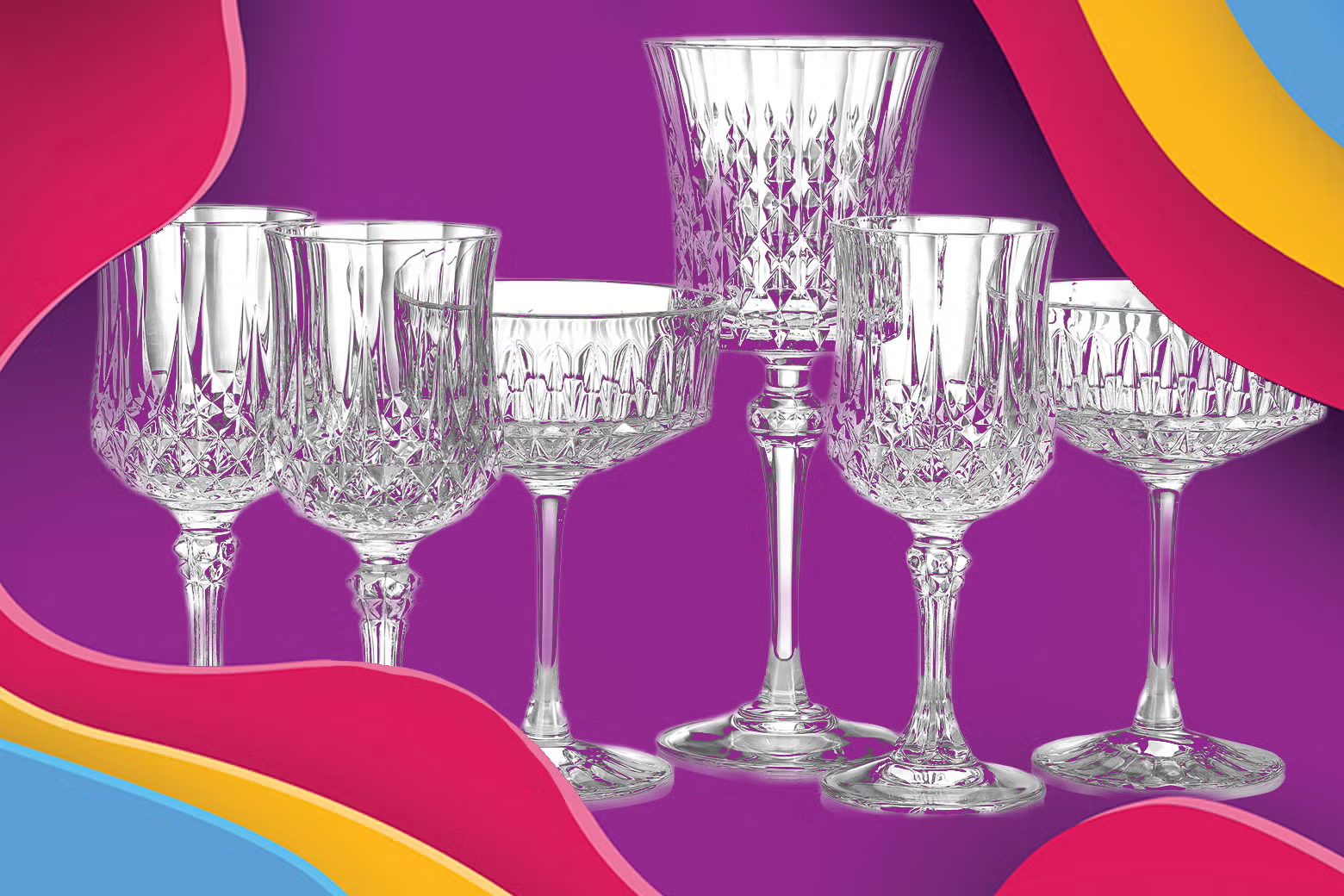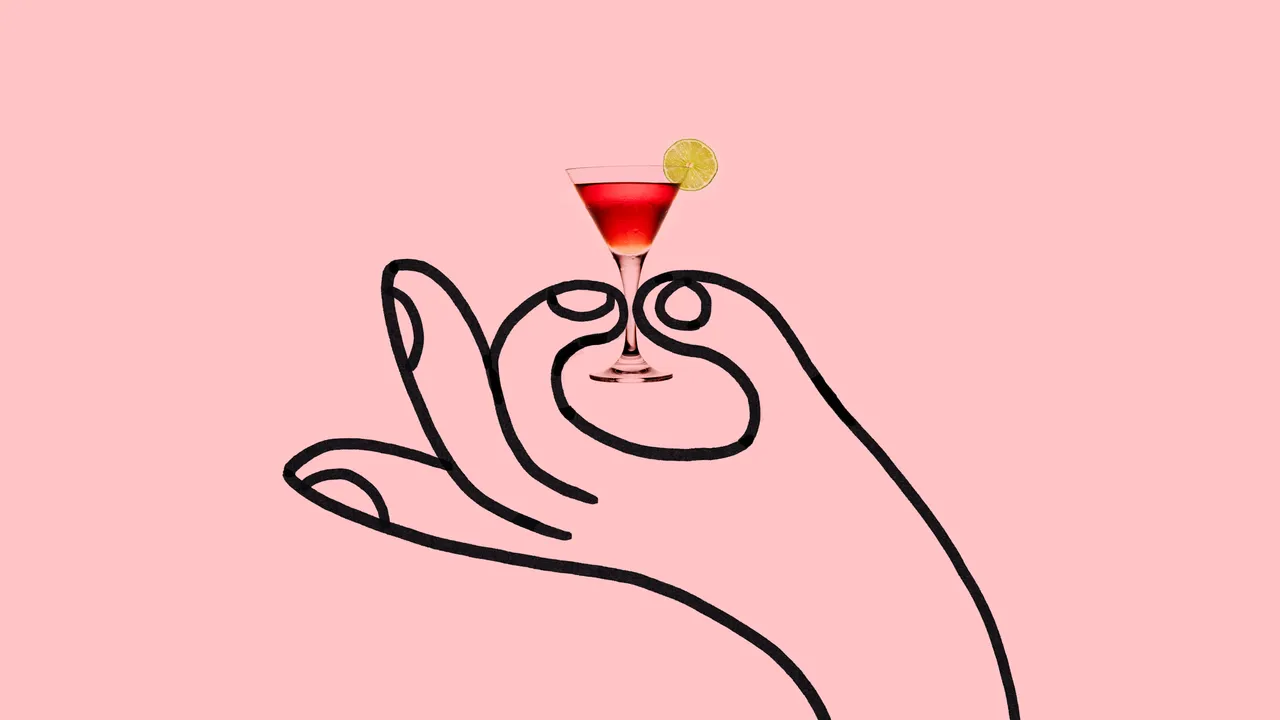
For much of my life, my mother’s side of the family—consummate New Englanders, some of them descended from a passenger on the Mayflower—seemed somewhat foreign to me. My father’s side, Russian Jews from New York, organized family life around boisterous gatherings, abundant with oily, salty, garlicky food and spirited philosophical interrogation. The Wasps, meanwhile, wrote carefully worded thank-you notes, nibbled politely on Triscuits, and celebrated a painstakingly traditional, though mostly secular, Christmas. Once, after my maternal grandfather hurt my feelings, bringing me to tears, I awoke in the middle of the night to find E.M.T.s wheeling him into an ambulance—instead of apologizing, he’d developed chest pains. He recovered, and we never spoke of it again.A few years ago, not long before that grandfather died, at the age of ninety-nine, he and my grandmother downsized from their longtime home in Vermont and invited my sister and me to claim heirlooms. In a cabinet beneath their wet bar, I found a beguiling artifact—a triangular black metal contraption called a Bar Aid, made in Japan in the nineteen-fifties, with a list of eighty cocktails printed on its slanted face. At the center is a dial and a small window, so you can spin through a paper scroll of recipes for the numbered drinks. A Gertie’s Garter calls for three parts dry gin to one part grapefruit juice and one part grenadine; for a Millionaire No. 2 (there’s also a Millionaire No. 1) you need Jamaican rum, apricot brandy, grenadine, lime juice, and sloe gin (not to be confused with gin, though it’s made from it).I’ve never been a particularly good drinker. I swore off gin in my twenties, when I realized it made me almost instantly ill, and mostly gave up on getting drunk in my thirties, when I decided that the hangovers were not worth it. Still, I’ve always been susceptible to the romantic appeal of mid-century cocktail culture. I was moved to imagine my grandparents, young and a little glamorous, in Manhattan, where they met, fixing drinks at five o’clock—and to imagine myself, decades later, making a new ritual of the same.To resolve to drink more in 2026 might seem oddly countercultural. In January, 2025, Vivek Murthy, then the U.S. surgeon general, released an advisory detailing a causal relationship between alcohol and an increased risk for seven kinds of cancer, and urging lawmakers to require warning labels. Later that year, Gallup reported that the percentage of American adults drinking alcohol had dropped to fifty-four, the lowest it had been in almost ninety years of polling, and that those who do drink are drinking less. The numbers are unsurprising when you consider the growing use of appetite-reducing GLP-1s, which some people find kill the desire to drink, as well as the incursions of the wellness industry, whose acolytes threaten to supplant happy hour with run clubs, and the apparent abstemiousness of Gen Z. Once, I’d been quick to assume that any adult who turned down a drink was either pregnant or a recovering alcoholic. Now even casual drinkers seem to be on a journey of sorts—if not toward sobriety, then toward some kind of self-knowledge.One evening not long ago, I met Amanda Crawford, a professional wine adviser, at Vandell, a new but nostalgic cocktail bar on the east side of Los Angeles. Crawford, who is in her early forties, caught the wine bug at Wellesley, where a favorite professor hosted tastings. Now she helps private collectors buy and sell bottles in the rare-and-fine market. What she described as the “classic archetype of the wine collector,” an investment banker in his thirties who is trying to impress his boss, “doesn’t exist anymore,” she told me. “The first crypto bubble, there was a lot of young blood, but then they lost all their money.” The Wall Street wine guys of the eighties, now elderly, seem to be pulling the ladder up behind them. “I go to dinners now, and everyone wants to talk about life extension,” she said. “All these multimillionaires and billionaires—they used to trade stocks, and now they trade longevity doctors.” After decades in the business, Crawford feels that she can weather the contraction—but she also doesn’t think it will be permanent. “Wine has been important for six thousand years,” she said. “I don’t think that a fashion for high-protein diets is going to interrupt that.”At Vandell, which was packed at 5 P.M. on a Tuesday, we ordered Martinis: gin for Crawford, cut with both dry and bianco vermouth, plus a splash of tarragon vinegar, and vodka for me, mixed with an umami bomb of the Japanese condiments shio koji (made from fermented rice) and yuzu kosho (a spicy citrus preserve), as well as smoked olive brine. Both were available in a half size, an option that Crawford and I had each noticed creeping onto menus in L.A. and in New York. Many bars and restaurants now seem to be courting those who want to drink lightly—or more “intentionally,” in the self-help-tinted parlance of the moment. They offer tiny ’tinis and other mini cocktails, they list drinks in order of A.B.V., and the beverages once known as mocktails have been rechristened with more dignified labels, such as “N.A.” and “spirit-free.”John deBary, the author of three books on cocktails (alcoholic and otherwise), who runs the beverage program at Strange Delight, a New Orleans-inspired seafood bar in Brooklyn, told me about a consumer behavior known in the business as “zebra-striping”—alternating between cocktails and N.A. drinks. At Strange Delight, he offers a teetotaller Martini, made with celery bitters, Tabasco, and non-alcoholic gin and vermouth, but he also develops recipes that are prodigiously boozy: a concoction called Having Fun Since 1933 (the year that Prohibition was repealed) combines passion-fruit juice and Pat O’Brien’s Hurricane Mix with a blend of rums. DeBary, for his part, stopped drinking in 2022. “I still do drugs!” he assured me. “I was, like, Wait—I actually don’t like the feeling of drinking alcohol.”There will always be corners of the hospitality world where moderation is anathema. The New York super-restaurateur Keith McNally, of Balthazar and Pastis, told me that his alcohol sales this year are the best they’ve been since the pandemic. One wonders if this is because his clientele skews a bit older than, say, Jean’s, a restaurant and club in downtown Manhattan that always seems crowded with glamorous women in their early twenties. Ashwin Deshmukh, one of its operators, described a forthcoming tiny-’tini program that’s oriented less toward restraint than toward novelty: the adorable Bunny Martini, a mix of vodka and fresh-pressed carrot juice in a three-and-three-quarters-ounce glass, garnished with carrot-top “ears,” will come with a train ticket, to be punched whenever a roving server gives a refill. (No need to elbow one’s way to the bar.) When we spoke, Deshmukh had been having trouble sourcing glassware; one vender was sold out of the model he wanted, thanks to large orders from the Metropolitan Club and from Alaska Airlines.Chloe Frechette, a former editor of the online drinks magazine Punch, and a co-owner of Echo Lake, a new rum bar in Williamsburg, theorizes that American drinking culture is having a “very honest” moment. “Pre-pandemic, wellness was really leeching in—people were ordering, like, activated-charcoal cocktails,” she recalled. “I feel like we’ve arrived at a moment where we’re not pretending that wellness needs to be part of this.” Drinking might confer its own kind of wellness, she suggested, one that comes from nurturing a pastime or convening with compatriots. (In 2025, Jacobin published an article titled “The Case for Social Drinking,” which argues that “it’s nearly impossible to have a semblance of socialism without the social.”) Like air travel, fast fashion, and so many indulgences of our era, drinking invites us to consider a gruelling litany of downsides and then decide whether the trade-offs are worth it.Not long ago, after a civilized mezcal tasting left me with an earth-shattering migraine, I considered giving up alcohol entirely. The prospect filled me with surprising sadness. I was more attached than I realized, not only to the way that a cocktail makes me feel—chatty, sentimental, hopeful, expansive—but also to the sensual and ritualistic aspects of drinking. I appreciate the beauty and the gravitas of the drinkware and the bar tools, and the sense that there is a right time for the right drink: an austere gin-and-tonic to be nursed after work, a pour of sweet, earthy amaro following dessert, eggnog spiked with rum at Christmas. Drinking is rooted in tradition—it’s no accident that every generation since Hemingway’s has revived the Martini—but it’s also thrillingly captive to personal preference: for me, one Martini is not enough, two is too many, and three half sizes is just right, with plenty of olives to line the stomach.Feeling wistful, I texted my friend Chris, a bon vivant whom I hadn’t seen in a while, to ask if he wanted to meet for a drink after he clocked out of his office job. He was, it turned out, temporarily on the wagon, because he feared that drinking would jeopardize his more serious effort to quit smoking. Plus, he added, “I can admit that last year was pretty wet.” He offered to make me a cocktail at what he called his “secret office bar.” Up a long set of stairs on a nondescript block in Hollywood, I found a door marked TELEPHONE ROOM, which opened into a dramatically appointed—and dramatically tiny—speakeasy, where Chris stood, behind a lacquered five-seat bar, backlit and smiling like the tuxedoed barkeep in “The Shining.” My grandfather would have got a kick out of the kitschy details: heart-shaped bowls filled with beef jerky and peanuts, a figurine of a mouse holding a tray of champagne. Chris made me a dirty vodka Martini—stirred, strained into a small Nick and Nora glass, and garnished with extra olives—all the while holding a cigarette that remained unlit. ♦
The Age of “Intentional” Drinking
Americans are losing their appetite for booze. Could the mini Martini lure them back?
1,645 words~7 min read