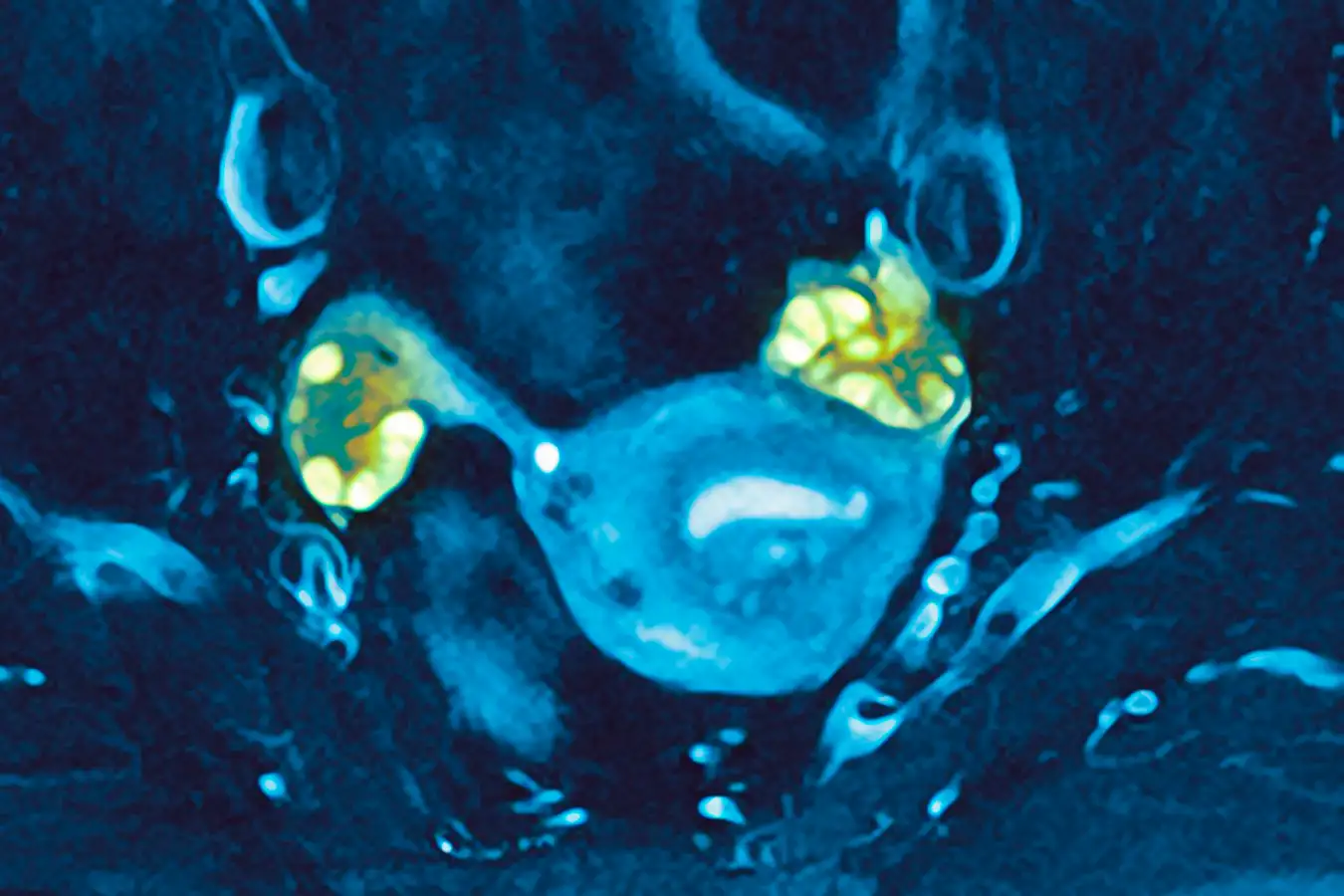
An MRI scan of polycystic ovaries (green)GUSTOIMAGES/SCIENCE PHOTO LIBRARY
Polycystic ovary syndrome (PCOS) is notorious for disrupting hormones and fertility, but it may have some surprising benefits after the age of 40. Ageing seems to naturally reshape the affected ovaries, often making periods more regular, delaying perimenopause and increasing fertility.
“Over the years, we’ve had so many women with PCOS telling us how they thought they would never be able to get pregnant without ART [assisted reproductive technology] and then they were so surprised because it happened in their 40s,” says Terhi Piltonen at Oulu University Hospital in Finland. “We call these children who they never thought they would have ‘evening stars’.”
Piltonen and her colleagues studied how PCOS influences the menopausal transition using data from 1849 women who were born in Finland in 1966 and had had regular health checks ever since as part of the Northern Finland Birth Cohort study.
When the women were 31 years old, 380 of them met the criteria for PCOS, meaning they had at least two of three characteristic features: irregular or no periods, high levels of testosterone and elevated anti-Müllerian hormone, which is a hormone produced by small follicles in the ovary.