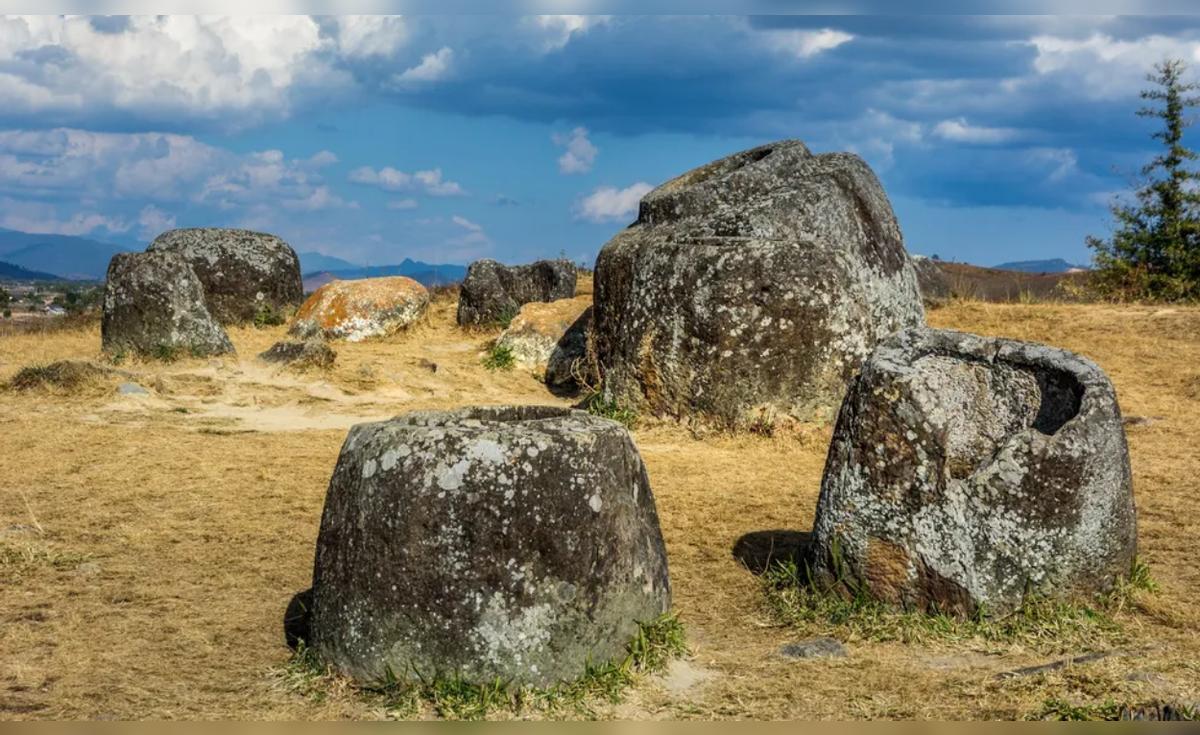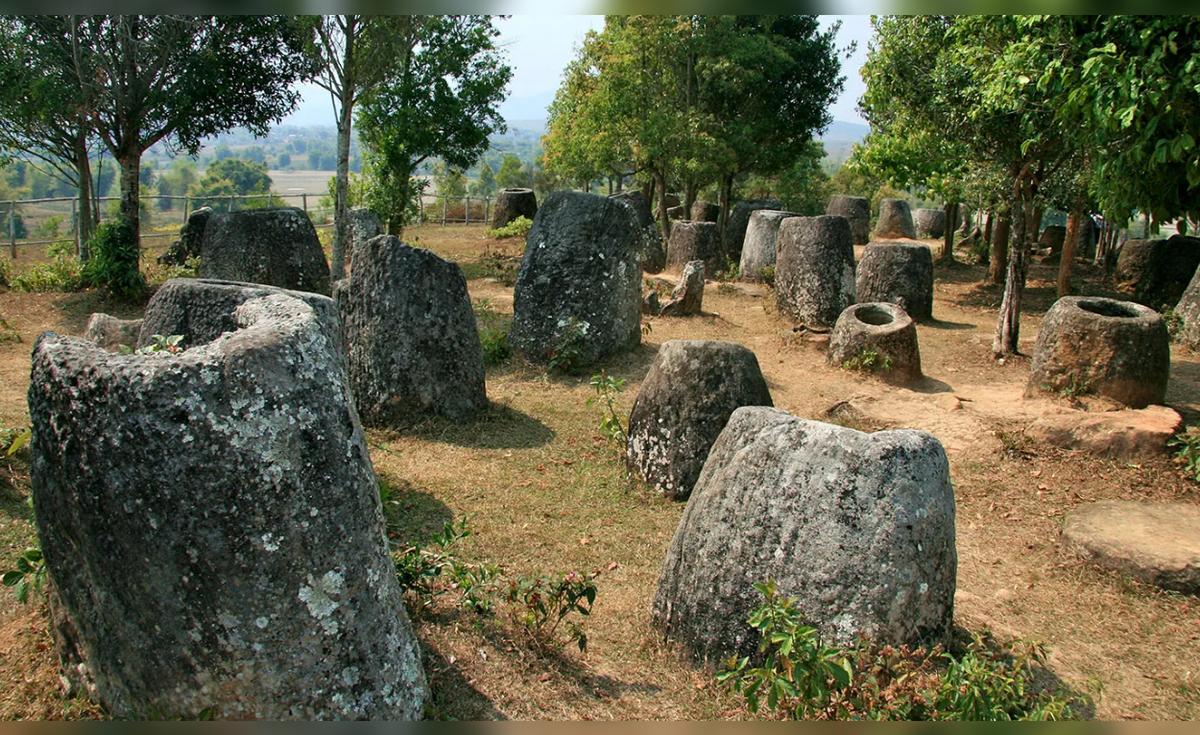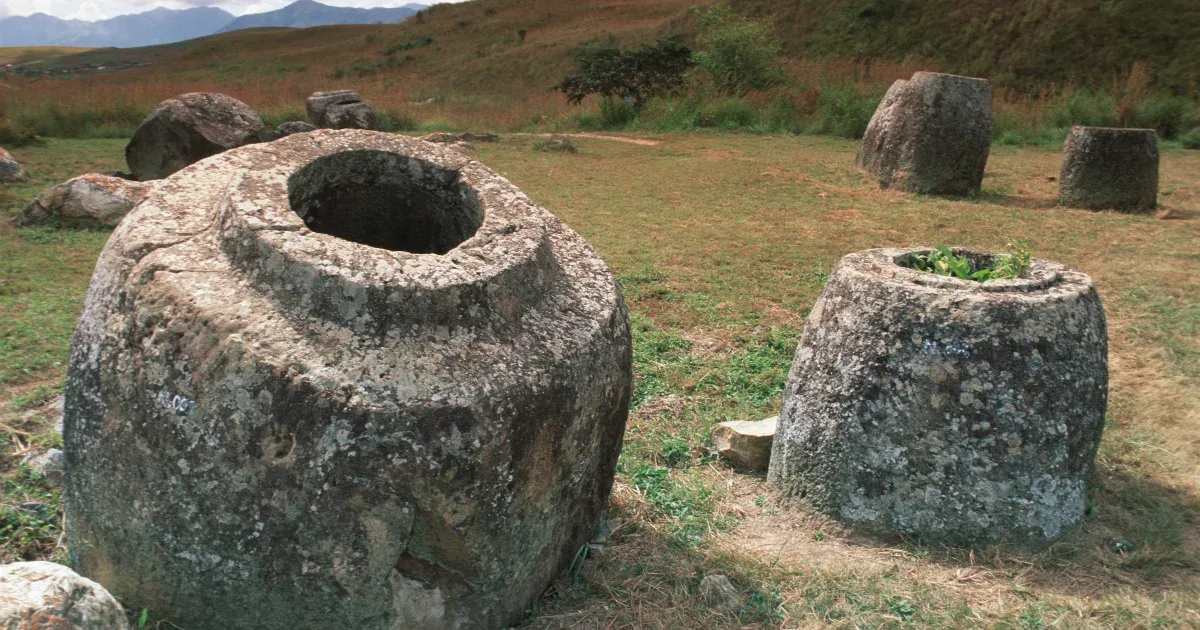
The plain of jars in LaosAlvov/Shutterstock
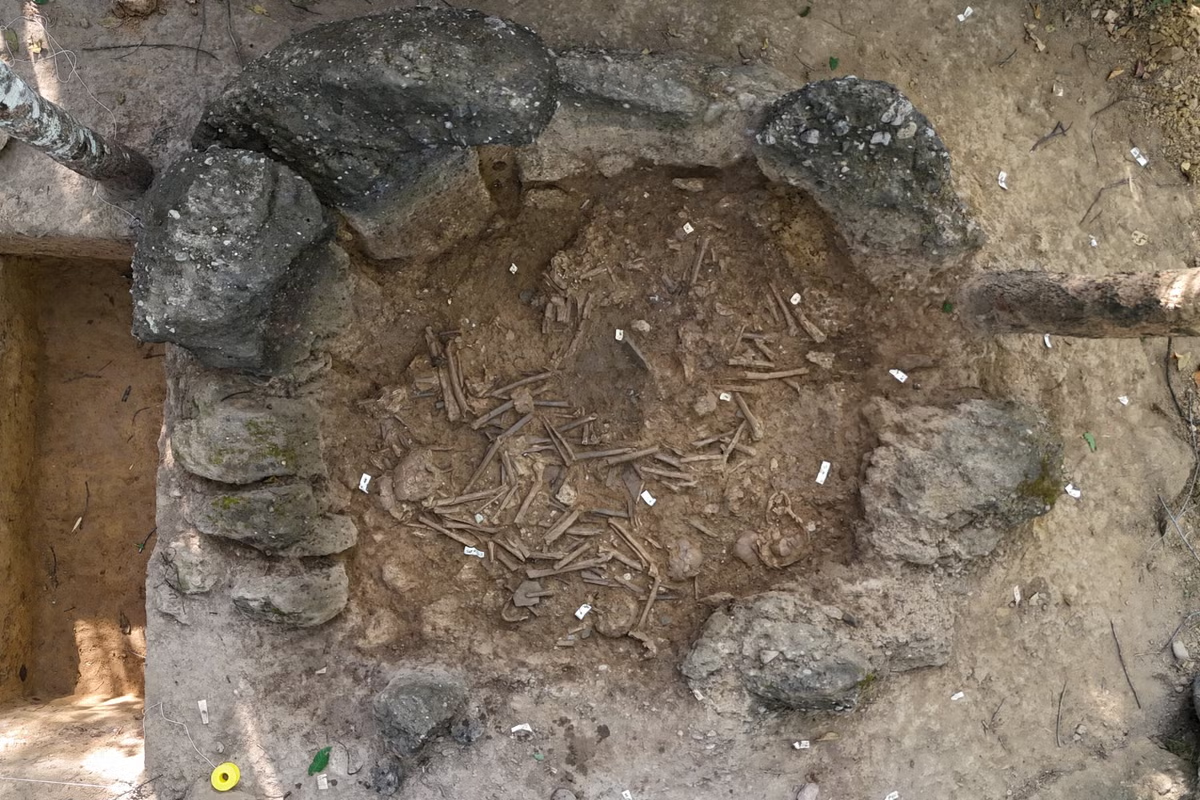
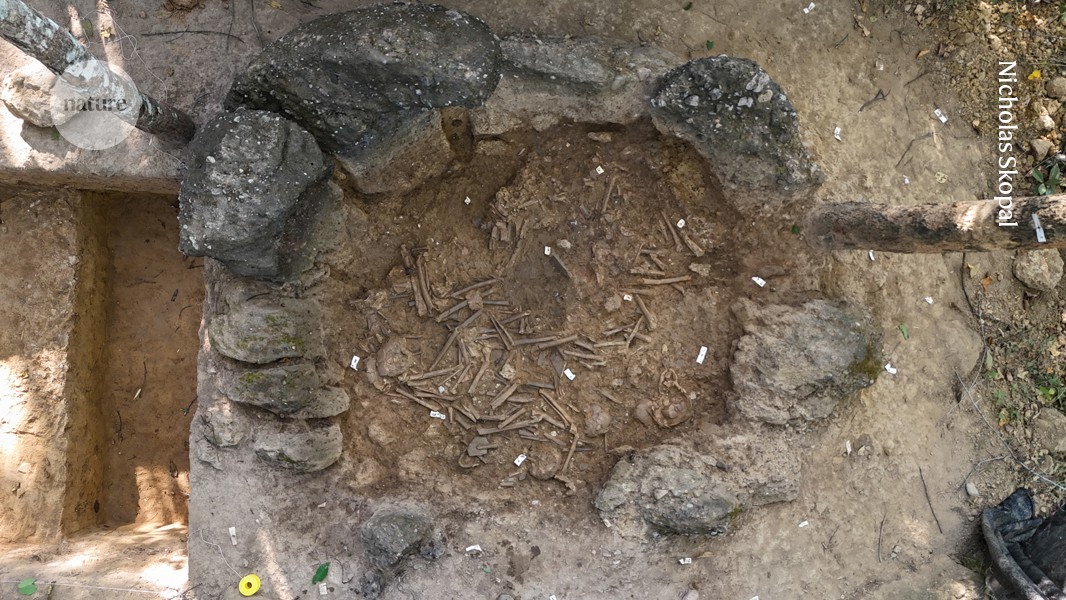
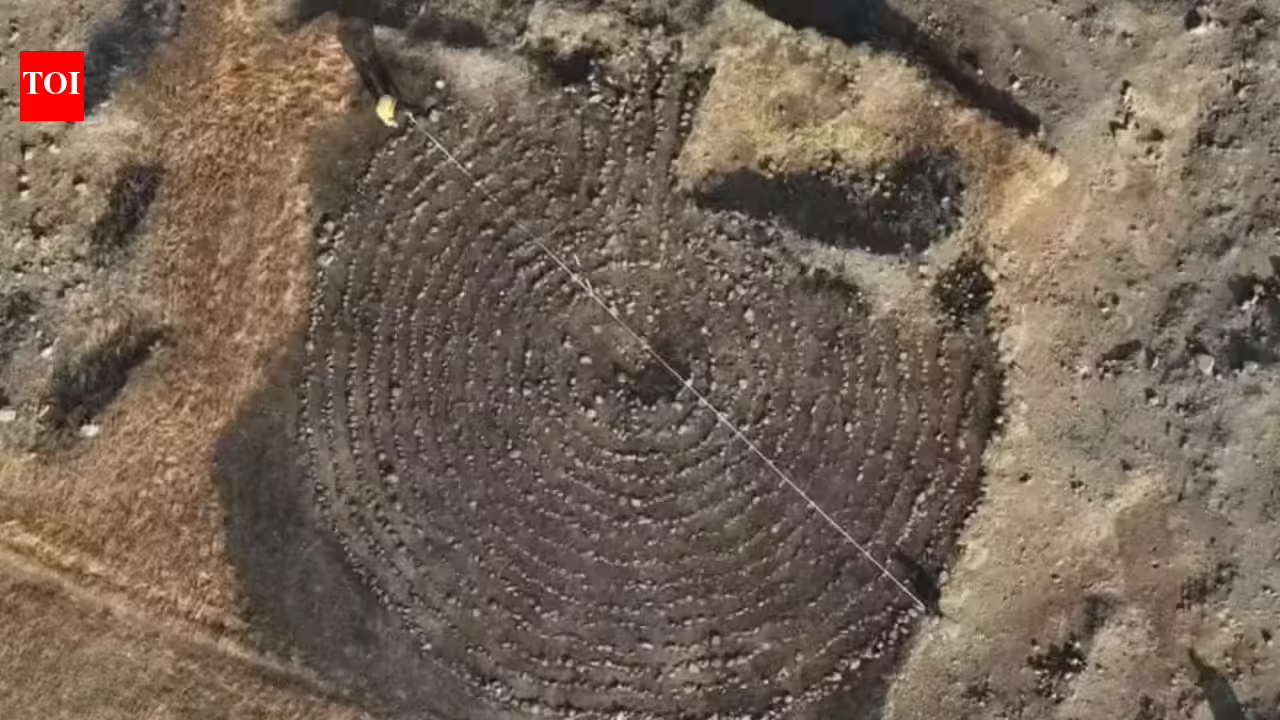
The remains of at least 37 people have been found interred in a giant stone jar in Laos, reshaping our understanding of one of South-East Asia’s most puzzling ancient landscapes.
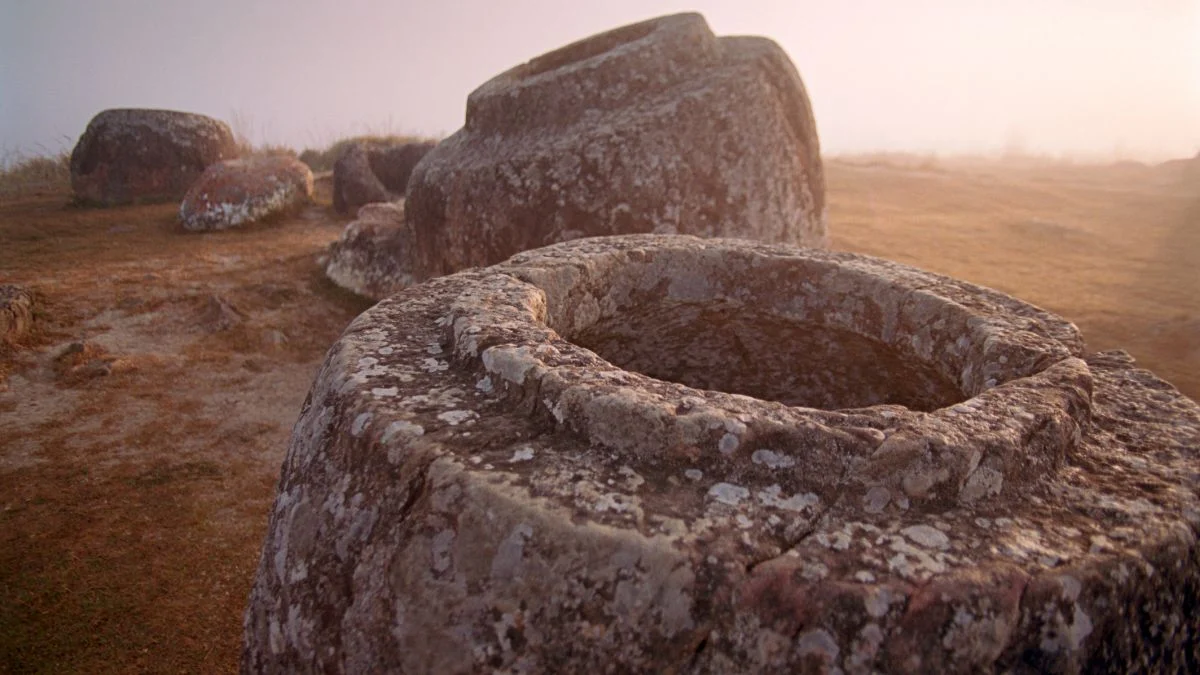
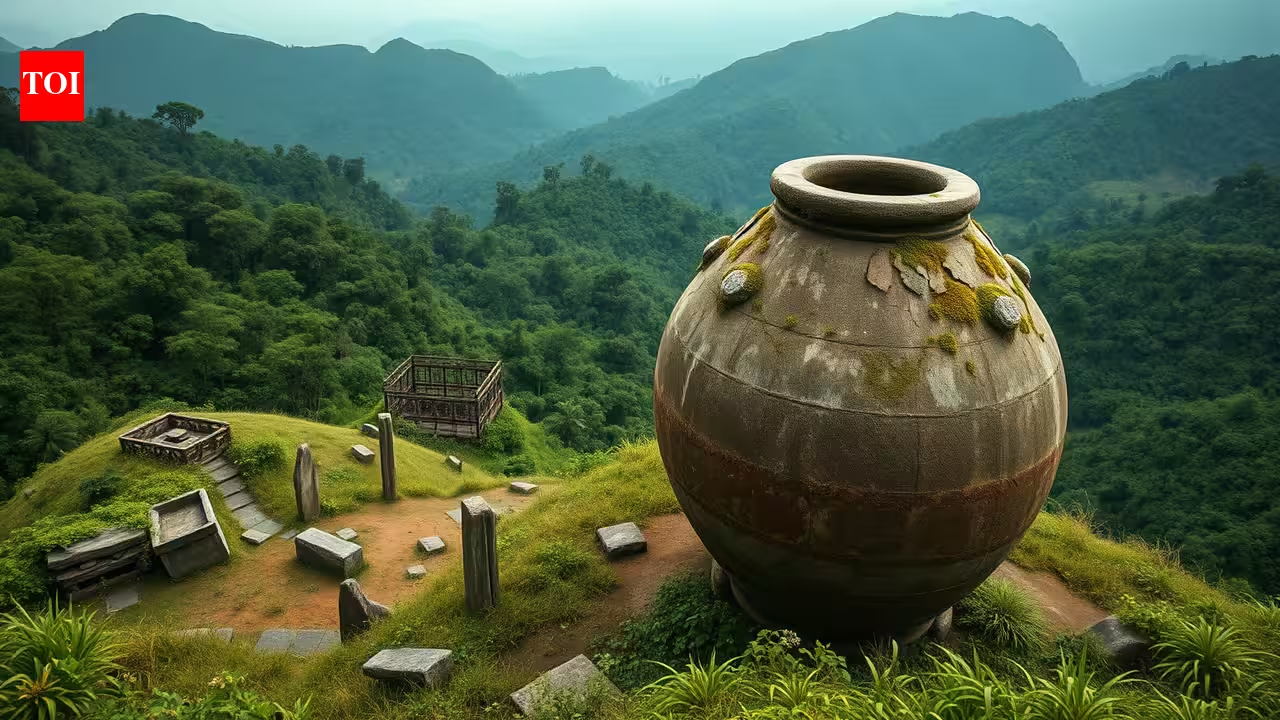
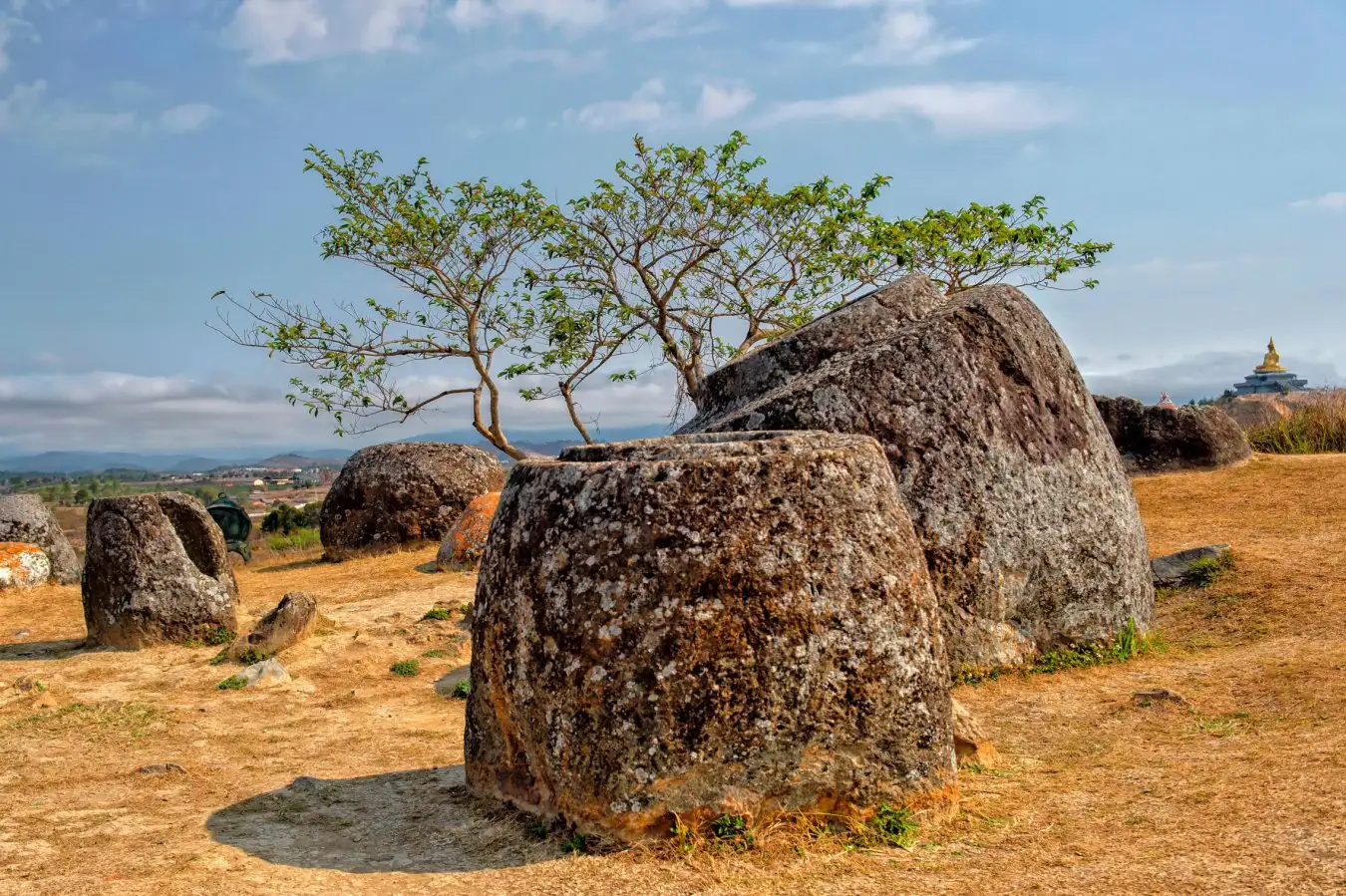
Around the remote Xieng Khouang plateau in central Laos sit thousands of giant stone jars, some 3 metres high and weighing several tonnes. The Plain of Jars has long been thought to be an ancient megalithic site, but who made the jars and what they were used for have remained mysterious.
“There are all these old stories associated with them, that they were made for giants who used them for brewing rice wine,” says Nick Skopal at James Cook University in Australia.
Investigations in the 1930s led to suggestions that the jars were associated with the South-East Asian Iron Age between about 500 BC and AD 500 and were used to cremate or decompose bodies. More recent studies have found glass beads, jewellery and a few cremated remains, as well as burials near the jars but not within them.