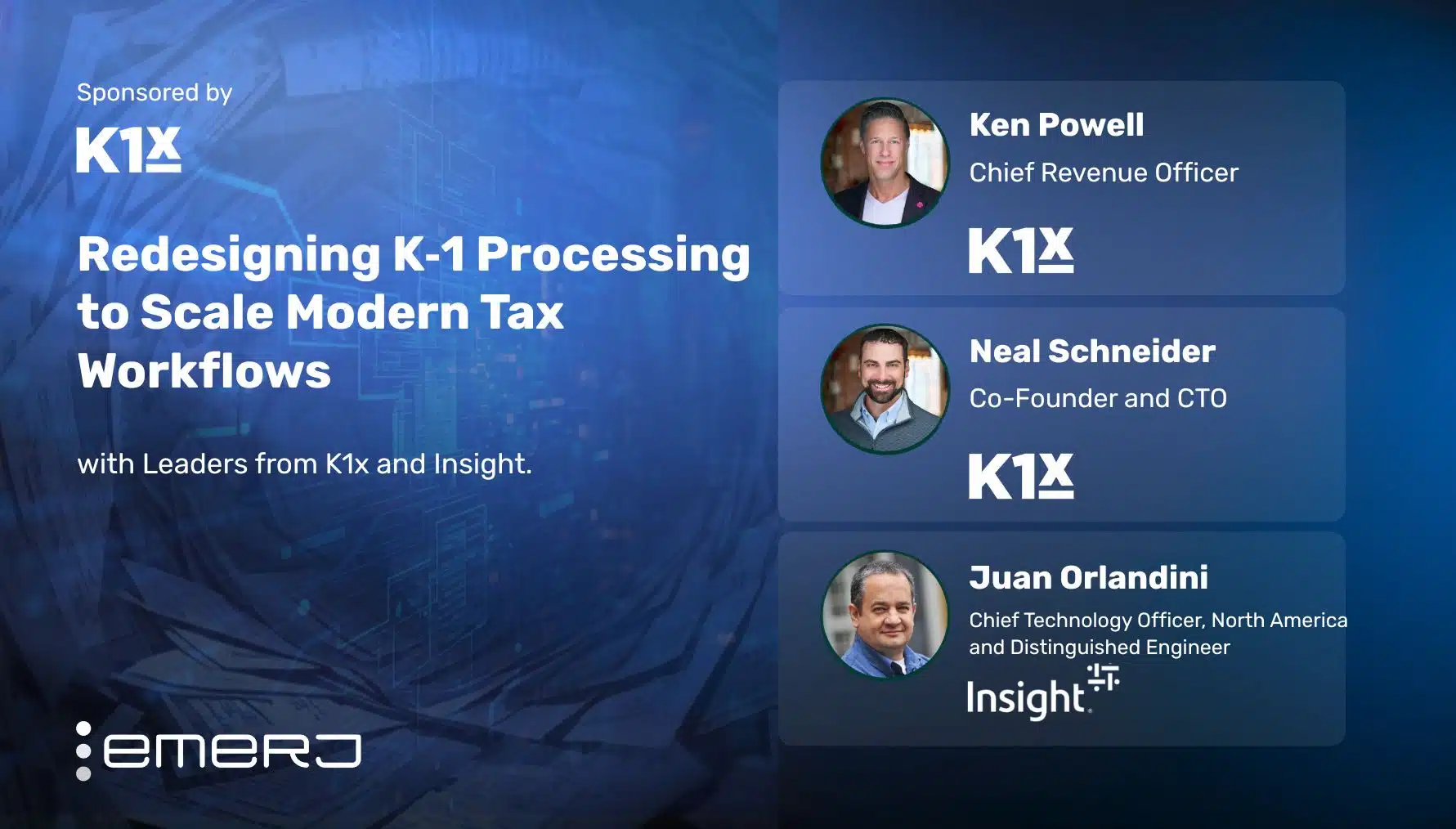
This article is sponsored by K1x and was written, edited, and published in alignment with our Emerj sponsored content guidelines. Learn more about our thought leadership and content creation services on our Emerj Media Services page.
The U.S. tax system is entering a structural imbalance: K‑1 volume is compounding, regulatory disclosures are expanding, and the talent base responsible for processing both is shrinking faster than firms can replace it. The result is not a seasonal capacity problem — it is a workflow model that can no longer absorb the load it was designed for.
For the tax and finance professionals at the center of that burden, no single segment illustrates the breaking point more clearly than the processing of Schedule K-1s.
The IRS reported over 4.5 million partnership returns filed for tax year 2023, representing more than 28.8 million individual partners, each of whom may receive a K-1 running anywhere from five to 500 pages of structured and unstructured data.
The SEC’s Division of Investment Management counts over 54,000 private funds holding $26.5 trillion in gross assets, a base that continues to grow as alternative investments become more broadly accessible.