15 min readCSS,
HTML,
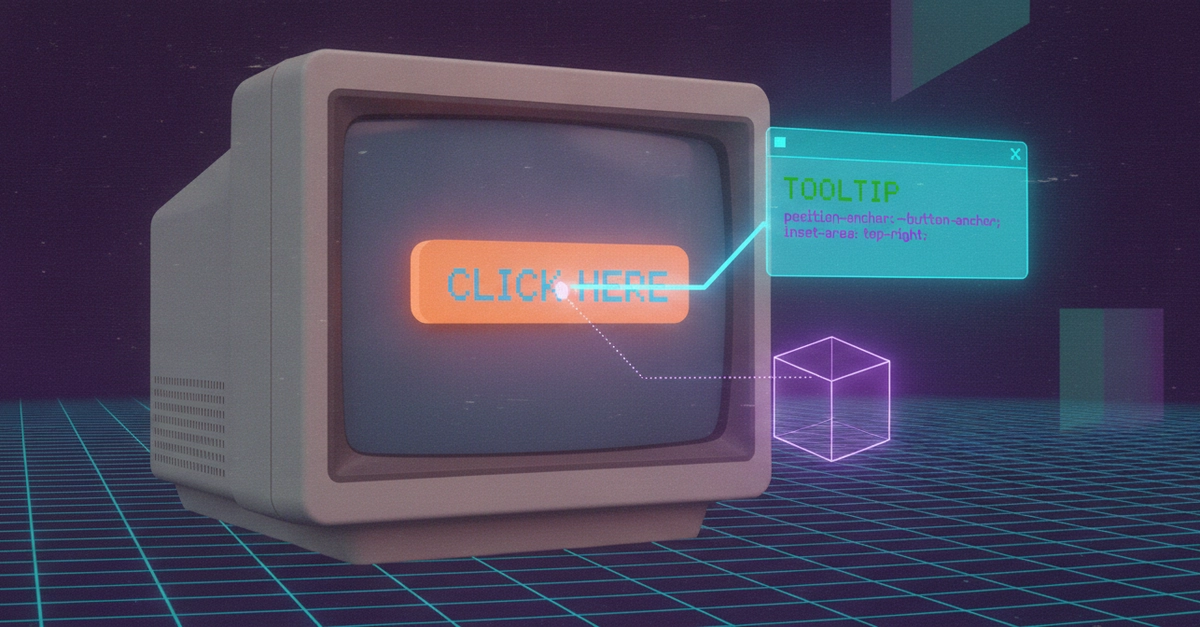
ToolsWhat happens if you rebuild a single tooltip using the browser’s native model without the aid of a library? The Popover API turns tooltips from something you simulate into something the browser actually understands. Opening and closing, keyboard interaction, Escape handling, and much of the accessibility now come from the platform itself, not from ad-hoc JavaScript.Tooltips feel like the smallest UI problem you can have. They’re tiny and usually hidden. When someone asks how to build one, the traditional answer almost always comes back using some JavaScript library. And for a long time, that was the sensible advice.I followed it, too.On the surface, a tooltip is simple. Hover or focus on an element, show a little box with some text, then hide it when the user moves away. But once you ship one to real users, the edges start to show. Keyboard users Tab into the trigger, but never see the tooltip. Screen readers announce it twice, or not at all. The tooltip flickers when you move the mouse too quickly. It overlaps content on smaller screens. Pressing Esc does not close it. Focus gets lost.Over time, my tooltip code grew into something I didn’t really want to own anymore. Event listeners piled up. Hover and focus had to be handled separately. Outside clicks needed special cases. ARIA attributes had to be kept in sync by hand. Every small fix added another layer of logic.Libraries helped, but they were also more like black boxes I worked around instead of fully understanding what was happening behind the scenes.That was what pushed me to look at the newer Popover API. I wanted to see what would happen if I rebuilt a single tooltip using the browser’s native model without the aid of a library.As we start, it’s worth noting that, as with any new feature, there are some things with it that are still being ironed out. That said, it currently enjoys great browser support, although there are several pieces to the overall API that are in flux. It’s worth keeping an eye on Caniuse in the meantime.The “Old” TooltipBefore the Popover API, using a tooltip library was not a shortcut. It was the default. Browsers didn’t have a native concept of a tooltip that worked across mouse, keyboard, and assistive technology. If you cared about correctness, your only option was to use a library, and that is exactly what I did.At a high level, the pattern was always the same: a trigger element, a hidden tooltip element, and JavaScript to coordinate the two.<button class="info">?</button>