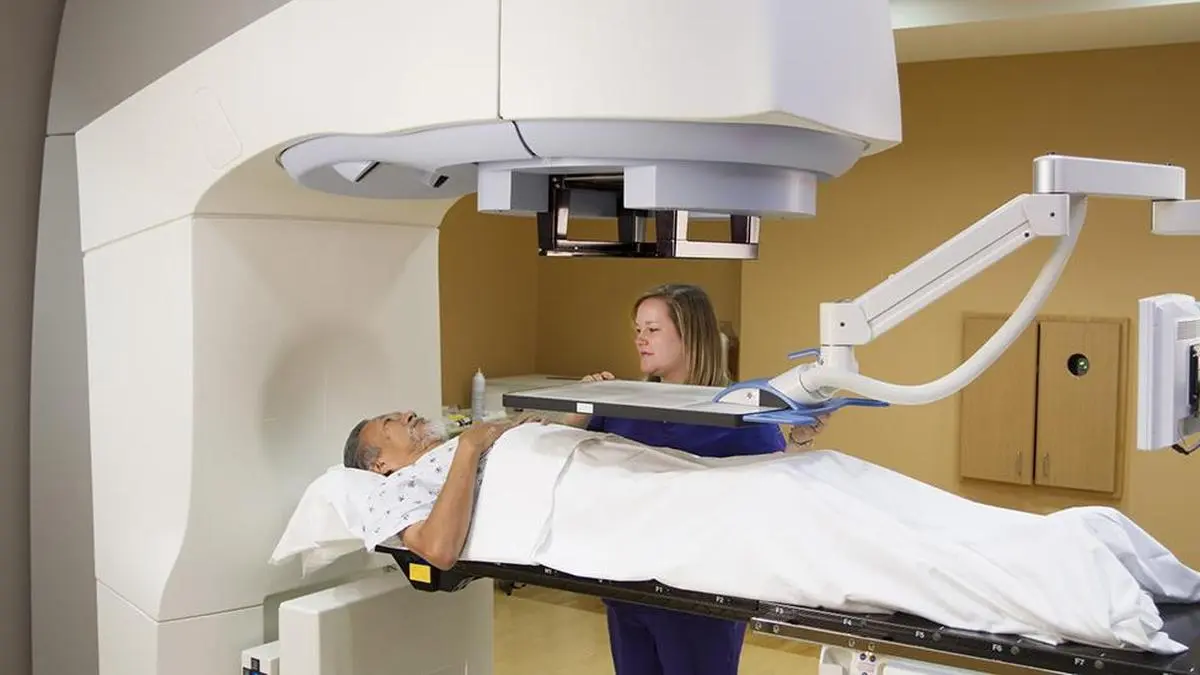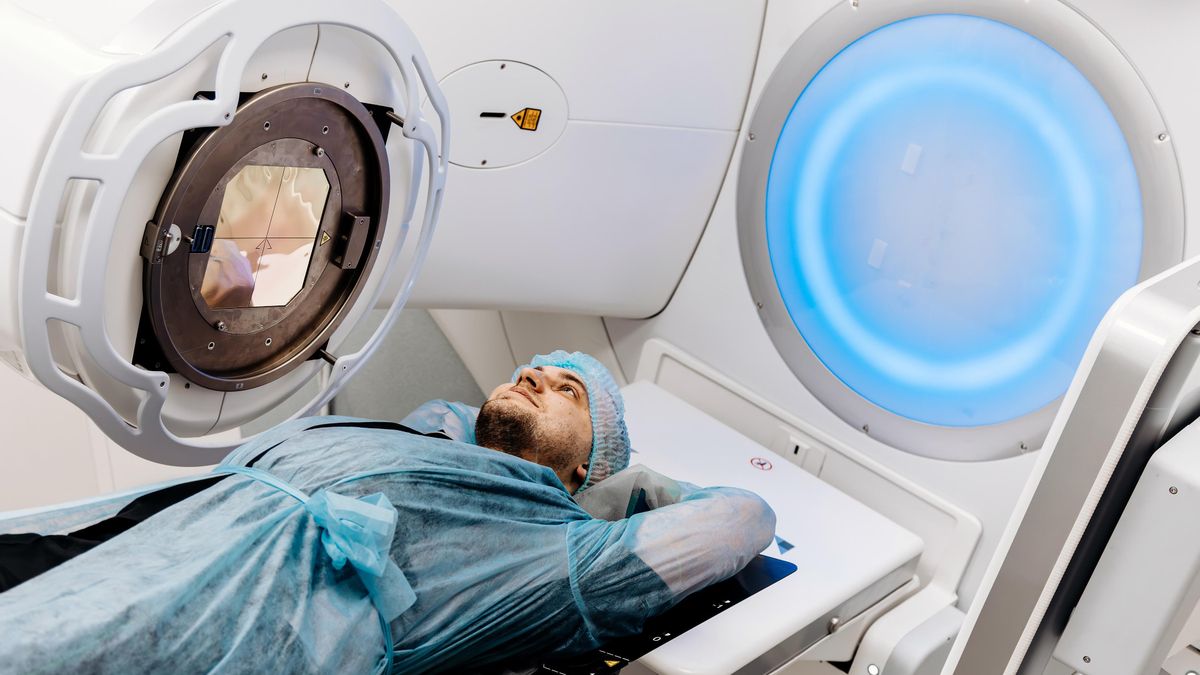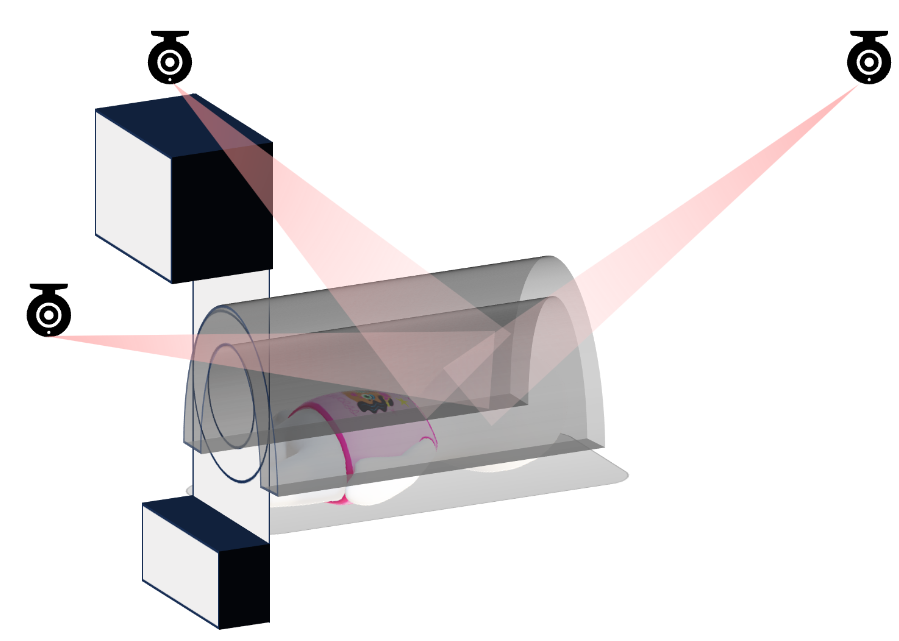
Illustration of the radiotherapy room and the occlusion problem faced by ceiling-mounted cameras in this application.
What was the topic of your PhD research and why was it an interesting area?
My topic of research was developing an optical tactile sensor to track head motion during radiotherapy. I worked on both the hardware and software development of this sensor, though my focus was mostly on the software side. Its importance comes from the fact that during radiotherapy, patients undergoing head and neck cancer treatment are typically immobilised. This is usually done using a thermoplastic mask, which can feel very claustrophobic, or a stereotactic frame. Frames are more common for brain cancers, but they have to be surgically inserted into the patient’s skull using pins. Either of these immobilisation tools may be used depending on the situation. When patients are uncomfortable, they are more likely to move, which affects the accuracy of treatment, especially with thermoplastic masks.
Another major issue is that current systems use ceiling-mounted cameras to record patient motion. These cameras cannot be placed too close to the patient because of the electromagnetic environment around the equipment. Their view is also frequently occluded because the patient moves into a tunnel to receive the ionising beams, which makes it difficult to capture rotational motion.