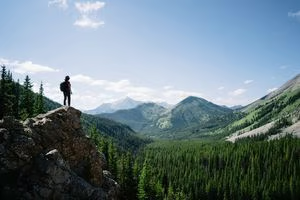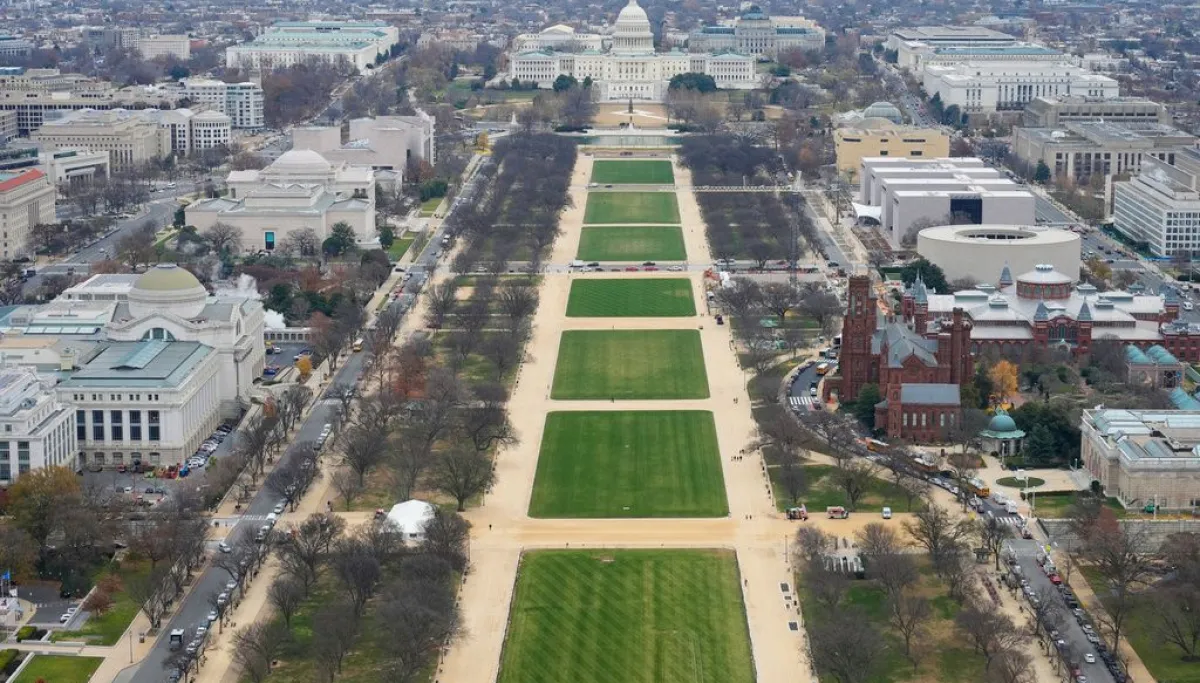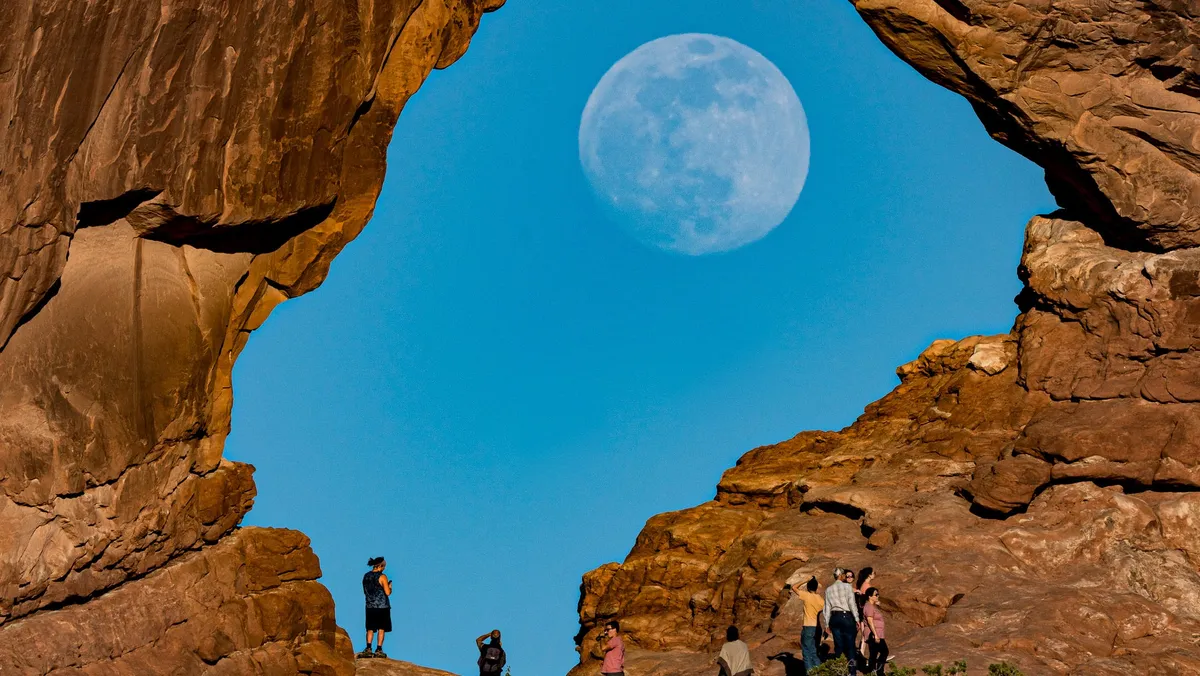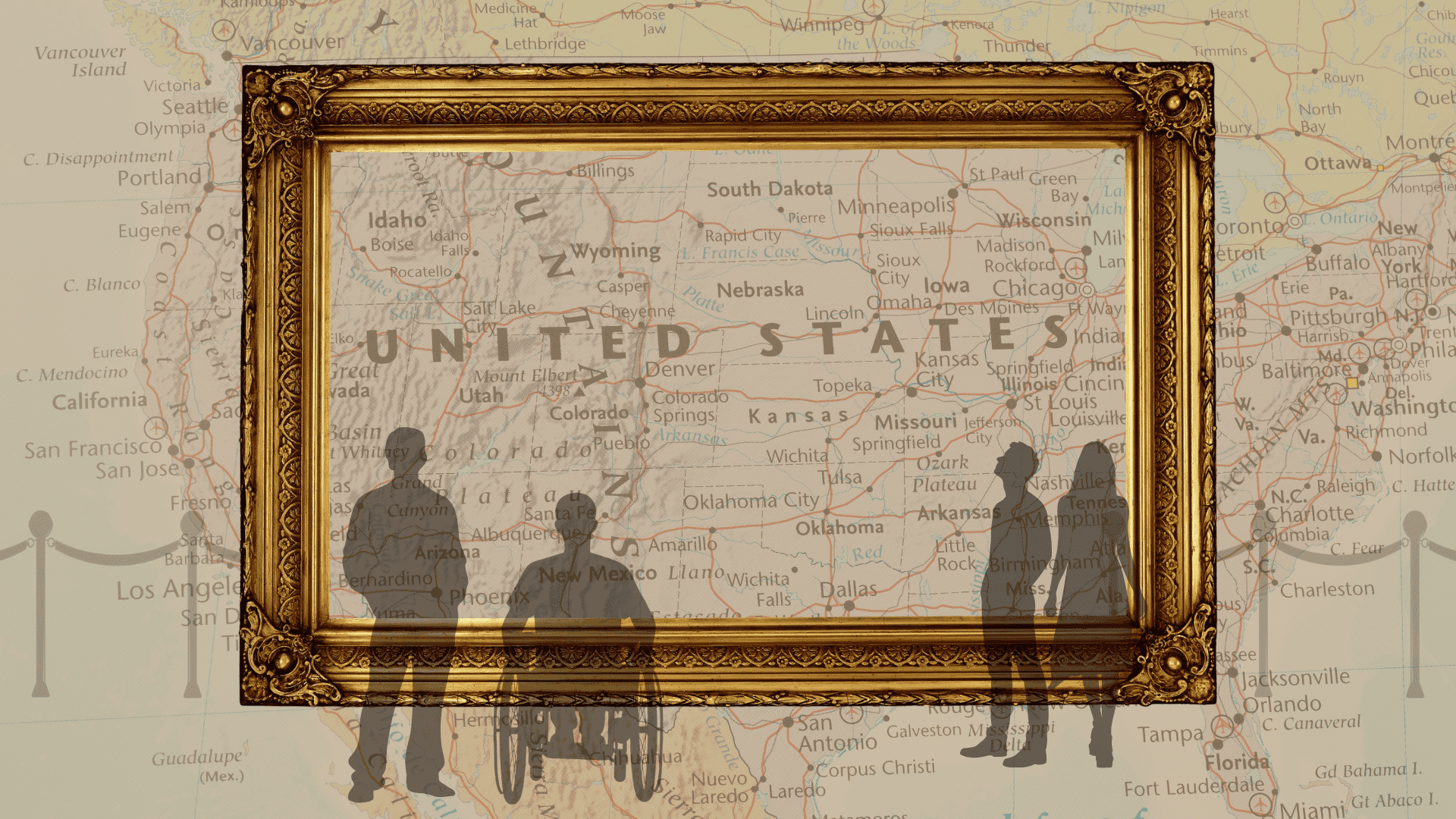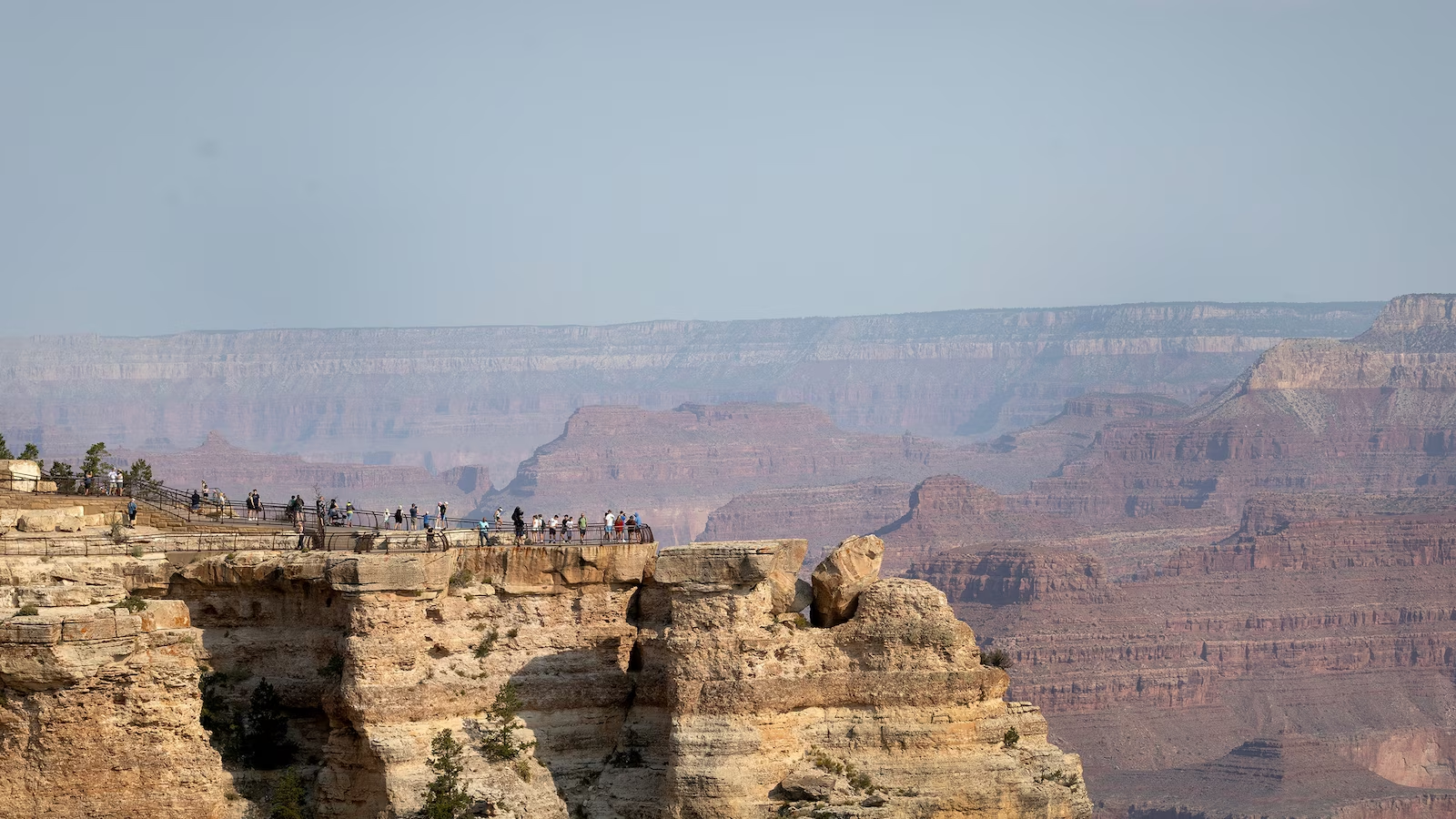
To mark the 250th anniversary of the United States, we're asking those in the know to tell us about the things, places, and experiences that define America right now. Here, we asked 25 notable outdoor enthusiasts—athletes, environmentalists, travel experts, advocates, and more—to each pick an American natural wonder, large or small, that they believe says something special about the country. Their responses, taking us from Maine to California and from Alaska to the Gulf Coast, are a map of this moment.The view of Half Dome and El Capitan from Tunnel View during winter in Yosemite National Park. Eric Thayer—Los Angeles Times/Getty ImagesYosemite National Park (California)Selected by Alex HonnoldIt’s been said that national parks are America’s best idea, and Yosemite was one of the first—and I think the most beautiful. The big walls and rock climbing are incredible, as is, most importantly, the ease of access. It’s such a wonderful place for people to experience the outdoors, and very close to my heart. Honnold is a rock climber. His recent climb of Taipei 101 was broadcast on Netflix in Skyscraper Live and his free solo climb of El Capitan in Yosemite was chronicled in the Oscar-winning 2018 documentary Free Solo.A slow moving serpentine river snakes on outside Gates of the Arctic National Park and Preserve, Alaska. Bonnie Jo Mount—The Washington Post/Getty ImagesGates of the Arctic National Park and Preserve (Alaska)Selected by Jon KrakauerGates of the Arctic National Park and Preserve—the second largest in the United States, covering more than 13,000 square miles in Alaska—is a vast expanse of spectacular wilderness without roads or designated trails. It speaks to our nation’s longstanding commitment to protecting the environment for the benefit of future generations. Krakauer is a mountaineer and author of books including Into the Wild and Into Thin Air, the 30th anniversary edition of which was recently released.The Sky Islands (Arizona/New Mexico)Selected by Rae Wynn-GrantThe Sky Islands—a phrase that sounds straight out of a fantasy novel—exist here on Earth, in the Southwestern U.S. They are small ecosystems located on the isolated mountaintops that rise from the arid deserts of Arizona and New Mexico. These high, lush peaks are home to some of the world’s most endangered wildlife, like the Mexican gray wolves that once roamed widely. Thankfully, many endangered species that call the Sky Islands home are reclaiming their place in the wild, due to extraordinary efforts from federal and state agencies, conservation partners, and philanthropists. America has always been a country of surprises and discovery, and this landscape—where seemingly inhospitable deserts are quietly alive with stories of persistence—captures that spirit in full.Wynn-Grant is a wildlife ecologist and co-host of Mutual of Omaha’s Wild Kingdom Protecting the Wild.The Rocky MountainsSelected by Mikaela ShiffrinI was incredibly fortunate to grow up in the Rockies, surrounded by the magic of the mountains. In a world full of complexities and heartache, sport can be a beacon of hope, and the Olympics, in particular, a beautiful show of peaceful cooperation and competition to the world. At the same time, these mountain ranges that have played such a key role in my skiing career are suffering from the effects of climate change, with increasing temperatures and less snow—notably evident this winter with record low snowpack across the west coast—highlighting the high stakes of this moment for the future of snow sports and our planet.Shiffrin is an alpine skier; she is a three-time Olympic gold medalist and eight-time world champion.A trail through redwood trees in Simpson-Reed Grove, Jedediah Smith State Park. VWPics/Universal Images Group/Getty ImagesRedwood National and State Parks (California)Selected by Chuck Sams Anytime you walk into the Redwood National and State Parks, you can’t help but look up in awe and wonder, feeling a sense of pride as you witness the resilience of this ancient forest. Redwood trees embody patience, endurance, and interdependence, for they have survived fire, flood, and centuries of human change—not through dominance alone, but through connection. Their shallow roots intertwine, supporting one another against storms large and small. As we mark our nation’s 250th birthday, we can look at these magnificent trees and know we will continue to grow together and continue our symbiotic relationship with the natural world now and in generations to come.Sams served as the director of the National Parks Service from 2021 to 2025. He is currently the director of Indigenous programs at Yale University’s Center for Environmental Justice. People walk the New York City High Line. Sergi Reboredo—VW Pics/Universal Images Group/Getty ImagesThe High Line (New York City)Selected by Glenn FogelThe High Line is a masterclass in American reinvention, showing that innovation isn’t always about building from scratch, but about reimagining what already exists. By transforming an obsolete rail line into a vibrant space for connection, it demonstrates how we can pivot our past into a future that prioritizes the human experience. It also reflects a core driver of American progress: the power of public–private partnership, strong government leadership, and philanthropy. From the Erie Canal to land grants and great universities, progress has long depended on collaboration across these forces. The High Line stands in that tradition, reminding us that our next 250 years will be defined not just by what we build, but by how we work together to unlock new potential in existing foundations and create spaces that bring people together.Fogel is the CEO of Booking Holdings.The crossroads in Clarksdale, Mississippi. Karen Focht—ZUMA Press Wire/ReutersThe Crossroads (Clarksdale, Miss.)Selected by Jeff DanielsAt the intersection of Highways 49 and 61, Robert Johnson gave birth to the blues. This celebrated myth redefined American music. Daniels is an actor, playwright, and musician.Delicate Arch at sunset in Arches National Park. Wolfgang Kaehler—LightRocket/Getty ImagesArches National Park (Utah)Selected by Henley VazquezArches National Park near Moab, Utah, captures something essential about travel right now: the growing desire to disconnect, slow down, and find meaning in our country’s most spectacular natural settings. At a time when travelers are craving simplicity and connection, Moab exists in a special bubble where status and division fade. Everyone lines up for the same breakfast burrito; everyone bonds over local beers, sharing the best climb or hike of the day. I visited with my daughter as we were emerging from our pandemic lockdown, and it’s a space I think resonates especially strongly now, to find common ground, inspiration, and adventure.Vazquez is the co-founder of Fora.Underwater kelp forest with a school of fish off of Casino Point in Catalina Island. Ric Tapia—APThe kelp forests of Catalina Island (California)Selected by Ed Begley Jr.Many years ago, kelp forests existed in San Pedro, L.A. Harbor, and elsewhere in Santa Monica Bay. In Catalina, they remain intact, and it’s a beautiful place to dive, snorkel, and enjoy from above sea level as well. Those waters are, to me, an indication of what can be done. The pollution was horrible, but thanks to the Clean Water Act, it’s a lot cleaner than it was in 1970. People think that, environmentally, things always get worse, but occasionally things get better. It’s the same with the air. We have millions more cars than we had in L.A. in 1970, and millions more people, but a fraction of the smog. That’s thanks to the Clean Air Act, signed by Richard Nixon—a Republican—and that bipartisan, working-together attitude that used to exist. It’s a good lesson for the country: We can do it if we work together. Begley Jr. is an actor and environmentalist.Lake Powell in Glen Canyon National Recreation Area RJ Sangosti—MediaNews Group/The Denver Post/Getty ImagesLake Powell and Glen Canyon (Utah/Arizona) Selected by Elizabeth KolbertLake Powell was created by a dam built on the Colorado River in 1963. The lake—really a reservoir—drowned Glen Canyon, thought by many to be the most spectacular spot along the entire river. Now, as climate change and drought shrink Lake Powell, Glen Canyon is emerging again, a natural wonder reborn thanks to disaster.Kolbert is the author of Life on a Little-Known Planet: Dispatches from a Changing World and a staff writer for The New Yorker. The American OceanSelected by Sylvia A. EarleWater, fresh and salty, is the nation’s blue heart; it underpins the existence of everything we care about, including our very existence. Bravo for the parks, monuments, reserves, sanctuaries, and laws that safeguard the nation’s most precious liquid assets, including jurisdiction over ocean space that more than doubles the size of the country. Earle is a marine biologist, oceanographer, a National Geographic Explorer at Large, and Founder and CEO of Mission Blue.The Hudson River (New York)Selected by Bhikkhu BodhiA place that resonates most deeply with me is not a mind-boggling, eye-popping wonder of nature, but a quiet cluster of rocks alongside the Hudson River in Cold Spring, N.Y. Watching the river from this spot, I see the convergence of time and timelessness, the intersection of history and geography, a mighty river bearing the scars of historical memory that flows on into the unpredictable future but always—always—remains itself, immovably in the present.Bodhi is president of the Buddhist Association of the United States.The Los Angeles River in South Gate, Calif. Brian van der Brug—Los Angeles Times/Getty ImagesThe Los Angeles River (California)Selected by Jay DuplassThe channelizing of the L.A. River between 1938 and 1960 in order to prevent flooding has had devastating consequences: destruction of natural habitats, prevention of groundwater recharge, and exacerbation of urban heat. The concrete gully gave us a cool car-racing scene in the movie Grease, but a rare natural urban oasis was turned into a 51-mile eyesore snaking through the city. Thankfully, the story has taken a positive turn with recent community efforts to restore and revitalize the river, along with a natural rewilding phenomenon. Nature is starting to take back on its own, and the L.A. River is becoming a source of pride and natural beauty again, a hopeful reminder of nature’s resilience.Duplass is a director, actor, and producer. He stars in Other Mommy, in theaters Oct. 9, and I Play Rocky, in theaters Nov. 13. He also directed the upcoming comedy-drama See You When I See You.The Klamath-Siskiyou Region biodiversity hotspot (Oregon/California)Selected by Sara BeeryAmerica harbors extraordinary biodiversity; millions of species have evolved across our diverse climates. The Klamath-Siskiyou region, which straddles the border between Oregon and California, is far less known than some of our iconic national parks, but is a center of extraordinary plant diversity, with thousands of species found nowhere else on Earth. This is just one of many such hidden, unique ecological treasures scattered across our country. Looking to our future, American technological innovation—from NASA’s growing set of Earth observation systems to AI-enabled species-identification systems—will play a key role in preserving our evolutionary legacy for future generations. Beery is a conservation technologist and assistant professor at MIT.Badlands National Park, Pinacles Overlook. Bernie Friel—UCG/Universal Images Group/Getty ImagesThe Badlands (South Dakota)Selected by Jessica NabongoI’ve been to every country in the world, and I think many Americans take for granted the beauty and diversity of our own landscapes. Something came over me in the Badlands. It made me very emotional. I felt the intimacy of nature, the presence of Indigenous history—the soul of the nation. I posted a video on Instagram, driving through, listening to Beyoncé and Miley Cyrus’ “II Most Wanted,” and it was just perfect! And something else: As a Black woman in a red state, I was met with nothing but kindness. Doing solo American road trips has reminded me that, regardless of the noise, most people are good. Nabongo is a photographer, travel expert, and author of The Catch Me If You Can: One Woman’s Journey to Every Country in the World. The Shafer Canyon dirt road at sunrise on near Moab George Rose—Getty ImagesThe Moab desert (Utah)Selected by Norman ReedusI rode a motorcycle through the Moab desert with a friend of mine, and it was one of the most beautiful places I’d ever seen. It felt timeless and perfectly sculpted and such a true natural work of art. It reminded me of something the author Edward Abbey, author of The Monkey Wrench Gang, the 1975 novel about environmentalists engaging in eco-sabotage in the Southwest, once said: “Enjoy yourselves, keep your brain in your head and your head firmly attached to the body, the body active and alive, and I promise you this much; I promise you this one sweet victory over our enemies, over those desk-bound men and women with their hearts in a safe deposit box, and their eyes hypnotized by desk calculators. I promise you this; you will outlive the bastards.”Reedus is an actor, producer, photographer, and artist.The California Redwood ForestsSelected by Sophia BushThe California redwood trees, specifically the Coast Redwoods or Sequoia sempervirens, are found in a narrow, 450-mi.-long strip along the Pacific coast, ranging from just south of the Oregon border down to southern Monterey County. They take my breath away because of their size, of course, but also because of what they reveal about our precious planet. Wood requires photosynthesis and complex cellular machinery, a perfect atmosphere, and billions of years of evolution; a simple wooden chair is, in fact, more miraculous than a diamond. And the redwoods, with their gentle giant wisdom, their whimsical fairy rings, and their lifespans—during which they bear witness to so much of human life on earth—are the most miraculous of all. If we listen to them, they have so much to teach us about what matters. Bush is an activist and actor who can be seen in the upcoming series Count My Lies. Her book I Will Tell You Mine will be released in October.Portage Glacier as seen from Portage Pass in Chugach National Forest in Alaska. Yereth Rosen—ReutersChugach National Forest (Alaska)Selected by Bob WheelerThe Chugach National Forest in Alaska is the perfect example of how America's National Forests are more than just a national treasure; they are one of our most vital natural resources, balancing commercial use with recreational access. Their 193 million acres are some of our last wild places, filled with breathtaking vistas, endless camping opportunities, and an escape from the bustle of modern life. Few places embody the American ideals of freedom, democracy, and exploration more powerfully than our national forests. Wheeler is the president and CEO of Airstream.Visitors explore the rocky coast and cliffs near Otter Point in Acadia National Park. Robert F. Bukaty—APAcadia National Park (Maine)Selected by Mirna ValerioThe birth and design of Acadia National Park in Bar Harbor is representative of what great things can happen when the very wealthy (the Rockefellers, in this case) are also civic-minded and philanthropic. It is a gorgeous land with several different types of terrain and natural features: ocean, lakes, mountains, cliffs, carriage roads, a pristine sunrise. Many parts are accessible to folks of all abilities. It is the perfect outdoor spot in all seasons—a treasure. Valerio, a.k.a. The Mirnavator, is an ultrarunner, an inclusivity advocate, and the author of the memoir A Beautiful Work in Progress.Yosemite National Park (California)Selected by Derek HoughOne of the first getaways my now wife Hayley and I took together was to Yosemite National Park. We went on a hike, and I looked at Hayley and knew I was going to marry her someday, so Yosemite will always hold a very special place in my heart. I remember stepping out of the tent at night and looking up all around me, and genuinely thinking we were in heaven. It was the most beautiful place I'd ever been in my life: waterfalls, dramatic cliffs, wildlife, nature. It is mindblowing to think about what we have access to, as Americans. I’ve been fortunate enough to see many places around the world, and nothing quite compares to what we have here in our backyard. Hough is a dancer, choreographer, and entertainer.Morro Rock from Morro Strand State Beach. Citizen of the Planet/UCG/Universal Images Group/Getty ImagesMorro Rock (California)Selected by Leah ThomasThis 500-plus-ft.-tall rock (and seemingly out-of-place natural wonder) sits in a tiny town in central California. It took millions of years to form via volcanic eruptions and magma, and stands whimsically amid a sparsely populated seaside community. It’s a reminder of the beauty in the most unassuming places all across America—ones that we often drive by and forget. It protects wildlife, holds deep spiritual meaning to Indigenous communities, and continues to stand tall all these years, a reminder that, regardless of change, nature will persist. It’s also a beautiful example of how a natural wonder can become an almost personified community member. “Oh yeah, that’s the Morro rock” is a phrase you’ll hear, like people talking about their most impressive neighbor. Thomas is an environmentalist.Our Protected LandsSelected by Ayana Elizabeth JohnsonOur country's leaders once saw clearly how invaluable and irreplaceable and majestic our ecosystems and landscapes are, and invested in park rangers and wildlife biologists to protect and understand them. Our national parks and forests, our marine reserves and scenic rivers are an imaginably rich birthright — impossible to choose just one! I hope we will continue to safeguard these places, as a wellspring of wonder for our future selves, and for future generations.Johnson is a marine biologist, teacher, and author of What If We Get It Right? Visions of Climate Futures.A person stands at an overlook at Zion National Park John Locher—APZion National Park (Utah)Selected by Maya HigaA natural wonder that I believe defines America now is Zion National Park. The sandstone peaks and wildlife of Zion are a true vision of the resilience and diversity that makes all living things, including ourselves, beautiful.Higa is a wildlife conservationist, content creator, and founder of the Alveus Sanctuary in Austin. A visitor views the Grand Canyon from Mohave Point on the South Rim. Jim West—UCG/Universal Images Group/Getty ImagesThe Grand Canyon (Arizona)Selected by Oksana MastersThe Grand Canyon represents resilience, survival, and the beauty that can come from struggle and time. To me, America is not about perfection—it’s about constantly evolving, adapting, and pushing forward through challenges, even when the path is difficult or divided. The canyon was shaped over millions of years by pressure, movement, and persistence, and that mirrors both my journey as a multisport athlete and the spirit I believe defines this country. As someone who has competed around the world, I think the Grand Canyon reflects the grit and possibility of America. It’s so powerful not because it is flawless, but because of everything it has endured and overcome. Masters is a multisport Paralympic athlete and 24-time medalist.The Wetlands of the Gulf Coast Courtesy Ian ShiveThe Wetlands of the Gulf CoastSelected by Ian ShiveThe wetlands of the Gulf Coast are both a sanctuary and a shield—vast living landscapes where wildlife, culture, and the forces of nature have shaped one another for centuries. From the protected marshes of Rockefeller Wildlife Refuge to the disappearing bays and barrier islands beyond, these waters sustain millions of migrating birds, nourish fisheries that feed the nation, and absorb the force of storms before they reach coastal communities. Ancient migration routes still pass through these wetlands each year, carrying life across an entire continent, while Cajun and Indigenous traditions remain deeply tied to the rhythms of tide, river, and marsh. In many ways, the future of the Gulf Coast is a reminder that the health of people and the health of wild places have never been separate stories.Shive is a photographer, filmmaker—including of the upcoming giant screen IMAX 3D film Into the Bayou—and the author of Refuge: America’s Wildest Places.
25 Ways Nature Tells America's Story
From the Grand Canyon to the Gulf Coast, these are the wild places that make America unforgettable.
3,222 words~15 min read