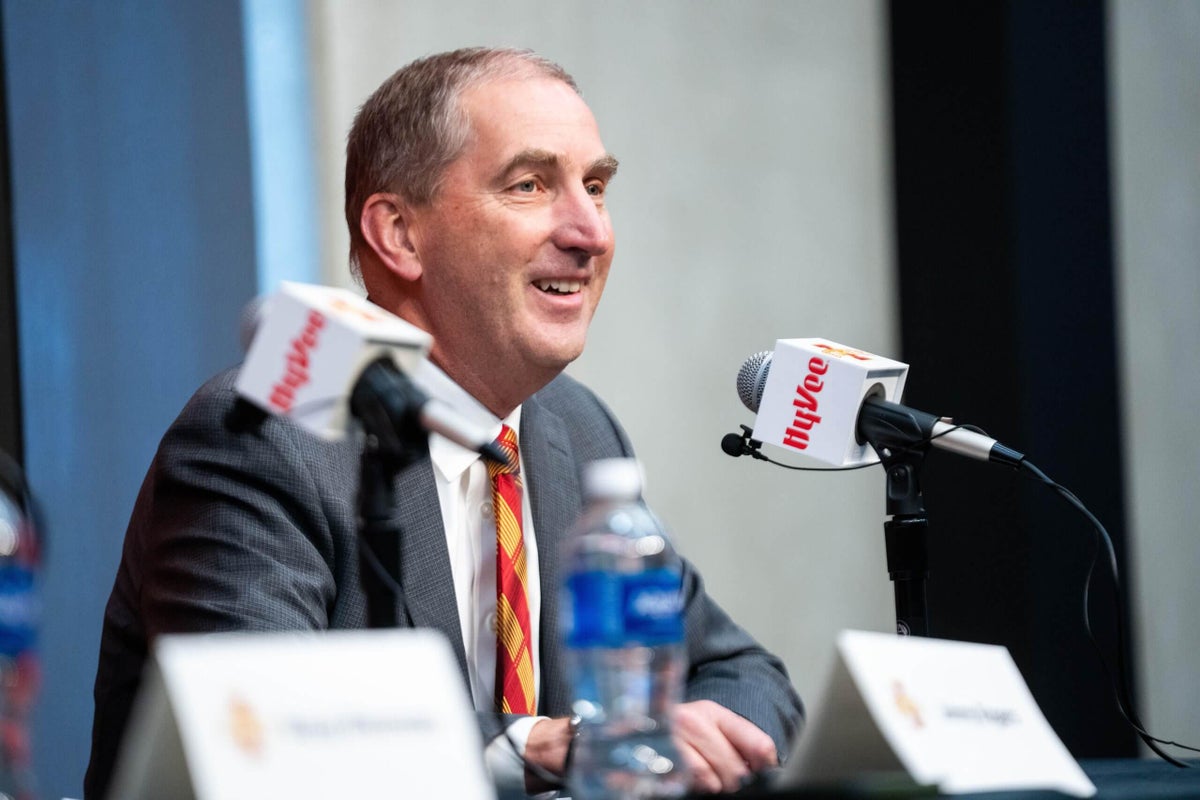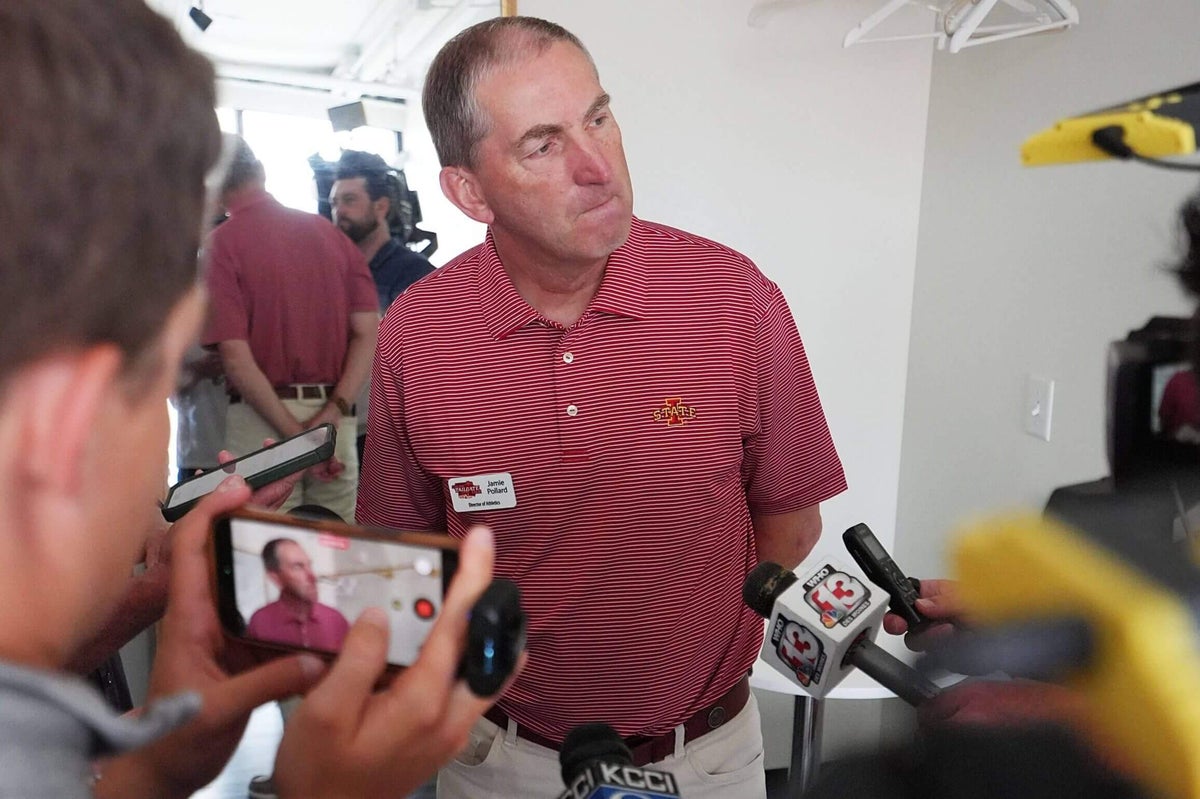
RANCHO PALOS VERDES, Calif. — Significant frustration over governance and other revenue-related issues between the Big 12 and the power-conference duo of the SEC and Big Ten has boiled over for one Big 12 athletic director, who told reporters, “Let ’em break away.”“I would turn it around and say we should break away from them,” Iowa State athletic director Jamie Pollard told reporters along his annual Cyclone Caravan and filmed by Cyclone Fanatic. “Let them go, but they have to go in all their sports and see how fun it is to play baseball and softball and track when it’s just the 20 of you.“That’s probably a little more draconian, but that’s how I feel about it. Let’s quit talking about it, quit threatening, go do it.”
Iowa State AD Jamie Pollard takes it up a notch when asked about Big Ten and SEC threatening to break away: pic.twitter.com/CxI7gA0Y5S
— Keith Murphy (@KeithMurphy) May 19, 2026Part of Pollard’s frustration stems from the Big Ten’s and SEC’s unwillingness to adhere to College Sports Commission rulings. The most high-profile case involves the CSC denying name, image and likeness deals worth $7.5 million to 18 Nebraska athletes with compensation coming from Playfly Sports, a multimedia-rights company that partners with Nebraska. Both sides appealed to an independent arbiter, which ruled in the CSC’s favor.“The four commissioners spent a lot of money creating the CSC,” Pollard said. “Then to have two of the conferences not want to adhere to it is perplexing to me, because then, why did we spend the money? If you didn’t want rules, then why did you create this entity? That’s what’s frustrating to me, the same people that say they want rules only want rules if they don’t apply to them.”According to numbers released by the CSC, beginning on June 11, 2025, and through April 30, 2026, it has cleared 26,556 deals worth a total value of $242.35 million. The CSC has denied 1,153 deals worth a total value of $56.17 million. Other deals, primarily from Big Ten and SEC schools, remain in limbo.Iowa athletic director Beth Goetz declined to comment about Pollard’s barbs at the Big Ten, saying, “I try to focus on Iowa and the Big Ten; I think that’s just good practice to focus on our own groups.”“Generally speaking, I think the Big Ten is trying to do things the right way in the system that exists,” Goetz said. “We’re putting our deals in, and we all recognize that right now there’s some challenges within the system that was created for a variety of reasons. So it’s just a collective focus on identifying the best way to continue to support the enterprise, and that means we need a sustainable financial model.”A breakaway was not discussed publicly at last week’s ACC spring meetings, but administrators there voiced concerns about the way the $20.5 million revenue-sharing cap is being enforced (or, more accurately, not enforced).“I think if we all would have gone into the settlement with the idea that the cap wasn’t really going to be the cap, we’d probably feel a little bit different about it,” Louisville athletic director Josh Heird said. “But I think a large majority, if not all of us, went into this settlement with the idea that the cap’s the cap. The cap’s not the cap. If reality deviates from your expectations, then it’s difficult to reconcile those at times. I think that’s what we’re going through right now as an industry.”Big Ten athletic officials vented their own frustrations at their league meetings, which has led to concerns over governance from the NCAA and CSC. Hopes for the SCORE Act, which would have granted the NCAA antitrust exemptions to regulate outside income, were dashed when a potential U.S. House vote was scuttled Monday. Administrators wanted the SCORE Act to coincide with the landmark House settlement, which allows athletic departments to pay athletes directly.“I don’t believe it’s working today,” Washington athletic director Pat Chun said. “The whole point of going into the settlement was to manage the third-party money and actually have a functional cap, and once that didn’t happen, that really undermined the fundamental reason of why the settlement was going to have any chance of having durability.”The Big Ten has not threatened to leave the NCAA or CSC, but it’s keeping its options open.“There’s a strong feeling to try to do everything we can, No. 1, to see what happens out of Congress and obviously support whatever comes out of that, if it does,” Indiana athletic director Scott Dolson said. “Beyond that, I would say there’s definitely an effort to make certain we can really coalesce together with the other conferences and work within the governance structure that exists … but at the same time keeping everything on the table and exploring whether options we may or may not need to pivot to, depending on the outcomes of a lot of things that sometimes are out of our control.”“The discussion has to start within, in our case, the Big Ten, and all the member schools of the Big Ten,” Maryland athletic director Jim Smith said.— Matt Baker contributed to this report.May 20, 2026Connections: Sports EditionSpot the pattern. Connect the termsFind the hidden link between sports terms