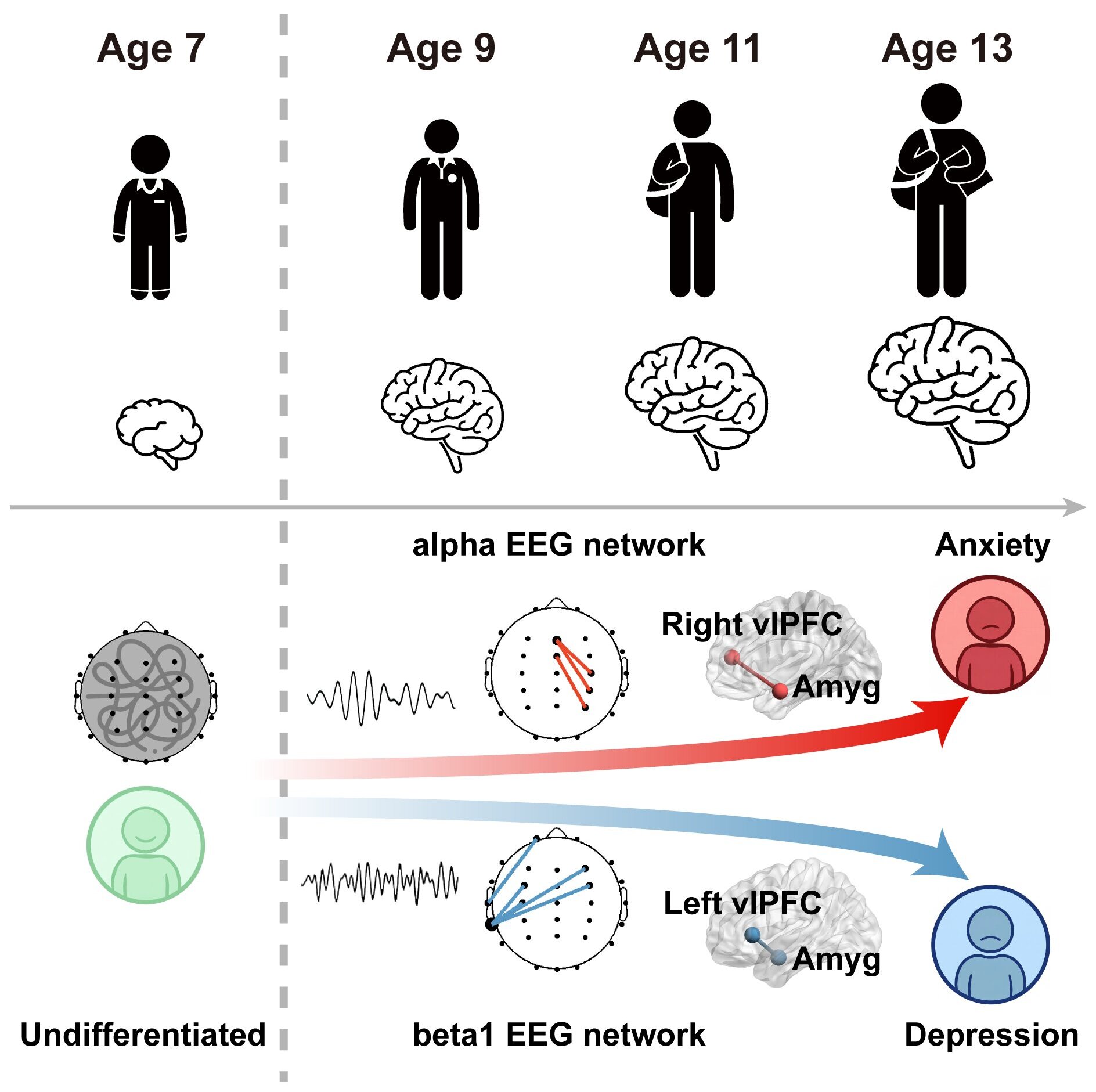
A longitudinal study in Biological Psychiatry identified distinct brain-wave patterns emerging from age 9 onwards that can forecast a child's vulnerability to anxiety or depression by age 13. This schematic illustrates the seven-year journey from childhood to adolescence. At age 7, the brain's electrophysiological signatures for future emotional health are entangled and undifferentiated (left). A critical neurodevelopmental shift occurs at age 9, when dissociable EEG networks emerge: alpha-band networks (red path) specifically predict the trajectory toward adolescent anxiety, while beta-1-band networks (blue path) predict the trajectory toward depression. Credit: Biological Psychiatry (2026). DOI: 10.1016/j.biopsych.2026.03.002
A longitudinal study tracking children over a period of seven years has identified distinct brain-wave patterns emerging from age 9 that can forecast a child's vulnerability to anxiety or depression by age 13. These predictive markers reveal divergent, hemisphere-specific neurodevelopmental trajectories. Anxiety is linked to activity on the right side of the brain, while depression is tied to the left.
The findings from the novel study in Biological Psychiatry provide a robust, externally validated foundation for early detection and targeted precision prevention.