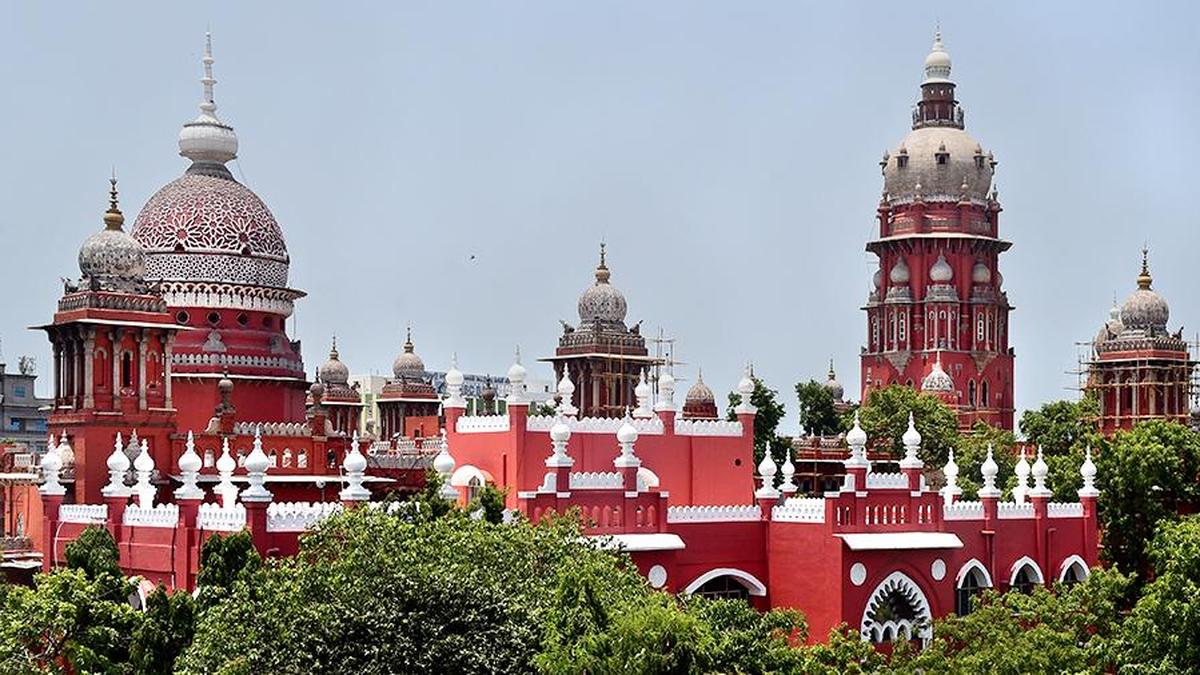
During a routine anticipatory bail hearing late in April, the Madras High Court referred to transgender persons as “children of god”.The phrase appears compassionate, an attempt to restore dignity to a marginalised community. But this language is neither neutral nor benign. It belongs to a longer history of paternalistic recognition in India, most notably captured in the term “Harijan”, popularised by Mohandas Gandhi to describe those oppressed by caste-based untouchability.Like “children of god,” the word “Harijan” sought to confer moral worth through spiritual elevation. And like it, the term was ultimately rejected by anti-caste thinkers for replacing structural critique with sentimental moralism.Indian courts have, when confronted with marginalised identities, reached for emotional language on more than one occasion. The Supreme Court’s 2014 landmark ruling in NALSA v Union of India, which affirmed the fundamental rights of transgender persons, opened by observing that they are often “treated as untouchables”.This analogy to caste, while rhetorically powerful, was not carried through into the reasoning of the judgment. Caste was reduced to a metaphor and with the judgement’s analysis proceeded on an isolated understanding of gender, leaving the intersection of caste and gender unexamined.The Madras High Court’s invocation of “children of God” is a shift in register – from social analogy to theological metaphor – but not a shift in method. In both instances, emotion substitutes for analysis. Even the judgment’s language – at points referring to “transgenders” rather than transgender persons – reflects this tendency to reduce individuals to categories.The court acknowledged social exclusion and directed the state to pursue rehabilitation. But the term remained undefined, leaving the intervention broad, paternalistic and untethered to the case at hand.Theology in a secular courtroomThe judgment invokes the “Creator”, only to insist that “it is no part of the judicial function to sit in theological judgment”. But once dignity is grounded in divine authorship, the basis of rights subtly shifts from constitutional guarantee to moral theology.A constitutional court derives its authority from the Constitution of India. Its task is not to affirm that all are equal before god, but to ensure equality before the law. When courts invoke theology without translating it into constitutional reasoning, they replace analytical clarity with platitudes.To describe a marginalised group as “children of god” is to mark them out as requiring reassurance – as if their inclusion in the category of the human must be specially affirmed. If everyone is, in some sense, a child of god, the phrase signals that this group, unlike others, needs to be reminded of it.Bail to sermonThe court was hearing an application for anticipatory bail by a YouTuber accused of spreading misinformation about the self-immolation of a transgender person.By the court’s own reasoning, the matter was effectively resolved early on. The petitioner had merely retransmitted content already in circulation. On that basis, the court indicated its inclination to grant bail.Ordinarily, that would have been the end of the matter. Instead, the judgement shifts from adjudication to exposition – moving away from the facts of the case and into a wide-ranging reflection on transgender lives and state responsibility.It became a leap from a specific criminal proceeding to population-level governance. The court went on to direct the state to formulate a comprehensive rehabilitation scheme at the taluk level – an intervention framed in terms of integration and inclusion.The immediate context of the case concerned a particular and highly visible segment of the transgender community – those who survive through street-based livelihoods, including begging and sex work.Yet this specific figure is universalised into “the transgender,” and the call for rehabilitation is built around that imagined subject.This is a familiar move. A stigmatised and hyper-visible group comes to stand in for the whole, and “rehabilitation” becomes the preferred vocabulary of response. What appears as benevolent intervention thus risks reproducing a narrow and paternalistic understanding of the community it seeks to address.Beyond the courtroomTaken together, the judgement reveals a broader pattern. Faced with marginalisation, courts reach for the language of empathy – analogy in NALSA v Union of India, theology in the present order, and generalisation in both. But empathy, in these instances, does not translate into a sustained engagement with caste, labour, gender identity or the limits of judicial power.Instead, the phrase “children of god” is amplified as the essence of the judgment. The discipline of constitutional reasoning recedes and is replaced by the ease of sentiment.Terms like Harijan once promised dignity through spiritual recognition. The rejection of these terms was a refusal to accept sentiment in place of justice. The reappearance of similar language in a different context should give us pause.The temptation for courts to enter the domain of moral or theological reflection is not new. It is visible in the long and troubled history of the “essential practices” doctrine, where judges have repeatedly assumed the role of interpreters of religion rather than adjudicators of rights.The result is doctrinal confusion – an accumulation of inconsistencies that courts themselves later struggle to untangle.A constitutional court need not be uncompassionate. But compassion cannot substitute for reasoning. Nor can it displace the language of rights through which the Constitution recognises individuals as equal participants in public life.For when rights are recast as compassion, recognition slips too easily into control.Sumit Baudh is the author of the forthcoming Routledge monograph Law at the Intersection of Caste, Class and Sex.
‘Children of god’: Madras HC infantilises transgender persons rather than speak of their rights
The court’s invocation seems empathetic but it substitutes sentiment for sustained a examination of caste, labour, identity and the limits of judicial power.
900 words~4 min read