If I were walking into a marketing role in 2026, I would not start by asking which AI tools the team uses.The content workflow is not where I would start. Neither is the lifecycle automation stack, and I would not waste an early conversation asking whether the team is on ChatGPT, Claude, Jasper, Canva, Midjourney, Clay, HubSpot Breeze, Salesforce Agentforce, or some agentic Frankenstein the growth team duct-taped together over a long weekend. Those questions answer themselves once you know what the team is responsible for.I would start with a more basic question, the kind that determines whether everything downstream is sane:Does this company understand that marketing now has two audiences?Most leadership teams think they already know the answer. Almost none of them have internalized what it means. Marketing now serves two audiences at once. It serves the humans it has always served, and the agents that increasingly read, summarize, compare, and recommend on behalf of those humans before any human decision gets made. Companies that miss the split lose on both sides.The losses are already showing up in the data. In a March 2026 survey of 1,076 B2B software buyers, sixty-nine percent reported choosing a different vendor than they originally planned because of guidance from an AI chatbot, and roughly a third bought from a vendor they had never heard of before the assistant surfaced it. That is not the work of better marketing. It is the work of a comparison system that read the public surfaces, weighed them against each other, and produced a shortlist — one that often did not include the buyer’s original preferred vendor.I’m starting a series on what I would do walking into a job today across the functions AI is reshaping. Marketing first, because I spent a long stretch of my career in and around it. Most of the AI-marketing conversation right now is about tools and adoption curves. This piece is about what the job has to become.Here’s what’s inside:The two audiences, and why most companies serve only one. What agents need is not a better tagline. It’s legibility, and legibility is a different job than persuasion.The “make more stuff” trap. Why an AI strategy built around content velocity puts your career on the most commoditized layer of the role.The truth layer. Why marketing has to become the steward of the company’s claims, proof, and product reality, not the decorator of decisions made elsewhere.Why AI-washing is a trust-debt loan. What happens when companies (and candidates) stretch their AI story past what they can defend, and why the agents catch it first.What to look for in a marketing role in 2026. The questions to ask before you take the job, and the surfaces marketing has to be allowed to touch.The AI-washing audit. A skill pack for Claude Desktop, Claude Code, ChatGPT, and Codex that builds your company’s truth layer from the ground up — diagnosis, claims-and-evidence map, AI-washing risk register, and a prioritized fix list.Let me show you what the split looks like, why most companies are sitting on the wrong side of it, and what the marketers who win the next decade will be doing differently.
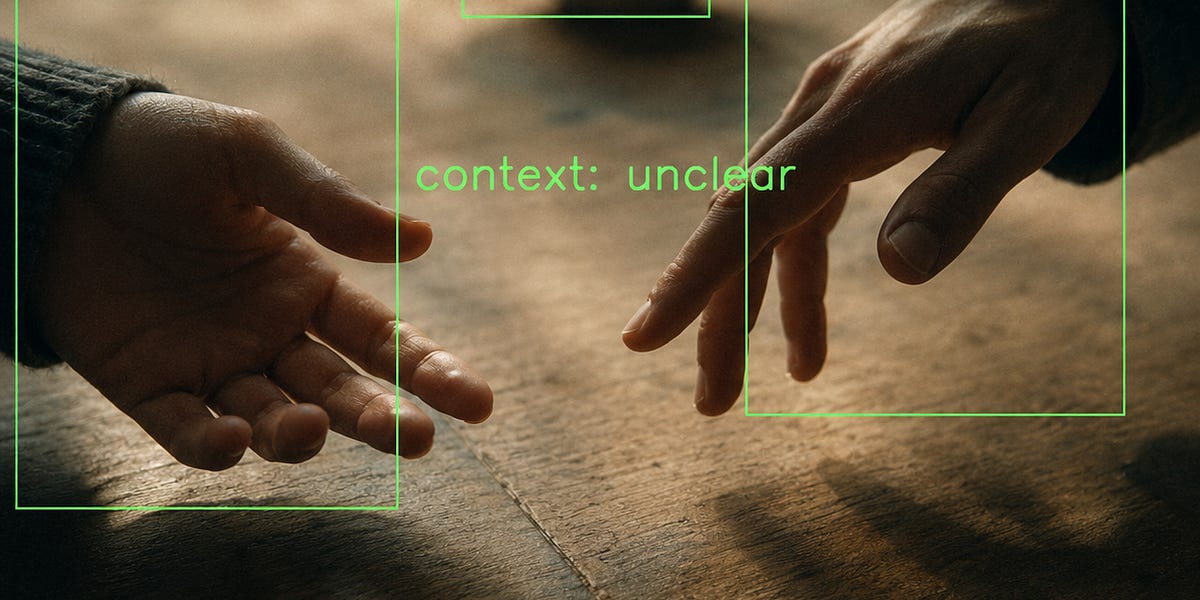
What ChatGPT sees when it looks at your company + 3 diagnostics
Watch now | If I were walking into a marketing role in 2026, I would not start by asking which AI tools the team uses.
524 words~2 min read