Victims in the cases from Arizona, Florida and Tennessee range from a 4-year-old girl who was stabbed to death to a 43-year-old mother who was buried aliveShow Caption
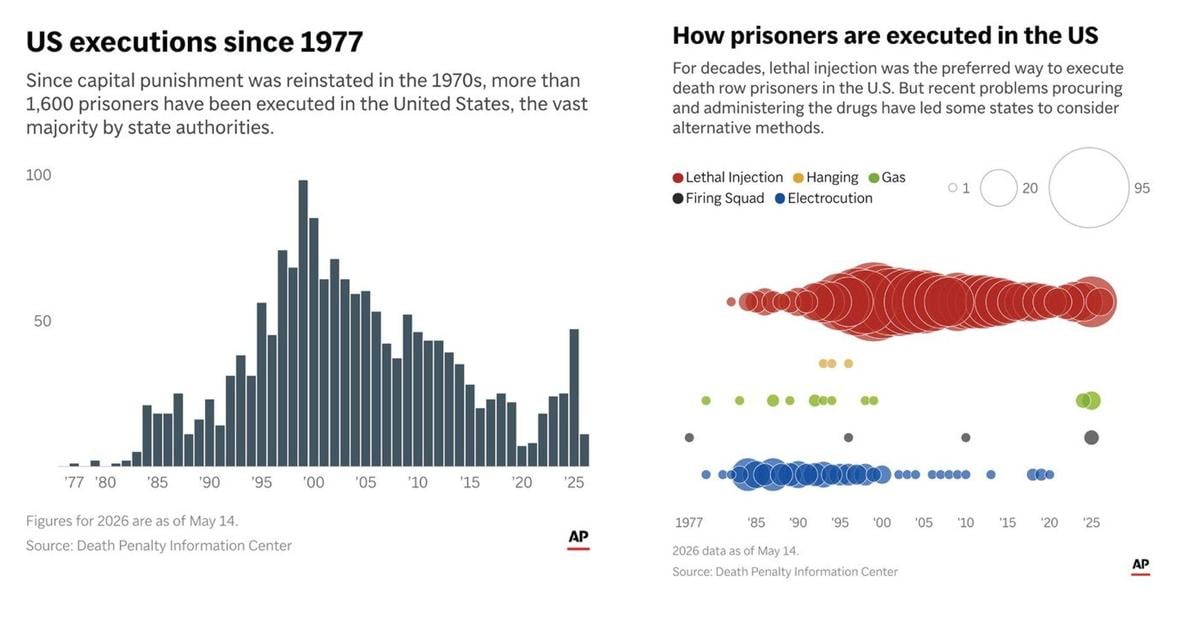
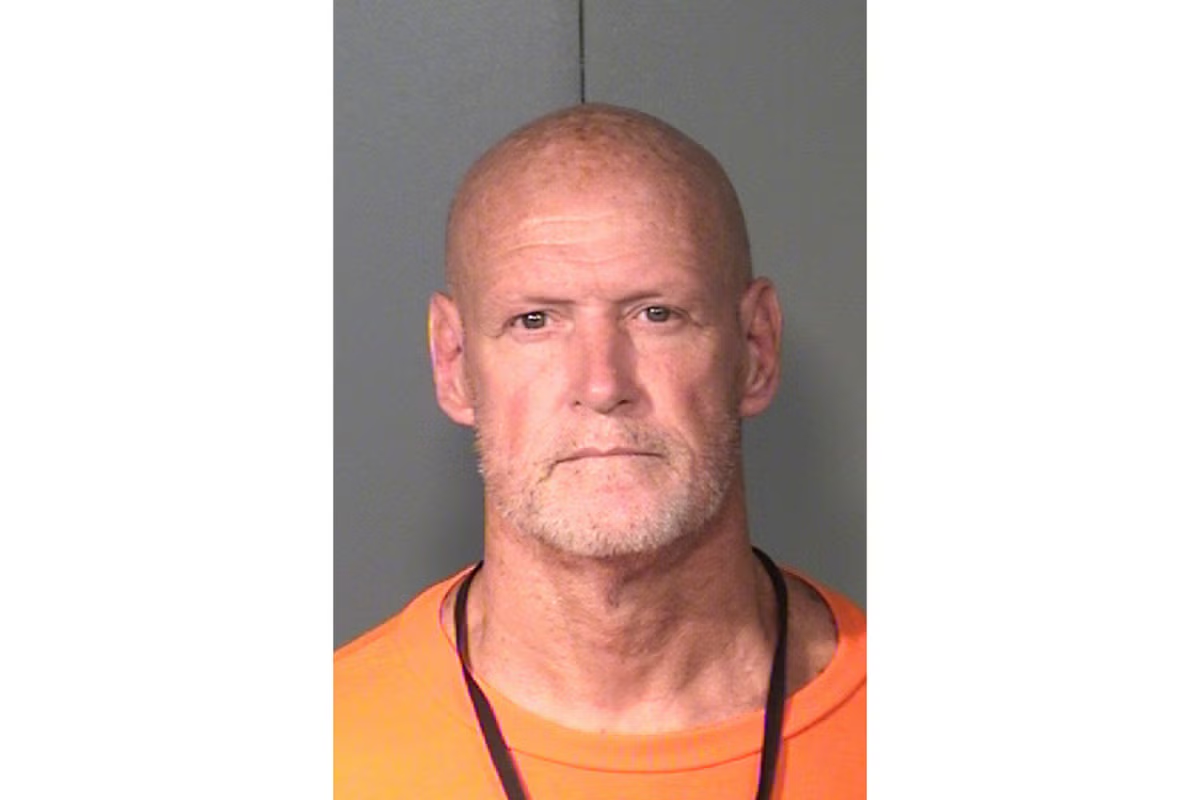
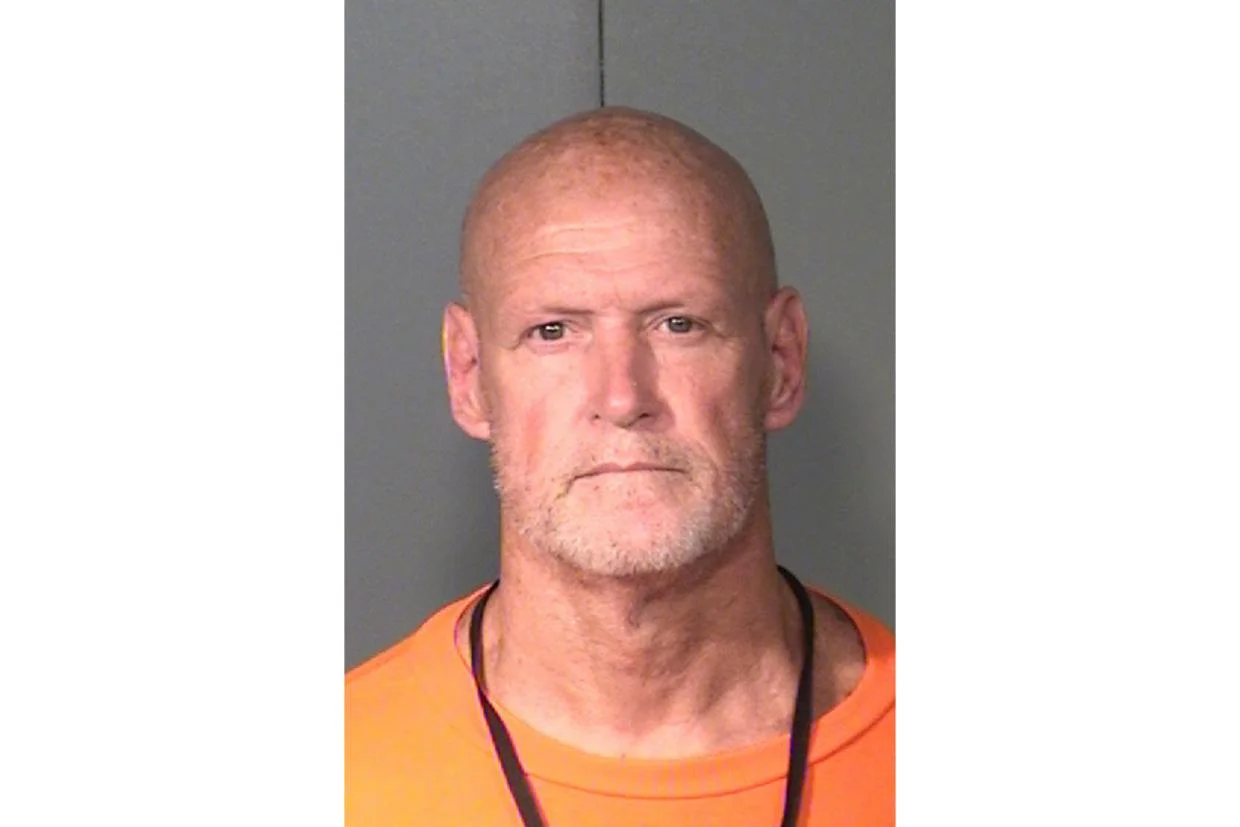
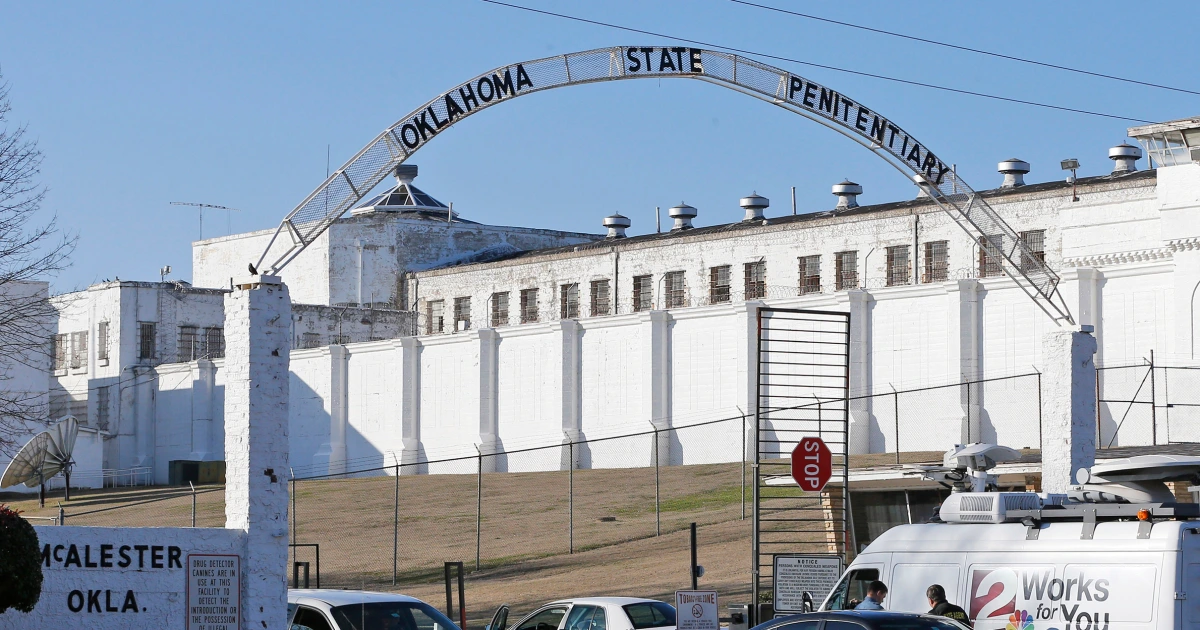
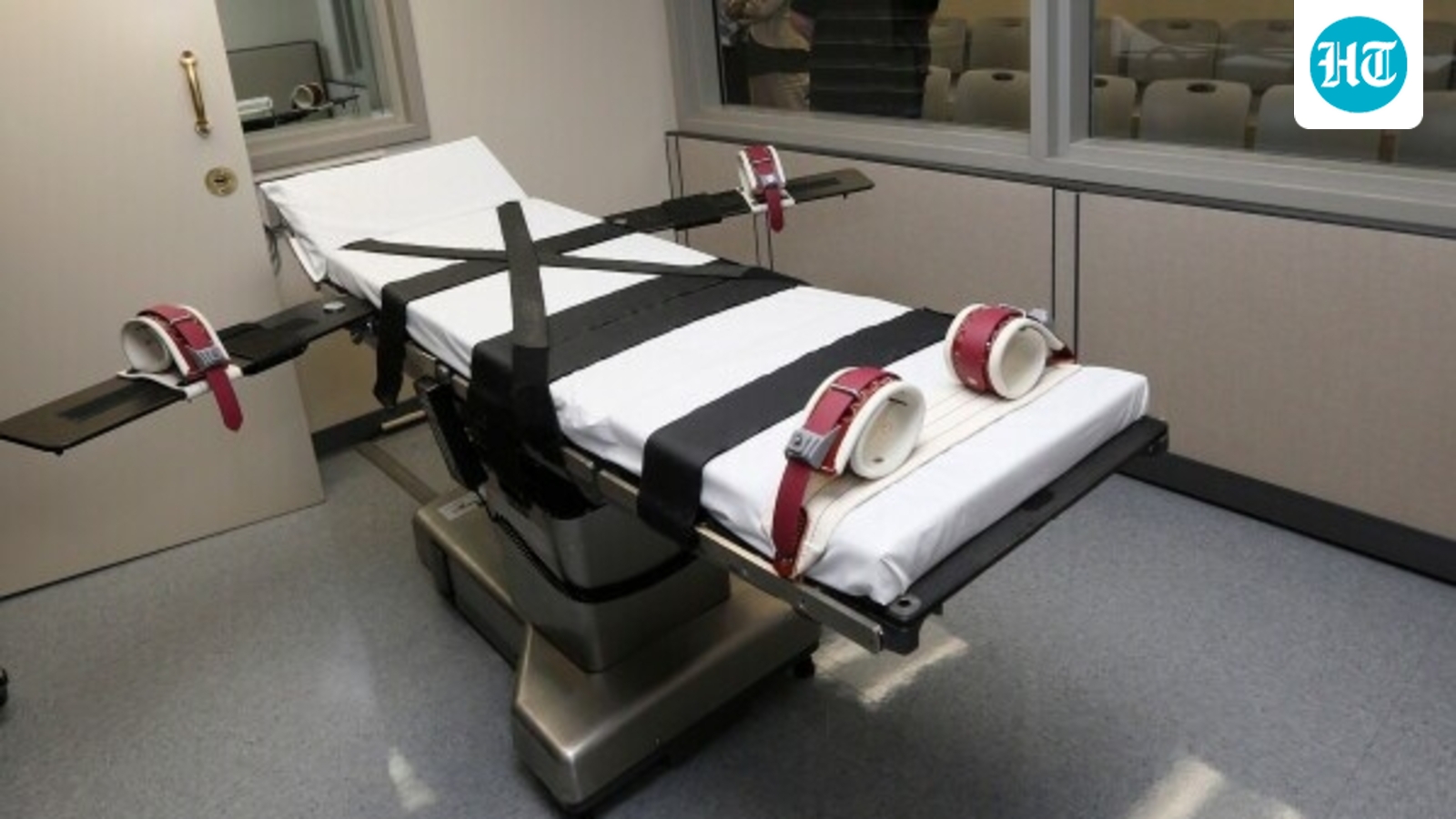
Three American inmates are set to be executed on Wednesday and Thursday in what stands to become the deadliest week for the death penalty in the U.S. so far this year.Arizona is set to execute Leroy McGill on Wednesday, May 20, for dousing a couple in gasoline and lighting them on fire in 2002, killing one of them and leaving the other with severe burns all over her body.On Thursday, May 21, both Tennessee and Florida are set to execute inmates. Tennessee is planning to put Tony Carruthers to death for the 1994 killing of three people at a cemetery, including a woman who was buried alive. And Florida is scheduled to execute Richard Knight for the 2000 stabbing deaths of a pregnant woman and her 4-year-old daughter.If Arizona, Tennessee and Florida all move forward with the executions as planned, that will make 15 inmates put to death in the U.S. so far this year. That's slightly down for the same five-month time period last year.All three men are fighting their executions.Here's what you need to know about their cases, why they're arguing that they don't deserve to die and why Kim Kardashian is calling for a reprieve for one of them.Arizona to execute inmate for setting couple on fireOn July 13, 2002, Leroy McGill walked into the Phoenix apartment of Charles Perez and Nova Banta. He then threw a cup of gasoline and set fire to them with a match, court records show. Prosecutors say McGill mixed Styrofoam with the gasoline to create a “napalm-like substance that would stick to his victims and cause them more pain," an allegations his attorneys deny.McGill attacked Perez and Banta because the couple had accused him of stealing a shotgun. Before he lit the match, McGill told the couple that they shouldn't talk about people behind their backs, court records say.Perez died of his injuries the day after the attack. Banta survived though she had severe burns covering 75% of her body.In recent months, McGill has been fighting to have his execution stopped, mostly over what his current lawyers say were trial errors by his defense attorneys at the time. So far the courts have rejected his arguments.McGill's execution would be Arizona's first of the year.Tennessee inmate fighting for fingerprint testingOn Feb. 24, 1994, Tony Carruthers and James Montgomery carried out three murders as part of their plan to take over the drug trade in their Memphis neighborhood and prove to everyone how ruthless they were, according to prosecutors.They targeted a 21-year-old drug dealer named Marcellos Anderson, his innocent mother and a 17-year-old friend, taking them to an empty grave that had already been dug for an upcoming funeral at a local cemetery, according to court records. There, as the three victims begged for their lives, prosecutors say Carruthers and Montgomery shot the young men, rolled all three of them into the grave and covered them with plywood and dirt, court records say. Anderson's mother, a 43-year-old housewife named Delois Anderson, was buried alive and died of suffocation.The funeral took place as scheduled soon after and a person was buried on top of the hidden bodies. The crime might have gone undetected had Montgomery's brother not informed police about what happened and led them to the gravesite, court records say.The case, which became infamous in Memphis, has gained national attention in recent weeks amid Carruthers' fight to have testing done on forensic evidence and fingerprints that his attorneys argue could exonerate him. Kim Kardashian recently called on Tennessee Gov. Bill Lee to hold off on the execution for the testing, and the American Civil Liberties Union has joined his attorneys in the fight."We know that there is no physical evidence that matches Tony," Lucas Cameron Vaughn, interim legal director for the ACLU of Tennessee, said earlier this month. "Investigators recovered fingerprints from the home where the victims were kidnapped, and locations exactly where you would expect a kidnapper to have touched. None of those fingerprints matched Tony. To this day, they remain unidentified."Lee said in a statement on May 19 that "after deliberate consideration" and "a thorough review of the case," he would not stop the execution."I am upholding the sentence of the State of Tennessee and do not plan to intervene," he said.Carruthers' execution would be Tennessee's first of the year.Florida to execute inmate for brutal attack on woman, daughterOn June 27, 2000, Richard Knight attacked Odessia Stephens and her 4-year-old daughter, Hanessia Mullings, when Stephens tried to kick him out of her house in Coral Springs, where he had been living. Stephens was the girlfriend of Knight's cousin, who was not home during the brutal attack.Knight used knives he got from the kitchen and stabbed Stephens repeatedly and then strangled and stabbed Hanessia. He then continued his attack on Stephens by strangling her and stabbing her, according to court records.Autopsies found that Stephens had 21 stab wounds, including 14 in the neck, and was covered in defensive wounds, while her daughter had four stab wounds in her chest and neck. Stephens was six weeks pregnant with her second child at the time, The Sun-Sentinel reported.The crime scene investigation found Stephens' blood on Knight's shirt, his bloody clothes under the sink, and Knight's DNA was found underneath Stephens' fingernails.Knight's attorneys have been arguing that his execution should be delayed to allow testing on a fingerprint of one of the knife blades used in the attack. They have also challenged the way Florida conducts its lethal injections, arguing that the state allows "unqualified" execution team members to perform a surgical technique to access veins without local anesthesia.The Florida Supreme Court recently rejected his arguments. If it moves forward, Knight's execution will be Florida's seventh of the year.Hans Mullings, Knight's cousin and Hanessia's father, said that Knight "deserves to die for what he's done," according to The Sun-Sentinel.“I just wish he died in a graphic way," Mullings said after sentencing. "They suffered a lot and he won’t. … He’s just going to be put to sleep and he’s gone.”Three executions in one week isn't unusualIt's not unusual for multiple executions to be held during the same week or on the same day, with as many as five falling during the same week in recent years. Experts agree that the timing of various states and when they schedule executions is coincidental.So far this year, states have executed 12 inmates. The executions of McGill, Carruthers and Knight will make that 15. Another nine executions are scheduled for the rest of the year so far but that figure is sure to increase as states can issue death warrants at any time.Last year, states carried out 47 executions, making it the deadliest year for death row inmates since 2009. Executions this year are running slightly behind the amount conducted during the same time period last year.Contributing: Perry Vandell, The Arizona RepublicAmanda Lee Myers is a senior crime reporter who covers the death penalty, cold case investigations and breaking news for USA TODAY. Follow her on X at @amandaleeusat. Lucas Finton covers crime, policing, jails, the courts and criminal justice policy for The Commercial Appeal. He can be reached at 901-208-3922 or Lucas.Finton@commercialappeal.com, and followed on X @LucasFinton. C. A. Bridges is a journalist for the USA TODAY Network-Florida's service journalism Connect team.