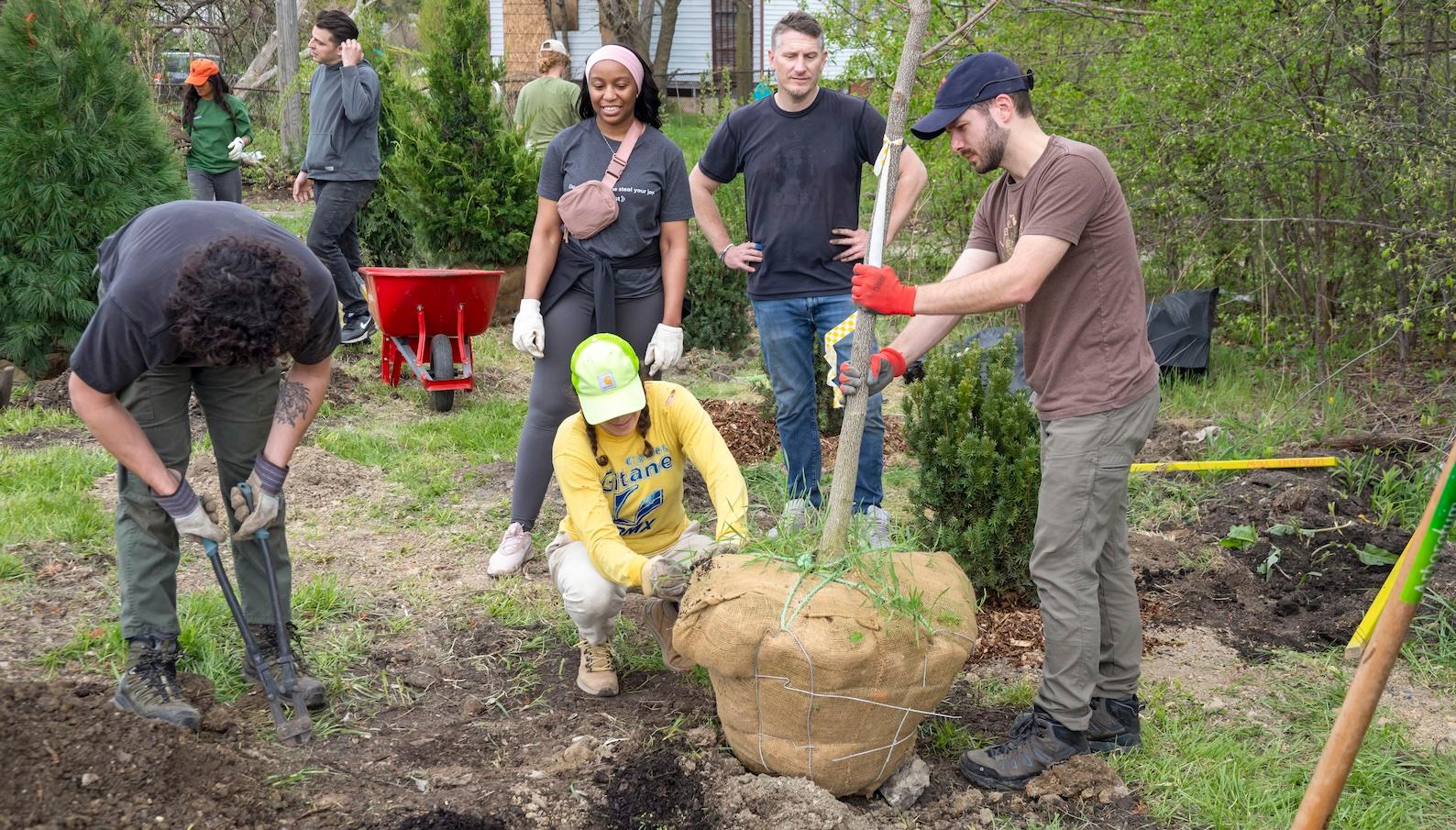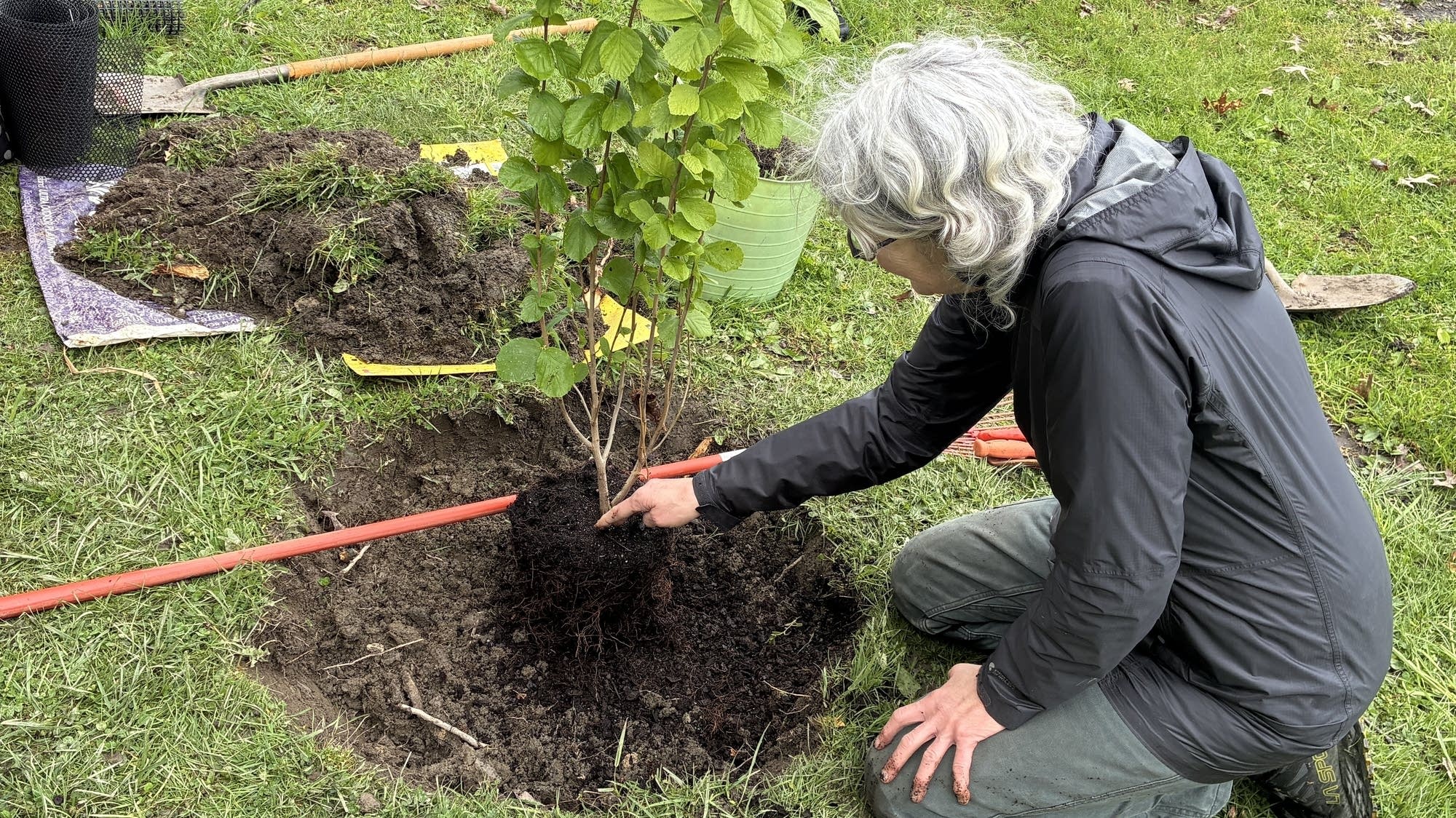
Ed Hoffman and his wife, Donna, just pulled up to a neighborhood park 15 minutes west of Cleveland. They checked in with a volunteer sitting at one of those plastic fold-out tables and picked out a redbud sapling from a row of native witch hazel, serviceberry, oak, and buckeye trees that their city, Lakewood, Ohio, is giving away for free.“We jumped right on it,” Hoffman said. “We missed it last year, so we decided to get it this year.”This is Lakewood’s third year doing this. It’s giving away 200 saplings this time, and every single one got claimed by residents within 24 hours.“We really take our tree canopy very seriously, and it's something that we've been trying to increase for the last few years,” said Lakewood’s city planner, Sophia Szeles. “We've been planting, as the city, separate from this event, 350-400 trees every year. And that is a significant part of our budget.”The city of Lakewood, Ohio, hosts tree giveaway events twice per year, and their saplings typically get reserved very quickly by eager residents.Caleigh Wells/MarketplaceThat comes out to roughly $375 per tree. It’s worth it, because Lakewood estimates the average tree in city limits is worth about $1,500.The Arbor Day Foundation estimates that every dollar cities put into trees returns $2 to $5 in benefits.“Trees make shade in places like public parks, and can divert heat from heat islands where there's lots of asphalt,” Szeles said. That translates to fewer dollars spent on air conditioning. Trees also make humans happy. Expanding the canopy decreases crime, according to the U.S. Forest Service. Trees make houses more valuable, and trees near business districts make people spend more. “People tend to spend a lot more time in the greener spaces. That equates to spending more money in those places, maybe just by being willing to explore a little more, to linger, to be more comfortable,” said regional planner Tyler Klifman with the Southeast Michigan Council of Governments. Then, there’s the savings on healthcare. A University of Illinois study found that even when controlling for all other demographics, people living near more green space spend nearly $400 less per year on healthcare.“If you wind all that up across a full population and entire city, then you start to see the benefit of these tree-planting programs,” said Kathleen Wolf, research social scientist at the University of Washington. She specializes in urban forestry and has no problem rattling off plenty of other reasons trees save cities money — air quality, water quality, stormwater management. She said the stormwater management benefits are substantial because root structures and canopies make it easier for land to deal with rainfall. That translates to dollars saved on watering nearby plants and tax dollars saved on storm runoff infrastructure.All of that has led cities to invest more in planting trees.“With the research about ecosystem services of urban trees, parks, green spaces, about health benefits, wow, that has really surged in the last decade or two,” Wolf said.That surge is especially prevalent in Ohio. When European colonizers first showed up in what’s now Ohio more than two centuries ago, they cut down trees to make way for farmland. According to the state’s Department of Natural Resources, forest cover fell from 95% to just 10%.Today, it has more “tree cities” like Lakewood designated by the Arbor Day Foundation than any other state. In the last century, tree cover in Ohio has rebounded spectacularly to more than 30% today.
Cities are investing tax dollars ... on trees. Here's why it works
Every dollar invested in trees generates roughly three dollars in benefits.
575 words~3 min read