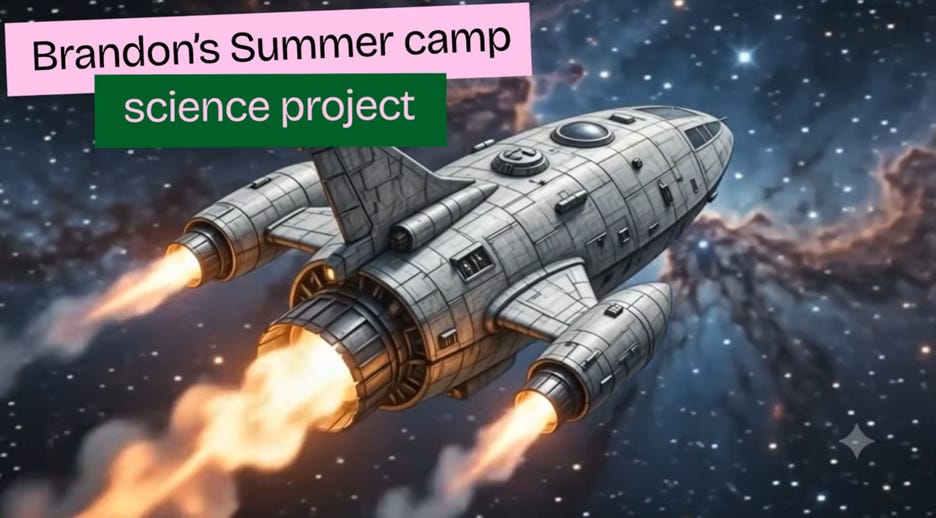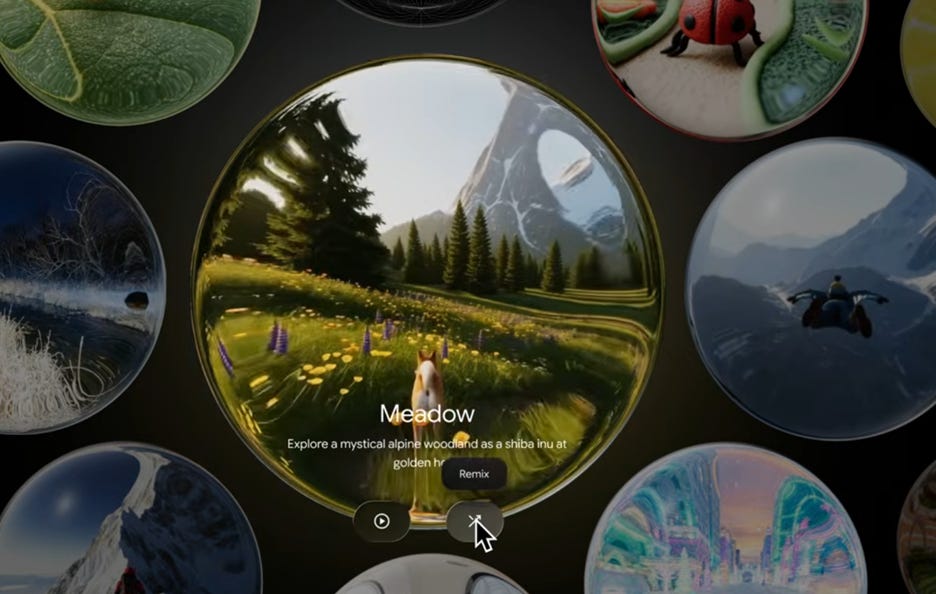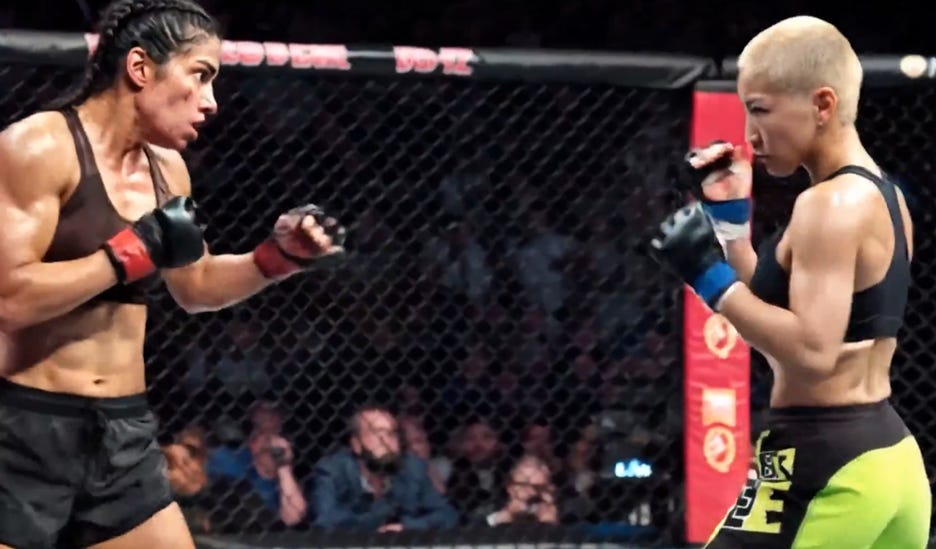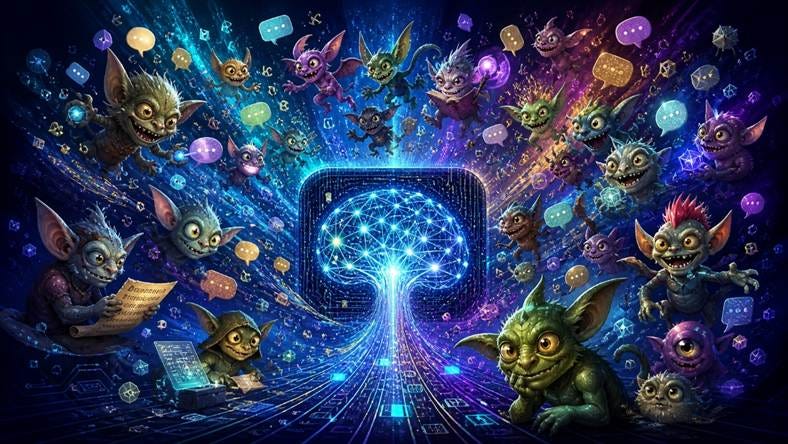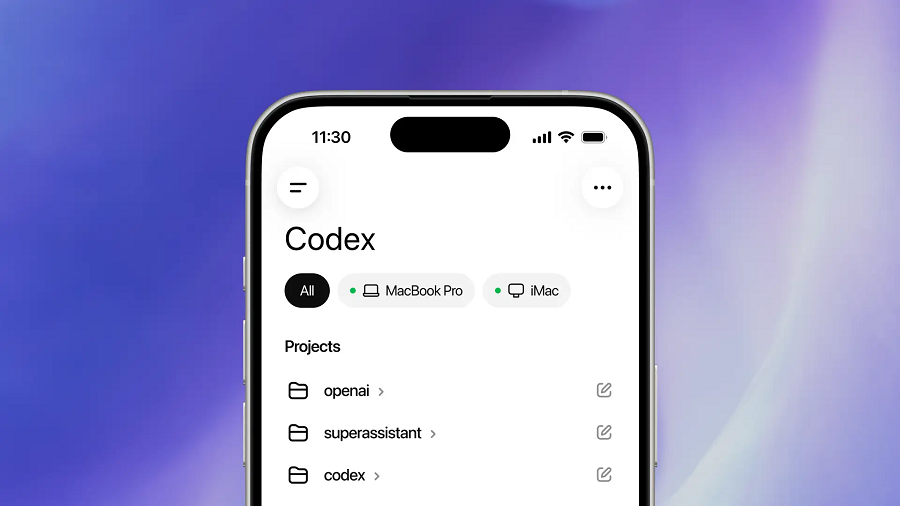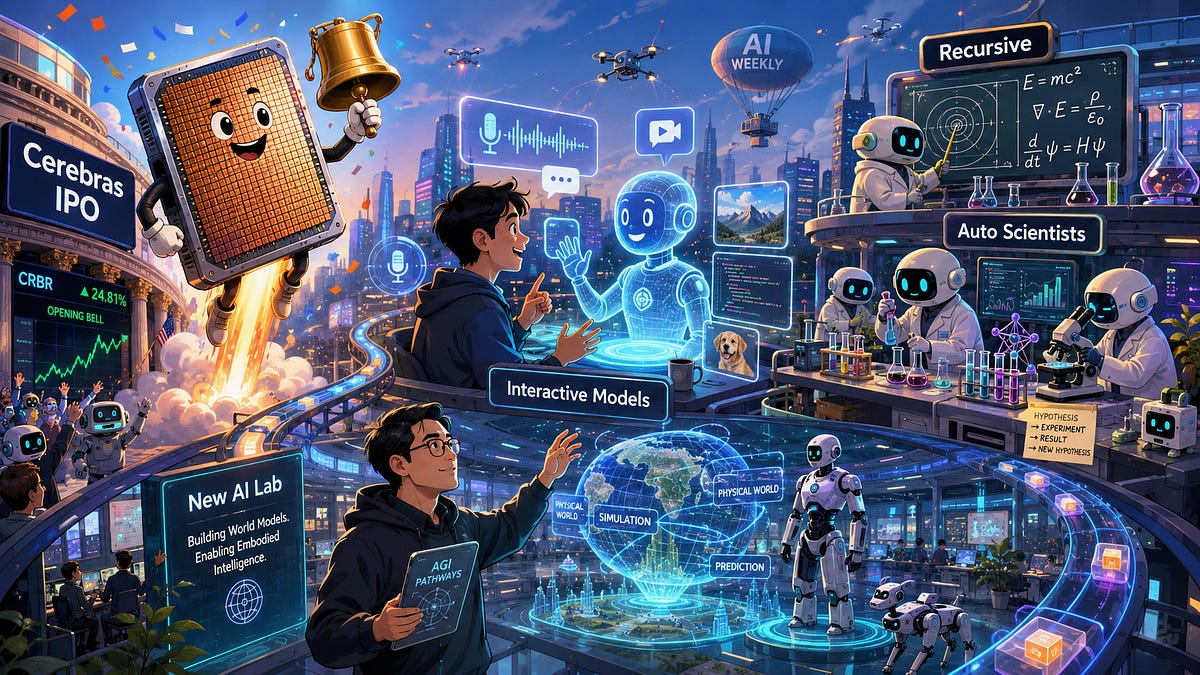
Figure 1. Image made by Krea K2 image generation. K2 is a great model for aesthetic image generation with customizable styles.Mira Murati’s Thinking Machines Lab introduced its first Interaction Models, designed for real-time continuous audio, video, and text collaboration rather than turn-by-turn chatbot exchanges. These interaction models process audio, video, and text in time-aligned 200 ms micro-turns rather than turn-based exchanges. The TML-Interaction-Small model is a 276B-parameter MoE model with 12B active parameters.An interaction model is in constant two-way exchange with the user—perceiving and responding at the same time.TML combines an interaction model that supports simultaneous real-time translation, temporal awareness for tracking conversation length, natural dialogue mechanics including structured interruptions, and user interface generation, with a background model that supports concurrent tool execution and web browsing. Combined it appears to be a powerful next-level form of interactive AI, a step beyond the turn-based AI interfaces. TML says broader preview access will come in the coming months.OpenAI made Codex available inside the ChatGPT mobile app, letting users monitor and direct coding tasks from iOS and Android. Users can review outputs, approve changes, and start tasks remotely, while the connected Codex environment remains on the user’s macOS machine; OpenAI says Windows pairing is coming later. The host computer executes the underlying processing locally while sending state updates and receiving prompts back from the mobile interface. Codex for Mobile is similar to Anthropic Claude’s Remote Control feature.New safety updates help ChatGPT respond safely when risk emerges in ChatGPT conversations. OpenAI introduced safety updates to better recognize evolving patterns of self-harm, suicide, or harm-to-others intent within and across conversations. Internal evaluations show that these improvements increased safe-response performance in suicide and self-harm cases during long conversation scenarios.Anthropic introduced Claude for Small Business, connecting Claude to several tools and shipping a collection of pre-built automation workflows and Claude skills targeting specific operations. The platform introduces 15 agentic workflows and connects Claude directly into everyday enterprise tools such as PayPal, QuickBooks, HubSpot, Canva, and DocuSign to automate routine operational tasks.Anthropic also announced an AI training partnership with PayPal called AI Fluency for Small Business. Anthropic’s broader initiative is to leverage Claude Cowork and Model Context Protocol connectors to provide customized AI workflows in industries like legal, finance, and healthcare.OpenAI launched a product for managed cyber defense called Daybreak. Daybreak is a cybersecurity system built around GPT-5.5, Codex Security, and verified defensive workflows designed to scan for potential cyber-vulnerabilities and exposures. Instead of distributing software or AI models directly to clients, the OpenAI Daybreak Framework operates as a managed service that runs internal evaluations on behalf of the customer. This controlled access approach aims to prevent advanced cyber-capabilities from being misused by malicious actors. The service can provide secure code review, vulnerability triage, patch validation, threat modeling, and remediation guidance.Penligent has thoughts on Mythos versus Daybreak for cybersecurity.Krea AI released Krea 2, an AI image generation model designed for aesthetic image generation with granular style and structure controllability. The system utilizes variable sliders to control precise stylistic inputs and can blend multiple images via individual asset weights. It also introduces mood boards that encapsulate custom profile definitions and keyword parameters for consistent stylistic rendering.Krea 2 focuses on visual taste and style control. Instead of relying only on longer prompts, creators can use moodboards and references to guide the model toward a specific look. – Krea AIKrea 2 is available at Krea AI.Meta expanded Muse Spark voice conversations across its consumer apps and devices. Muse Spark is now available via the Meta AI app, WhatsApp, Instagram, Facebook, and Ray-Ban Meta Gen1 and Gen 2 smart glasses, with low-latency voice interaction, live camera input, and integration with Meta surfaces such as Reels inside native Meta AI applications and smart glasses.Google introduced the Google Book, a laptop that integrates AI natively into the operating system, taking Android and ChromeOS into the AI era with Gemini AI support. The system reengineers traditional computing interactions by rolling out an AI-enabled pointer that utilizes head tracking, eye tracking, and speech commands to modify documents or drag elements without keyboard inputs.Related to Google Book release, Google previewed upcoming Android updates that embed Gemini AI directly into native applications and mobile web browsing. Users can execute automated workflows such as booking travel or reserving parking with a few clicks. Visual understanding can be used to convert a shopping list image to a full online shopping cart. Text input AI voice dictation with “Rambler” can dynamically eliminate conversational pauses, stuttering, and filler words.Figure 3. Branding it as “Gemini Intelligence,” Google is bringing a number of Gemini-based features into the upcoming Android 17, getting ahead of Apple in AI race on mobile.Observability startup Raindrop AI has launched a tool for debugging and evaluating AI agents called Workshop. The open-source Workshop tool provides a local dashboard to stream real-time telemetry, such as tokens and tool calls, into a single SQL database file. It features a self-healing eval loop that enables coding agents to autonomously identify and fix errors by analyzing execution traces.The goal pattern is being productized across coding agents. Anthropic introduced /goals on Claude Code to separate task execution from task evaluation. The feature uses an independent evaluator model to verify that user-defined completion conditions are met (such as passing before an agent terminates its work. OpenAI also has a /goal workflow in Codex and Hermes agent has a goals feature. The flow where the agent continues until validation criteria are satisfied is a refinement of the Ralph Wiggum loop, reduces reliance on separate observability platforms.Notion released the Notion Developer Platform, offering engineering utilities for agent integration with Notion, including a dedicated Command Line Interface and execution workers. The platform turns Notion into one shared canvas for data, where both users and agents such as Codex, OpenClaw or Hermes can interact with Notion database structures. This allows external developers to execute custom code directly on Notion’s servers, initialize webhook triggers, and leverage a specialized agents SDK.Open-source autonomous agent Hermes passed OpenClaw as the most-used CLI agent on OpenRouter and added background computer use through TryCUA for macOS computer control. This is a key improvement for local Hermes agent use; Hermes can run on local or remote infrastructure.Anthropic released Claude Code Agent View, an interface to manage multiple agent sessions at the same time. The interface change consolidates multiple background agent operations into a single dashboard view to track what requires user input, what is actively running, and what has finished. This replaces the need to keep numerous open terminal windows running concurrently during multi-agent software engineering tasks.OpenAI launched new personal finance tools in preview for ChatGPT Pro subscribers, which connects to financial institutions for finance data and provides a dashboard for portfolio performance, spending, and upcoming payments. The tool leverages the reasoning capabilities of the new GPT-5.5 model to assist with detailed spending analysis and long-term financial planning.YouTube is expanding its AI likeness detection program to all users over the age of 18. The feature uses facial scans to monitor the platform for potential deepfakes and allows users to request the removal of matching content.Ahead of I/O, reports say Google is preparing to launch an advanced AI agent called Gemini Spark. This is a Gemini agent that could work continuously in the background on tasks such as inbox triage, online workflows, and app-linked actions. There are also rumors that upcoming Gemini 3.2 Flash is 15x cheaper and nearly as smart as GPT-5.5. This remains unconfirmed by Google, and we will have to wait for Google to reveal more at Google I/O next week.RecursiveMAS is an innovative multi-agent framework that allows AI models and agents to collaborate through a unified latent-space recursive loop rather than communicating via standard text. Introduced in the paper “Recursive Multi-Agent Systems,” the framework connects heterogeneous AI models into a collective reasoning loop utilizing a lightweight RecursiveLink module to transmit latent states. RecursiveMAS achieves an average 8.3% accuracy improvement across various benchmarks while increasing end-to-end inference speed by up to 2.4-fold.Cerebras Systems made a massive Nasdaq debut, raising $5.55 billion in an IPO where shares surged from $185 to $385, pushing its market cap past $100 billion. Driven by $510 million in 2025 revenue and $237.8 million in net income, the company is expanding its Wafer-Scale Engine cloud infrastructure for high-speed AI inference. This growth is supported by strategic partnerships with industry leaders such as OpenAI and Amazon Web Services.Anthropic’s Claude adoption surpasses OpenAI’s ChatGPT among American businesses. According to the May 2026 Ramp AI Index, Anthropic’s business adoption rose to 34.4% in April, showing a 3.8% monthly climb and overtaking OpenAI’s 32.3%. Anthropic’s growth is driven by Claude Code usage, but its success is hampered by constraints in compute.Attempting to manage compute and user demands for Claude, Anthropic has reinstated third-party agents in Claude subscriptions by implementing a monthly credit quota system. Agent SDK and claude -p usage on subscription plans will draw from a new monthly Agent credit separate from interactive usage limits. Users can apply their subscription to OpenClaw usage, but once users consume their baseline allocated tier allowance within agent platforms, subsequent consumption shifts to standard API data rates. Feedback has been mixed, since high-throughput agent tasks will consume these flat credits quickly, leading to higher development expenditures compared to previous subscription limits.Google updated its spam policy to mark attempts to manipulate generative AI responses in Search, including AI Overview, as spam. The policy targets tactics such as recommendation poisoning and generative engine optimization (GEO) used to deceive Search systems. Elon Musk’s newly rebranded SpaceXAI is reportedly losing top talent. More than 50 researchers and engineers have departed the company since February, with several key leaders joining rivals Meta and Thinking Machines Lab.Richard Socher’s startup Recursive Superintelligence has emerged from stealth with $650 million in funding. The San Francisco-based company aims to create a recursively self-improving AI model using an approach centered on open-endedness. The founding team includes prominent researchers such as Peter Norvig and Tim Shi.OpenAI is exploring legal action against Apple over disappointing ChatGPT integration results. OpenAI is reportedly frustrated by the integration’s low visibility and revenue, while Apple has raised concerns regarding privacy and OpenAI’s hardware ambitions.California jurors are now deliberating over the future of OpenAI. The trial centers on Elon Musk’s allegations that OpenAI and Microsoft breached a charitable trust by transitioning toward a for-profit business model, but most interesting has been some of the revelations at trial, such as: Musk once sought majority control of OpenAI; Microsoft’s commercial rights were revised around the AGI clause; and OpenAI has raised far more private capital than previously understood.Figure 4. The work of art by Monet was labelled as done by AI, eliciting criticism of the flaws of perceived AI art.An art experiment on X highlighted human bias against AI content, by labeling a real Claude Monet painting as made using AI and soliciting critiques, then getting an earful of them. Users on X wrote extensive critiques detailing why the painting supposedly lacked an organic soul, suffered from synthetic color balancing, and looked inferior to classical artwork.the reflection in AI art is just noise splattered right. Monet actually understood how light behaves on water - Charles DeskinsThe responses demonstrate a human aesthetic bias against AI. A genuine historical masterpiece was viewed as inferior due to its perceived AI pedigree.
AI Week in Review 26.05.16
Krea K2, TML Interaction Models, Codex in Mobile, ChatGPT safety, Claude for Small Business, OpenAI Daybreak, Google Book, Raindrop AI's Workshop, Goals in Claude Code and Codex, Notion Dev Platform.
1,881 words~9 min read