Developing new protein-based therapies and catalysts involves the challenging task of designing protein binders, or proteins that bind to a target protein or small molecule. The search space for possible amino acid sequence permutations and resulting 3D protein structures for a designed binder is vast, and achieving strong, specific binding requires careful optimization of the interactions between the protein binder and the target.
To address these challenges, NVIDIA has released Proteina-Complexa, a generative model that designs de novo protein binders and enzymes.
In this post, we detail the key technologies behind Proteina-Complexa, explore primary use cases, and highlight the extensive experimental validation of generated protein binders. We also provide a step-by-step guide for using the command-line interface to generate your own binders.
Key technologies in Proteina-Complexa
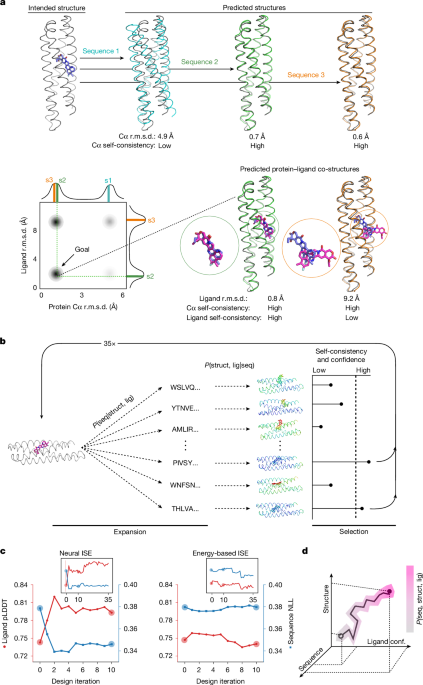
Proteina-Complexa performance relies on three distinct technical components: the base generative model, the training datasets, and the integration of inference-time compute scaling.

 aws.amazon.com