AI-Generated Summary
AI-generated content may summarize information incompletely. Verify important information. Learn more
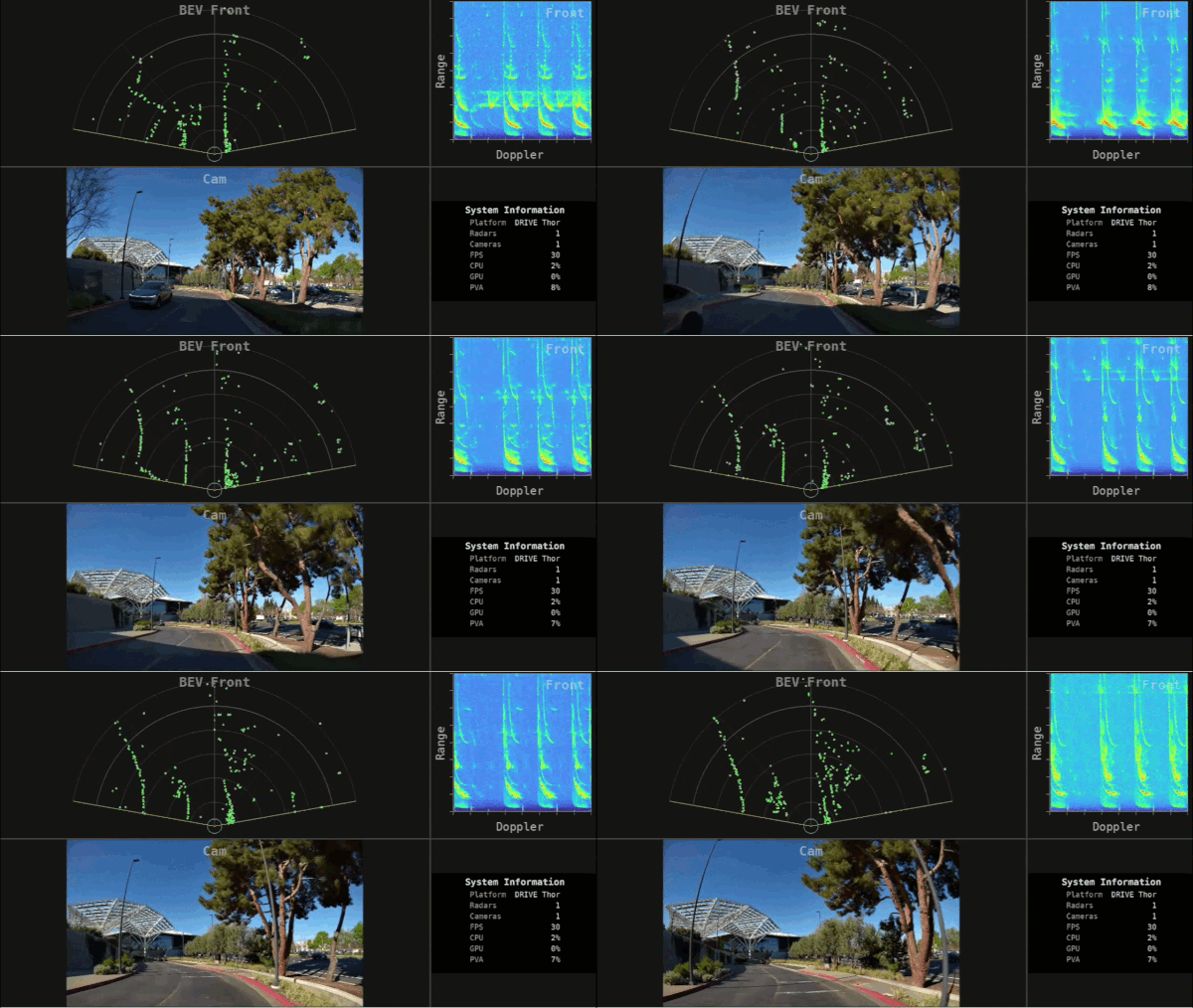
In the current state of automotive radar, machine learning engineers can’t work with camera-equivalent raw RGB images. Instead, they work with the output of radar constant false alarm rate (CFAR), which is similar to computer vision (CV) edge detections. The communications and compute architectures haven’t kept pace with trends in AI and the needs of Level 4 autonomy, despite radar being a staple of vehicle‑level sensing for years.
The real 3D/4D “image” signal is instead processed inside the edge device. The radar outputs objects, or in some cases point clouds, which is similar to a camera outputting a classical CV Canny edge‑detection image.
Centralized radar processing on NVIDIA DRIVE changes this model: Raw analog‑to‑digital converter (ADC) data moves into a centralized compute platform. From there, a software-defined pipeline accelerated by dedicated NVIDIA Programmable Vision Accelerator (PVA) hardware handles everything from raw ADC samples to point clouds, with the GPU reserved for AI usage at any stage in the data flow. In such a paradigm, machine learning AI systems aren’t constrained to edge detections, instead they can utilize the full fidelity radar image, offering ~100x increase in available bits of information.