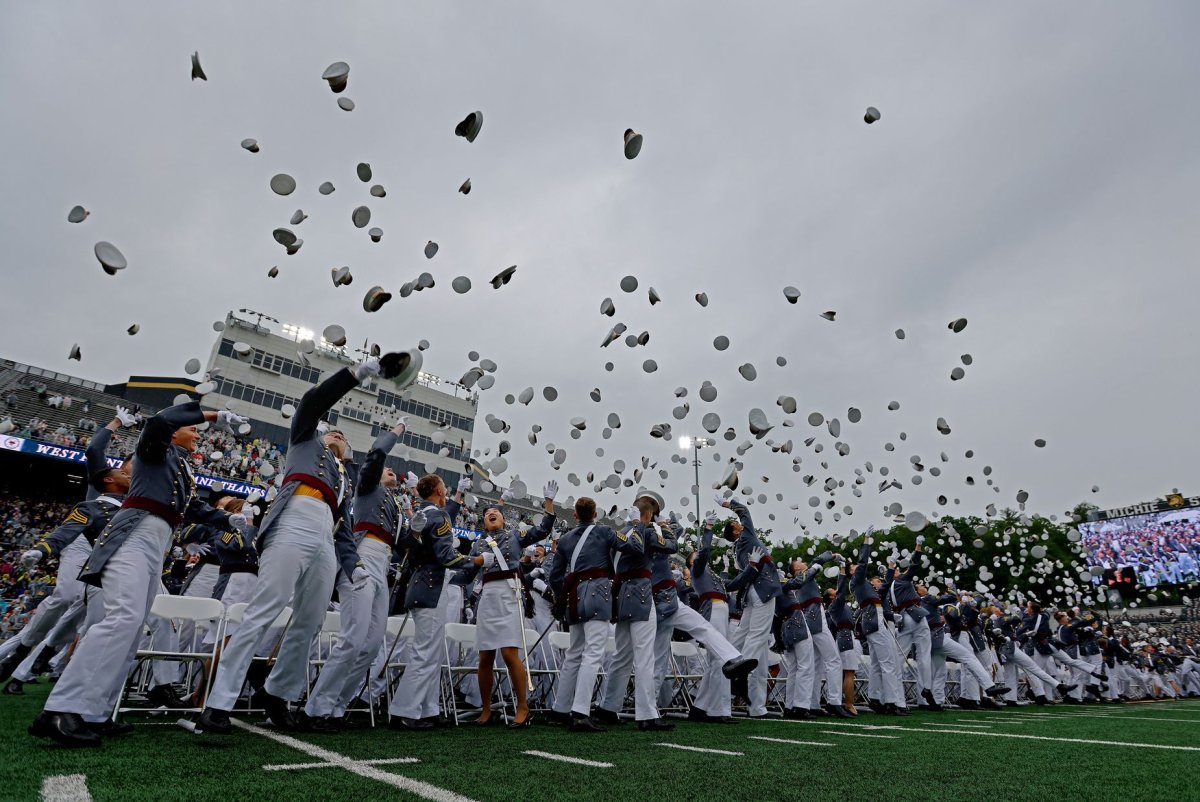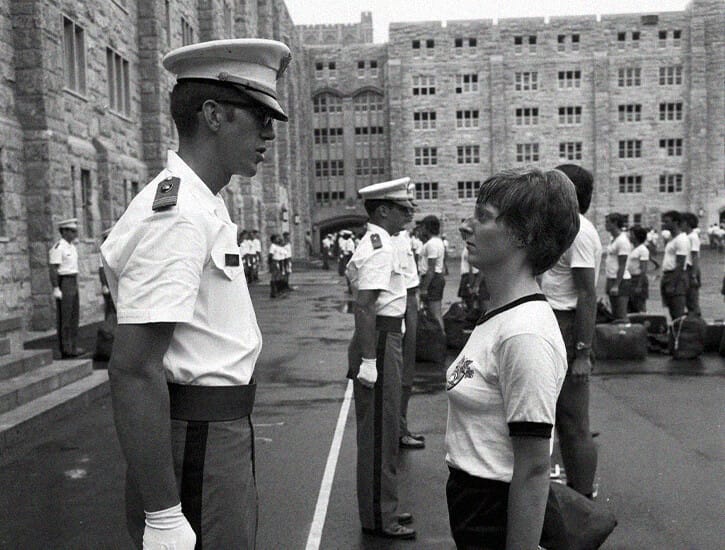
West Point’s class of 1979 witnessed what they viewed as the tragic end to their all-male power structure. They called themselves the “Last Class with Balls,” or, conversely, the “Last Class Without Bitches.” Some memorialized this grubby distinction on their class rings, with the acronym “LCWB.”
Over the preceding decades, lawmakers and military leaders had worked desperately to keep feminine energy out of the officer class. In 1944, Georgia’s Democratic representative E.E. Cox floated legislation to establish a separate service academy for women, one in which they were educated in “clerical, scientific and other duties” so that, once fighting broke out, “the able-bodied man may do the advanced work of fighting in the front lines.” The military later concocted a harebrained scheme to integrate the service academies that involved injecting female cadets with testosterone to make them more aggressive. By the time the Air Force Academy was constructed, in the late 1950s, women had been serving in official military capacities for decades, and yet still the school hung a large plaque at its entrance reading “Bring Me Men.”
The service academies were ultimately opened to women only thanks to hard-fought federal legislation first introduced in 1972 by Senator Jacob Javits of New York. After years of opposition, it was ratified in late 1975 with a stroke of President Gerald Ford’s pen. This was partly a push toward equity, but also a practical response to the personnel problems created two years prior with the end of military conscription.