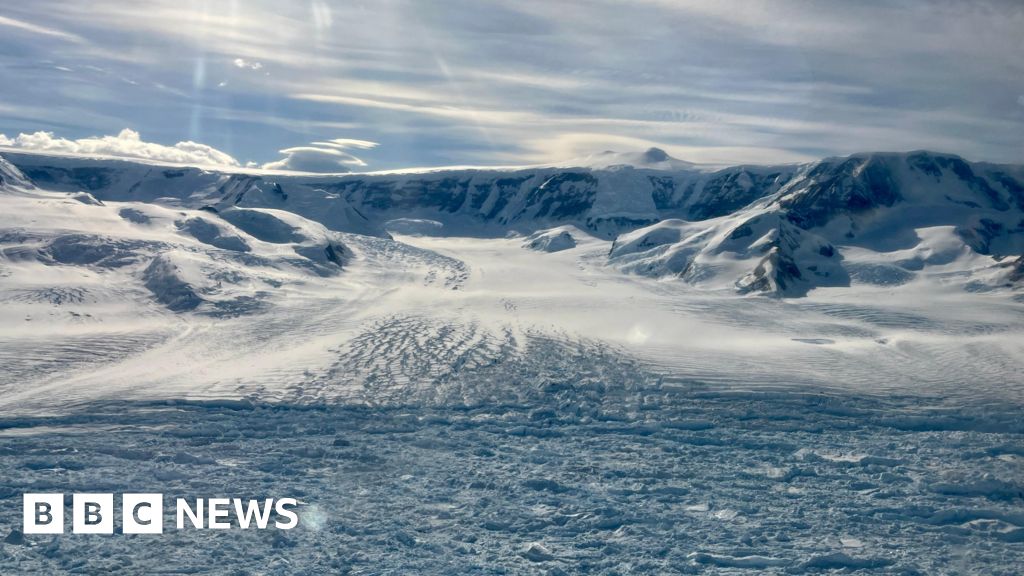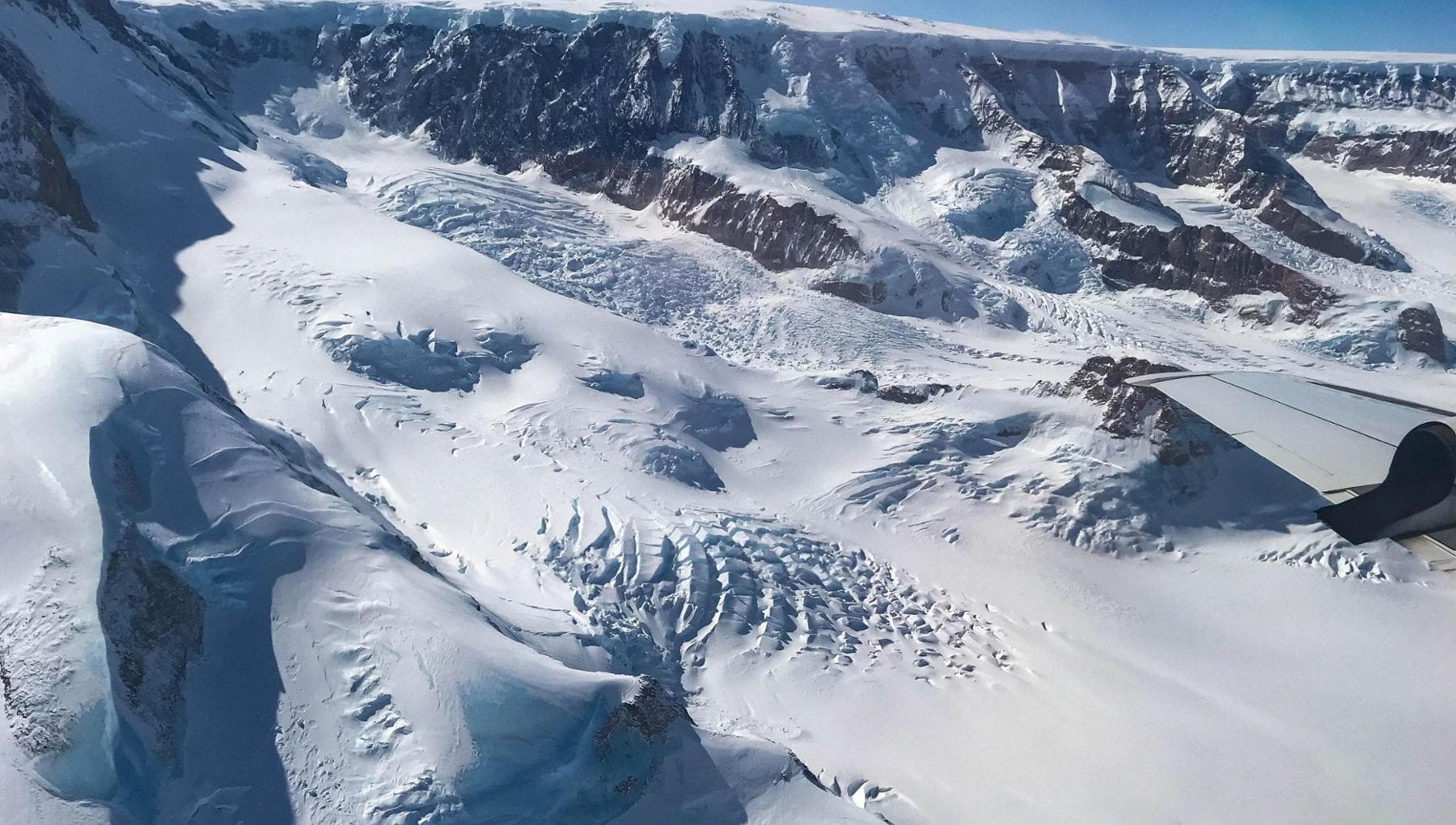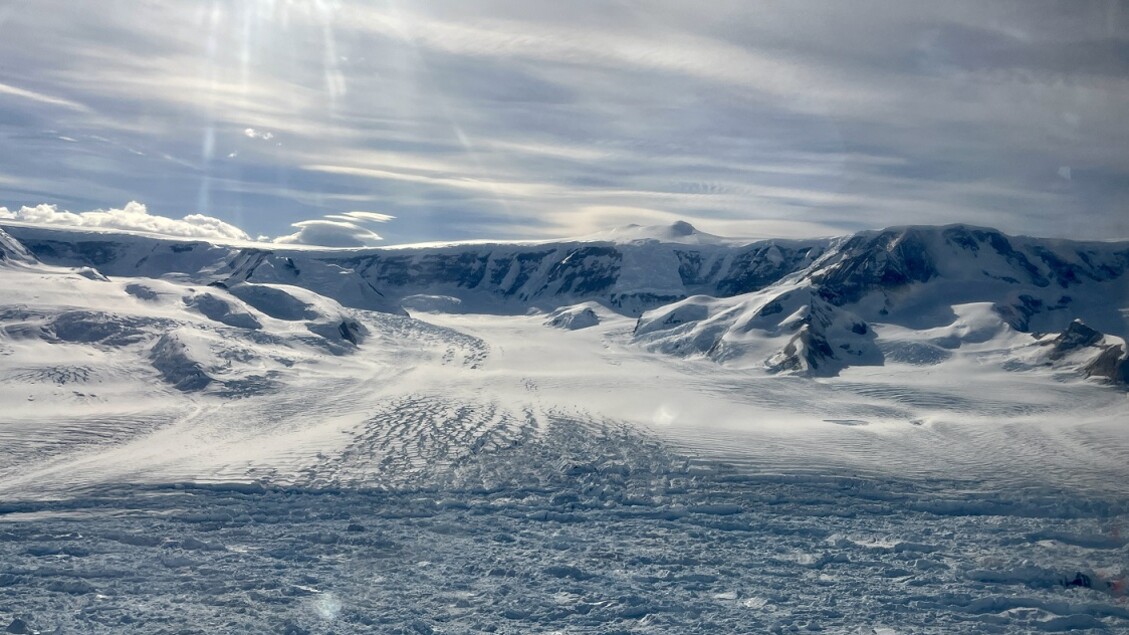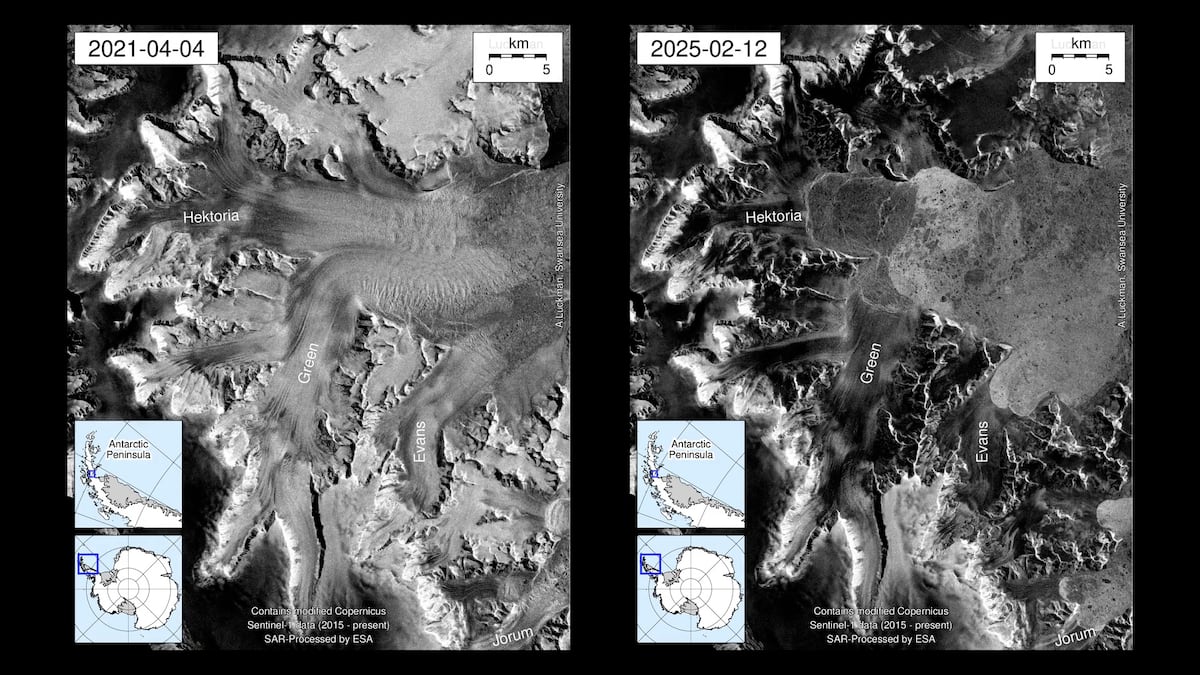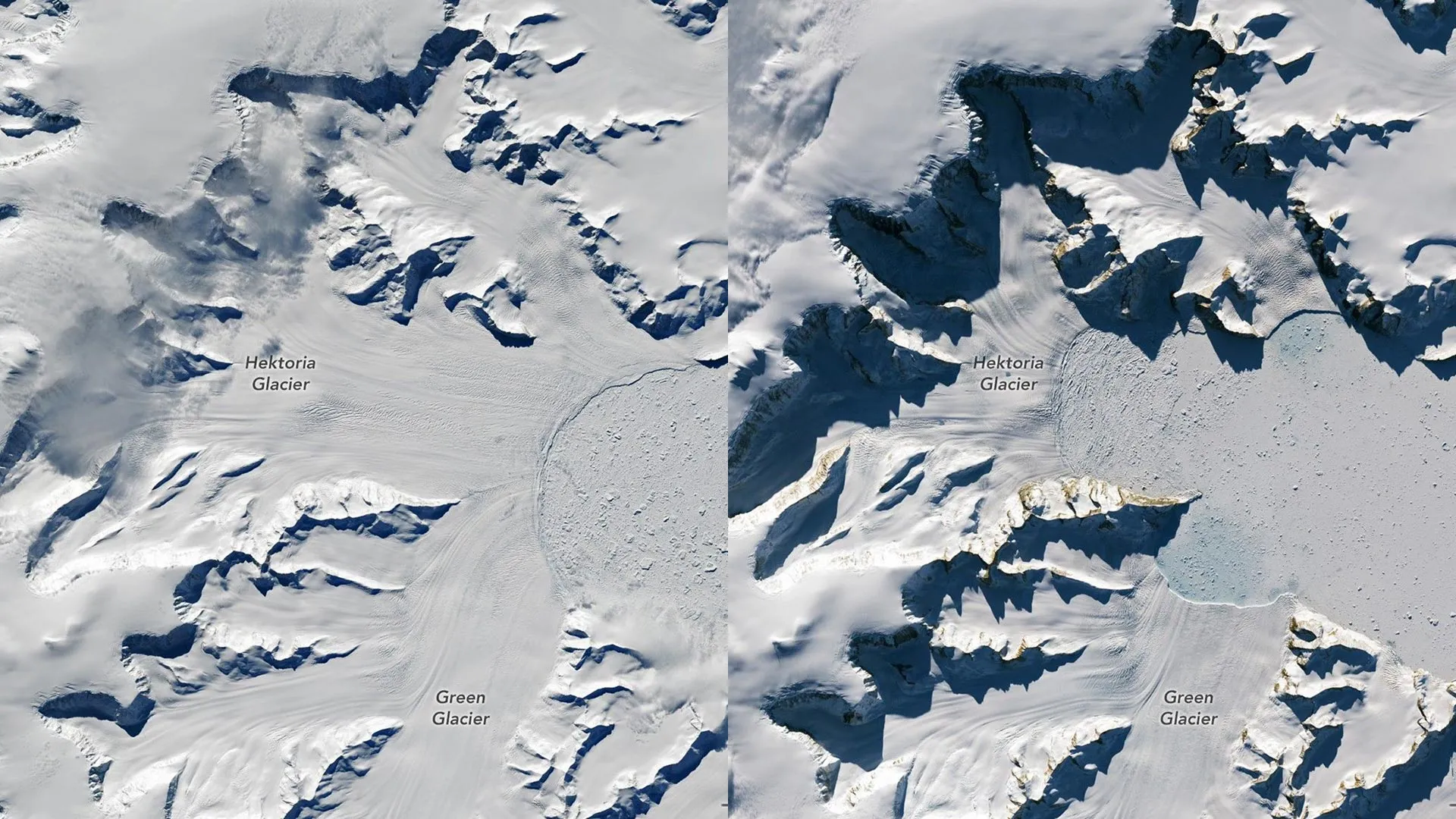
Antarctica's Hektoria Glacier underwent an astonishing collapse between early 2022 and spring 2023, retreating at a pace rarely seen in modern observations. In just 15 months, the glacier lost roughly 25 kilometers (15 miles) in length. During one especially dramatic two month period, the glacier's terminus pulled back by more than 8 kilometers (5 miles), marking the fastest retreat of grounded glacial ice ever recorded in modern history.
Scientists recently analyzed the event using multiple types of remote sensing data and concluded that the glacier's shape and structure played a major role in the rapid collapse. Hektoria Glacier, located on the Antarctic Peninsula, begins on land and extends into the ocean, where its outer section forms a floating mass of ice known as an "ice tongue." Researchers found that the glacier lost not only this floating ice tongue, but also a large section of grounded ice resting on a flat area of bedrock. That grounded ice loss directly contributes to sea level rise.
Although Hektoria is relatively small compared to some of Antarctica's massive glaciers, scientists warn that similar processes affecting larger glaciers could have far greater consequences worldwide.