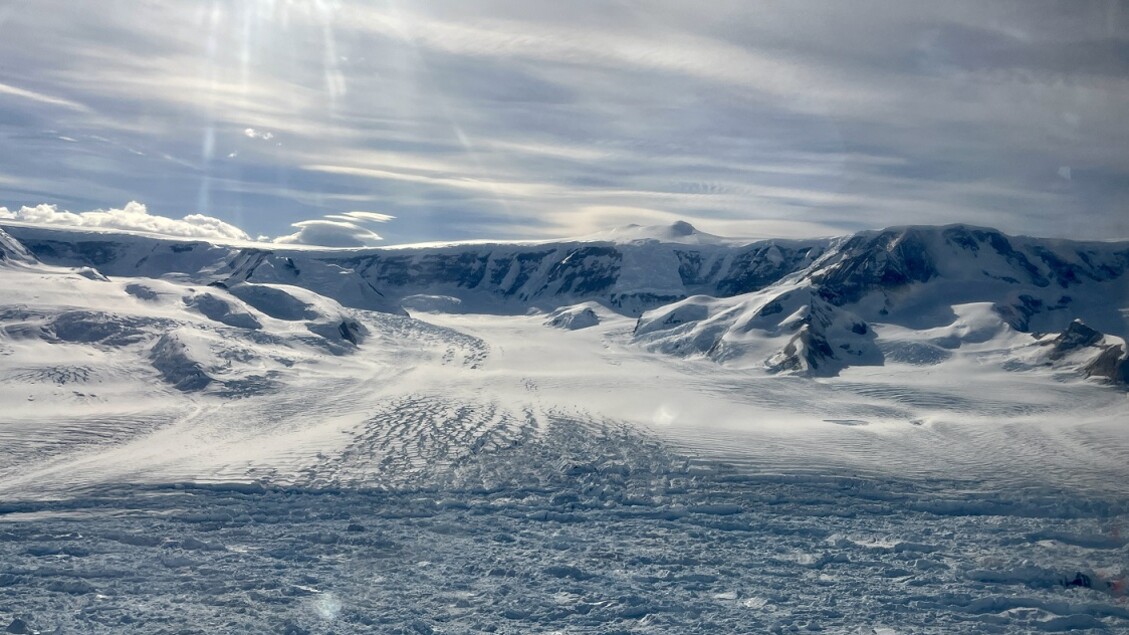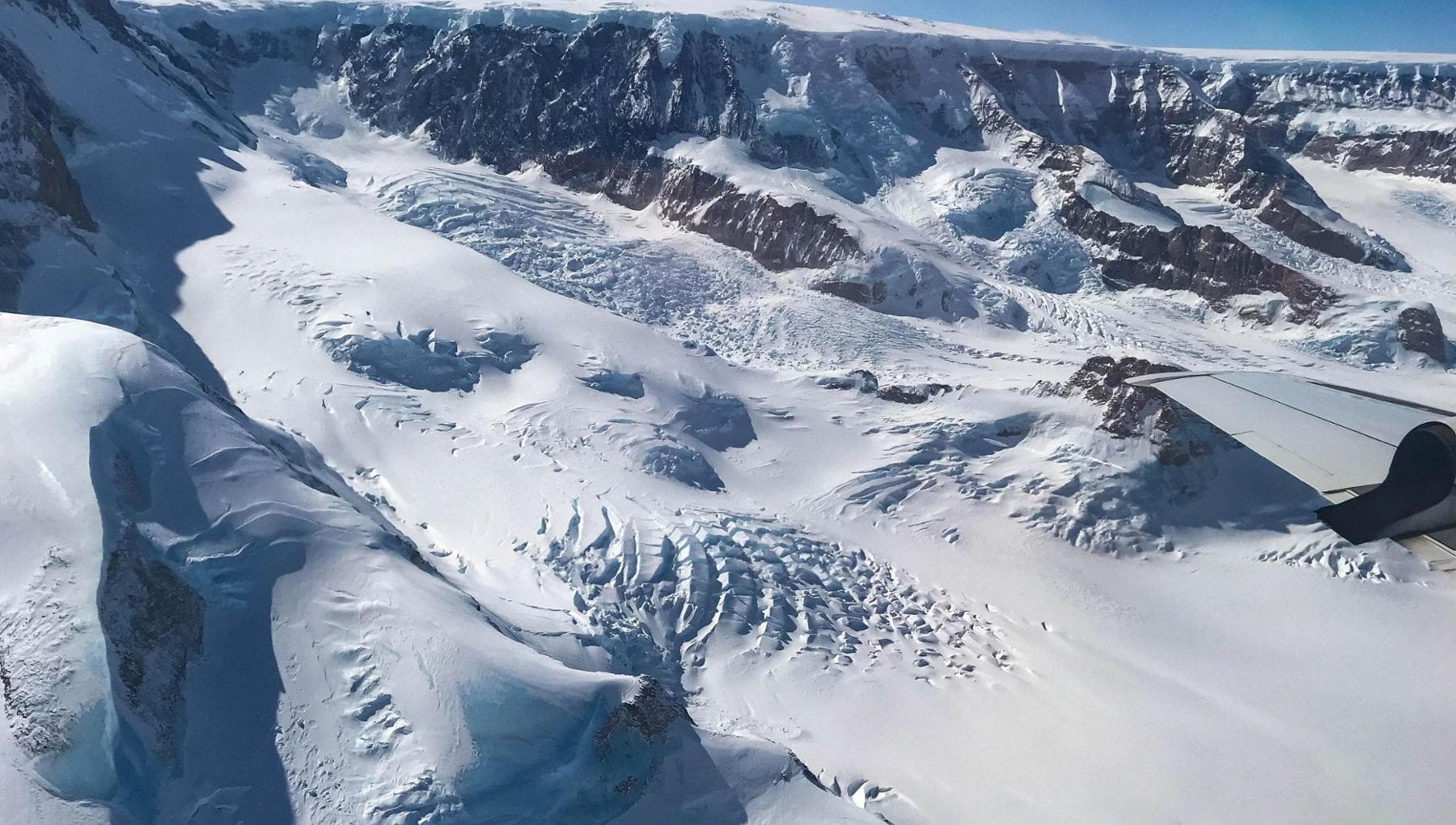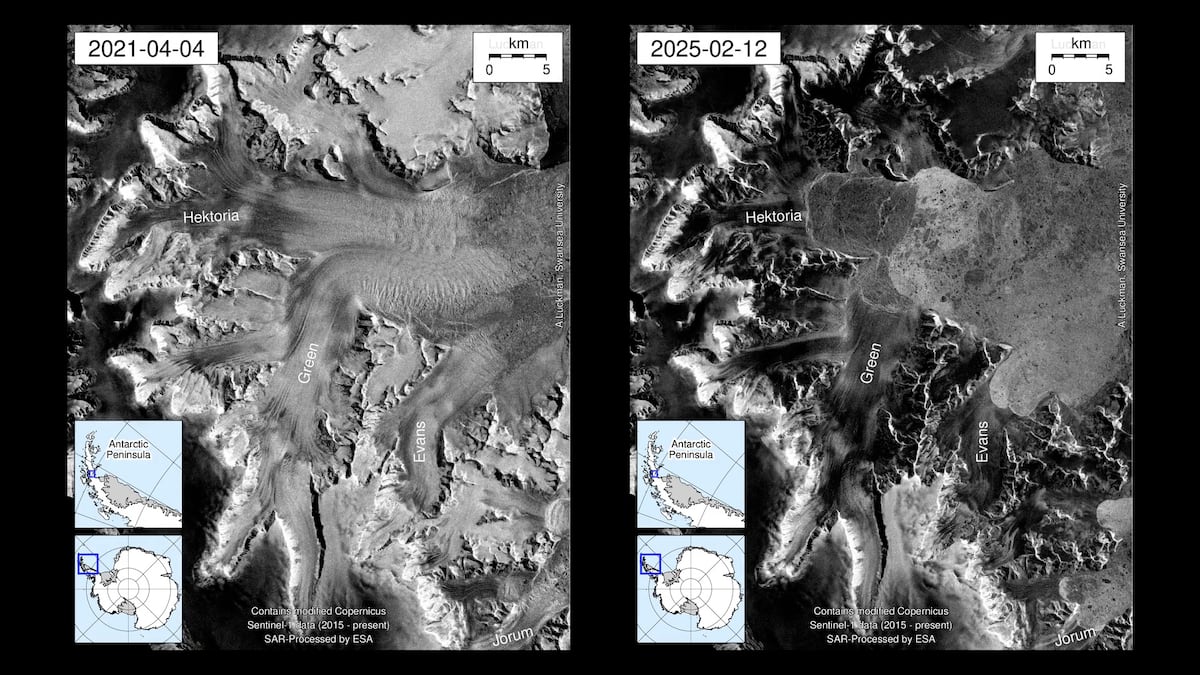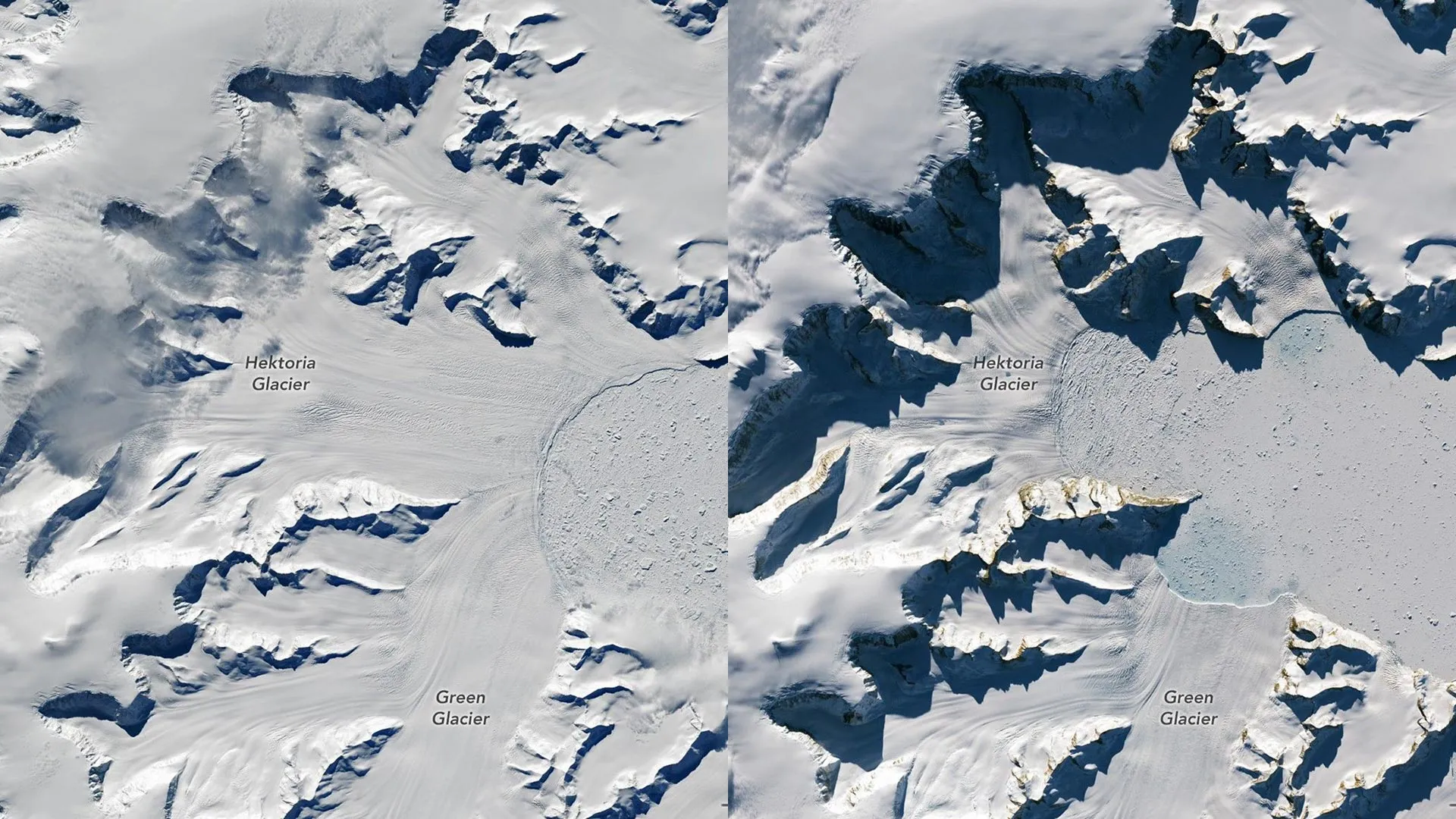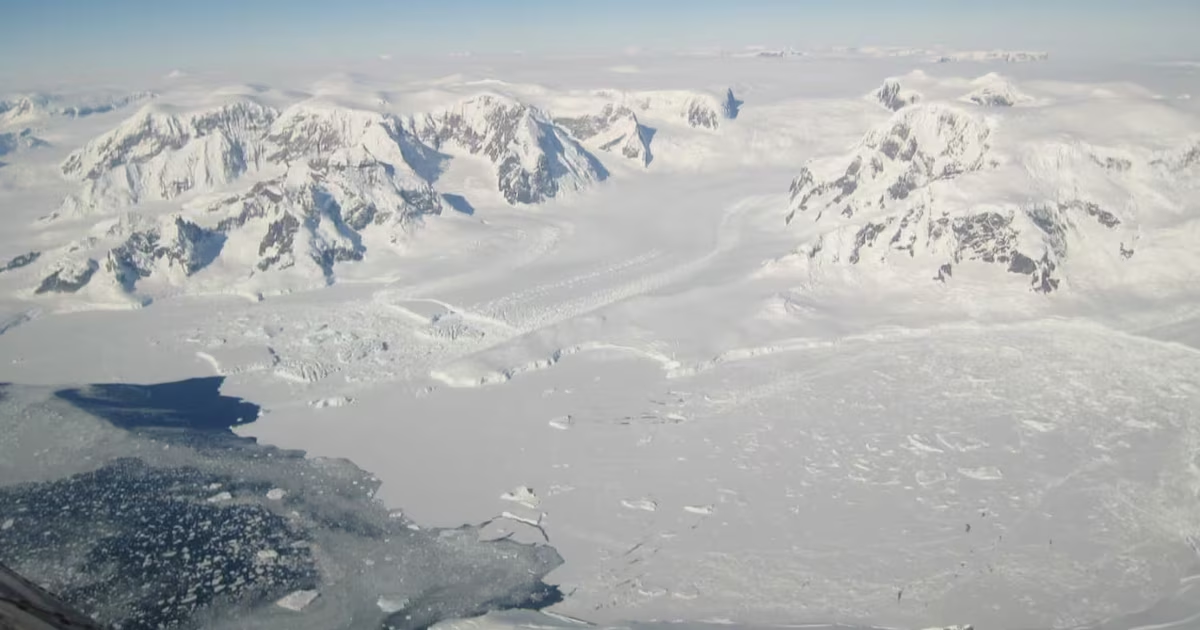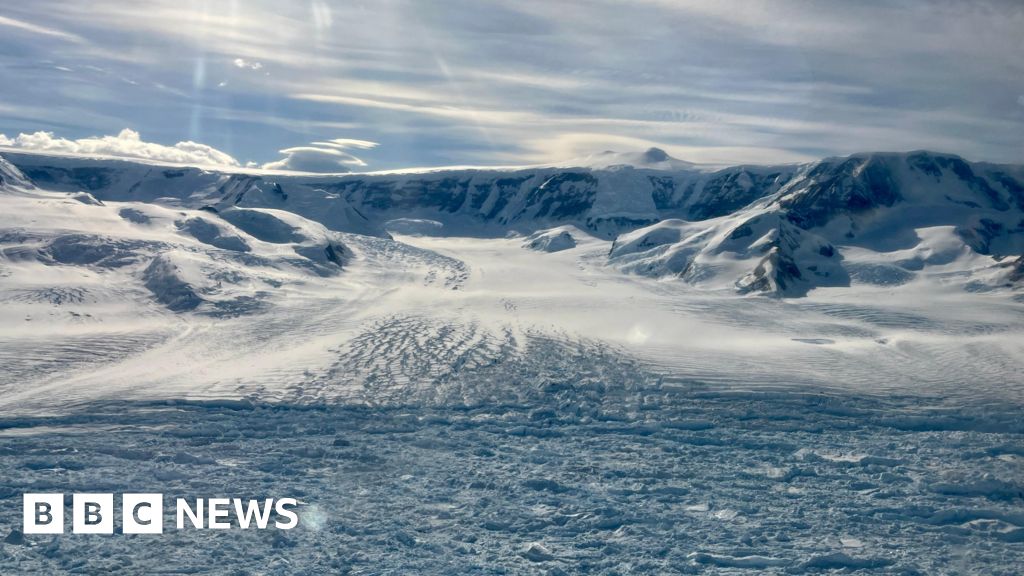
The recent rapid retreat of an Antarctic glacier could be unprecedented, a new study suggests, a finding which could have major implications for future sea-level rise.
The researchers found that Hektoria Glacier retreated by more than 8km (5 miles) in just two months in late 2022.
The authors believe it could be the first modern example of a process where the front of a glacier resting on the seabed rapidly destabilises.
But other scientists argue that this part of the glacier was actually floating in the ocean – so while the changes are impressive, they are not so unusual.
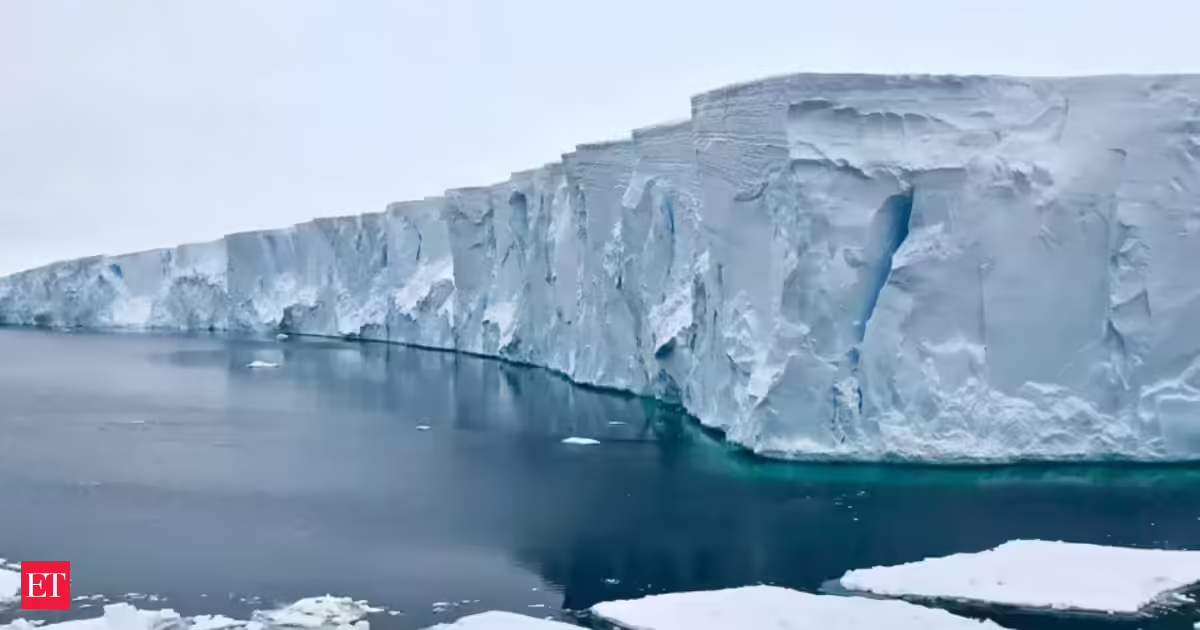
Floating tongues of glaciers extending into the sea – called ice shelves – are much more prone to breaking up than glacier fronts resting on the seabed.