Policymakers, international organisations and business representatives discussed Europe’s ageing population and persistent labour shortage concerns - and as a result, how these issues are pushing governments and employers to rethink migration policies.
Meanwhile, it was highlighted how Central Asian countries are increasingly positioning themselves as suppliers of trained workers through regulated international recruitment systems.
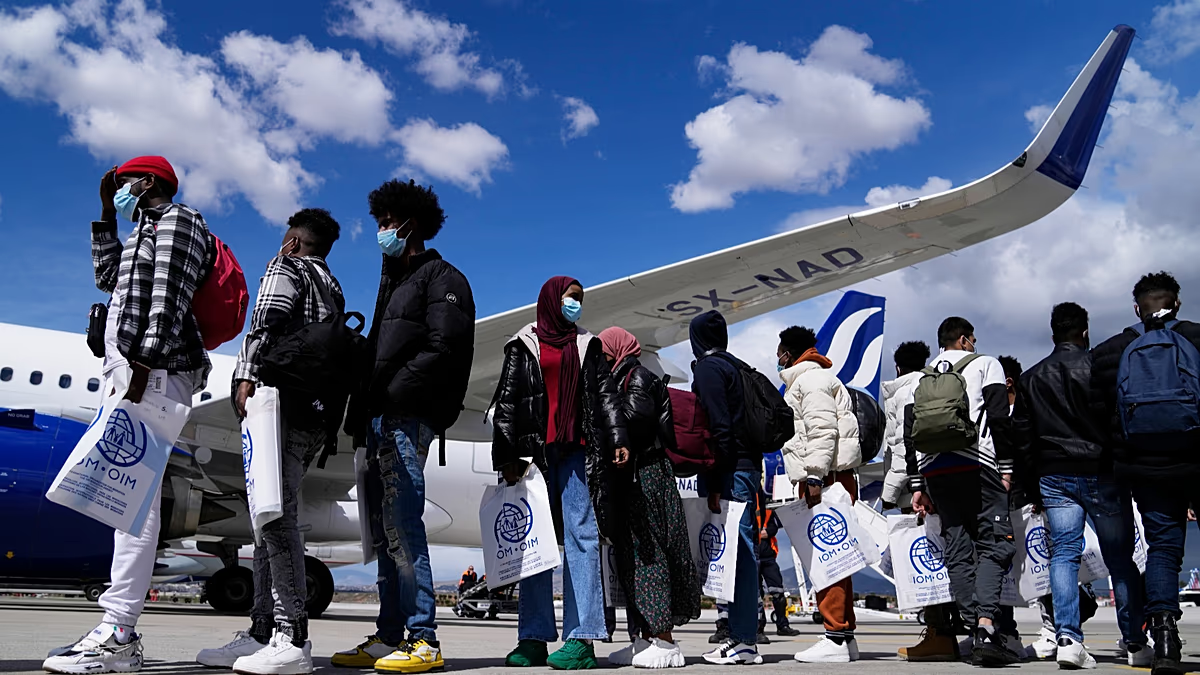
According to the International Organization for Migration, an intergovernmental organisation within the UN system, around 304 million people were living outside their country of birth in 2024, nearly double the estimated global migrant population recorded in 1990.
Europe’s labour shortage challenge
Across Europe, low birth rates and ageing populations are reducing the size of the workforce, creating labour shortages in sectors including agriculture, construction, healthcare and services.