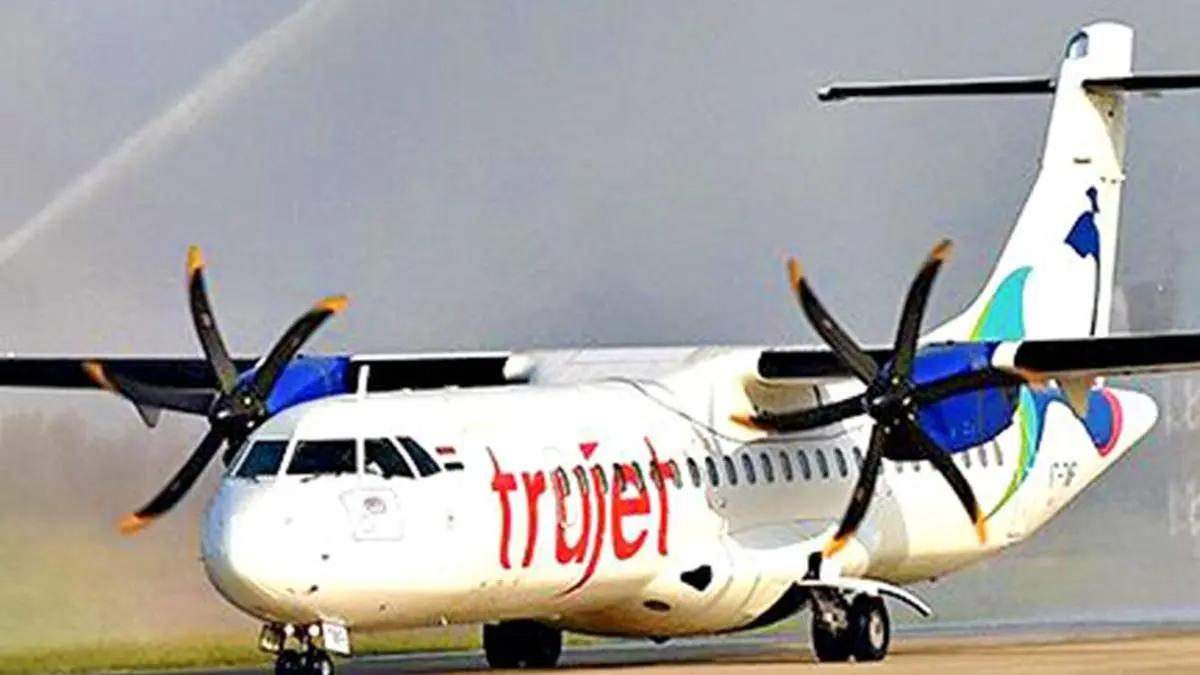
The approval of the Modified UDAN scheme, with a commitment of ₹28,840 crore over the next decade, signals that the ambition to democratise air travel is not only intact but accelerating. Yet, as the programme scales, a more fundamental question comes into focus. Can connectivity alone unlock the full potential of regional aviation, or does the next phase require a deeper structural shift.UDAN, the regional air connectivity scheme has connected 88 airports and helped operationalise 619 routes (FILE PHOTO)The answer lies in pairing connectivity with capability. Specifically, in building and deploying aircraft designed for India’s unique operating realities.UDAN has already delivered a meaningful transformation. It has connected underserved regions, brought first time flyers into the system, and expanded the aviation map of the country. But scale brings complexity. Not every route has matured as expected. Passenger demand on certain sectors remains inconsistent. Some regional airports have struggled to sustain operations.This is not a weakness of the programme. It is a natural transition from expansion to sustainability. And sustainability in regional aviation is ultimately driven by economics.India’s regional routes operate under very different conditions compared to mature global markets. Short distances, low passenger density, infrastructure constraints, and high price sensitivity define this segment. However, the aircraft serving these routes are often designed for very different operating environments.This creates a structural mismatch. Operators are forced to adapt route economics to aircraft, rather than the other way around. Indigenous aircraft can change this equation. Platforms designed specifically for short haul connectivity, capable of operating from smaller airstrips, and aligned with local cost structures can significantly improve route viability. Aircraft design, in this context, becomes a strategic lever rather than just a technical choice.This moment is especially significant because India already has the concrete elements needed for a next-generation regional turboprop program. Domestic projects in the 19-seat class are advancing, while parallel efforts target a larger pressurised twin-turboprop in the 50–70-seat segment: A 50–70 passenger airframe, twin turboprop engines (roughly 2,000–3,000 shp each), cruise speeds near 450–520 km/h, typical range of 1,100–1,300 km, and short-field performance for secondary airports. Regulatory changes are being phased in to support in-country design, flight testing and type certification within a realistic 18–30-month post-test timetable, plus expanded approvals for production, supplemental type certificates and line maintenance. Supply-chain development is already visible: nacelles, propulsors, avionics suites, interiors and landing-gear suppliers are partnering with Indian OEMs and MROs, and skills training pipelines for airframe, systems and certification engineers are scaling up. When demand-side programmes for regional connectivity are synchronized with these manufacturing milestones — targeted airport upgrades, route licensing, and firm order book development — India can rapidly convert domestic needs into a competitive regional aircraft industry with clear export potential and substantial local employment.The Modified UDAN scheme has created a strong demand framework for regional connectivity. The next step is to ensure that this demand also strengthens domestic capability. This can be achieved through calibrated policy interventions. Incentivising the deployment of indigenous aircraft, aligning viability gap funding to support domestically manufactured platforms, and enabling faster certification pathways can create a clear demand signal for Indian manufacturers.At the same time, the ecosystem around regional aviation needs to evolve in parallel. Pilot training, maintenance infrastructure, and technical skill development for smaller aircraft segments will be critical to sustaining long term growth. The objective is straightforward. Every new regional route should also contribute to building India’s aerospace ecosystem.India is on track to become one of the largest aviation markets in the world. But scale alone is not enough. Resilience and self-reliance will define the strength of this growth. Recent global supply chain disruptions have highlighted the risks of over dependence on external manufacturing ecosystems. Countries with domestic production capabilities have greater flexibility and control over their aviation networks.For India, this is not just about reducing imports. It is about shaping an aviation model that is economically viable, operationally resilient, and globally competitive.UDAN began as a connectivity initiative. UDAN 2.0 has the potential to evolve into a much broader national capability building exercise. The financial commitment is in place. The policy intent is clear. The technical foundation is emerging. What is needed now is alignment. Let UDAN 2.0 be the launchpad for an Indian aerospace renaissance: Routes that connect people and regions, and purposefully build skills, factories, and aircraft at home. When connectivity and capability move together, India will not just expand its skies, it will own them.(The views expressed are personal)This article is authored by Subhakar Pappula, founder and CEO, Flamingo Aerospace.
UDAN 2.0 must be paired with indigenous aircraft capability
This article is authored by Subhakar Pappula, founder and CEO, Flamingo Aerospace.
749 words~3 min read