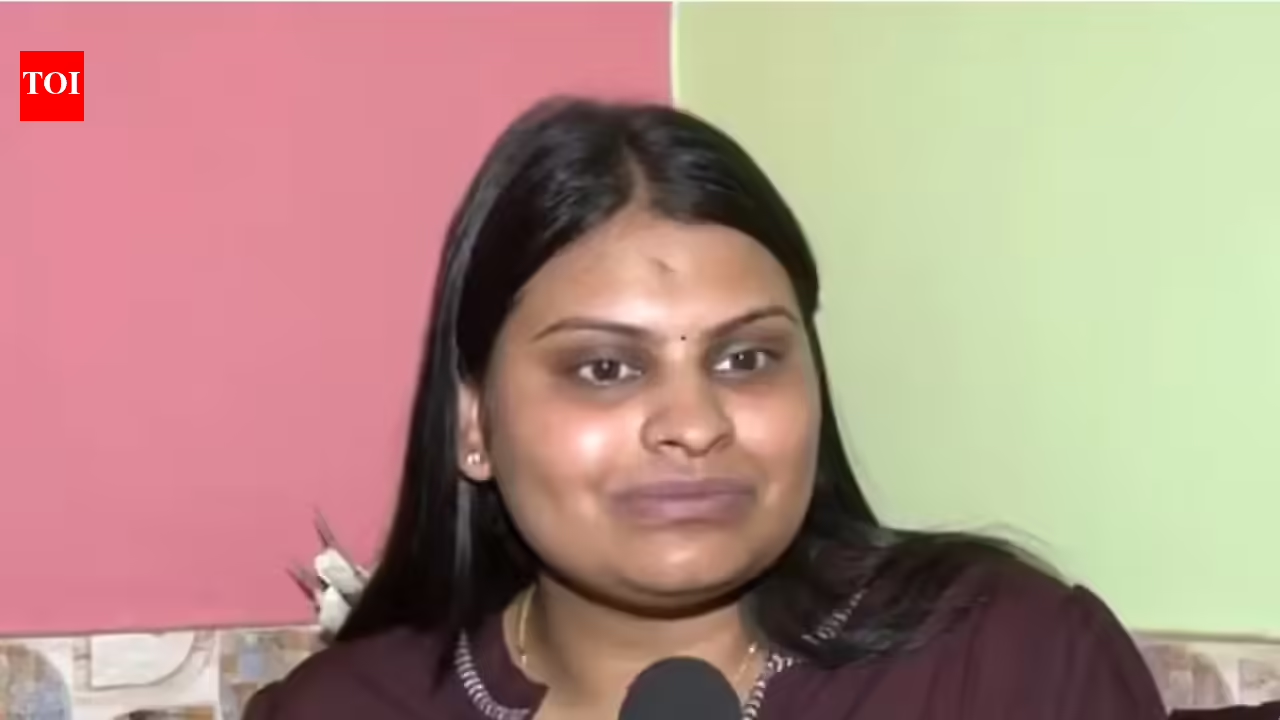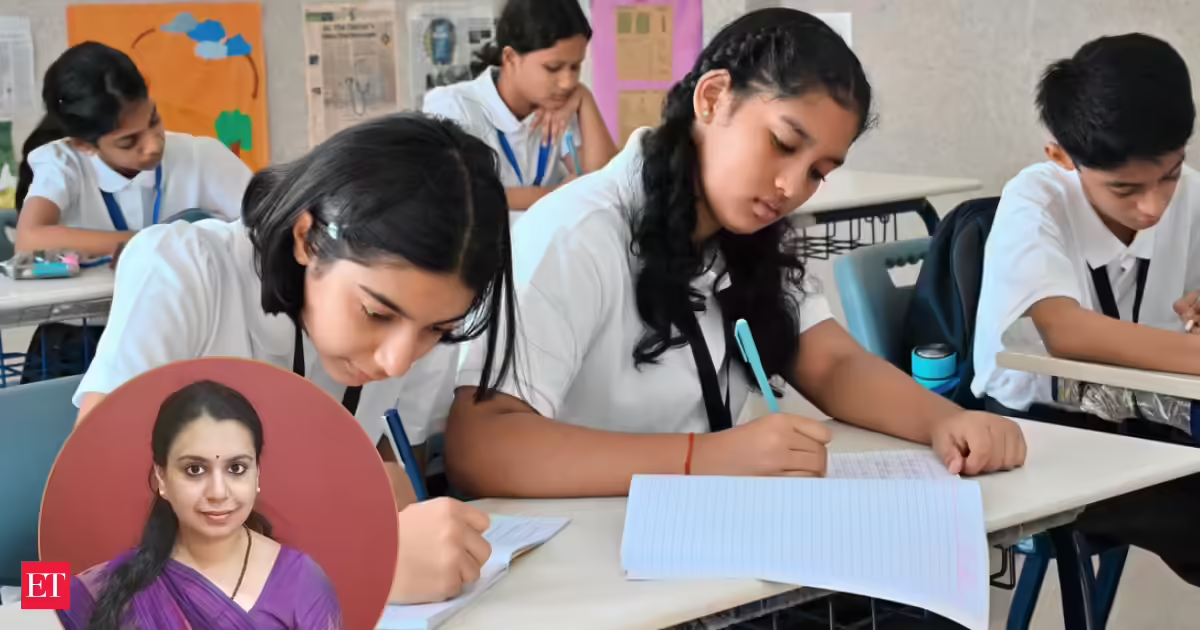
Divya Mittal has sparked widespread discussion on social media after sharing a post on X about the gaps in conventional education and the life skills she believes are missing from school systems. The post has garnered nearly 390,000 views. Reflecting on her academic journey from IIT Delhi to IIM Bangalore and eventually the IAS, Mittal said the country’s best institutions taught her how to clear competitive examinations and manage responsibilities, but did not prepare her to deal with loneliness or quiet her own mind. She said students spend years learning how to achieve success, but are rarely taught how to find happiness.— divyamittal_IAS (@divyamittal_IAS) Emotional regulation and communication among key concerns Mittal argued that schools focus heavily on academic knowledge while neglecting emotional development. She said students memorise scientific concepts but are not taught how to process emotional pain or manage internal struggles. According to her, silence is often mistaken for peace, leaving many adults unable to deal with difficult emotions. She also highlighted the lack of lessons around deep communication, saying students learn to write essays but not how to express vulnerability, set boundaries or stand up against bullying in workplaces. She said education systems fail to teach the practical language required for adult life. Questions raised over critical thinking and financial awareness On critical thinking, Mittal said schools reward students for having answers, while real life often demands the ability to ask questions. She noted that many people grow up accepting opinions without examining their origins because they are taught to treat information as unquestionable truth. She also stressed the absence of financial literacy in school education. While students spend years studying mathematics, she said they are rarely taught how to manage money, avoid debt traps or understand the emotional and social impact of finances. Mittal added that education often focuses on earning money rather than managing it responsibly. Self-discipline, loneliness and mental health discussed Mittal said schools operate through fixed schedules and supervision, but adulthood requires self-discipline without external monitoring. According to her, many people struggle later in life because they were never taught how to motivate themselves independently. Discussing loneliness, she said students grow up surrounded by people and are often unprepared for the silence of adulthood. She described peace as learning to be comfortable alone rather than viewing solitude as rejection. She also spoke about the importance of understanding people and recognising hidden intentions, saying many individuals feel betrayed because they were never taught to interpret behaviour beyond words.Call for greater focus on mental health and self-discovery Mittal further criticised the lack of emphasis on mental health maintenance in schools. She said education systems encourage people to push through exhaustion, contributing to burnout later in life. According to her, students should learn to identify stress, recognise when they need help and seek support during emotional distress. Concluding her post, Mittal said students spend years trying to become the “best” without understanding who they truly are. She argued that the most meaningful form of education is discovering personal values and priorities before external pressures define them.
IAS officer Divya Mittal says schools teach achievement, not happiness, sparks debate on Indian education
Divya Mittal, an IIT Delhi and IIM Bangalore alumna, has sparked a nationwide conversation. She points out that India's top educational institutions teach how to succeed academically but fail to equip students with essential life skills. Mittal emphasizes the need for emotional regulation, deep communication, critical thinking, and financial literacy.
510 words~2 min read