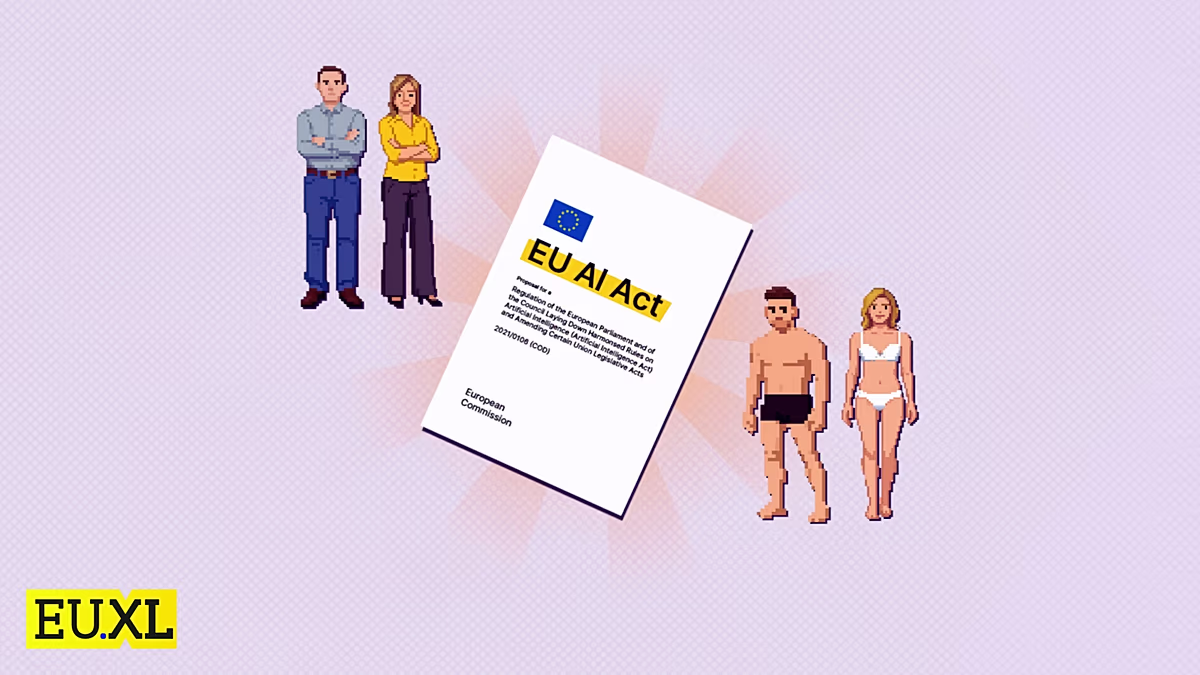
On 7 May, co-legislators agreed to ban "nudifier apps" under the Digital Omnibus on AI. These controversial tools can generate AI-created sexual images or videos that “undress” individuals without consent, raising concerns over privacy and ethical use of technology.
New-generation AI makes the creation of synthetic content increasingly affordable and realistic. About 8 million deepfakes were online in 2025, with 90 per cent of online content set to be AI-generated by 2026, the European Parliament Research Service found.
So far, EU law has addressed deepfakes indirectly by treating them as violations of privacy and transparency, sparking calls for stronger protection under an outright EU-wide ban.
“[...], there was perceived to be a lacuna in the law in addressing them [deepfakes]. That's why the Omnibus was seen as an opportunity to address that”, said MEP Michael McNamara from Renew Europe in the European Parliament and co-rapporteur for the Civil Liberties, Justice and Home Affairs committee.
While co-legislators still need to formally greenlight their position, Europe is already giving a clear signal: “nudifier apps” are a serious form of sexual digital abuse that must be banned before they enter the market.