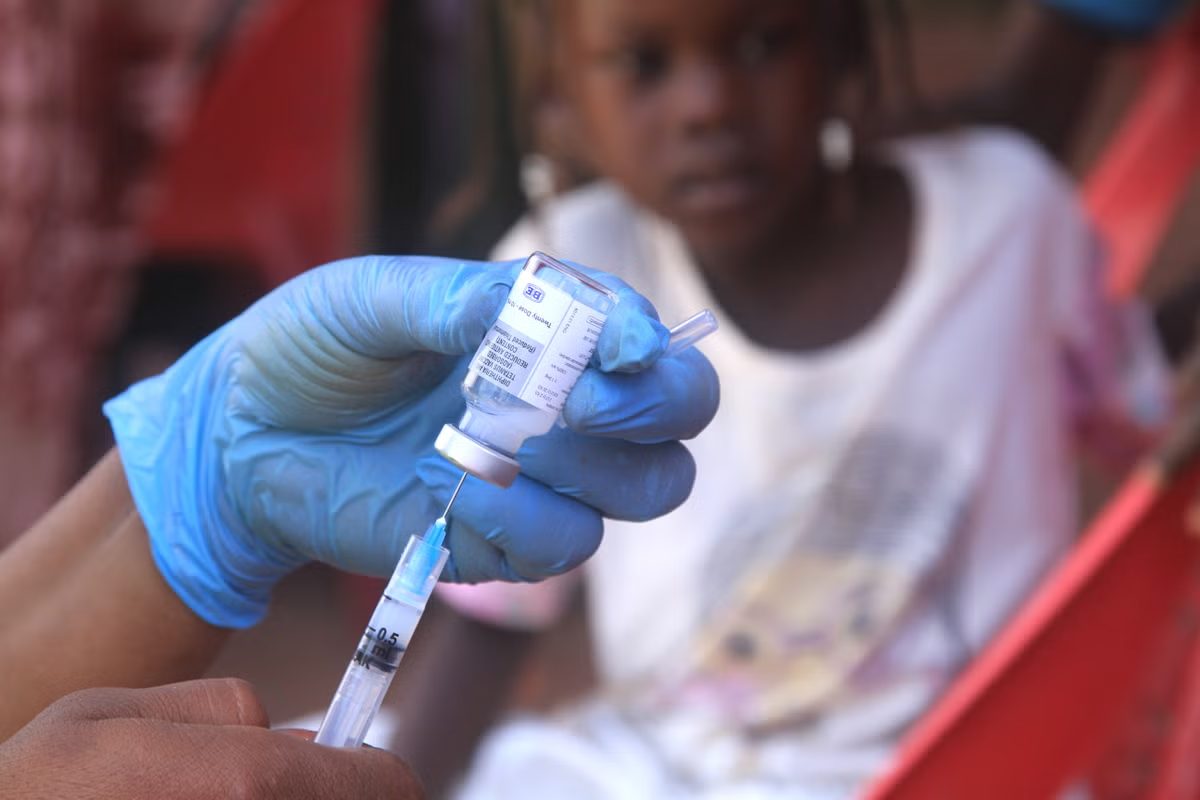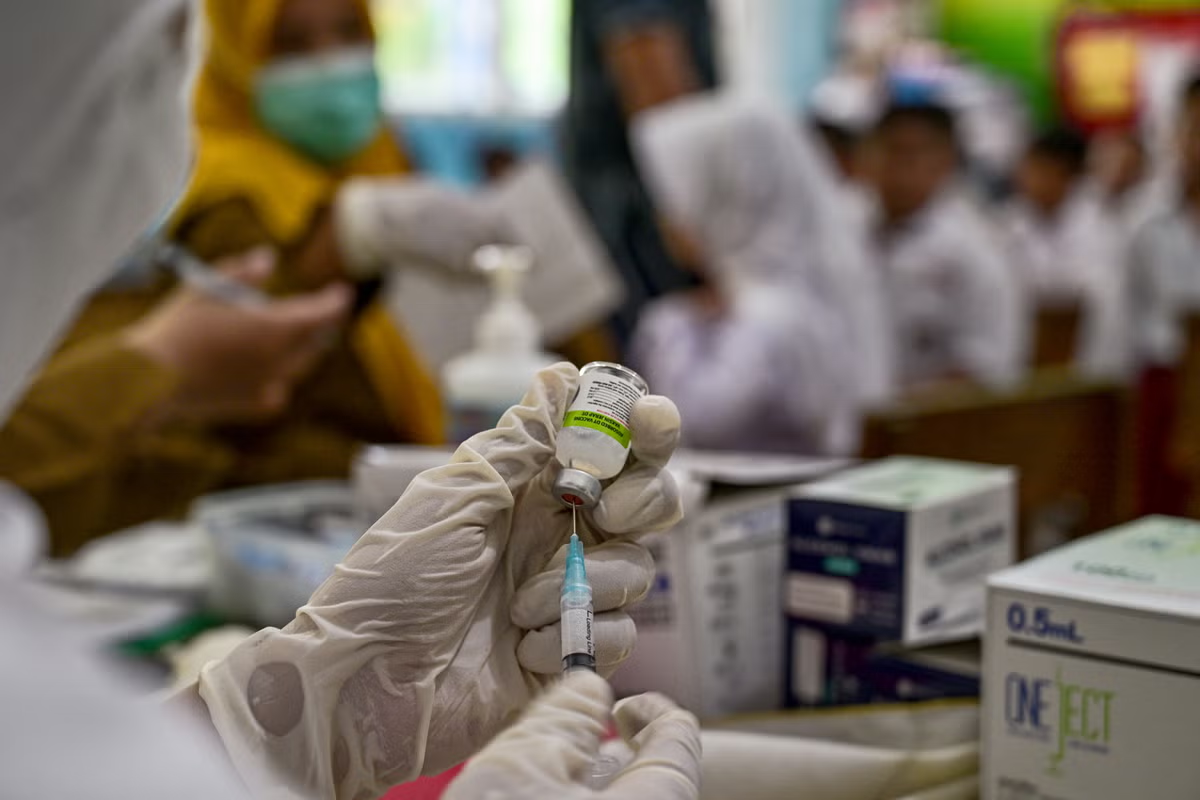
The health minister, Mark Butler, has expressed concern about “the biggest diphtheria outbreak we’ve seen, certainly for decades” as the serious bacterial infection spreads through the Northern Territory and into bordering states.Diphtheria, which can cause either skin (cutaneous) or respiratory disease, is considered rare in Australia following a vaccination rollout that began in the 1930s.Prior to the Covid pandemic, most Australian cases were imported from overseas. According to the Australian Centre for Disease Control, a high proportion of these cases were cutaneous diphtheria.But since 2020, there have been a few small diphtheria clusters in different areas of northern Australia, involving both cutaneous and respiratory cases.The most recent outbreak began in March, and is affecting Indigenous people almost exclusively.Sign up for the Breaking News Australia emailThe latest data from the National Notifiable Disease Surveillance System shows there were now 133 cases in the Northern Territory linked to the outbreak. There were also 79 cases in Western Australia, six in South Australia, and up to five in Queensland. There is a mix of cutaneous and respiratory cases.It’s the first large outbreak to be seen in Australia in more than 20 years.Butler said: “We’re working with the NT government and the Aboriginal-controlled sector to get more vaccines there.“There’s no question this is serious,” he told ABC Radio National on Tuesday.“It’s serious in the NT. It’s spreading across other parts of the Top End. It’s crept below the South Australian border into the APY Lands. So we’re working very closely with the NT government, but also with the Aboriginal-controlled sector.”The spread is being driven in part by falling vaccination rates since the Covid-19 pandemic, combined with people missing booster shots as adults.Routine childhood immunisation coverage fell to its lowest level in five years in 2025, with the Australian immunisation handbook recommending the diphtheria vaccine for infants, children and adolescents, and routine booster vaccination in adults.Boosters are particularly important for special risk groups such as pregnant women.Diphtheria bacteria can live in the mouth, nose, or throat, or on skin lesions of those infected. It is spread through respiratory droplets during coughing or sneezing, or through close contact with skin lesions.Symptoms of respiratory diphtheria include a sore throat, fever, a grey covering over the tonsils, and enlarged lymph nodes. Left untreated, respiratory diphtheria can be life-threatening.Meanwhile, symptoms of cutaneous diphtheria include chronic, non-healing sores or shallow ulcers which can become covered by a grey membrane.Prior to vaccination, diphtheria was a leading cause of childhood death globally. Respiratory diphtheria is significantly more deadly, killing up to one in 10 infected people even with treatment.Both are treated with antibiotics, ideally administered promptly to limit transmission. Respiratory diphtheria may also require treatment with an antitoxin, but this needs to be administered early.There has been one death suspected to be caused by the current outbreak, but Butler said the Northern Territory government is still investigating the cause.“We’re waiting to see the advice of that investigation,” he said.It would mark the first diphtheria death in Australia since 2018.Prof Robert Booy, an infectious diseases paediatrician, said diphtheria was “readily transmitted in close quarters of families especially,” making spread more likely in overcrowded housing.He said quickly providing easy access to vaccinations in affected areas, including booster shots, was critical to addressing the outbreak.Childhood immunisation coverage rates Australia-wide have decreased below the 95% aspirational target, with coverage rates for two-year-olds at about 90%, far below the target required to achieve herd immunity for highly infectious diseases.However, 94.33% of Aboriginal and Torres Strait Islander five-year-olds are covered.Dr Milena Dalton, the head of immunisation and health strengthening at the Burnet Institute, said the outbreak “highlights how quickly vaccine-preventable diseases can re-emerge when there are immunity gaps”.“Diphtheria remains rare in Australia because vaccination works. But this outbreak is a reminder that rare does not mean impossible, and that protection needs to be maintained through timely boosters for adolescents and adults,” she said.
‘Biggest diphtheria outbreak’ in decades spreads into Queensland, SA and WA
Health minister Mark Butler says vaccines are being rushed into NT communities, with one suspected death
645 words~3 min read